Sheol, Samuel's Ghost, and Why Israel Banned the Dead
What does the Bible say about Halloween? Trace Sheol, the witch of Endor, and Second Temple roots of the communion of saints to resurrection hope.
Every October, somebody online announces that Halloween is secretly pagan, or secretly Satanic, and the argument runs in circles for about a week before everyone forgets about it until next year. But here's what almost nobody brings up: the holiday's actual name, All Hallows' Eve, points to a Christian doctrine about the dead that didn't start with medieval Catholicism. It started centuries earlier, in Judean texts written between the Testaments, wrestling with a question the Hebrew Bible leaves wide open. Where do the dead go? Can the living say anything to them? What does the Bible say about Halloween starts, strangely enough, not with pumpkins or saints' days, but with a word: Sheol. And the clearest window into what Sheol means is a scene almost nobody expects to find in a book about prophets and kings: a desperate king, a medium, and a dead man who appears.
Let's trace this from the ground up. Sheol first, then the ban on talking to the dead, then the strangest scene in the Hebrew Bible, then the centuries of Judean thought that turned a vague underworld into a doctrine the church still recites every week.
Sheol Is Not Hell: Mapping the Hebrew Underworld
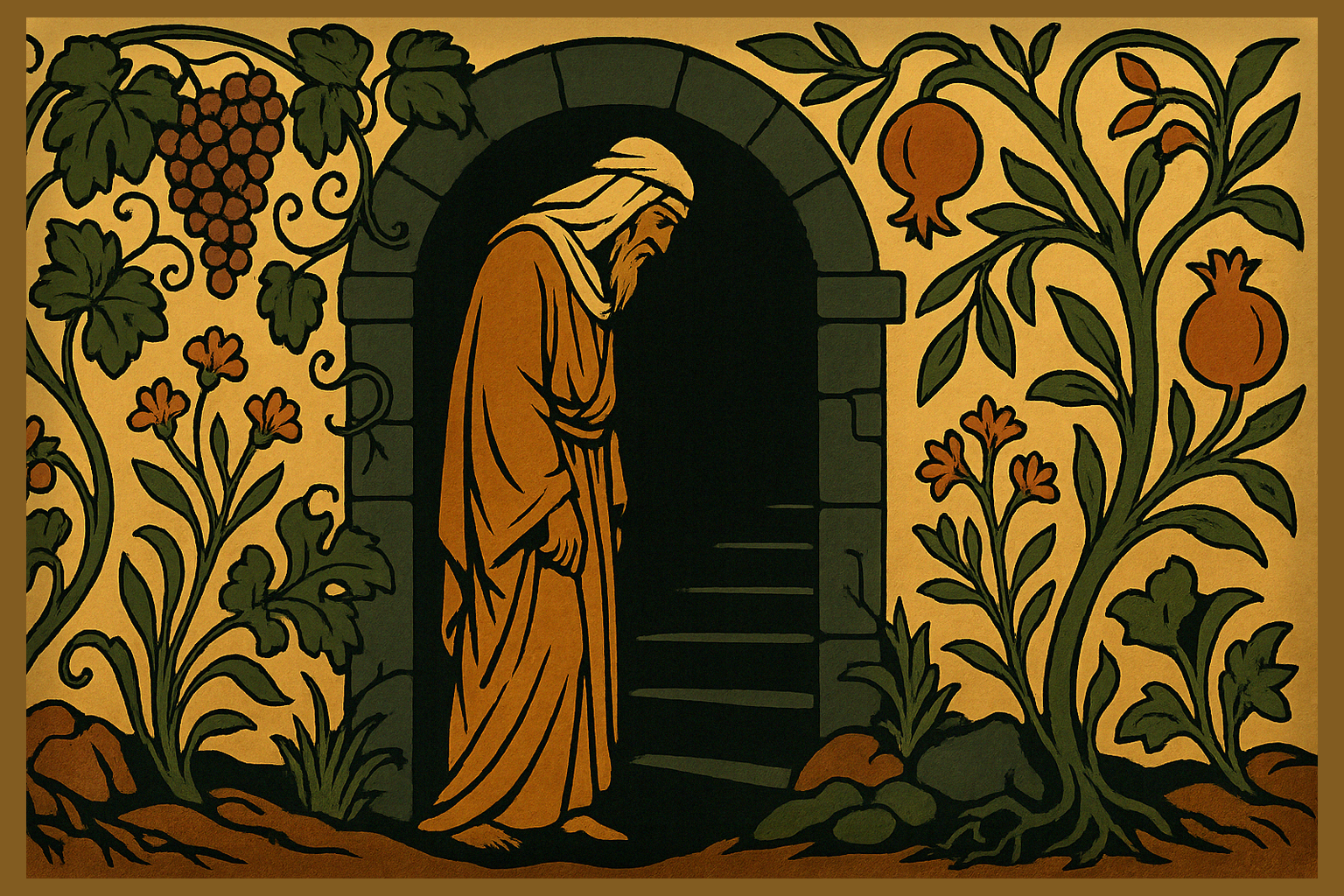
Most modern readers hit the word "Sheol" in an English Bible and mentally substitute "hell," the fiery compartment reserved for the wicked. The Hebrew Bible never does this. Sheol is a basement, not a courtroom.
The Vocabulary of the Pit: Sheol, Abaddon, and the Grave
Look at how the Hebrew Bible talks about death. Sheol shows up alongside Abaddon ("destruction" or "ruin"), the Pit, and simply "the grave," and these words function as near synonyms. Psalm 88 piles them up in a single breath of despair: the psalmist says his life draws near to Sheol, he's counted among those who go down to the Pit, he's like the slain who lie in the grave, forgotten, cut off from the hand of God (Alohim). Notice that this psalmist is righteous. He's praying. He hasn't done anything to earn punishment. He's dying, and dying terrifies him, because Sheol is where everyone goes.
That's the whole point of the vocabulary cluster. Sheol, Abaddon, the Pit, and the grave describe one shared destination for "the small and the great," to borrow Job's phrase, a place where slaves are free from their masters because nobody there has any status at all. It's sorted by mortality, not merit. Everybody who dies goes down.
This matters because so much of our modern Halloween anxiety assumes the Bible has a clear map of heaven, hell, and ghosts wandering between them. The Hebrew Bible has something much stranger: one shadowy pit, for almost everybody, and minimal interest in describing its geography beyond "dark" and "deep."
Rephaim: Why the Dead Are Called "Shades"
Here's a word study worth sitting with. The Hebrew Bible calls the dead rephaim, usually translated "shades" or "spirits," but the root idea is weakness, slackness, a kind of fading. The rephaim aren't ghosts in the pop-culture sense, rattling chains and scaring the living. They're diminished. Yashayahu 14 pictures the king of Babylon arriving in Sheol and the rephaim stirring to greet him with something close to mockery: "You too have become as weak as we are."
This word carries real theological weight. It doesn't claim the dead have ceased to exist; it claims they've lost their vitality, their strength, their capacity to act in the world of the living. They persist, but as a shadow of what they were. This is a culture that believed something continues after death. It didn't believe that something retained much power or dignity. The rephaim are real, but they are weak, and that distinction turns out to matter enormously for the Endor story later.
A Place Without YHWH's Presence, Not a Place of Judgment
Job and the Psalms describe Sheol's darkness in terms of absence, specifically the absence of the Lord (YHWH). Psalm 88 asks, in effect, whether the Lord works wonders for the dead, whether the shades rise up to praise him. The implied answer is no, and the text treats that as the tragedy of Sheol, not its justice.
Sheol isn't dark because God is punishing people there. It's dark because God's presence, which fills everything else in the biblical world, doesn't reach there. This is a crucial distinction. The Hebrew Bible's underworld isn't a penal colony sorted by moral record. It's a place cut off from the life-giving presence that animates everything else in creation. That's a fundamentally different kind of darkness than the one most readers assume when they hear "Sheol" and think "hell." And it's why, when the Hebrew Bible imagines something worse than ordinary death, it has to reach for a whole new vocabulary later in Daniel and in Second Temple writings, rather than simply intensifying Sheol's horror. Sheol was bad enough on its own terms.
Why Deuteronomy 18 Bans Necromancy Without Denying Ghosts
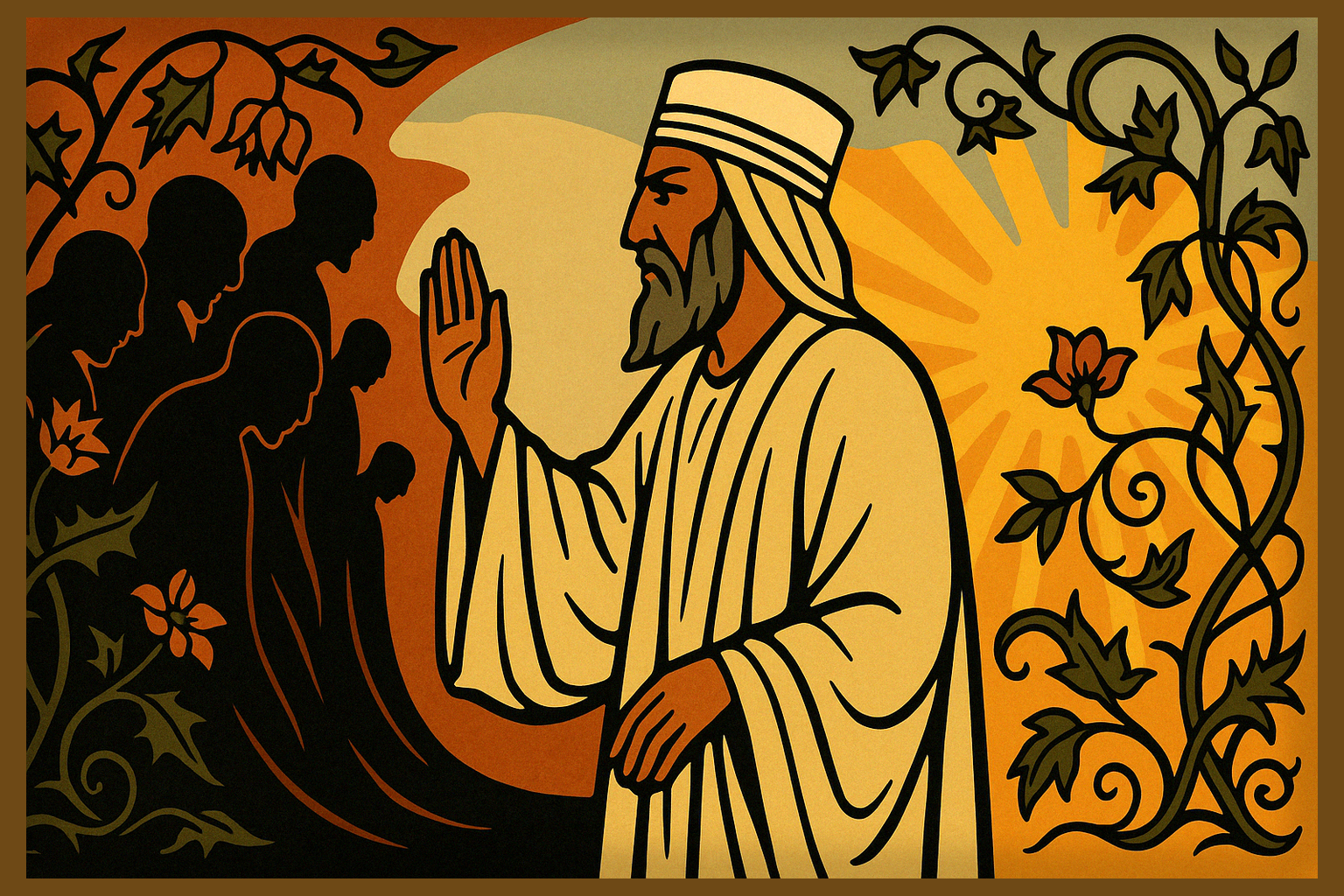
So if Sheol holds everyone in a kind of shared shadow, why does the Hebrew Bible come down so hard on anyone who tries to talk to the people down there?
A Rival Source of Guidance in a World With One God
Deuteronomy 18:9-14 lists a cluster of banned practices: child sacrifice, divination, sorcery, interpreting omens, casting spells, and consulting mediums or "those who inquire of the dead." Notice the company necromancy keeps here. It isn't grouped with "things that don't work," the way a modern skeptic might file astrology next to flat-earth theory. It's grouped with divination: the broader practice of trying to extract hidden knowledge from a source other than the Lord.
This is the real issue. Israel's whole covenant structure assumes that YHWH speaks to his people through prophets, through Torah, through the priesthood's use of the Urim and Thummim. Consulting the dead offers an alternative channel, a back door to information God hasn't chosen to give. The underlying charge is covenant disloyalty: reaching for guidance from a source that competes with the one God who has bound himself to Israel. If the dead could tell Saul what he wanted to know, that made them a rival oracle, and Deuteronomy treats rival oracles as a threat to the entire relationship between Israel and the Lord, not as harmless nonsense.
What Saul's Visit to Endor Assumes Before It Even Happens
Watch what happens before 1 Samuel 28 gets going. Saul has already enforced Deuteronomy's ban. He's expelled the mediums and necromancers from the land, on pain of death, by his own royal decree. Then the Philistines muster for war, Saul is terrified, he inquires of the Lord by dream, by Urim, by prophets, and gets nothing back but silence.
So he does the one thing he's already outlawed. He disguises himself and goes looking for a medium, and the text notes almost in passing that his own servants know exactly where to find one, despite the ban he enforced. Nobody in the story treats mediums as a quaint superstition that doesn't work. Saul isn't desperate enough to try nonsense. He believes the practice is genuinely effective, effective enough that he's willing to break his own law, and dangerous enough that it needed banning in the first place. The prohibition in Deuteronomy only makes sense in a culture convinced something real was happening at these séances.
The Witch of Endor and Samuel's Genuine Appearance
This is where the story gets uncomfortable for a lot of modern readers, and it's worth sitting in that discomfort rather than rushing past it.
What the Medium Sees and Why It Terrifies Her
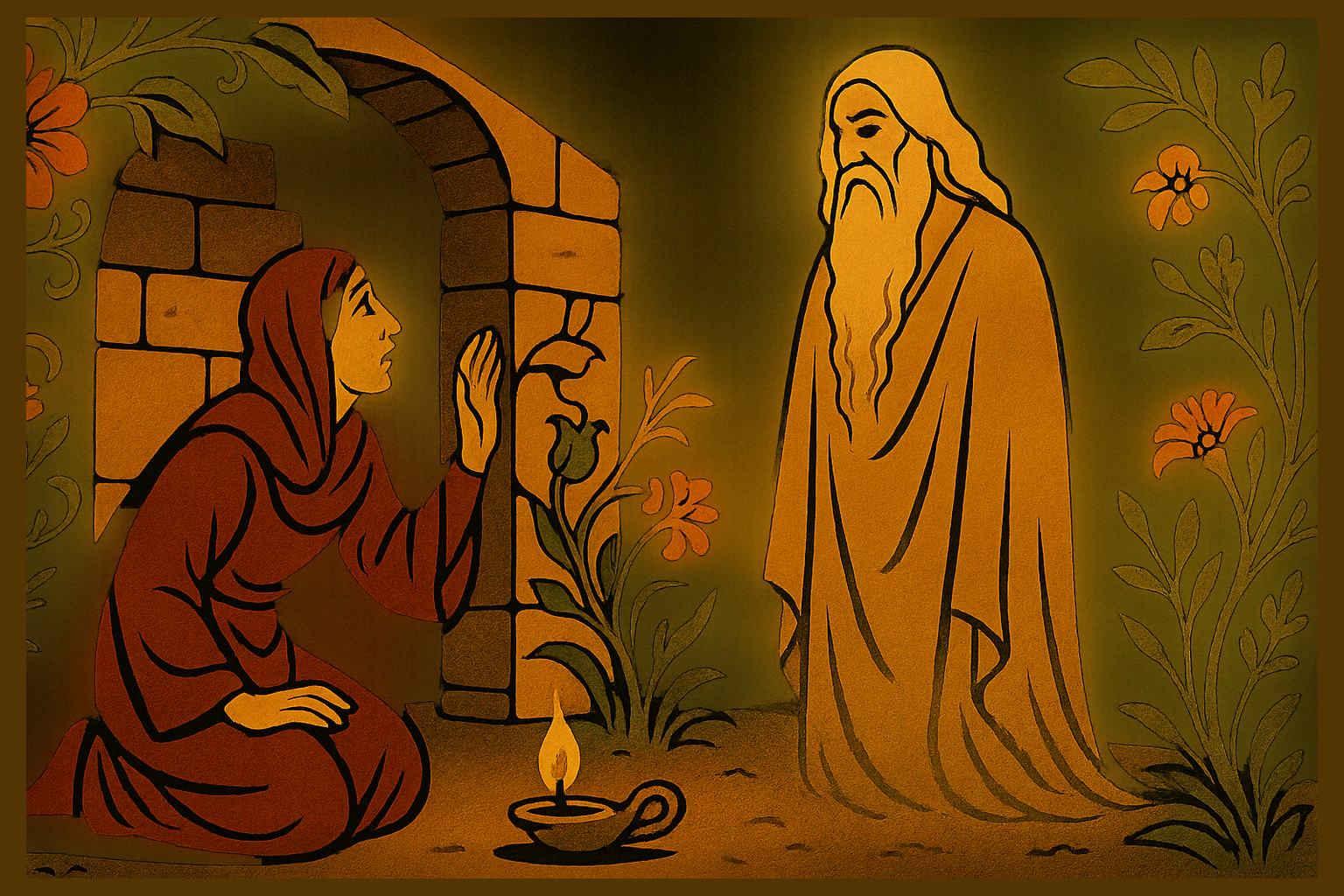
Saul, in disguise, asks the woman at Endor to bring up Samuel. She performs whatever ritual she normally performs, and then something happens that the text marks as unusual even for her. She sees something, cries out in a loud voice, and immediately says to Saul, "Why have you deceived me? You are Saul." She recognizes him not because of anything he's done, but apparently because of what she's witnessed. Something about Samuel's appearance is different from her ordinary trade, different enough to unmask the king standing in front of her.
The narrator handles this moment with real care. The text doesn't say she faked a vision and got lucky. It describes her reaction as genuine alarm at something beyond her control. 1 Samuel 28 is written by someone who wants the reader to understand that Samuel appeared, that this was not a trick, and that the medium herself was startled by what her own ritual produced. The text treats the supernatural event as real, which is exactly what makes this scene so theologically loaded.
Samuel's Message: Judgment Still Belongs to YHWH
What keeps this story from becoming an endorsement of necromancy is Samuel's message itself. Samuel appears, but his words don't give Saul a loophole, a secret channel around God's silence. He reaffirms the verdict Saul already received through the normal prophetic channel years earlier: the kingdom has been torn from Saul and given to David, because Saul disobeyed the Lord at Amalek. Samuel even tells Saul that he and his sons will die the next day, and that the Lord has handed Israel over to the Philistines.
Samuel's appearance is real, but his message does nothing except repeat what YHWH had already said through legitimate prophecy. The necromancy doesn't give Saul new information or a different outcome. It forces him to hear, through an illegitimate channel, the same judgment he could have accepted through the legitimate one. Judgment belongs to the Lord alone, and no back door around his silence changes his verdict. The text manages this without flattening the mystery on either side. Samuel genuinely appears. YHWH's authority over Saul's fate is never for a moment in question.
Second Temple Judaism Builds a Map for the Waiting Dead
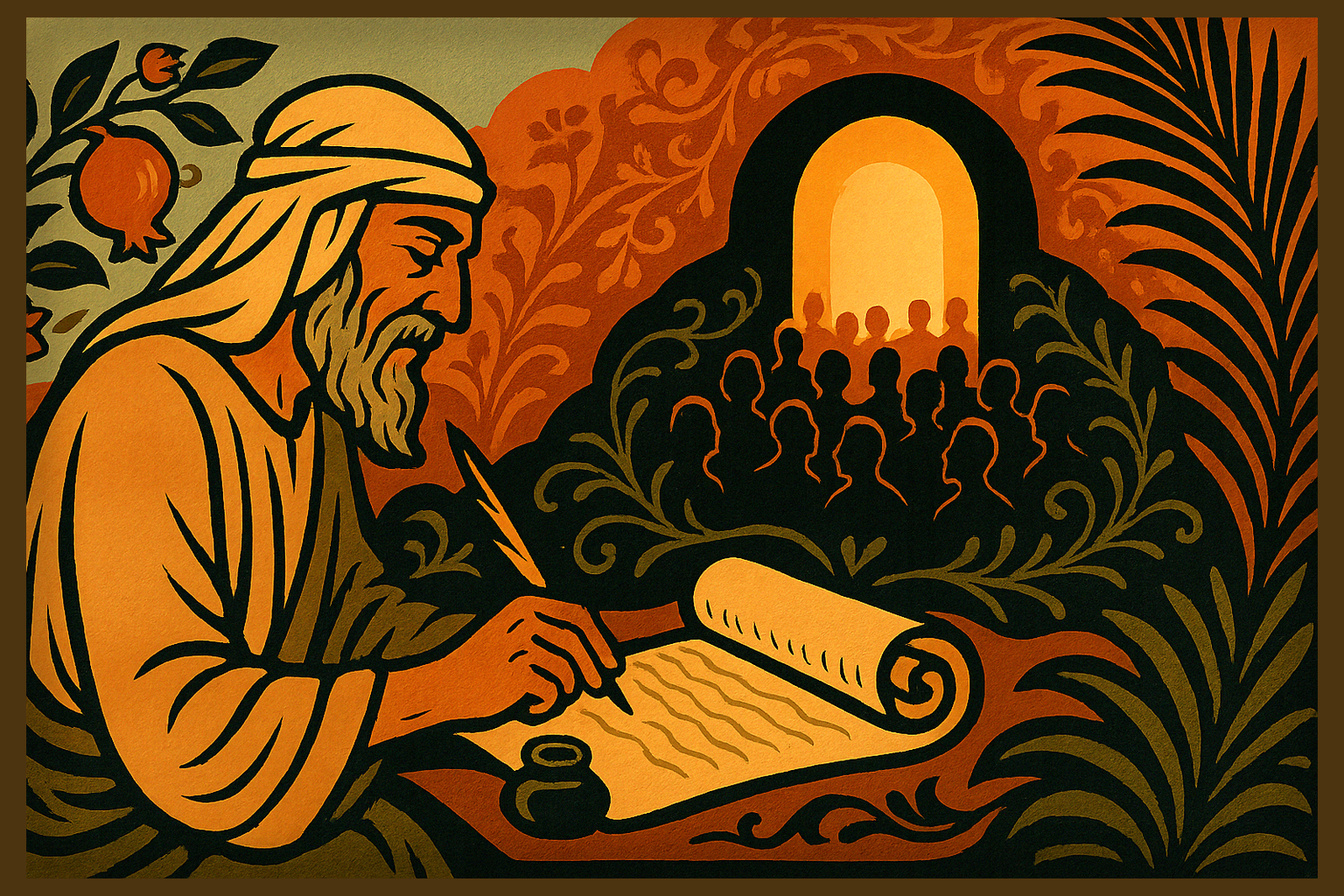
The Hebrew Bible leaves Sheol mostly undescribed, a dark pit with no real geography. Judean writers in the centuries before Jesus (YHWShA) didn't leave it that way.
Daniel 12 and the First Clear Resurrection Hope
Remember back in Psalm 88, the psalmist asking whether the dead can rise and praise God, with the clear implication of no. Daniel 12:2 answers that question directly, centuries later, with language the earlier Hebrew Bible simply doesn't have: "Many of those who sleep in the dust of the earth shall awake, some to everlasting life, and some to shame and everlasting contempt." This is a hyperlink forward from Sheol's silence into an explicit promise that the dead will rise to be judged.
Notice what's new here. Sheol was a shared, undifferentiated holding place. Daniel 12 introduces moral sorting, but crucially, it places that sorting at a future resurrection, not inside Sheol itself. The dead are "sleeping," waiting, and a day is coming when they'll be raised and separated by their deeds. This is the first unmistakable resurrection text in the Hebrew Bible, and it changes the whole shape of Judean thinking about death from this point forward.
1 Enoch's Compartments: Righteous and Wicked Held Apart
Judean apocalyptic literature (writings using vivid symbolic visions to reveal the end of history and the fate of the dead) took Daniel's seed and grew an entire architecture out of it. 1 Enoch is not part of the Hebrew Bible's canon, but it reflects how some Second Temple Judeans elaborated on Daniel's hope. Its twenty-second chapter describes Enoch being shown a mountain with hollow places inside it, compartments where the spirits of the dead are held until judgment. Some compartments hold the righteous, reportedly near a spring of bright water. Others hold sinners, already experiencing a measure of suffering while they wait. One compartment holds those who were murdered, crying out for justice against their killers, though the exact details of this scene vary somewhat across surviving manuscripts.
This is a major shift from the Hebrew Bible's single shadowy underworld. The dead in 1 Enoch aren't erased, weakened shades drifting together in one pit. They're distinct individuals, morally sorted, consciously waiting, held in a kind of in-between state before the final resurrection and judgment Daniel had promised. Second Temple Judeans were, in effect, drawing the map that Sheol never bothered to draw, filling in the geography between death and resurrection with real theological content.
2 Maccabees and the Judean Roots of Praying for the Dead
If the dead are waiting rather than simply gone, a natural question follows: can the living do anything for them?
Judas Maccabeus's Offering for the Fallen
2 Maccabees 12:39-45 tells a story that catches most readers off guard the first time they encounter it. After a battle, Judas Maccabeus and his soldiers go to collect the bodies of the fallen for burial. They find that some of the dead had been wearing amulets sacred to idols, a violation of Judean law. Judas takes up a collection, roughly two thousand silver drachmas, and sends it to Jerusalem to provide a sin offering on behalf of these dead soldiers.
The author of 2 Maccabees comments directly on why this makes sense: "if he were not expecting that those who had fallen would rise again, it would have been superfluous and foolish to pray for the dead." This is a theological argument, not sentimental ritual. Praying and offering sacrifice for the dead only makes sense if the dead still exist in some meaningful state and still have a stake in a coming resurrection and judgment.
Why This Practice Assumes Resurrection Is Coming
Trace the thread back. Daniel 12 promised a future resurrection. 1 Enoch mapped out where the dead wait for it, morally sorted, conscious, in hope or in dread. 2 Maccabees takes the next logical step: if the dead are waiting for resurrection, the living can still act on their behalf, can still address their situation before the judgment arrives. The practice of praying for the dead isn't a late Christian invention layered onto the Bible. It's a direct outgrowth of Second Temple Judean eschatology (Judean beliefs about the end of history, judgment, and resurrection in this period), showing up in Judean literature roughly a century or more before there is a church to call it doctrine, written sometime in the latter half of the second century BC.
This is the piece most people miss entirely when they argue about whether praying for the dead is "biblical" or "Catholic invention." It's Judean, predating both labels, built on the resurrection hope Daniel introduced and the compartments 1 Enoch described.
From Judean Hope to Communion of Saints
This is where the whole trail comes together, and where Halloween's actual name starts making sense.
The Living and the Dead as One Family Under YHWShA
Early Christians didn't invent the conviction that the dead are waiting rather than gone, or that the living and the dead remain bound together in hope. They inherited it from the Second Temple Judean world we've traced: Daniel's resurrection promise, 1 Enoch's compartments, 2 Maccabees' intercession for the fallen. What Christians added was a center of gravity. The waiting of the dead and the hope of the living were now both anchored in one specific event: the resurrection of Jesus. YHWH himself entered death and walked out the other side. That event is the proof that bodily resurrection isn't a future theory but an accomplished fact, already begun in him.
This is what the phrase "communion of saints" originally names: the conviction that believers who have died and believers still living remain one family, united by a shared hope that death has not severed. All Saints Day, and the eve that became Halloween, grew directly out of this conviction: a day set aside to remember that the dead in Jesus are not gone, only waiting, exactly as Daniel and 1 Enoch had insisted centuries earlier.
Resurrection as the Real Answer to Halloween's Question
Here's the pattern worth carrying with you past October. Halloween's fascination with the boundary between living and dead isn't a pagan intrusion that Christians need to either baptize or condemn. The boundary itself is the oldest question in the Bible, the one Sheol raised and never answered, the one Saul tried to force open at Endor and was rebuked for forcing. Second Temple Judaism answered it with waiting, with compartments, with intercession. Christianity answered it with resurrection: not a way to talk to the dead, but a promise that death's boundary itself gets undone.
That's a sharper, stranger, and far more hopeful answer than either "Halloween is Satanic" or "Halloween is harmless." It's an answer built on a body raised from a grave, not a candle lit at a window.
What Does the Bible Say About Halloween
So what does the Bible say about Halloween? The Hebrew Bible gives us Sheol, a shared shadow for everyone, not a courtroom. It gives us a ban on necromancy rooted in covenant loyalty, not skepticism about spirits. It gives us a medium at Endor who genuinely raises Samuel, and a king who learns, the hard way, that judgment belongs to the Lord alone no matter which door you knock on. Second Temple Judeans took that unfinished picture and built Daniel's resurrection hope, 1 Enoch's compartments, and 2 Maccabees' prayers for the fallen, roughly a century or more before there was a church to call any of it Catholic.
All Hallows' Eve inherited that whole structure, then re-centered it on YHWH himself walking out of the grave in the flesh. The question Halloween was built to mark was never fundamentally about costumes or candy. It was about whether death gets the last word, and the biblical answer, traced from Sheol to the empty tomb, is no.
A Close Reading
A close reading of the passage through Story, Symbol, and Praxis.
Want to read the passages behind this article in their original language?
Read the Greek and Hebrew behind this passage yourself, verse by verse, through the same scholarly lenses as Babel Report.
Explore Babel Lens →babellens.aiMore in mystery


Explore the full gallery of essays and meditations
Browse the Collection