What Sin Means: Hebrew and Greek Reveal More Than "Missing the Mark"
What is sin in the Bible? Trace chata, pesha, awon, and hamartia to find the biblical definition of sin as missed purpose and broken loyalty.
Ask most people what sin means and you will get the same answer almost every time. Breaking a rule. Something on a list, somewhere, got violated. That definition is not wrong exactly, but it is thin. It flattens three thousand years of careful Hebrew and Greek vocabulary into a single flat idea, and it leaves most readers unprepared for what the biblical authors are doing when they use the word.
The biblical definition of sin does not come from one term. It comes from a cluster of Hebrew words, each doing its own specific work, picked up later by Greek writers who knew exactly what they were inheriting. Trace the vocabulary and you find sin described as missed purpose, as political betrayal, as a warped internal structure. Put them side by side and a picture emerges that is more relational and more vocational than "rule-breaking" ever captures.
Why the Bible Needs More Than One Word for "Sin"

Open a Hebrew concordance and look up every place English Bibles use the word "sin," and you will find yourself staring at a pile of different Hebrew terms. Scholars count roughly twenty distinct Hebrew words that eventually get funneled into this one English term. That pile is a clue.
The English Word "Sin" Flattens Three Different Hebrew Words
Three words carry most of the weight in the Hebrew Bible: chata, pesha, and awon. English translators, working with a language that has one common word for wrongdoing, collapse all three into "sin" most of the time. That choice is understandable. English readers need something consistent to follow across a long book. But it hides a distinction the original authors built in on purpose.
Notice what happens by the time these words reach Greek. In the Septuagint, the Greek translation of the Hebrew Bible made a few centuries before Jesus (YHWShA), nearly all of this vocabulary gets funneled into one Greek word: hamartia. That tells you something about how fluid and overlapping these terms had become by the Second Temple period, the centuries roughly between the return from Babylonian exile and the fall of Jerusalem's temple in AD 70. The Greek word is doing the work of absorbing an entire Hebrew vocabulary of wrongdoing.
Why Vocabulary Choices Are Literary Choices
Ancient Hebrew authors were not sloppy. They picked words the way any careful writer picks words, for precision and effect. When a prophet reaches for pesha instead of chata, that is a literary choice, and it is signaling something to an audience that would have heard the difference immediately.
This is a pattern worth noticing early, because it changes how you read everything that follows. Sin in Scripture is not one idea wearing different masks. It is several distinct metaphors, stacked together, each contributing something the others do not.
Chata: The Archer Who Missed the Target
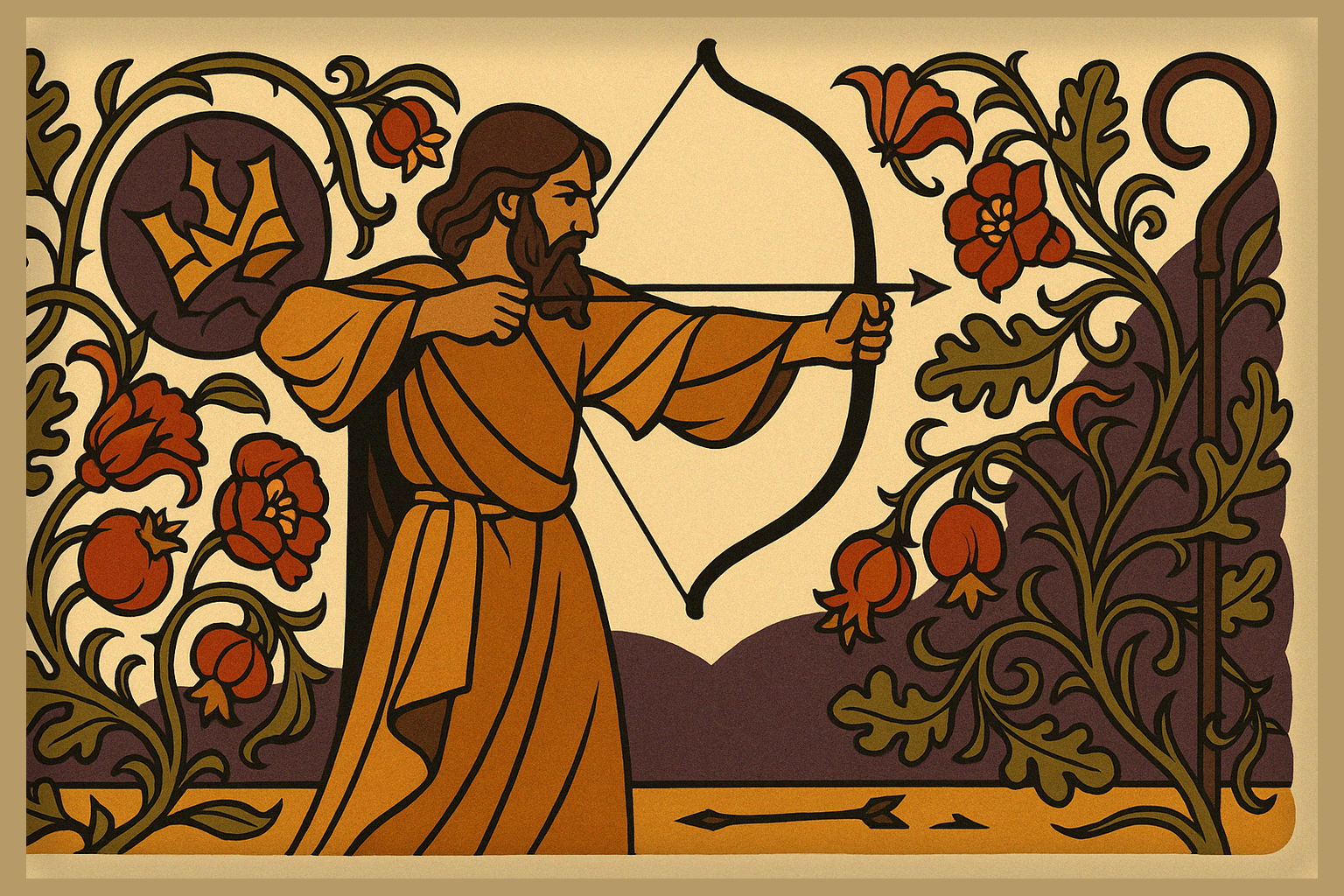
Start with the most common Hebrew word, chata, because it gives you the clearest physical picture of all three.
The Physical Picture Behind the Word
Chata is an archery term. It describes an arrow that failed to reach its target, that fell short or veered off course. You can see this everyday, non-moral use of the word in Judges 20:16, where a group of left-handed soldiers is described as able to sling a stone at a hair "and not miss." That is chata, used with zero spiritual weight at all. It is simply the word for failing to hit what you aimed at.
This is the root picture behind the most frequent Hebrew word for sin, and it should reshape how you hear it. Chata is not primarily a courtroom word about crossing a line someone drew. It is a word about falling short of a purpose. An archer who misses the target has not necessarily broken a law. He has failed at the thing he was trying to accomplish.
What Missing the Mark Assumes About the Target
An arrow can only miss a target that already exists. Missing assumes a mark was there to be hit in the first place. You cannot talk about falling short of a purpose unless there was a purpose to begin with.
That is a significant assumption baked into the most common Hebrew word for sin. It means the biblical authors are not starting with a list of prohibitions and then measuring humanity against it. They are starting with a purpose, a target, a design for what human life was supposed to look like, and chata names the experience of falling short of that design. The rest of the Bible answers the question of what exactly that target was.
Pesha and Awon: Rebellion and a Twisted Structure

Chata gives you missed purpose. The next two words give you something sharper and, frankly, more uncomfortable.
Pesha as a Covenant and Political Term
Pesha shows up in contexts that have nothing to do with personal piety at first glance. Look at 1 Kings 12:19, where it describes Israel's revolt against the house of David. This is political vocabulary. It is the word for a vassal breaking loyalty with a king, for a subject nation throwing off the rule of its rightful sovereign.
So when the prophets pick up pesha and apply it to Israel's relationship with the Lord (YHWH), they are not softening the word into something vague like "moral failure." They are keeping its political edge intact. Amos opens his entire prophetic book with a string of nations condemned "for three transgressions, and for four" using exactly this word. He is accusing kings of treason against the true King. When this same word gets applied to Israel's sin, the accusation is rebellion against rightful rule, not a private lapse in judgment.
Awon as a Bent or Warped Condition
Awon works differently again. Its root carries the sense of something twisted, bent, or warped out of its true shape. Picture a tent pole that has warped in the sun, or a beam in a house that has bowed under weight it was never designed to carry. That is the image awon is built on.
This matters because awon describes a condition, not merely an event. It is the word a person might carry for years, the kind of distortion that settles into the structure of a life rather than existing as a single isolated act. When Psalm 51 pleads "I was brought forth in iniquity," the word is awon, and it is describing something closer to a warped state of being than a discrete choice made on a particular afternoon.
Reading the Three Words Together
Set these three words next to each other and the fuller picture snaps into focus. Chata: missed purpose, like an arrow that fell short of its target. Pesha: broken loyalty, like a vassal in revolt against a rightful king. Awon: warped condition, like a structure bent out of its true shape.
These are three angles on something far bigger than rule-breaking. Sin, in the Hebrew Bible's own vocabulary, is a failure of purpose, a rebellion of loyalty, and a corruption of condition, all at once. Keep those three pictures in your head, because Genesis 3 was written with exactly this vocabulary in the room.
Genesis 3 as a Failed Vocation, Not a Forbidden Fruit
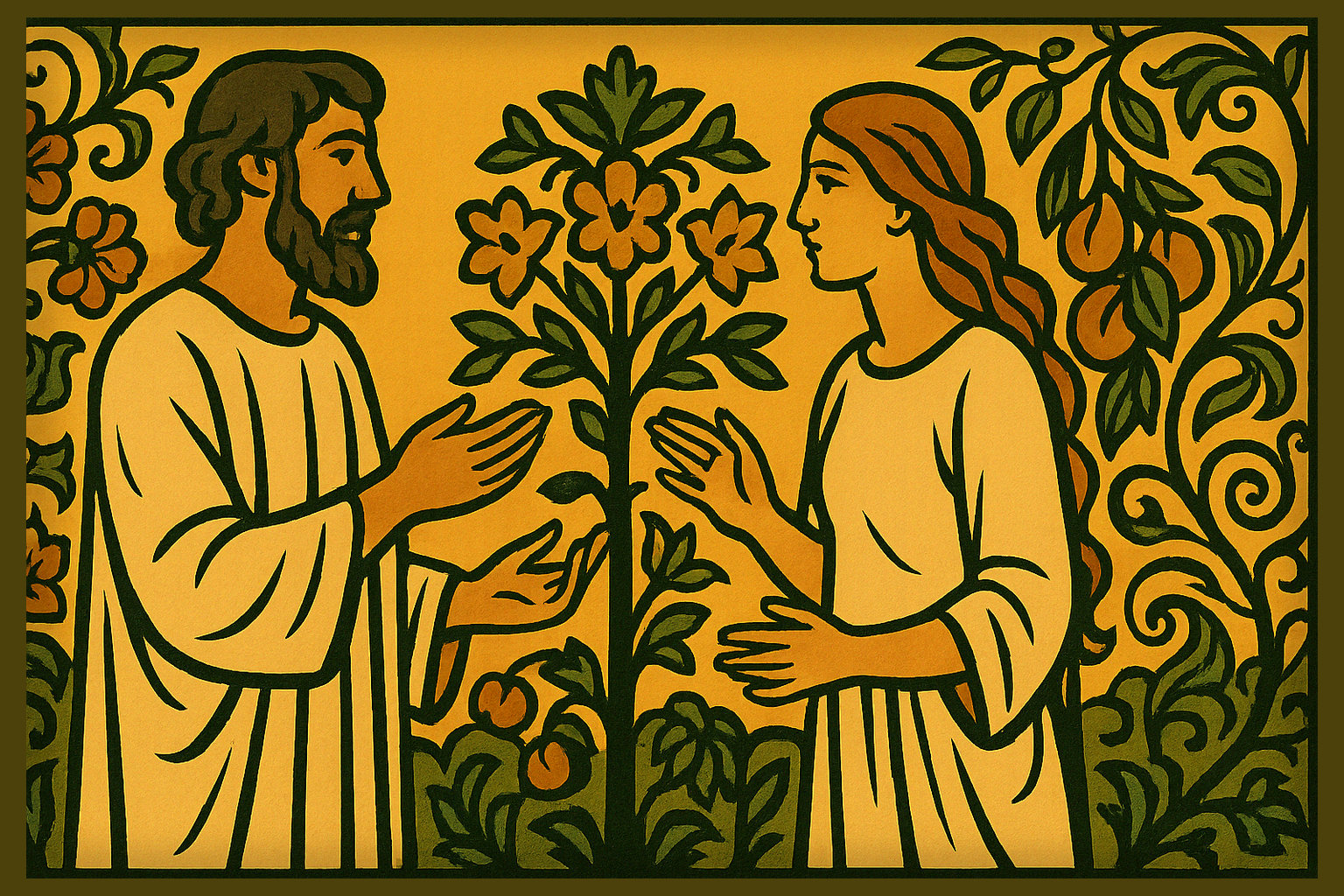
Most readers come to Genesis 3 looking for the moment a rule got broken. Watch what happens when you read it looking instead for a vocation that got abandoned.
The Vocation Given in Genesis 1 and 2
Before the serpent ever shows up, God (Alohim) has already given the humans a job. Genesis 1:26-28 places them in the world to bear his image, to represent his character and rule into creation, extending order the way he extends order. Genesis 2 puts them in the garden "to work it and keep it," language that some interpreters connect to the priestly service described elsewhere in the Hebrew Bible, though that reading is debated among scholars.
This is the target chata assumes exists. The humans were aimed at something specific from the beginning: faithful representation of God's rule over a good world. Reading Genesis 3 without this vocation in view is like reading a story about an employee's failure without ever being told what the job was. The job was image-bearing. Everything that follows has to be read against that assignment.
What the Failure in the Garden Targets
Look closely at what the serpent attacks in Genesis 3:1-5. He does not argue that the rule is unjust. He attacks the humans' trust in who God is, suggesting God is withholding something good, that God cannot be relied upon to have their best interest at heart. That is an assault on loyalty before it is ever an assault on behavior.
By the time the fruit is eaten in verse 6, the real event has already happened. The visible act, taking and eating, is the fruit of a trust that had already shifted somewhere else. This is why Genesis 3 reads less like a courtroom violation and more like the biblical pattern we traced: pesha, a loyalty transferred to another authority, expressing itself through chata, a concrete failure to hit the mark the humans were made for. The failed vocation, not the forbidden fruit, was the real event.
Hamartia: The Greek Word That Keeps the Hebrew Picture Alive
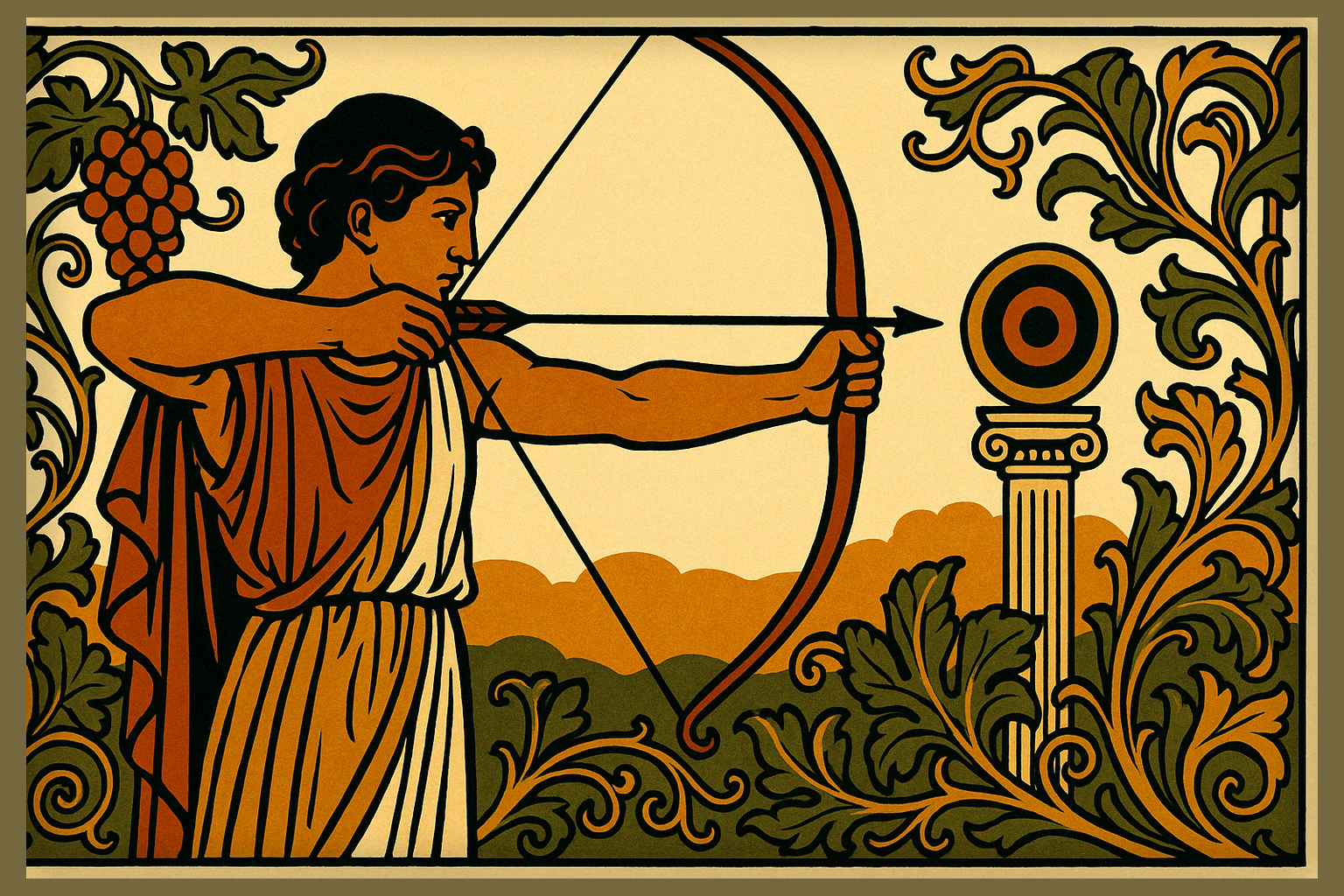
Jump forward several centuries to the Greek New Testament, and you find the same picture, not a new one.
Hamartia Meaning and Its Roots in Greek Usage
Hamartia is the primary Greek word for sin across the New Testament, and its root sense in wider Greek usage is "to miss the mark" or "to fall short," the exact archery image carried by the Hebrew chata. In secular Greek, the word could describe an archer missing a target or a speaker failing to make a point. The moral sense develops from that same physical picture.
The translators chose it on purpose. When the Septuagint translators needed Greek vocabulary to render the Hebrew Bible's vast wrongdoing vocabulary, hamartia became the default term precisely because its root meaning already matched chata so closely. The arrow imagery crosses the language barrier intact.
Why This Continuity Matters for Reading the New Testament
This continuity should change how you hear Paul and the Gospel writers. When they reach for hamartia, they are not inventing a fresh theological category disconnected from the Hebrew Bible. They are drawing on centuries of vocabulary that already carried the weight of missed purpose, broken covenant loyalty, and warped condition.
The biblical authors invite us to read the New Testament's sin-language as the continuation of a single story, not a reset. Paul did not learn a new word for wrongdoing when he started writing Greek letters. He inherited an old word loaded with Hebrew meaning, and he uses it with that full weight intact.
Paul's Sin as Ruling Power in Romans
Nowhere is that inherited weight more visible than in Romans, where Paul does something most modern readers do not expect: he talks about sin almost like it has a personality.
Romans 1 and the Exchange of Glory
Romans 1:21-23 describes a trajectory, not a single bad decision. Humanity knew God, Paul says, but did not honor him as God, and their thinking became futile. The result is an exchange: they traded "the glory of the immortal God for images" resembling created things. This is the vocation of Genesis 1 inverted. Instead of reflecting God's glory into creation as his image-bearers, humanity hands that glory over to the created order itself.
This is sin as idolatry at the level of worship, and it is also sin as a corrupted vocation. The job was representation. Romans 1 describes that job collapsing, worship flowing toward the wrong object, truth suppressed rather than honored. It is Genesis 3's failed loyalty, written out at civilizational scale.
Sin as Power in Romans 6 and the Language of Slavery
By Romans 6, Paul's language shifts further still. He talks about being "enslaved to sin," about sin "reigning" in mortal bodies, about presenting yourself as a slave either to sin or to righteousness. This is not bookkeeping language for a tally of bad deeds. It is the language of a governing authority, an occupying power that has to be overthrown rather than merely forgiven one incident at a time.
Paul uses sin here as something closer to a hostile ruling force than the sum total of individual wrong acts. The sin-offering ultimately judges and condemns this power in the flesh, right at the point where human failure had been concentrated. That reframing matters enormously for how Jesus's death gets understood. If sin is only a list of violations, you need a system for erasing entries. If sin is a ruling power that has hijacked humanity's vocation, you need something closer to a liberation, a change of allegiance from one kingdom to another. Paul is building toward exactly that argument.
Jesus and the Condition of the Heart
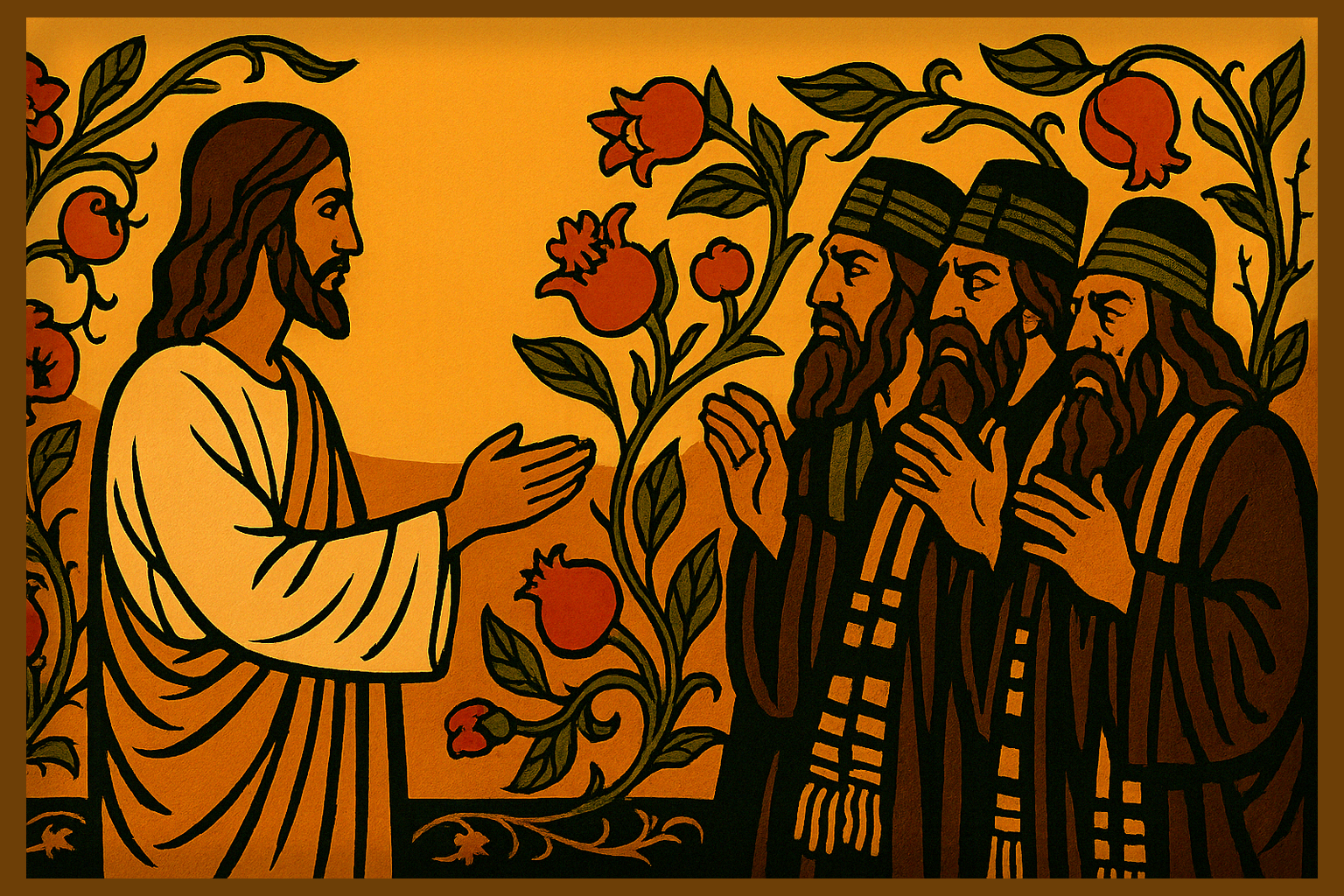
If Paul relocates sin from a tally of deeds to a ruling power, Jesus relocates it from behavior to the heart's allegiance, and he does it in a single, pointed exchange with the religious leaders of his day.
Mark 7 and What Defiles a Person
In Mark 7:14-23, Jesus is confronted about ritual handwashing, a practice tied to purity regulations. His answer goes somewhere nobody expected. Nothing outside a person that goes in can defile him, he says. What comes out of a person, from the heart, is what defiles: evil thoughts, theft, murder, adultery, deceit, envy, pride.
Notice what Jesus does not do here. He does not expand the purity code or draft an additional list of behaviors to monitor. He points underneath behavior entirely, to the heart as the source from which all of it flows. Jesus locates sin where the Hebrew vocabulary had been pointing all along, in awon's warped condition rather than only in chata's missed action.
Sin as Allegiance, Not Action
Jesus's teaching invites a reader to ask a sharper question than "which rule did I break." The question becomes: who or what commands my loyalty? That is the same pesha language the prophets used centuries earlier, now turned inward and personal. Rebellion against rightful rule was never only a national or political category. It is what happens in a single human heart that has quietly shifted its allegiance away from the King it was made to represent.
This is why Jesus so often diagnoses sin in terms of treasure, masters, and kingdoms rather than violations. "No one can serve two masters." "Where your treasure is, there your heart will be also." The vocabulary has changed from Hebrew to Aramaic to Greek across a thousand years, but the underlying architecture has not moved. Sin is missed purpose, broken loyalty, and warped condition, converging in the human heart.
Put the whole trajectory together and you can see why reducing sin to rule-breaking leaves so much of the biblical story unexplained. Chata names a missed purpose. Pesha names a broken loyalty to a rightful King. Awon names a warped condition running underneath behavior. Genesis 3 shows all three happening together in a failed vocation, not in a bitten fruit. Paul shows sin functioning as a power that has hijacked that vocation at scale. Jesus shows sin as a question of allegiance settled in the heart long before it ever shows up in an action.
Sin, biblically speaking, is the experience of an arrow falling short of the target it was made for, the betrayal of loyalty to a rightful King, and the slow warping of a life's true shape. Understanding sin in the Bible this way does not make the category easier to dismiss. It makes it harder to flatten into a simple list, and it makes the solution offered in Jesus look less like a pardon for infractions and more like a King restoring exiled subjects to the job they were always meant to do.
A Close Reading
A close reading of the passage through Story, Symbol, and Praxis.
Want to read the passages behind this article in their original language?
Read the Greek and Hebrew behind this passage yourself, verse by verse, through the same scholarly lenses as Babel Report.
Explore Babel Lens →babellens.aiMore in salvation



Explore the full gallery of essays and meditations
Browse the Collection