Why I Pronounce God's Name Yahuwah
The prophets' names carry Yahu, Judah's name holds YHWH plus one letter, and Josephus called it four vowels. Here is why I pronounce God's name Yahuwah.
Later Jewish tradition remembered a sound. On the Day of Atonement, the high priest spoke the name of God (Alohim) aloud in the Temple court, and the priests and people standing there fell on their faces. A priest's son named Josephus grew up in that city. Decades later he wrote that the name engraved on the high priest's gold plate was made of four vowels. He never wrote down how it sounded.
In AD 70 the Temple burned. What came through the fire were four letters, יהוה, with no vowels attached.
I pronounce God's name Yahuwah. I did not arrive there by following a teacher or a movement. I arrived there by listening for the sound that survived, in the Hebrew names of Scripture, many of which carry part of the divine name inside them.
You might not land where I have landed. I would only ask that you weigh each piece of evidence honestly and see whether the case for saying Yahuwah holds together. I think it does.
Key Takeaways
The four Hebrew letters of the divine name, יהוה, have come down to us without their original vowels. That leaves every reader with a choice, and most people make it without knowing they have made one.
- Start with the names, not the footnotes: Hebrew personal names preserved pieces of the divine name in ordinary speech long before anyone added vowel marks to the text.
- Hear the prophets out: Isaiah, Jeremiah, and Elijah were Yeshayahu, Yirmeyahu, and Eliyahu, and each name ends in Yahu.
- Look twice at Judah: יהודה (Judah) and the divine name יהוה differ by a single letter, the Dalet.
- Take Josephus at his word: A first-century Judean priest described the name on the high priest's gold plate as "four vowels."
- Read the oldest scrolls as they are: The Dead Sea Scrolls write the name with no vowel marks at all.
- Hold the conclusion with open hands: None of this settles the matter for good, and it does not need to in order to be a sound reason.
Behind all of it sits a simpler question: what it means to call on a name the Creator Himself called His memorial.
Where the Evidence Should Start
Most of the confusion around this question comes from starting in the wrong place.
Consider two people trying to recover how a great-grandfather pronounced the family surname. In the first case, the searcher opens a reference book compiled long after the old man died, by editors who never heard him speak. In the second, the searcher sits down with the old man's grandchildren and listens to the names they still answer to, names that were handed down mouth to ear. Both searchers are sincere. Only one is listening to the sound itself.
Now, which of those two would you trust more?
Why I Do Not Begin With the Medieval Vowel Marks
Hebrew was originally written with consonants only. Readers supplied the vowels from memory and from use, the way an English reader knows how to say "Mr." without being told. Between roughly the seventh and tenth centuries AD, a group of Jewish scribes known as the Masoretes added a system of dots and dashes to preserve the reading tradition. Our oldest complete Hebrew Bible, the Leningrad Codex, dates to AD 1008.
When those scribes came to the four letters of the divine name, they did something different. By that time, reverence had led readers to avoid saying the name aloud, so they substituted Adonai, which means "my lord." The scribes placed vowel marks on יהוה that signaled the reader to say that substitute word. The marks were a reminder of what to say instead.
That practice was born of reverence, and I do not mock it. It does mean the medieval vowels on the name cannot tell us how Moses or Isaiah said it. When European readers later combined the consonants of the name with the vowels meant for Adonai, the result was "Jehovah," a word no ancient Israelite ever spoke. Most English Bibles chose another route and printed the name as LORD in small capitals, so that the Lord (YHWH) of Israel's covenant became, on the page, a title rather than a name.
So I set the vowel marks aside as a starting point. They are a record of a later tradition. They are not a recording of the earlier voice.
The Prophets Carry Yahu in Their Names
Here is where the grandchildren come in. Look at the Hebrew names of three prophets whose books and stories most Christians know well.
- Isaiah is Yeshayahu (ישעיהו), "Yahu is salvation."
- Jeremiah is Yirmeyahu (ירמיהו), "Yahu lifts up."
- Elijah is Eliyahu (אליהו), "my God is Yahu."
All three end in the same three letters, יהו, which are the first three letters of the divine name. That ending is a short form of the name, and it is old. It appears in Hebrew names written centuries before anyone added vowel marks to the text. Hezekiah was Chizqiyahu. Zechariah was Zekaryahu. Obadiah was Obadyahu. The list runs long.
When the Masoretes pointed those personal names, they gave the ending the sound "yahu." The same scribes who covered the full name with a reminder to say Adonai left the short form of the name audible in hundreds of places. In the proper names, the sound was never hidden.
What a Short Form Can Tell Us
Think about how short forms work in ordinary life. A woman named Alexandra goes by Alex among her friends. If the full name were lost and only the short form survived, you would still know with some confidence how the full name began. You would not know how it ended, but you would not be starting from nothing.
Yahu is to יהוה what Alex is to Alexandra. It tells us how the first three letters sounded in the mouths of people who carried them every day. Y-H-W, said aloud, comes out as Yahu.
The same short form turns up outside the Bible. In the fifth century BC, a colony of Judeans living on the island of Elephantine in Egypt wrote letters and contracts in which they referred to their God as יהו, the three-letter form. They wrote it without vowels too, but it shows the short form was in common use far from Jerusalem.
I want to be careful here. We cannot know exactly how each prophet's name sounded, and pronunciation shifts over centuries. But the same three letters keep appearing at the end of name after name, and that steady repetition is worth hearing. A pattern repeated across hundreds of names is evidence.
There is one more name that belongs on this list. The Hebrew name of Jesus (YHWShA), Yahusha, begins with that same Yahu and joins it to the word for deliverance. When the angel told Joseph to give the child this name "for he shall save his people from their sins" (Matthew 1:21, KJV), the name itself declared who was doing the saving. Exodus 23:21 says of the messenger who would lead Israel, "my name is in him." The name of the Messiah is Yahu who saves, because He is Yahuwah come in the flesh to do what His name had always promised.
Judah: God's Name Plus One Letter
The second piece of evidence is so simple that many people read past it for years. Set two Hebrew words side by side.
- The divine name: יהוה (Y-H-W-H)
- Judah: יהודה (Y-H-W-D-H)
The only difference is one letter, the Dalet (ד), sitting in the fourth position. Take it out of Judah and you are left with the divine name, letter for letter.
Notice that Scripture ties Judah's name to the divine name from the moment it is given. When Leah bore her fourth son, she said, "Now will I praise the LORD," and she called the boy Judah (Genesis 29:35, KJV). The child was named in an act of praising the Name, and his name carries it nearly whole.
If Judah was pronounced Yahudah, as I suspect it was, then removing the Dalet gives you Yahuwah. The "da" drops out and the sounds around it close together. Yahu-dah becomes Yahu-wah.
What This Does and Does Not Prove
The match does not prove the pronunciation, and I would be uneasy with anyone who claimed it did. The letters alone cannot tell us the original vowels of Judah's name. The Masoretic tradition reads it Yehudah, and the Greek translators wrote Iouda.
Place it next to the prophets, though, and it gains weight. In the first set of evidence, the short form Yahu survives inside personal names. In the second, nearly the whole divine name survives inside the name of a tribe. The two point in the same direction. Neither one stands alone, and neither needs to.
The people who came from Judah were called the Yahudim, the Judeans. Writers in the Hebrew roots tradition have long pointed out that the nations around them knew them as the people who bore the name of Yah. Every time a Judean said who he was, he was saying something close to the name of his God.
A whole people carried the Name in the word they used for themselves.
A First-Century Witness: Josephus and the Four Vowels
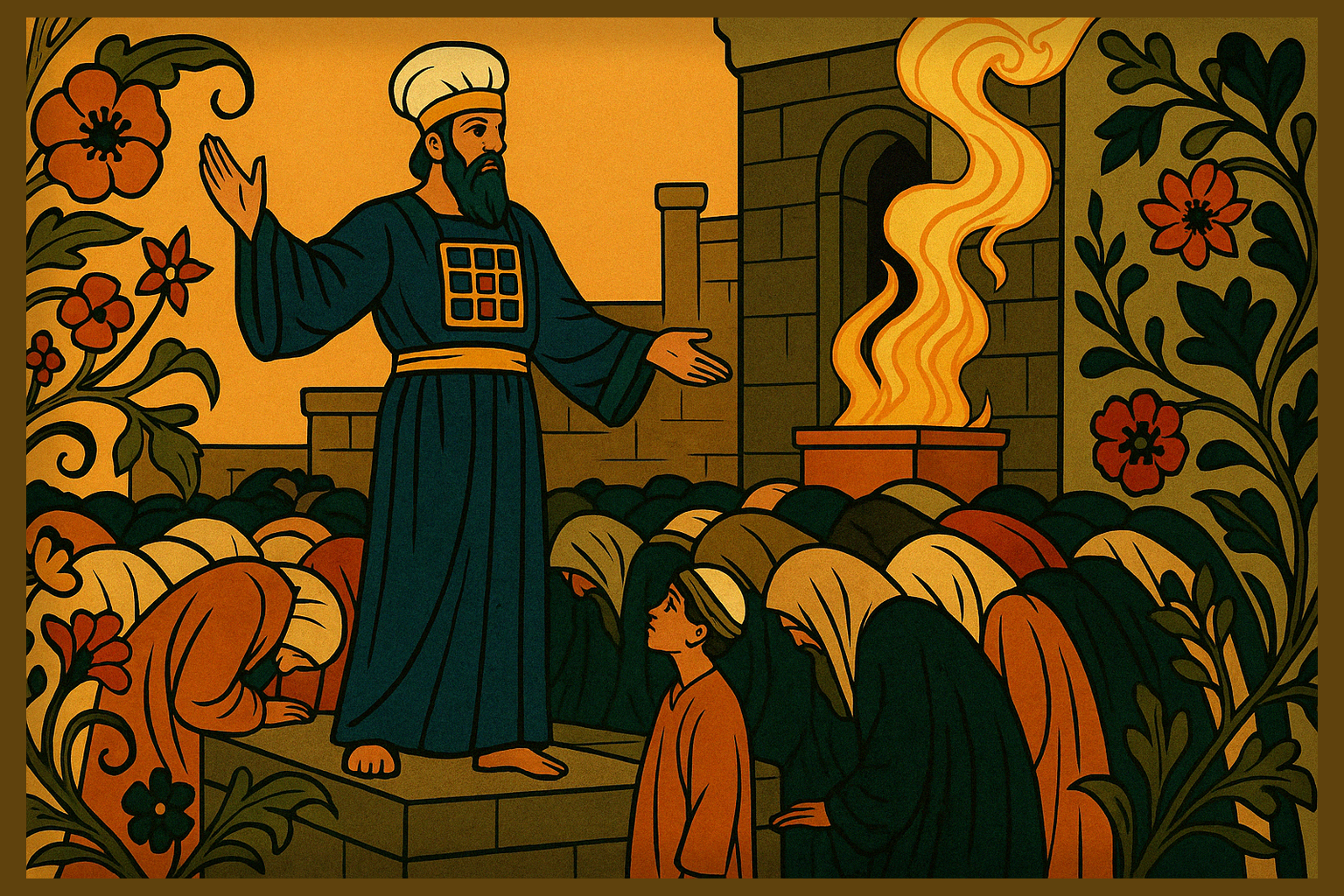
The third witness comes from someone who stood close to the Temple before it fell. Josephus was a first-century Judean historian, born into a priestly family in Jerusalem around AD 37. He would have seen the high priest in his garments with his own eyes.
In The Jewish War (5.235), Josephus describes the gold plate on the high priest's head, the one Exodus 28:36 commands to be engraved "HOLINESS TO THE LORD" (KJV). He says the sacred name was engraved on it, and that this name consists of "four vowels" (φωνήεντα τέσσαρα).
Josephus wrote that sentence roughly nine centuries before the Leningrad Codex existed. He does not tell us how the four letters sounded, and he might have been deliberately reticent, as many priests of his day were. But he is an early witness, he was a priest, and he calls all four letters vowels.
Why Four Vowels Matters
In Hebrew, three letters do double duty. The Yod, the He, and the Waw can stand for consonants, but they also serve as vowel markers, signaling the sounds "ee," "ah," and "oo" or "oh." Scholars call them "mothers of reading." The divine name is made entirely of those three letters.
A name built only from letters that carry vowels is a name built to be breathed. Yod gives the "ya." He gives the breath of "h." Waw gives the "u" and, when it moves into the final syllable, the "w." The last He gives the closing "ah." Read with the letters doing their vowel work, יהוה comes out close to Ya-hu-w-ah.
Josephus does not hand us that pronunciation. What he does is confirm, from inside the priesthood and before the Temple's fall, that the name was understood as four vowel letters. That fits Yahuwah well.
The Oldest Scrolls Leave the Vowels Open

The fourth piece is less a clue than a clearing of the ground. The Dead Sea Scrolls, copied between roughly the third century BC and the first century AD, are a thousand years older than the medieval vowel system. They spell the divine name יהוה, with no marks at all.
In some of the scrolls, the scribes did something striking. The Great Psalms Scroll from Cave 11, for example, is written in the square Hebrew script of its day, but the divine name is written in the older paleo-Hebrew letters. The copyists set the name apart on the page so no reader could miss it. What they did not do was fix its vowels.
Picture two maps of the same coastline. In the first, an early surveyor walked the shore and left blank the places he had not seen. In the second, a mapmaker centuries later filled every blank with confident lines, though he never visited the coast. The second map looks more complete. The first is more honest about what it knows.
Now, if you wanted to know what the coast looked like in the surveyor's day, which map would you lean on?
That is why I do not treat medieval vowel marks as the final word on how Moses or the prophets said the name. The oldest witnesses leave the vowels open, and that leaves room for the evidence of the names.
What About Yahweh and Yahuah?
Two other readings have serious defenders, and both deserve a fair hearing.
Yahweh
Yahweh is the reading most scholars favor today, and it appears in many study Bibles and textbooks. It rests partly on Greek spellings recorded by church writers in the late second through fifth centuries, such as Iaoue and Iabe. I respect the care behind that reconstruction. But those spellings come from writers working in Greek, centuries after the Temple fell, often reporting how others pronounced the name. Greek also has no letter for the "h" sound in the middle of a word and no clean way to write a "w."
It seems to me that Yahweh also loses the one sound the Hebrew names kept alive. The prophets said Yahu. Yahweh has no "hu" in it at all. If the short form tells us how the name began, a reading that drops that sound has some explaining to do.
None of this means people who say Yahweh are dishonoring the Creator. They are making a reasoned choice from the evidence they find most persuasive. I am making a reasoned choice too, from different evidence.
Yahuah
Many in the Hebrew roots tradition say Yahuah. They point out that Hebrew has no true "w" sound in the English sense, that the Waw functions as a "u," and that the name draws on the root הוה, "to become" or "to exist," which echoes the "I AM THAT I AM" of Exodus 3:14. I find much of that argument persuasive, and it reaches the same Yahu that the prophets' names preserve.
Try this. Say "Yahu-ah" slowly, then say it at the speed of ordinary speech. As your lips move from the "u" toward the "a," they round and release, and a "w" forms whether you intend it or not. Yahuah and Yahuwah are much closer in the mouth than they look on the page.
So I would suggest the difference between those two readings is mostly one of spelling. Yahuwah writes down the glide that the mouth produces anyway, and it lets the Waw do what Hebrew letters in the middle of a word naturally do, which is carry the voice from one vowel to the next. I say Yahuwah because I want the spelling to match what I hear when the name is spoken.
The Name and the Covenant
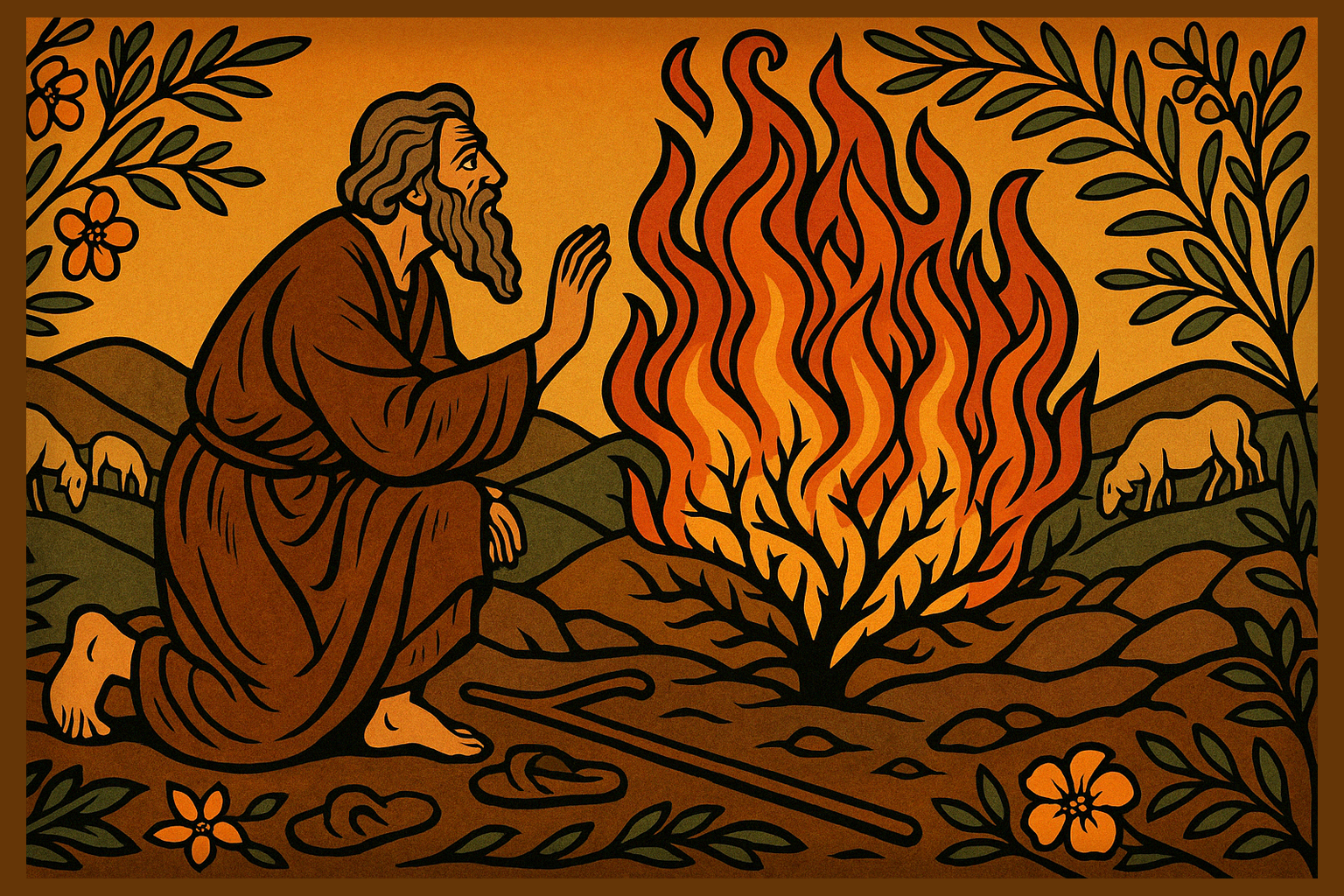
All of this could be treated as a puzzle for linguists. Scripture will not let it stay there, because in the Bible a name is the handle by which a relationship is held.
When Moses asked what he should tell Israel, the answer was a name. The God of Abraham, Isaac, and Jacob made Himself known as a person who could be called upon, the one who would bring His people out of Egypt and keep His promises to their fathers. The exodus was the act that gave that name its meaning. To say the name was to recall what He had done.
That is why the daily prayer of faithful Israelites, the Shema, centers on the name. "Hear, O Israel: The LORD our God is one LORD" (Deuteronomy 6:4, KJV). In the Hebrew it is the name itself, spoken twice. To pray those words was to pledge loyalty to the one God who had acted in history, in a world full of other gods and other lords demanding allegiance. It was a kingdom confession, made by a small people surrounded by empires.
The prophets saw what happened when the name faded. Jeremiah heard the Creator say that false prophets "think to cause my people to forget my name... as their fathers have forgotten my name for Baal" (Jeremiah 23:27, KJV). Baal means "lord" or "master." The danger was that the personal name of Israel's covenant partner would be swapped for a generic title any god could wear.
Even the translators of the King James Version felt the weight of this. In Psalm 83:18 they printed the name itself, praising the one "whose name alone is JEHOVAH," the most high over all the earth. Their vowels were borrowed, but the impulse was right. Some verses lose their meaning when the name is reduced to a title.
The Name Made Visible
For those of us who follow the Messiah, the question gains one more layer. On the night before His death, Jesus prayed, "I have manifested thy name unto the men which thou gavest me" (John 17:6, KJV). He came as that name in human form, the fullness of the Godhead dwelling bodily, Yahuwah Himself walking among His people.
Paul draws on the same thread when he writes that at the name of Yahusha every knee should bow (Philippians 2:10). He is quoting Isaiah 45:23, where it is Yahuwah who says, "unto me every knee shall bow." The knees bend to one name, because there is one God, and He has made Himself known in the face of the Messiah.
The Name I Want to Honor
The prophets carry Yahu in their names. Judah's name is God's name plus one letter. Josephus, a priest who saw the high priest's gold plate, called the four letters vowels. The oldest scrolls leave the vowels open. Together, these give me a clear and sufficient reason to pronounce God's name Yahuwah.
I know this evidence does not settle the question for good. Honest people weigh it differently, and I would rather be corrected than be stubborn. But I see no reason to set Yahuwah aside merely because another reading is more popular.
In the end, I want to call my Creator by the name He revealed, and I want to say it as faithfully as I can. That matters more to me than winning a debate about language or defending a tradition, mine included.
You could weigh the same evidence and reach a different answer. I would only invite you to weigh it, and to treat the name as something worth getting right. Exodus 3:15 says it plainly: "This is my name for ever, and this is my memorial unto all generations" (KJV).
That is the name I want to honor, and Yahuwah is how I say it.
A Close Reading
A close reading of the passage through Story, Symbol, and Praxis.
Want to read the passages behind this article in their original language?
Read the Greek and Hebrew behind this passage yourself, verse by verse, through the same scholarly lenses as Babel Report.
Explore Babel Lens →babellens.aiMore in origins


Explore the full gallery of essays and meditations
Browse the Collection