Coins Suggest Britain's King Verica Was a Woman
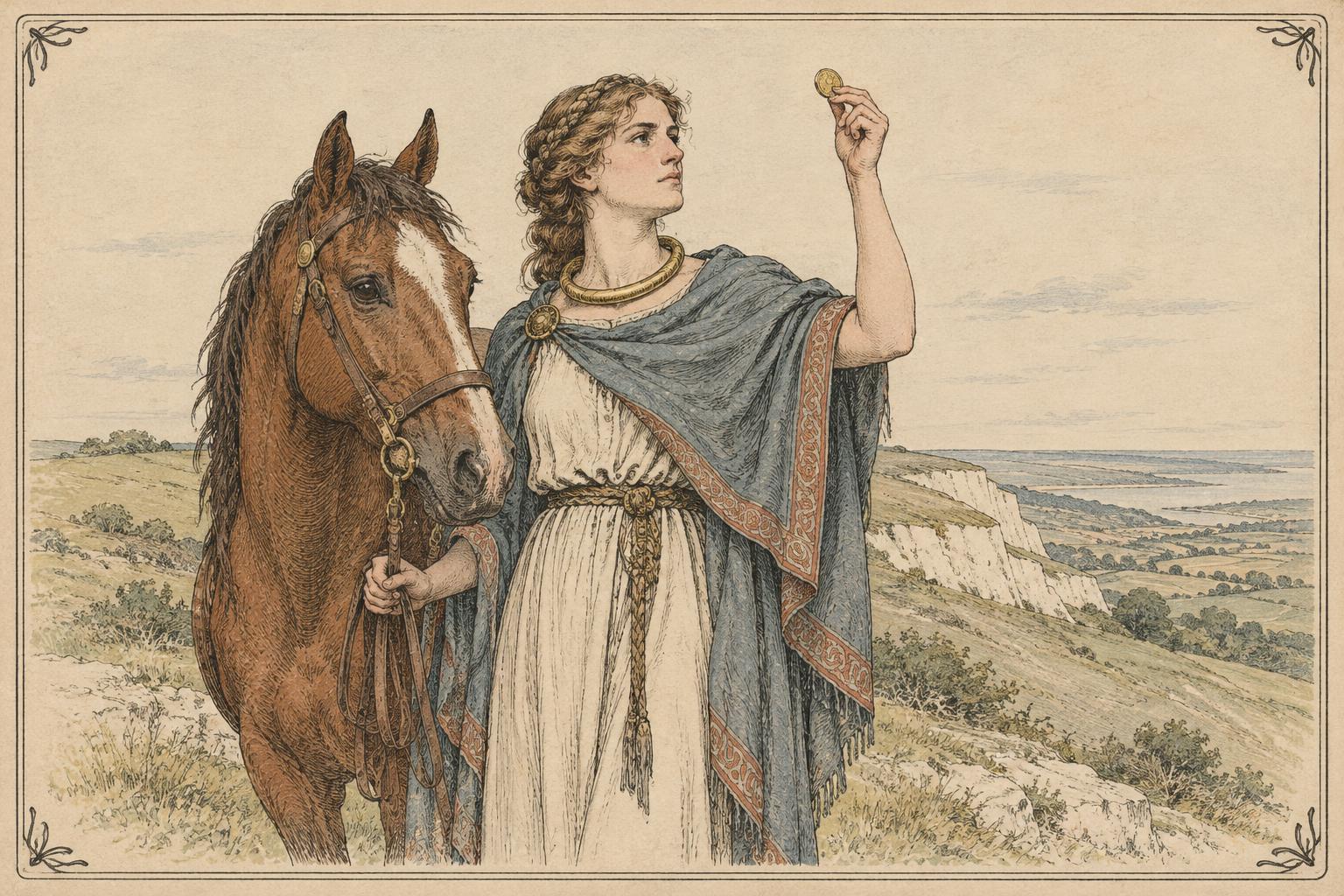
Gold and silver coins of Verica show a slender, bare-breasted rider on horseback holding a spear. The inscriptions read VIR, for Verica, and REX. Archaeologist Miles Russell of Bournemouth University says the image points to a woman, and that the ruler long called a king should be seen as a queen.
Verica ruled the Atrebates, a tribe whose lands covered much of modern Hampshire and West Sussex. Around A.D. 40 she was driven from power and fled to the Roman emperor Claudius. The Roman historian Cassius Dio wrote that she persuaded Claudius to cross the Channel. Rome invaded Britain in A.D. 43.
Russell leads the research, which appears in his new book on Caratacus and is discussed in Current Archaeology. He gives three lines of argument. The first is her name. It ends in "a," as do the names of Cartimandua of the Brigantes and Boudica of the Iceni, two other British women who held power in the same era.
The second is the title. Rex is Latin for king, but Russell says it carried no gender. Rome recognised female rulers under it, and Cleopatra is the best-known case. He adds that the word on her coins shows she ruled with the full approval of the emperor.
The third is the imagery. Other British coin-issuing rulers of the period appear as plainly male warriors. Verica does not. Russell blames the nineteenth-century classical historians who first read these coins. He says their patriarchal outlook led them to assume a man.
The finding also changes how her part in the invasion reads. Russell notes that Roman writers cast Claudius as weak and led by women and freed slaves. In his view, Dio's account of a woman talking the emperor into war fits that stereotype. He says her role went well beyond whispering. He argues she gave tactical information and support on the ground, and that the invasion gave Claudius the military success he needed.
Russell argues that Verica was more influential than Boudica, who led a revolt against Rome in A.D. 60. He says Rome may never have invaded without Verica's flight. "We should take the archaeological evidence at face value," he said. The work follows earlier Bournemouth research, involving Russell, on an Iron Age British society centred on women.
The case shows how an old reading can persist. A name ending, a Latin title and a coin portrait were all available to earlier scholars. They were read through assumptions about who could hold power, and the same objects now yield a different ruler.
Compiled from the reports below. Read the originals.
Sources
- November 4, 2026
- November 6, 2026Archaeology MagazineResearcher Argues Famous British Iron Age King Was Really a Queen