Owls, Not Diners, Left Thousands of Frog Bones in a Roman Ditch
A shallow ditch at Bar Hill, on the line of the A14 between Cambridge and Huntingdon, held a puzzling mass of tiny bones. Teams from MOLA and Headland Archaeology dug it between 2016 and 2018. La Brújula Verde puts the count at more than 9,000 bones, while phys.org gives 8,000. Nearly all came from frogs and toads.
The ditch ran about 20 meters through an Iron Age enclosure on the edge of the Fens. It held 72% of all small-animal remains from the settlement. Early ideas included a feast, a ritual deposit, a die-off in the cold or animals trapped on migration.
Zoologist Paul Clarkson of Bournemouth University saw the news and approached MOLA zooarchaeologist Vicki Ewens. Together they studied more than 1,600 bones and teeth from the original finds bags. Among the long bones, 85.9% showed damage from passing through an animal's gut. There were no cut marks and no burning.
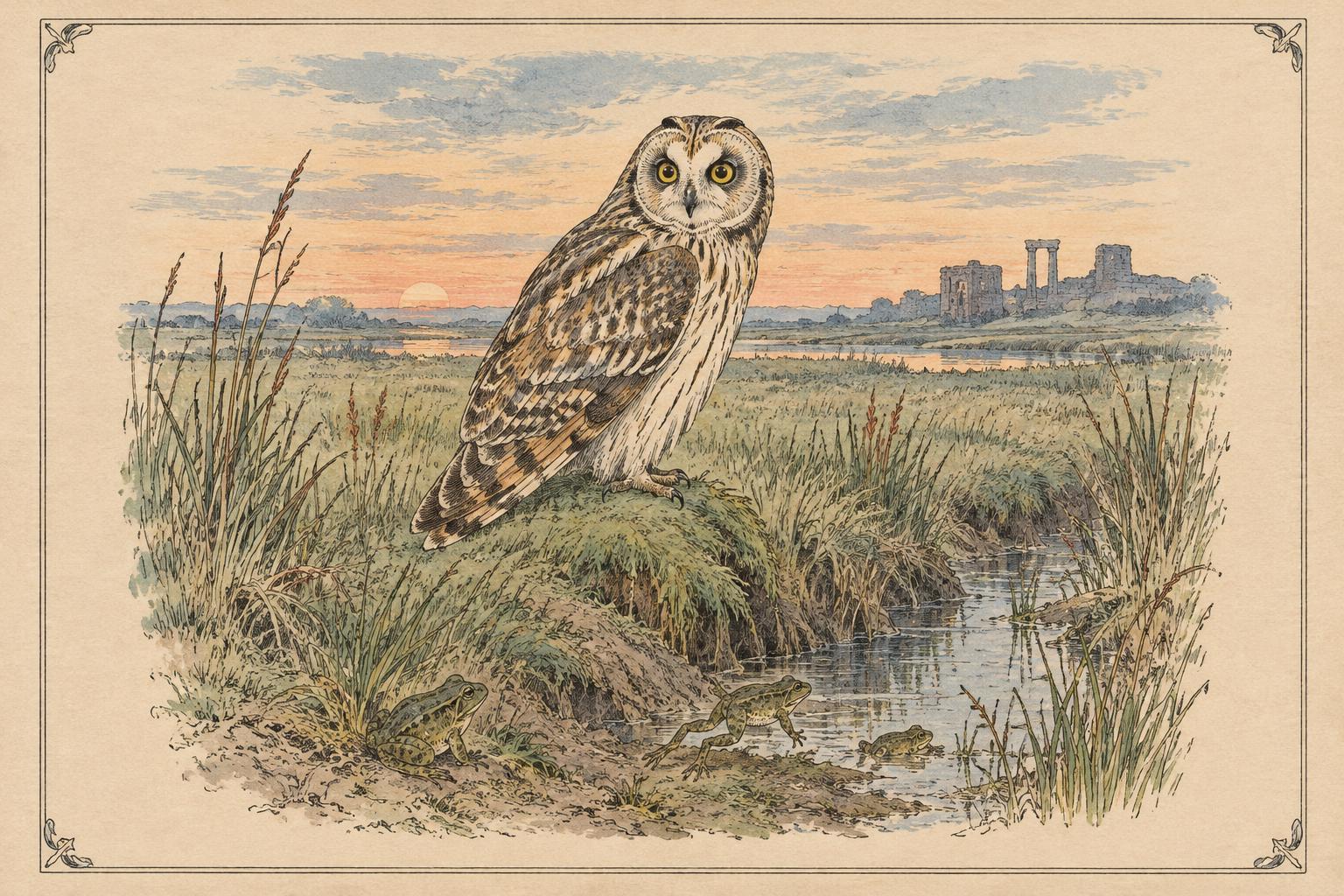
Breakage patterns narrowed the culprit. Herons, otters and snakes digest amphibians too thoroughly. Daytime raptors smash bones. Owls swallow prey whole and cough up pellets that keep fragments intact. The Bar Hill pattern matched short-eared owls. Slightly heavier digestion in some mouse and vole bones suggests hen harriers roosted there too.
Radiocarbon dates on three frog bones, run at the University of Vienna, overlap in the third century AD. The team also measured 179 arm bones. Most frogs were young and had died in their first autumn or winter, or by the following spring. With the ditch filling in one episode, the evidence fits a single winter.
The landscape explains the glut. Falling water left temporary ponds that frogs could exploit for mass breeding. Woodland had been cleared for grazing since the Iron Age, so by Roman times the area was open grass, the habitat these owls favor.
The birds also say something about people. Both species avoid disturbed ground, so this corner was probably quiet that winter. The authors think it more likely lay on a seasonal livestock route that stood empty in colder months. A second, weaker idea is that people avoided the spot for social or ritual reasons. A small cemetery with burials dated AD 200 to 410 later lay where two enclosures overlapped. The authors call that evidence fragmentary. Their model also assumes that ancient owls behaved like modern ones.
The case shows how a dramatic reading of a strange deposit can fail under close analysis. Reading bone damage and age profiles turned a supposed human act into evidence of animal behavior, and of how empty the surrounding land was.
Compiled from the reports below. Read the originals.
Sources
- November 9, 2026
- November 10, 2026