Psalm 23: Hunted by Goodness in Life's Darkest Valleys
Psalm 23 meaning from the Hebrew: Yahuah the shepherd, the valley of deep darkness, and the goodness and hesed that chase you down.
Most people meet Psalm 23 at a funeral. Someone reads it over a casket, or a chaplain whispers it in a hospital hallway, and the whole psalm gets filed away under "what you say when someone is dying." I want to push back on that, gently but firmly, because the Hebrew underneath this psalm tells a different story. The psalm 23 meaning that David wrote isn't a death-bed poem. It's a life poem, the kind of thing a shepherd-turned-king says about every valley he's ever walked, including the one he's walking right now. Once you start tracing the grammar and the word choices David makes, you find a text far fiercer, and far more useful for the living, than the greeting-card version most of us grew up with.
So let's slow down and examine what's on the page, the psalm David wrote rather than the one you've heard a hundred times.
A Shepherd Boy Before He Was a King
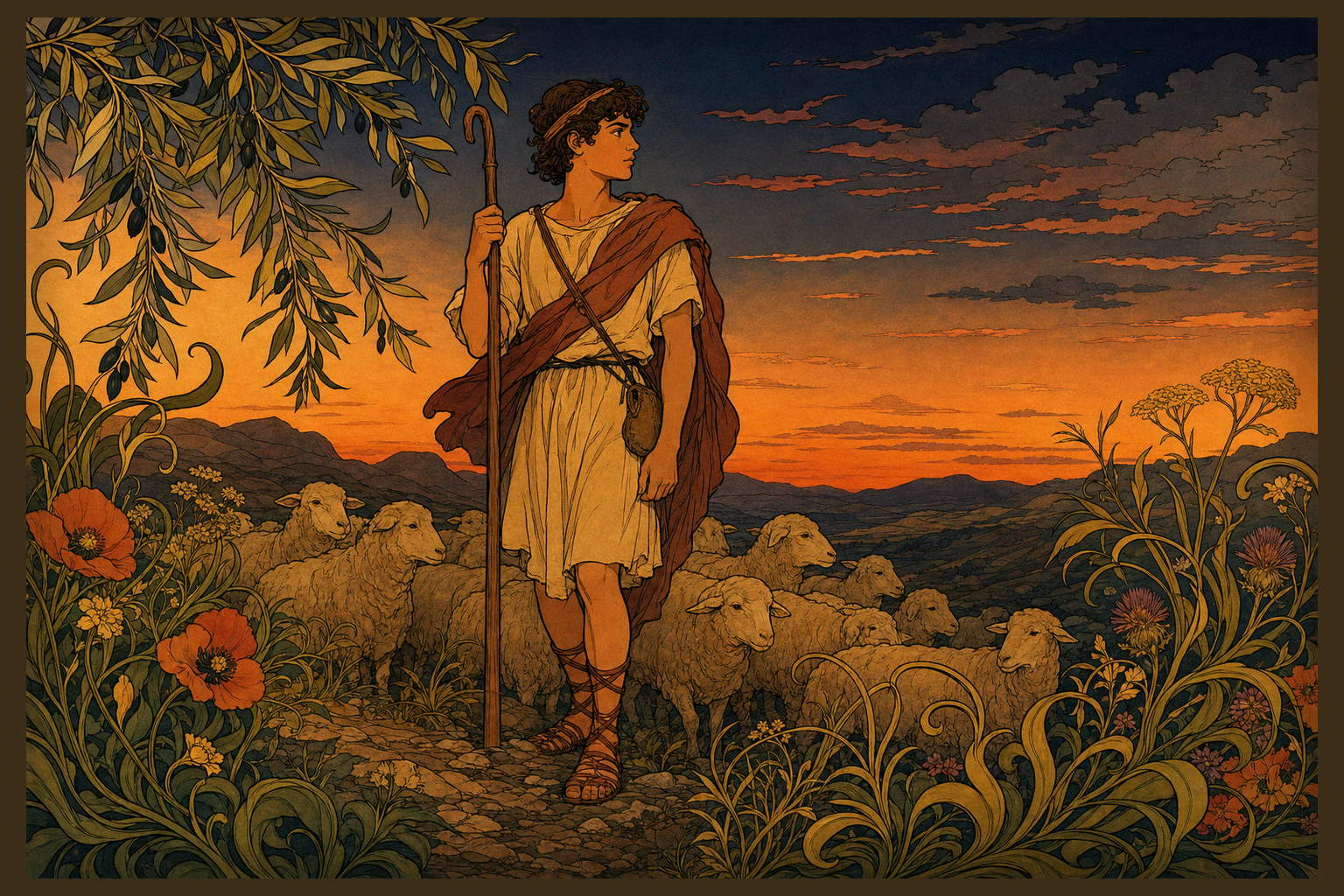
Before David could write that Yahuah (YHWH) was his shepherd, he had to spend years being the shepherd. That biography is not incidental to the psalm. It's the whole reason the metaphor has teeth.
What a Shepherd Did in the Judean Hills
Shepherding in the ancient Near East was not a peaceful job. It was dangerous, exhausting, and unglamorous. A shepherd in the Judean hills lived outside for weeks at a time, moving flocks between seasonal pastures, sleeping near the animals because predators came at night. Lions and bears show up in David's own account of his shepherding years, not as poetic flourishes but as real threats he fought with his hands (1 Samuel 17:34-36). Sheep are, by nature, defenseless. They have no claws, no speed, no camouflage. Their entire survival depends on the character and vigilance of the person watching them.
This matters for the opening line of the psalm. David isn't describing a gentle, pastoral daydream. He's describing a job that required constant readiness for violence on behalf of creatures that could do nothing to protect themselves.
Why a King Calling Himself a Sheep Is a Strange Claim
In the ancient Near East, "shepherd" was a standard title for kings. In the prologue to his law code, Hammurabi of Babylon calls himself "the shepherd, selected by the god Enlil." When Israel's tribes made David king, they reminded him that Yahuah had said, "You shall shepherd my people Israel" (2 Samuel 5:2). The prophet Ezekiel uses the same image to indict Israel's failed leaders, accusing the "shepherds" of feeding themselves instead of the flock, leaving the weak to scatter and die (Ezekiel 34). So when David writes a psalm, you'd expect him, as king, to cast himself as the shepherd of his people. Instead, David puts himself in the other position entirely. He's the sheep.
This is a reversal worth sitting with. The most dominant man in Israel, a warrior who killed a giant and built an empire, chooses the most vulnerable animal in his own kingdom as his self-description. David is telling us something about where real security comes from, and it isn't the throne. It's the shepherd standing over him.
"I Shall Not Want": A Present-Tense Claim, Not a Someday Promise
The opening line of the psalm, "I shall not want," gets read by most people as a hope for the future, something like "someday I won't need anything." The Hebrew verb David uses can describe something that is true now and keeps being true, and in context that is how the line reads. His point is "I lack nothing, right now, under this care."
That distinction changes everything about how you read the rest of the psalm. David isn't writing from a place of resolved comfort looking back on hardship. He's writing from inside the care itself, in real time, wolves and valleys included. This is a psalm about present provision, not deferred hope.
The Psalm's Hidden Hinge: When "About God" Becomes "To God"
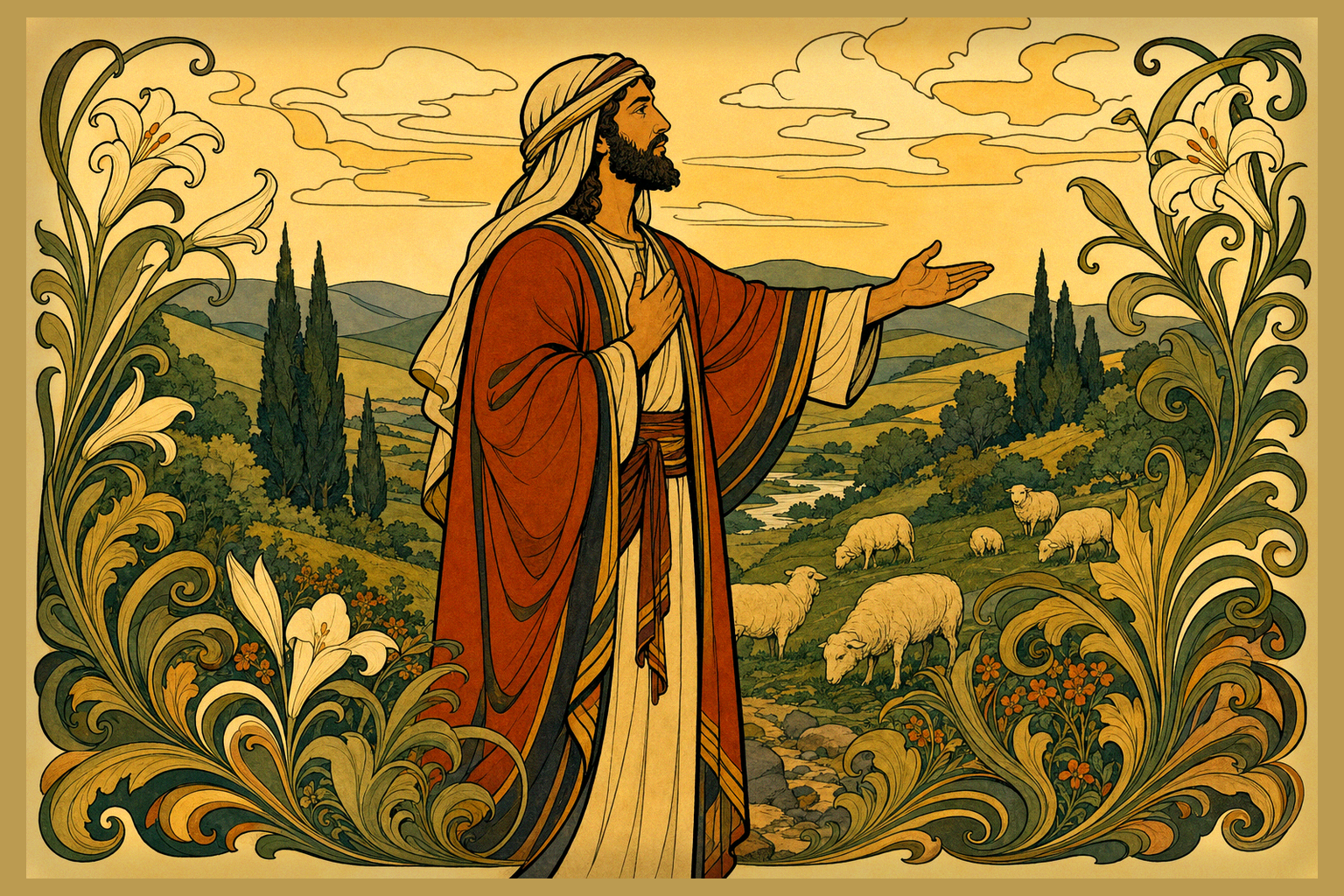
Here's the detail that almost every popular treatment of this psalm walks right past. Psalm 23 doesn't talk the same way all the way through. Something shifts in the middle, and that shift is the real architecture of the poem.
Third Person Confidence in Verses 1 Through 3
Read the opening three verses out loud and notice the grammar. "The Lord is my shepherd." "He makes me lie down." "He leads me." "He restores my soul." David is talking about Yahuah in the third person, the way you'd describe someone to a friend, calm and confident, almost like a theological statement, a settled conviction recited from a place of safety.
This is the voice of someone describing truth they know well. It's the voice of a creed, a conviction spoken from a comfortable distance. There's nothing wrong with this kind of speech. It's how most of us talk about God (Alohim) most of the time, especially when things are going fine.
The Sudden Shift to "You" in the Valley
Then verse 4 happens, and the grammar breaks open. "Even though I walk through the valley of the shadow of death, I will fear no evil, for you are with me." David stops talking about Yahuah and starts talking to him directly. The grammar moves from talking about God to talking to him.
The shift happens at the exact moment the valley gets dark. As long as David is describing green pastures and still waters, he can speak about God from a safe theological distance. The moment the darkness closes in, distance isn't good enough anymore. He needs to speak directly to the one who's there with him.
Why This Structural Turn Matters for Every Reader in a Valley
This grammatical hinge mirrors something nearly every honest person recognizes. There's a difference between knowing true things about God and needing God. You can recite "the Lord is my shepherd" at a Bible study with real conviction and still find yourself, three months later, in a hospital waiting room where the only prayer you can manage is "you, be here, right now."
The psalm is built to carry you through that exact transition, from confident theology recited about God to a desperate, intimate cry addressed to him. If you've ever felt your prayers change shape when the diagnosis came back or the marriage ended, you've lived the grammar of Psalm 23 without knowing its name.
Valley of the Shadow of Death or Valley of Deep Darkness
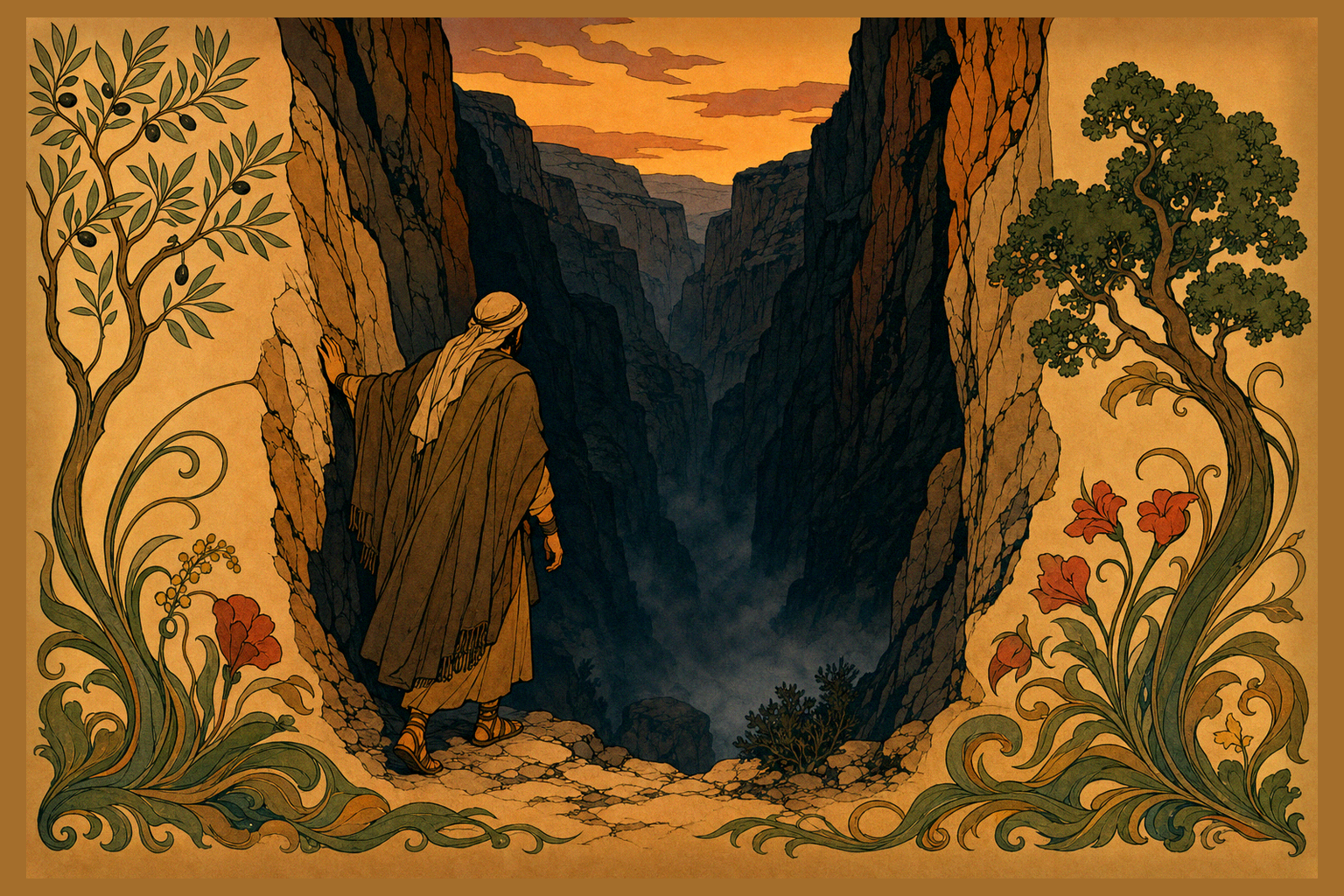
The most famous phrase in the whole psalm has been slightly misread for centuries, and fixing that mistranslation opens the psalm back up for the living.
Unpacking Tsalmavet: Disorientation More Than Dying
The Hebrew word usually translated "shadow of death" is tsalmavet. Older translations heard this as a compound word built from tsel (shadow) and mavet (death), producing the eerie, funeral-appropriate phrase we all know. This reading is disputed. Some Hebrew scholars read tsalmavet as one word that simply means "deep darkness" or "deep gloom," not as a direct reference to dying. On that reading, it's darkness so total you lose your bearings. Both readings have defenders, and the psalm's meaning holds up either way.
This matters enormously. The same word shows up elsewhere in the Hebrew Bible describing mines where miners can't see, deserts where travelers lose the path, and prison cells where captives sit in gloom (Job 28:3, Jeremiah 2:6, Psalm 107:10). None of those passages is about dying. They're about being lost, stuck, and afraid, with no clear way forward.
Why This Reading Frees the Psalm from Funerals Alone
This is why boxing Psalm 23 into funeral-only territory does violence to the text. David isn't only picturing a deathbed. He's picturing the valley you walk through during a divorce, a diagnosis you're still waiting on, a season of depression with no visible exit, the year after you lost the job and the mortgage is still due. Read either way, tsalmavet covers the kind of darkness that makes you lose your sense of direction, not only the darkness at the end of life.
Once you see this, the psalm reopens for every reader stuck in a season they can't see their way out of. Verse 4 belongs to anyone who has lost their way, not only to the dying.
Hunted by Goodness: The Aggressive Hebrew Behind "Follow Me"
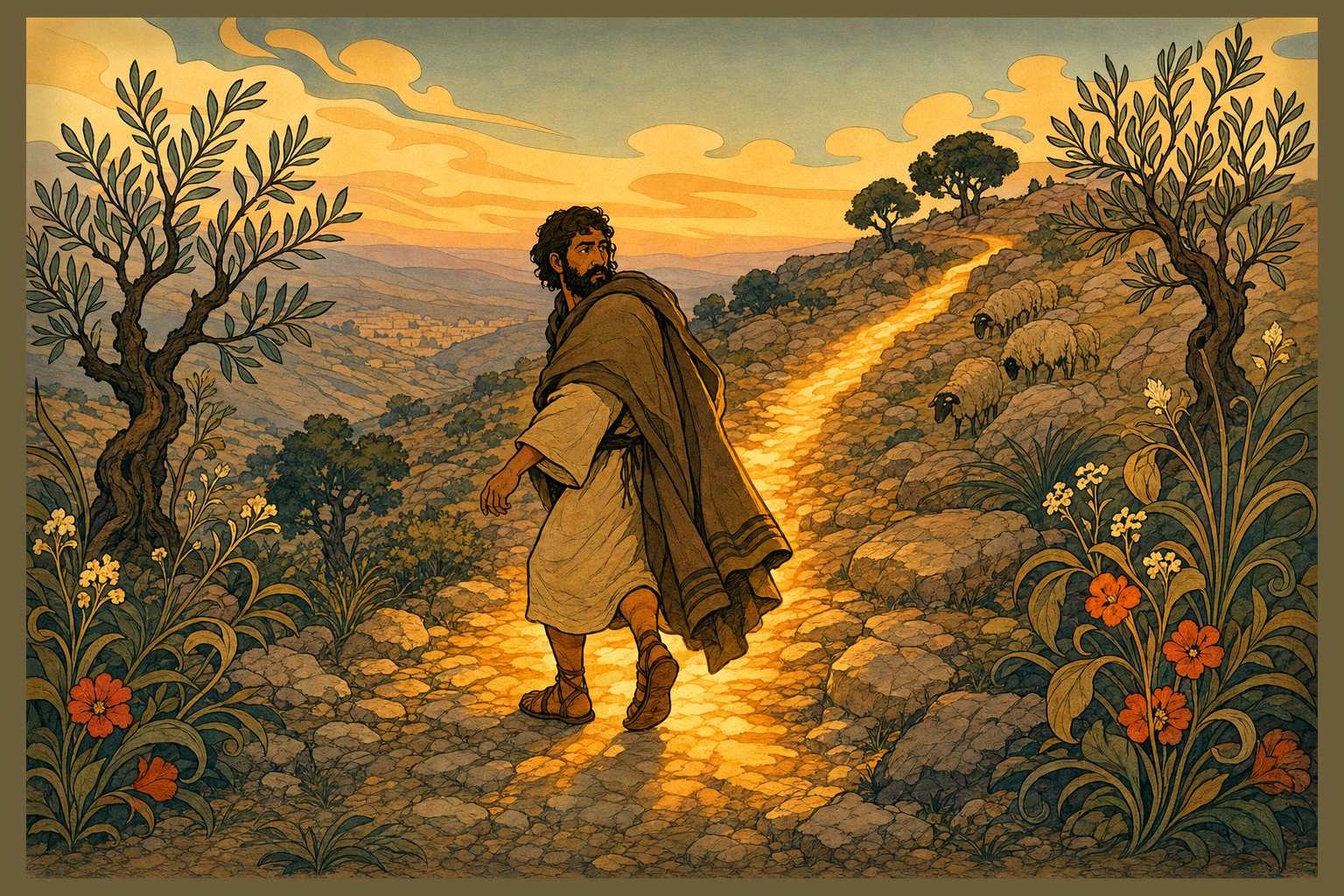
Now we get to the detail that, once you see it, you won't be able to unsee it. It's the most overlooked word study in the entire psalm, and it rewrites the final verse completely.
Radaph: The Verb Predators Use to Chase Prey
The closing verse of the psalm reads, "Surely goodness and mercy shall follow me all the days of my life." The word behind "follow" is radaph, and "follow" is far too gentle a translation. Radaph is the verb the Hebrew Bible uses for hunting, chasing, and pursuing with intent to catch. It's the word used when Pharaoh's army chases Israel to the edge of the Red Sea (Exodus 14:8). It's the word used when enemies pursue David himself through the wilderness, trying to run him down and kill him (Psalm 7:5, Psalm 143:3). David uses it for a hunter tracking a partridge in the hills (1 Samuel 26:20), and armies use it for enemies on the run. It is a hunting word.
So when most English translations render this verse as goodness and mercy "following" you, they're giving you a picture of a polite companion trailing a few steps back. That is not what the Hebrew says.
David's Reversal: Goodness and Mercy as the Hunters
David takes the exact verb used elsewhere for enemies hunting him down, and he applies it to goodness and covenant love instead.
The same word that describes Saul chasing David through the wilderness, the same word that describes armies pursuing fleeing refugees, now describes something pursuing David with the same relentlessness, except this time it's goodness doing the chasing, and David is the one being run down.
This is the radical heart of the psalm. You are not politely accompanied through your valley by a vague, drifting kindness. You are hunted, pursued, chased down by goodness and covenant love. The hunting language of the Hebrew Bible gets turned completely inside out, used now for rescue rather than ruin.
Hesed: Covenant Loyalty, Not a Passing Feeling
The second word in that pairing, usually translated "mercy" or "lovingkindness," is hesed. Hesed is loyal, covenant-bound faithfulness, a commitment that keeps showing up whether or not it's deserved.
It's the word used throughout the Hebrew Bible to describe Yahuah's covenant faithfulness to Israel even in seasons of their unfaithfulness, stretching from the promises to Abraham through the long history of a people who kept breaking covenant while God kept keeping it. Think of it as the loyalty of a spouse who keeps a vow long after the romance has gotten complicated.
What hunts you down in the valley is a commitment Yahuah made and keeps. Goodness and hesed pursue you with the same relentlessness a predator shows its prey, except this time you are the one being saved rather than devoured.
A Table Set in the Middle of the Threat
The psalm has one more image left, and it shifts metaphors in a way that completes the whole picture.
The Shepherd Becomes a Host
Verse 5 changes the picture from shepherd and sheep to host and guest. "You prepare a table before me." This is intimate hospitality language, the kind used for welcoming a guest into your home, anointing their head with oil, filling their cup. It's a strange image to follow a passage about predators and dark valleys, until you notice where David places it.
Why the Table Is "In the Presence of My Enemies"
The table isn't set after the threat is gone. It's set "in the presence of my enemies," meaning the danger is still there, visible, close enough to see across the table. The psalm pictures sitting down to a full meal while the wolves are still circling. It's a harder, more honest claim than "everything will be fine eventually." David is saying Yahuah's care doesn't wait for the threat to clear. It shows up in the middle of it.
Living in the House of Yahuah as the Psalm's Final Word
The psalm ends with David declaring he will dwell in the house of Yahuah forever. The arc of the whole poem moves from a sheep grazing in open pasture, to a traveler walking through disorienting darkness, to a guest seated at a table surrounded by danger, and finally to a permanent resident in God's own house. Wilderness care becomes permanent dwelling.
If you're in a valley today, unsure which direction is forward, that's exactly who this psalm was written for. The psalm 23 meaning David intended was never reserved for the dying. It was written by a man who had been chased by lions and by a king who wanted him dead, who carried his own guilt after Bathsheba and Uriah, and who came out the other side to write that goodness and hesed had been chasing him back the whole time.
The same is being said to you. Whatever valley you're in right now, his goodness and hesed are right behind you, and they have no intention of losing the trail.
A Close Reading
A close reading of the passage through Story, Symbol, and Praxis.
Want to read the passages behind this article in their original language?
Read the Greek and Hebrew behind this passage yourself, verse by verse, through the same scholarly lenses as Babel Report.
Explore Babel Lens →babellens.aiMore in origins


Explore the full gallery of essays and meditations
Browse the Collection