Why You Can't See Jesus in Scripture Yet
The Road to Emmaus reveals why biblical knowledge fails without divine illumination. Discover how Jesus opens Scripture to reveal himself throughout the Hebrew Bible.
You read Scripture and see history. The disciples walked with God (YHWH) and saw a stranger. This blindness runs deeper than poor lighting on a dusty road.
The Road to Emmaus exposes a problem more serious than grief or disappointment. Two disciples who knew their Scriptures walked seven miles with the risen Messiah and never recognized him. They discussed Moses and the Prophets with the person these texts described. They explained their crisis to the one who could solve it. Then Jesus (YHWShA) opened their eyes.
Your reading glasses will not fix this problem. The disciples possessed scholarly knowledge but lacked divine illumination. Every prophecy was a portrait they missed. Recognition came through breaking, not teaching. Their entire interpretive framework collapsed on that afternoon when Rome crucified their Messiah. Scripture has one storyline, not scattered moral lessons. Your blindness mirrors theirs exactly. Divine intervention remains the only solution.
The same Jesus who walked unrecognized beside them must open your eyes to see him in the text you think you already understand.
Their World Collapsed on Friday
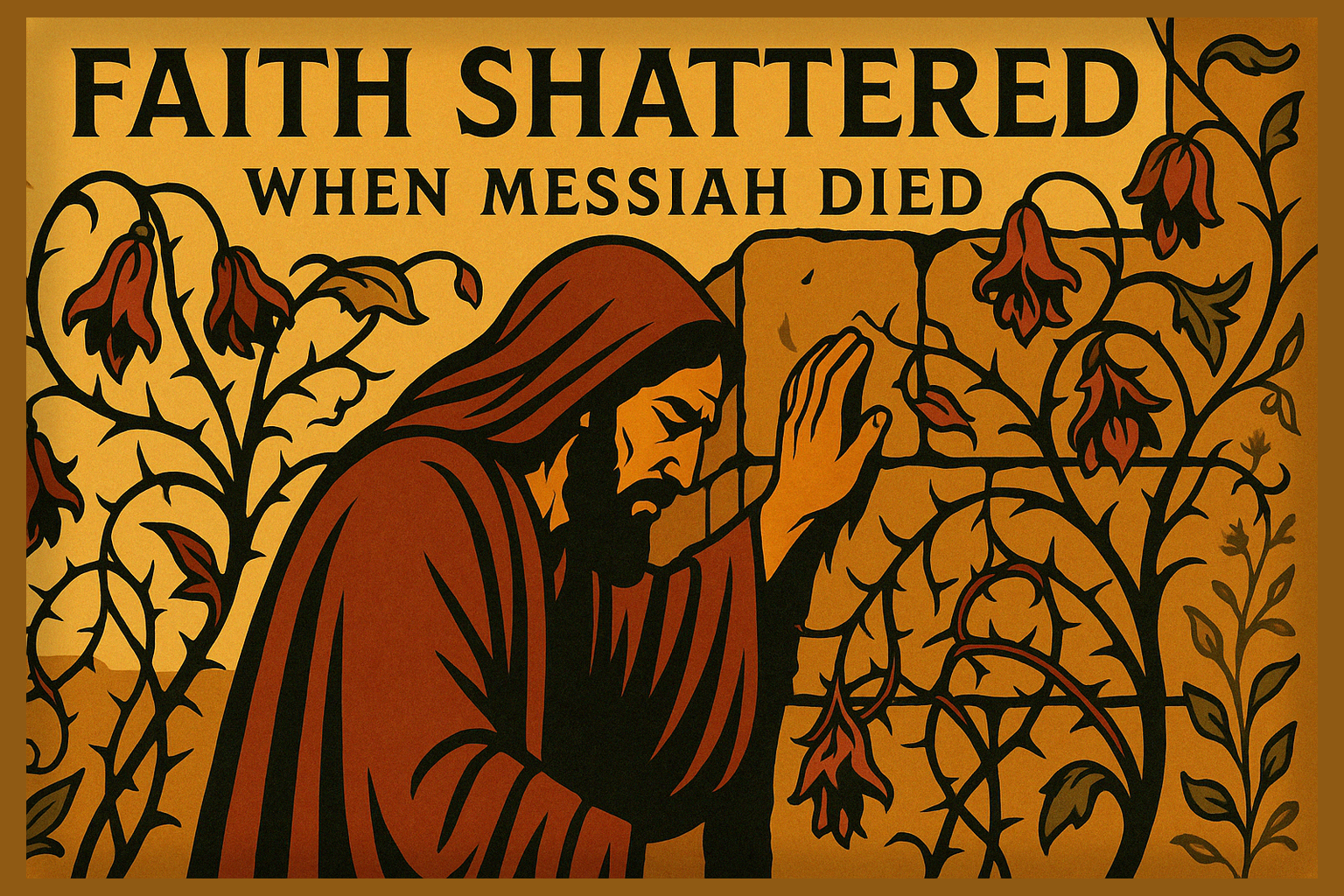
The disciples walked away from Jerusalem with their theological framework in ruins. They had built their understanding of Messiah on solid ground. Now their teacher hung dead on Roman wood and their hope lay buried in Joseph's tomb.
These men were not theological novices. They had studied under scribes and rabbis. They knew Daniel's seventy weeks and Isaiah's suffering servant. They understood the promises made to David and the prophecies spoken through Jeremiah. But knowledge had not prepared them for the crucifixion.
This event shattered more than their emotions. It destroyed their hermeneutical system. Everything they thought they knew about Messiah, kingdom, and redemption proved inadequate when confronted with the cross. The very Scriptures they had memorized seemed to contradict the reality they witnessed.
The Certainty That Preceded the Crisis
Before his death, these disciples possessed theological certainty. They knew Messiah would restore Israel's kingdom. They understood the prophetic timeline. They recognized Jesus as the promised one who would overthrow Roman occupation and establish David's throne forever.
This certainty was not based on wishful thinking. It emerged from careful study of Hebrew Scripture. The promises were clear. God had sworn to David that his kingdom would endure. The prophets had declared that Messiah would rule the nations. Isaiah had proclaimed good news to the captives and freedom for the oppressed.
But the crucifixion contradicted their theological framework entirely. The Messiah they expected to conquer Rome died at Roman hands. The kingdom they anticipated never materialized. The restoration they hoped for ended in a tomb.
Their certainty had been built on Scripture. Their crisis emerged from the same source. The text that had given them hope now seemed to mock their faith. What they thought they understood about God's promises lay in ruins.
When Prophetic Knowledge Failed Them
The disciples possessed extensive knowledge of messianic prophecy. They could quote Isaiah chapter 53 and explain Daniel's vision of the Son of Man. They understood the promises made to Abraham and the covenant sworn to Moses. But their knowledge could not prepare them for the cross.
This failure was not due to insufficient study. These disciples had devoted their lives to understanding Scripture. They had memorized vast portions of the Hebrew Bible. They could recite genealogies and explain ceremonial law. Yet all this knowledge proved inadequate when tested against reality.
The problem was not with Scripture itself. The text had faithfully recorded God's revelation across centuries. Every promise would be fulfilled. Every prophecy would find its target. But the disciples had misunderstood how these ancient words would come to pass.
Their interpretive framework was too small to contain God's plan. They expected a political messiah who would restore Israel's earthly kingdom immediately. They could not conceive of a suffering messiah who would establish his kingdom through death and resurrection. Their prophetic knowledge was accurate but incomplete.
The same texts that had nourished their faith now seemed to contradict their experience. How could Messiah die? How could God's anointed one suffer defeat? How could the promised kingdom fail to appear? Their world collapsed because their hermeneutics could not accommodate God's method of fulfillment.
Every Prophet Drew His Portrait
From the garden's first promise to Malachi's final word, the Hebrew Scriptures painted Jesus (YHWShA) in detail across centuries of revelation. The disciples knew these texts by memory but saw only scattered promises where God had written a unified portrait.
The problem was not with their memory or their devotion to study. They could recite lengthy passages from Moses and quote the Psalms extensively. They understood the historical context of the prophets and the theological significance of the ceremonial law. But they read Scripture as a collection of separate promises rather than a unified narrative.
Each text seemed to stand alone. Genesis 3:15 spoke of victory over the serpent. Isaiah 7:14 promised a virgin-born son. Micah 5:2 identified Bethlehem as Messiah's birthplace. Daniel 9:26 predicted the anointed one's death. But the disciples could not see how these scattered verses formed a single portrait of one person.
Genesis to Chronicles: The Hidden Storyline
The Hebrew Bible tells one story from beginning to end. Adam's fall created the problem that Messiah would solve. Noah's ark prefigured the salvation Messiah would provide. Abraham's sacrifice of Isaac foreshadowed the sacrifice God would make. Moses' bronze serpent pointed to Messiah's crucifixion. David's kingdom anticipated Messiah's eternal reign.
But this storyline remained hidden from the disciples' understanding. They saw historical events rather than prophetic types. They observed ceremonial requirements rather than spiritual realities. They noted moral lessons rather than messianic portraits. The unified narrative escaped their comprehension entirely.
Consider the Passover lamb. Every detail pointed to Messiah. The lamb must be without blemish, selected on the tenth day, killed at evening, its blood applied to the doorposts for protection from death. These were not mere ceremonial requirements but prophetic descriptions of Jesus's (YHWShA) sacrifice.
Or examine David's life. The shepherd who became king. The anointed one rejected by his brothers. The ruler who united the tribes and established Jerusalem as the holy city. The warrior who defeated Israel's enemies and brought peace to the land. Every detail prefigured Messiah's ministry.
The disciples knew these stories intimately. They understood the historical significance of the Passover and the political importance of David's reign. But they could not see how these ancient events cast shadows of future realities. The hidden storyline remained concealed from their interpretive vision.
Messianic Prophecy They Memorized but Missed
The disciples had memorized Isaiah 53 but did not understand its meaning. They could recite the passage about the suffering servant who was wounded for transgressions and bruised for iniquities. They knew the verse about being led as a lamb to slaughter and not opening his mouth. But they could not connect this suffering figure to their expectation of a conquering messiah.
The same blindness affected their reading of Psalm 22. They knew David's cry of dereliction: "My God, my God, why have you forsaken me?" They understood the description of bones out of joint and garments divided by lot. They recognized the reference to pierced hands and feet. But they read these verses as the writer's personal lament rather than Messiah's prophetic suffering.
Daniel's prophecy of the seventy weeks presented another interpretive challenge. The disciples understood that Messiah the Prince would appear at the appointed time. They recognized that the anointed one would be cut off but not for himself. They knew that desolation would follow Messiah's death. But they could not align this predicted suffering with their expectation of immediate kingdom establishment.
Even clearer prophecies escaped their understanding. Zechariah 12:10 spoke of looking upon him whom they had pierced. Isaiah 50:6 described giving his back to those who struck him and his cheeks to those who plucked out the beard. Psalm 16:10 promised that God's Holy One would not see corruption. These verses painted a detailed portrait of Messiah's suffering, death, and resurrection. But the disciples saw only isolated prophecies rather than a unified picture of Jesus.
Their blindness was not due to ignorance or lack of devotion. They possessed extensive knowledge of Scripture and deep commitment to its truth. But they could not see the forest for the trees. Individual verses remained disconnected from the larger narrative. Separate prophecies failed to paint a single portrait. The very texts that described Jesus in detail remained blurred to their understanding until he opened their eyes.
Jesus Opened What Scholars Cannot
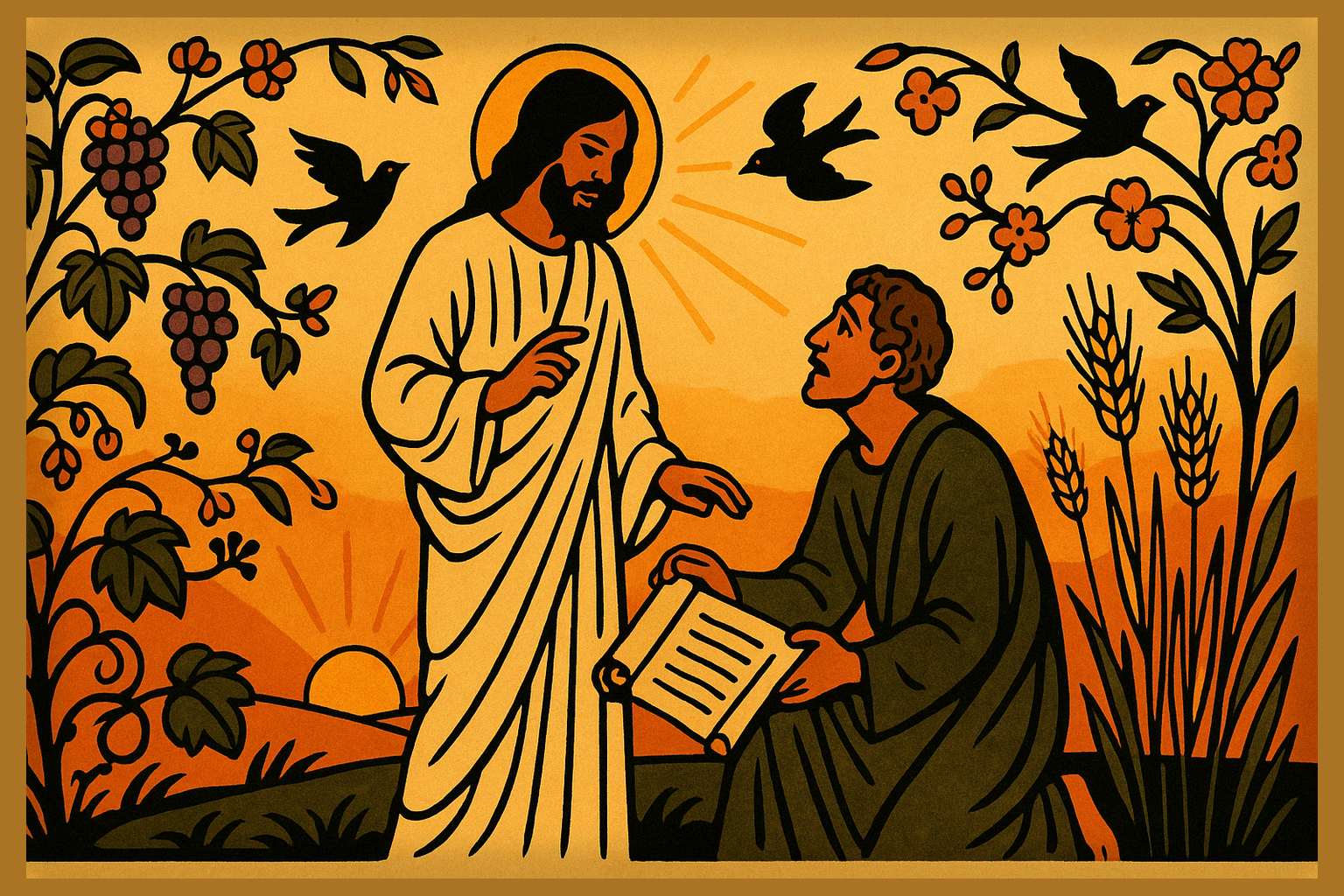
Hours of biblical exposition along that dusty road accomplished nothing until Jesus himself became their teacher. The finest interpretive methods and deepest theological training cannot substitute for divine illumination of the text.
The disciples had received excellent biblical education. They knew Hebrew grammar and could parse difficult constructions. They understood the historical context of various passages and the literary structure of different books. They could identify poetic devices and explain ceremonial symbolism. But all this scholarly apparatus proved inadequate to reveal Jesus in the text.
Modern readers face the same limitation. Seminary training provides tools for biblical study. Historical-critical methods illuminate cultural backgrounds and textual transmission. Literary analysis reveals structural patterns and thematic development. Systematic theology organizes doctrinal truths and resolves apparent contradictions. But none of these approaches can substitute for Jesus opening Scripture to reveal himself.
The Hermeneutical Authority Problem
The disciples' problem was not lack of information but lack of authority. They possessed extensive knowledge about Scripture but lacked the key to unlock its deepest meaning. They could analyze the text but could not see its ultimate referent. They understood the words but missed the Word himself.
This limitation affects every human interpreter. No amount of linguistic skill or historical knowledge can bridge the gap between textual analysis and spiritual revelation. The most careful exegesis cannot force Scripture to yield its Christological treasures. Only Jesus himself possesses the hermeneutical authority to open the text and reveal his presence throughout its pages.
Consider the Ethiopian eunuch's encounter with Philip in Acts 8. This man was reading Isaiah 53 but could not understand its meaning. He asked Philip whether the prophet spoke of himself or someone else. Philip then preached Jesus to him from this passage. But even Philip's explanation required the Spirit's work to produce faith and baptism.
The same pattern appears throughout the New Testament. Jesus had to explain the Scriptures to his disciples after his resurrection. The apostles required special revelation to understand how Old Testament prophecies found fulfillment in Christ. Even the apostle Paul, trained by Gamaliel in the finest traditions of rabbinical interpretation, needed a divine encounter on the Damascus road to see Jesus in the Hebrew Bible.
This is not an argument against careful study or scholarly preparation. Scripture commands believers to study diligently and handle the word of truth accurately. Historical background and linguistic analysis provide context for interpretation. This is how I spend most days. But these tools remain secondary to the primary need for divine illumination.
Why Careful Exegesis Still Leaves You Blind
Modern evangelicalism has placed great emphasis on proper hermeneutical method. Seminaries teach principles of grammatical-historical interpretation. Bible study guides emphasize observing the text before interpreting and applying its meaning. Commentaries provide detailed analysis of syntax and semantics. All these approaches have value and deserve commendation.
But careful exegesis alone cannot reveal Jesus in the Hebrew Bible. The most meticulous attention to grammatical detail and historical context will not expose the Christological significance of Old Testament texts. The problem is not with the method but with the interpreter's spiritual condition.
Look at Jesus's accusation against the religious leaders in John 5:39-40. He told them they searched the Scriptures diligently because they thought eternal life could be found there. But these very Scriptures testified about Jesus, yet they refused to come to him for life. Their problem was not exegetical incompetence but spiritual blindness.
The Pharisees possessed superior knowledge of Hebrew Scripture. They had memorized vast portions of the biblical text. They understood complex regulations and could explain difficult passages. They followed rigorous interpretive principles and maintained high standards of textual accuracy. But all this expertise could not help them recognize Messiah when he stood before them.
The same blindness affects contemporary readers. You can master Hebrew vocabulary and understand ancient Near Eastern backgrounds. You can trace thematic development and identify literary structures. You can resolve textual variants and explain historical difficulties. But none of these skills will help you see Jesus in the Old Testament unless he opens your eyes.
This reality should produce humility rather than despair. The solution is not to abandon careful study but to recognize its limitations. Scholarly tools remain for biblical interpretation, but they cannot substitute for spiritual illumination. Only Jesus himself can open Scripture to reveal his presence throughout its pages.
Recognition Through Breaking, Not Teaching
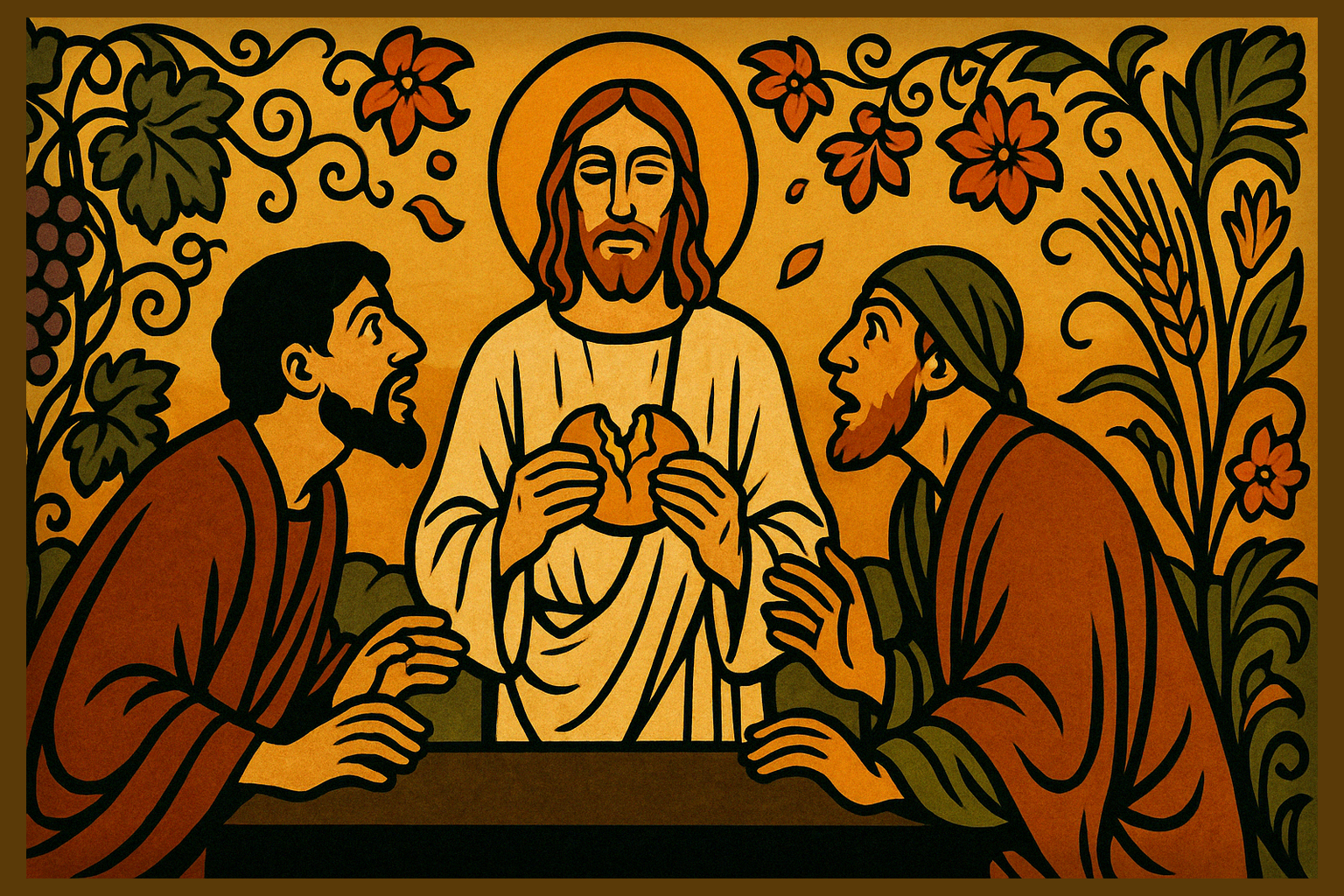
The moment Jesus broke bread, he vanished. What scholarly discussion could not accomplish in seven miles of walking, one familiar gesture revealed instantly. But recognition came only when Jesus chose to open their eyes.
The disciples had listened to extended biblical lesson throughout their journey to Emmaus. Jesus had explained how Moses and the Prophets testified about Messiah's suffering and glory. He had connected Old Testament passages to recent events in Jerusalem. He had provided the interpretive key that unlocked Scripture's unified message. But none of this teaching produced recognition.
Their hearts had burned within them as Jesus opened the Scriptures. They later acknowledged that his exposition had stirred their emotions and kindled their hope. The biblical connections he made were compelling and transformative. But intellectual understanding did not lead to personal recognition. They still saw him as a stranger rather than their risen Messiah.
The Sacramental Moment of Clarity
Recognition came through a simple action rather than complex explanation. Jesus took bread, blessed it, broke it, and gave it to them. In that moment, their eyes were opened and they knew him. The gesture that had been repeated countless times during his earthly ministry finally penetrated their spiritual blindness.
This was not magic or manipulation. The breaking of bread served as a sacramental moment when Jesus chose to reveal himself to his disciples. The familiar action connected present reality to past experience. They had seen him break bread to feed five thousand. They had watched him during the passover meal on the night of his betrayal. Now the same gesture revealed his resurrection presence.
The timing was essential. Jesus did not reveal himself at the beginning of their conversation or during his biblical exposition. He waited until the moment was right, when their hearts had been prepared through his teaching and their faith had been kindled by his explanation of Scripture. Only then did he open their eyes to see him clearly.
But the moment their eyes were open, Jesus vanished from their sight. They no longer needed his physical presence because they had received something more valuable. Their interpretive framework had been rebuilt. Their understanding of Scripture had been transformed. Their vision of Messiah had been corrected. The risen Yahusha could withdraw his visible presence because he had accomplished his purpose.
Divine Initiative in Biblical Understanding
The Road to Emmaus demonstrates that biblical understanding depends entirely on divine initiative. The disciples could not force recognition through intense concentration or sincere desire. They could not achieve spiritual insight through careful analysis or emotional pleading. Only Jesus himself could open their eyes to see him in the text.
This principle applies to every encounter with Scripture. Readers can prepare themselves through prayer and study. They can approach the text with humility and expectation. They can eliminate distractions and focus their attention. But none of these preparations can guarantee spiritual illumination. Only God can open blind eyes to see his truth.
The apostle Paul understood this principle. He prayed that God would give the Ephesians "a spirit of wisdom and of revelation in the knowledge of him, having the eyes of your hearts enlightened" (Ephesians 1:17-18). Paul recognized that even mature believers need ongoing divine illumination to understand spiritual truth.
The same reality explains why identical biblical texts produce different responses in different readers. One person reads Isaiah 53 and sees only historical narrative about an anonymous suffering servant. Another reads the same passage and encounters Jesus Christ in vivid detail. The difference is not due to superior intelligence or better education but to divine illumination.
This should transform how believers approach Scripture. Bible study should begin with prayer for divine illumination rather than confidence in human understanding. Interpretation should proceed with dependence on the Spirit rather than reliance on scholarly method alone. Application should emerge from encounters with the living Christ rather than abstract moral principles.
Scripture's Single Story Versus Scattered Lessons
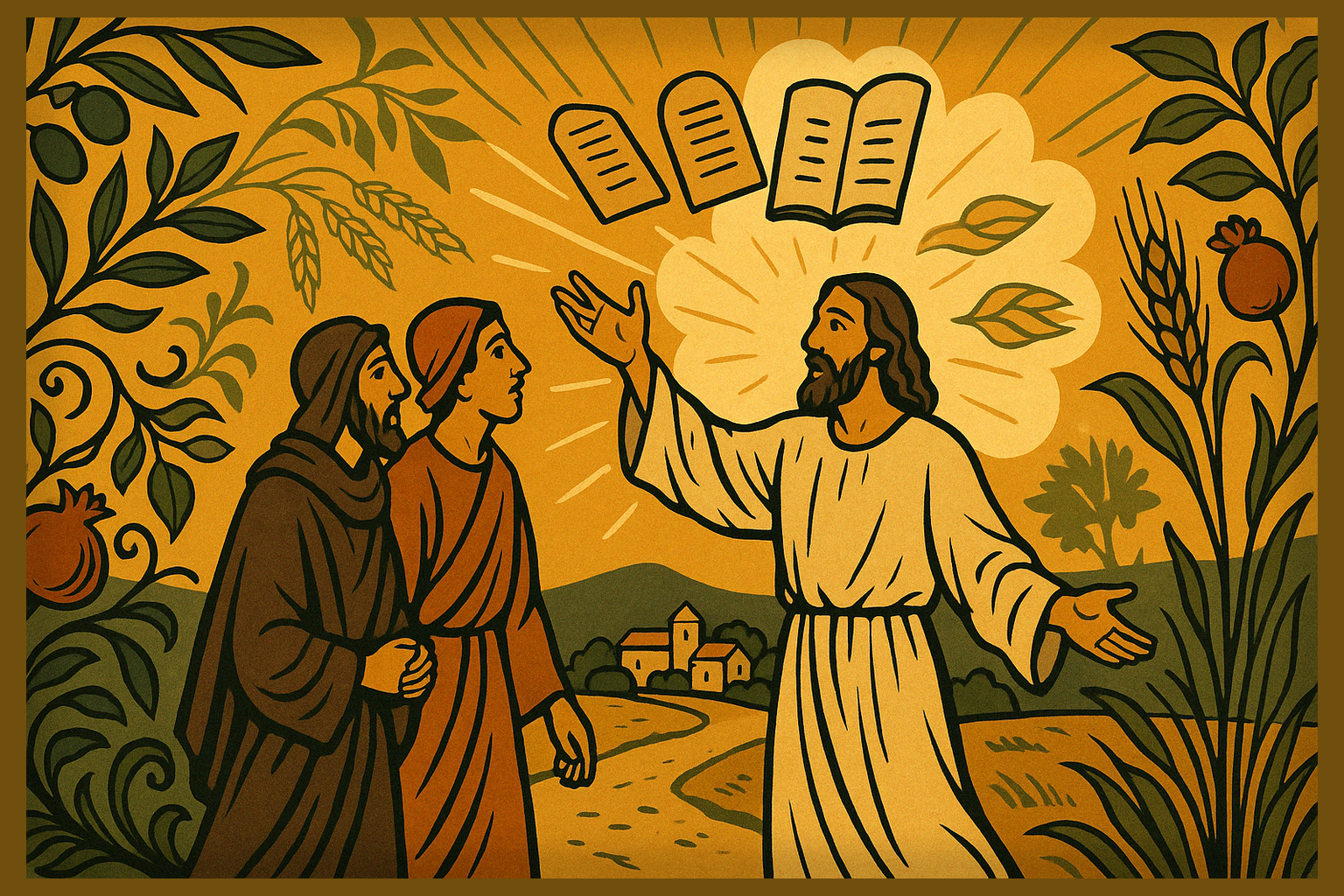
The Road to Emmaus reveals that Moses, the Prophets, and the Writings tell one story about Jesus. This is not a collection of moral teachings or historical accounts but a unified narrative pointing to one person.
Most readers approach the Old Testament as an anthology of separate books written by different authors across many centuries. Each text seems to address its own historical situation and provide its own theological insights. Genesis tells creation stories. Exodus describes Israel's liberation from Egypt. Leviticus outlines ceremonial laws. Numbers records wilderness wanderings. This fragmented approach obscures Scripture's unified message.
But Jesus revealed a different way of reading these ancient texts. He showed his disciples that all Scripture speaks about him. Moses wrote about Messiah's coming. The Prophets described his suffering and glory. The Psalms contained his prayers and praises. Every text contributed to a single narrative that found its climax in his death and resurrection.
Redemptive History as Christological Interpretation
The Hebrew Bible presents redemptive history as a Christological narrative from beginning to end. God's promise to crush the serpent's head in Genesis 3:15 finds fulfillment in Jesus's victory over Satan. The Passover lamb's sacrifice in Exodus 12 prefigures Jesus's death for sin. The bronze serpent's healing power in Numbers 21 foreshadows Jesus's crucifixion. David's kingdom in 2 Samuel anticipates Jesus's eternal reign.
This interpretive approach was not invented by New Testament writers but revealed by Jesus himself. He taught his disciples to read the Old Testament as testimony about his person and work. He showed them how ancient events prefigured future realities. He explained how ceremonial laws pointed to spiritual truths. He revealed how prophetic promises found fulfillment in his ministry.
Consider how Jesus interpreted his own death and resurrection. He did not present these events as unexpected tragedies or surprising victories but as fulfillments of ancient Scripture. The Messiah had to suffer because Moses and the Prophets had predicted his suffering. He would rise from the dead because the Psalms had promised his resurrection. His death and resurrection were not departures from God's plan but accomplishments of his eternal purpose.
This Christological reading of redemptive history transforms how believers understand the Old Testament. Every narrative becomes a type or shadow of Jesus's ministry. Every ceremonial law points to his sacrificial work. Every prophetic promise finds fulfillment in his kingdom. The entire Hebrew Bible becomes a unified testimony about the coming Messiah.
Biblical Typology and Foreshadowing Patterns
The Old Testament contains extensive typological patterns that prefigure Jesus's person and work. These are not arbitrary connections imposed by creative interpreters but intentional designs woven into Scripture by divine inspiration. God ordained that ancient events would cast shadows of future realities.
Adam serves as a type of Christ as the representative head of humanity. But where Adam failed through disobedience, Jesus succeeded through perfect obedience. Noah's ark prefigures salvation through judgment as Jesus provides refuge from God's wrath. Abraham's willingness to sacrifice Isaac foreshadows God's sacrifice of his only Son. Moses' role as mediator between God and Israel anticipates Jesus's work as the one mediator between God and humanity.
The ceremonial system contains elaborate typological significance. The Passover lamb must be without blemish, as Jesus was without sin. The scapegoat carried Israel's sins into the wilderness, as Jesus bore our sins on the cross. The high priest entered the Holy of Holies once a year with blood sacrifice, as Jesus entered heaven's sanctuary with his own blood. The Day of Atonement provided temporary covering for sin, but Jesus's sacrifice provides eternal redemption.
Even architectural details carry typological meaning. The tabernacle's construction followed heavenly patterns because it represented God's dwelling with his people through Christ. The temple's dimensions and decorations pointed to spiritual realities fulfilled in Jesus's ministry. The ark of the covenant symbolized God's presence and mercy that would be fully revealed in Christ.
These typological connections are not imposed on the text by later interpreters but revealed by Jesus himself. He explained to his disciples how ancient shadows found substance in his person and work. He showed them how ceremonial types achieved their purpose in his sacrifice. He revealed how prophetic promises reached their target in his ministry.
Modern readers who ignore biblical typology miss much of Scripture's richness and unity. They see only historical narratives where God has provided prophetic portraits. They observe only ceremonial requirements where God has revealed spiritual realities. They find only moral lessons where God has painted pictures of his Son.
Your Blindness Mirrors Theirs Exactly
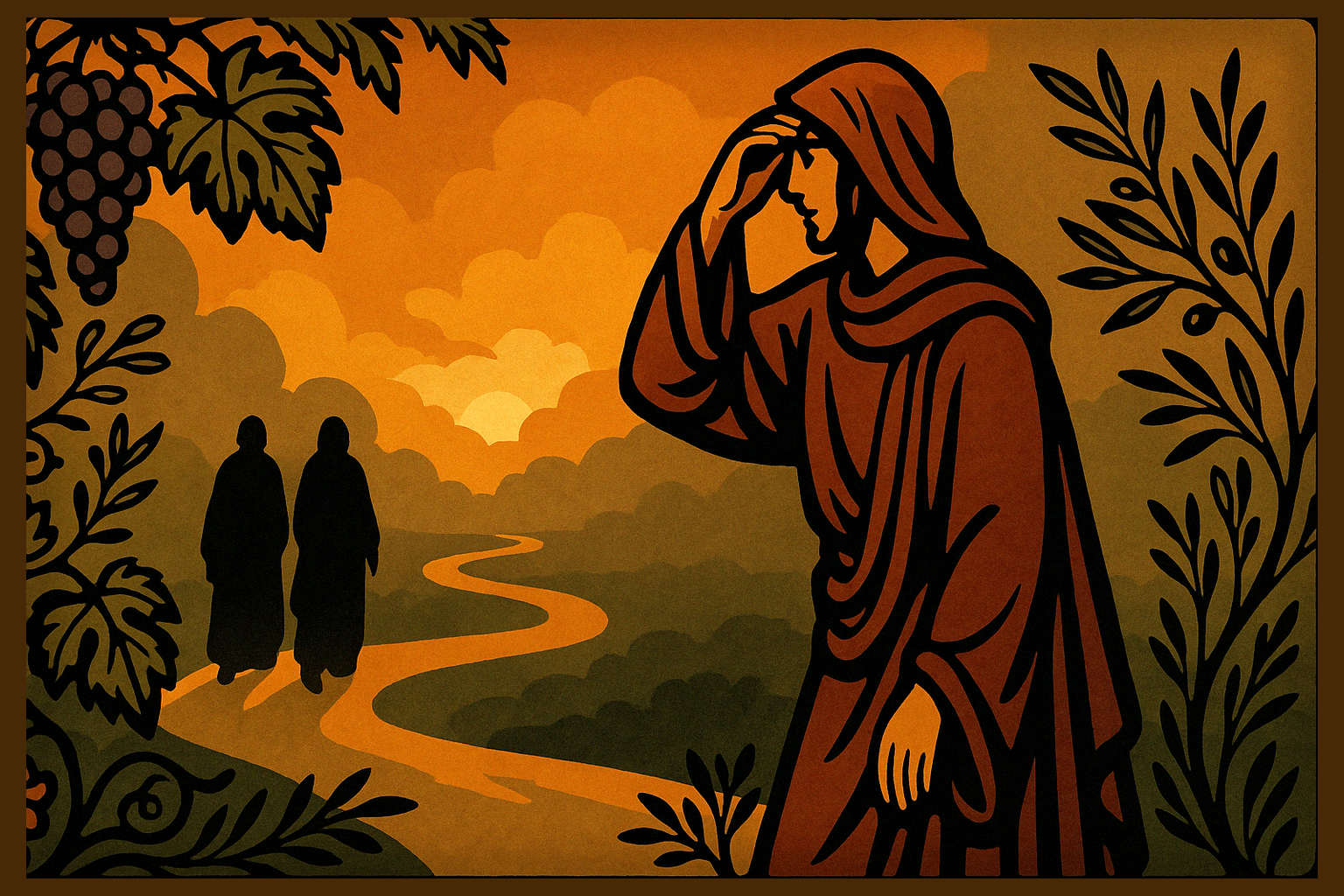
The same interpretive veil that prevented two disciples from recognizing their risen Lord (YHWH) prevents modern readers from seeing Jesus throughout the Hebrew Bible. This is not a first-century problem solved by better lighting or historical distance.
You possess advantages the disciples lacked. You have the complete New Testament with its explicit Christological interpretation of Old Testament texts. You can read how Jesus fulfilled ancient prophecies and accomplished ceremonial types. You have access to centuries of theological reflection and scholarly commentary. You know how the story ends.
But these advantages do not automatically produce spiritual sight. Knowledge about Jesus does not equal recognition of Jesus. Information about biblical interpretation does not guarantee illuminated understanding. The same blindness that affected the disciples on the road to Emmaus continues to affect contemporary readers who approach Scripture without divine illumination.
The Hermeneutical Veil Across Centuries
Paul described this blindness as a veil that covers the minds of those who read Moses without coming to Christ (2 Corinthians 3:14-16). This veil is not removed by scholarly training or careful study but only by turning to the Lord (YHWH). Until Jesus opens your eyes, you will read Scripture without seeing its primary subject.
The veil manifests itself in various ways. Some readers approach the Old Testament as ancient history that provides moral lessons for contemporary life. They see David's victory over Goliath as encouragement for facing personal challenges rather than a prophetic portrait of Messiah's victory over Satan. They understand the Exodus as liberation from oppression rather than redemption from sin's bondage.
Other readers treat the Hebrew Bible as a collection of predictions that find fulfillment in Jesus but maintain no organic connection to his person and work. They recognize that Isaiah 53 describes Jesus's crucifixion but miss how the suffering servant's identity permeates the prophet's entire message. They acknowledge that Psalm 22 contains details of the crucifixion but overlook how David's experience prefigures Messiah's passion.
Still others read the Old Testament as background material that provides context for understanding the New Testament. They study Jewish customs to illuminate Jesus's teachings and explore Second Temple Judaism to clarify Paul's letters. But they approach these ancient texts as preparation for the gospel rather than early chapters of the gospel itself.
All these approaches reflect the same blindness that affected the disciples on the road to Emmaus. They possess biblical knowledge but lack biblical vision. They understand textual details but miss the central subject. They can explain historical contexts but cannot see the unified storyline that connects every text to Jesus.
Active Petition for Interpretive Illumination
The solution requires more than better study methods or increased devotion. You must actively petition Jesus to open your eyes as he opened the disciples' understanding. This is not a passive process that occurs automatically through time or effort but an active encounter that requires divine initiative.
Prayer for illumination should precede every encounter with Scripture. But this is not a ritual formula that manipulates God into revealing his truth. It is a humble acknowledgment of your need for divine assistance and a sincere request for spiritual sight. You are asking Jesus to do what he alone can do: open the Scriptures to reveal himself throughout their pages.
This petition should be specific rather than general. Ask him to show you how particular Old Testament texts point to his person and work. Request divine illumination to see typological connections and prophetic fulfillments. Pray for eyes to recognize the unified narrative that connects Genesis to Malachi through the person of Christ.
But be prepared for the disorientation that accompanies illumination. When Jesus opens your eyes to see him in Scripture, your previous interpretive framework may collapse as the disciples' understanding was shattered on Friday afternoon. Texts you thought you understood will reveal new depths of meaning. Passages you considered simple history will display prophetic significance. Books you approached as moral instruction will emerge as Christological testimony.
This disorientation is temporary but necessary. Your old way of reading Scripture must give way to Jesus's method of interpretation. Your fragmentary understanding of individual texts must yield to comprehension of the unified story. Your moral and historical reading must be transformed by a Christological vision that sees Jesus as Scripture's central subject from beginning to end.
The disciples experienced this transformation on the road to Emmaus. Their conversation began with confusion and despair but ended with recognition and faith. Their interpretive blindness was replaced by illuminated understanding. Their fragmentary knowledge was unified by a clear vision of how all Scripture testifies about Jesus.
The same transformation awaits every reader who petitions Jesus to open their eyes. The veil that prevents you from seeing Christ in the Old Testament can be removed by the same divine authority that illuminated the disciples' understanding. But you must ask specifically for what only Jesus can provide: the interpretive key that unlocks Scripture's unified testimony about himself.
Scripture remains a closed book until Jesus opens it to reveal himself. You cannot force this revelation through intense study or sincere desire. You cannot achieve spiritual insight through scholarly method or emotional pleading. Only divine intervention can transform your reading from historical analysis to Christological recognition.
The disciples thought their problem was circumstantial but discovered it was hermeneutical. They needed more than comfort for their grief or explanation of recent events. They required a complete reconstruction of their interpretive framework with Jesus as the key that unlocked every text's ultimate meaning.
Your need is identical to theirs. The same blindness that prevented them from recognizing Jesus on the Road to Emmaus prevents you from seeing him throughout Scripture. The same divine intervention that opened their eyes must open yours. The same Jesus who explained how Moses and the Prophets testified about his suffering and glory must become your teacher and illuminate your understanding.
But when he opens your eyes, you will see what the disciples discovered: every page of Scripture tells his story, every prophecy finds its fulfillment in his person, and every text from Genesis to Malachi points ultimately to him. The scattered pieces will form a unified portrait. The fragmentary promises will reveal a complete salvation. The Hebrew Bible will emerge not as preparation for the gospel but as the gospel's earliest chapters, written by prophets who saw his day and were glad.
A Close Reading
A close reading of the passage through Story, Symbol, and Praxis.
Want to read the passages behind this article in their original language?
Read the Greek and Hebrew behind this passage yourself, verse by verse, through the same scholarly lenses as Babel Report.
Explore Babel Lens →babellens.aiMore in origins


Explore the full gallery of essays and meditations
Browse the Collection