Intact Roman Child's Sarcophagus Opened at Tomis, Romania
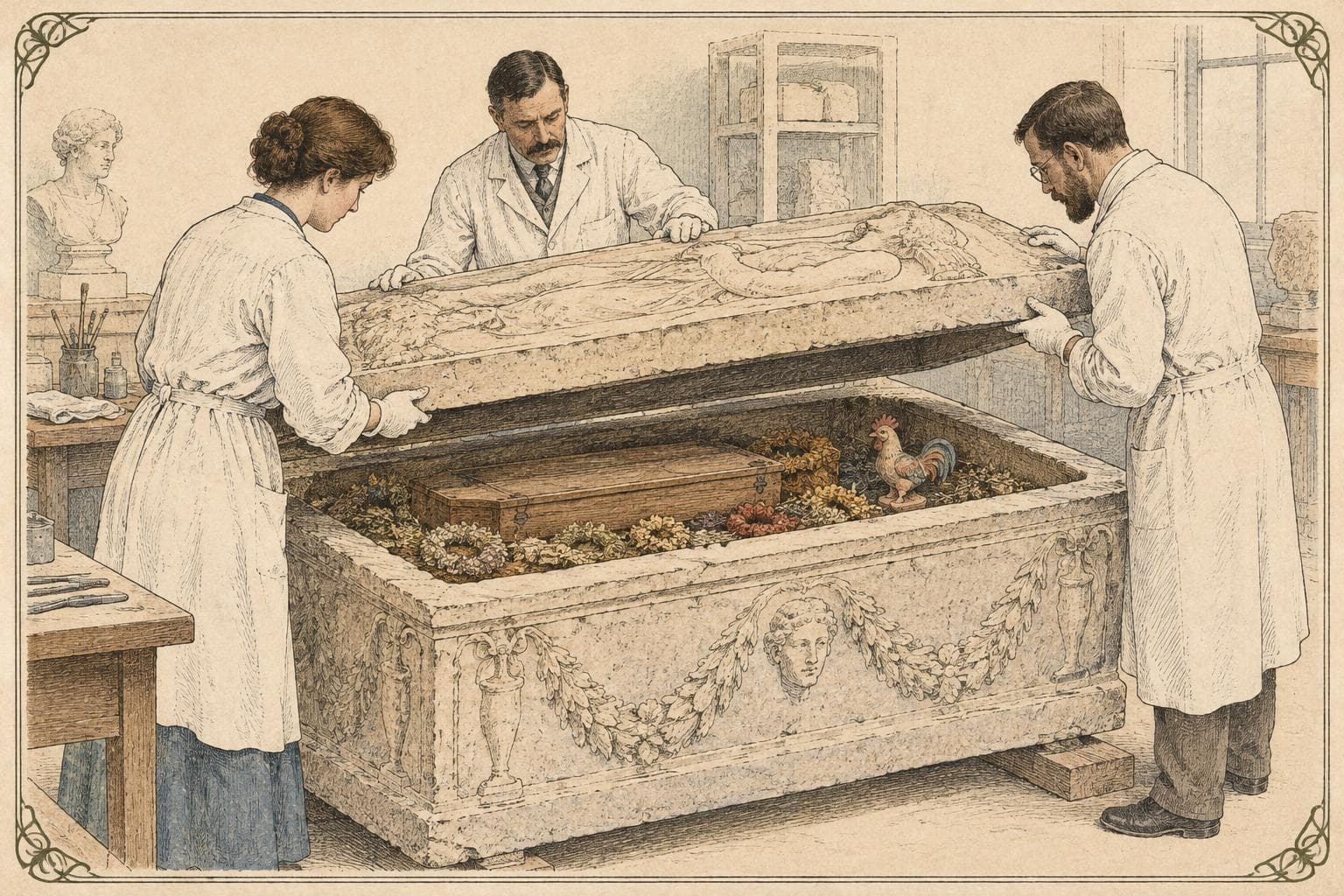
A sealed Roman sarcophagus has been opened in Constanța, Romania, and inside lay the burial of a small child in a wooden coffin. The grave dates to the 2nd or 3rd century AD, when the Black Sea coast belonged to the Roman Empire.
Constantin Băjenaru and Cătălin Nopcea, of the National History and Archaeology Museum of Constanța, were running a preventive excavation in the Flămânda district. On 22 October 2026 they suspected an untouched sarcophagus beneath the soil. It was lifted out and moved to a museum building. On 27 October conservators, restorers and archaeologists lifted the lid.
The goods around the child were modest but telling. They include bronze items of personal adornment, clay toys, a coin and traces of flower garlands. Two bullae were also found. These were small pendants that Roman families hung on children as protective charms. Reports also mention clothing. One toy is a clay rooster with a rattle, which the excavators take as a sign that the child was very young. These details are preliminary until a full report appears.
The tomb sits at the northern edge of the necropolis of ancient Tomis. It lay roughly 1.5 km from the city, beside a road to Histria, another coastal city to the north. Romans buried their dead outside the walls and along main routes. The position of this grave may therefore help show how far the cemetery reached and how burials were arranged along the road.
The wooden coffin is itself a notable survival. Wood is among the first materials to disappear from a site. A preserved coffin can show how craftsmen of the period built and joined such pieces. The museum calls the find important mainly because the sarcophagus stayed intact and its contents were undisturbed, which offers firm evidence on Roman burial customs at Tomis.
This is not the museum's first Roman cemetery work in the city. A campaign finished in February 2026 at a hospital site produced 34 Roman-period burials. Băjenaru directed that dig too. Specialists will now study the burial context, the objects and the building methods of both coffin and sarcophagus, and results are planned for publication and display.
Tomis began as a Greek colony and later became a Roman provincial city. The poet Ovid was exiled there in AD 8. Intact sarcophagi are rare, because most are found already opened or looted.
A sealed child's grave gives direct evidence of how Roman families in a provincial port city cared for their youngest dead. Toys, amulets and garlands show the private side of burial practice, which written sources seldom record.
Compiled from the reports below. Read the originals.
Sources
- October 29, 2026Archaeology MagazineChild’s Sarcophagus Discovered in Romania
- October 30, 2026La Brújula VerdeArchaeologists Open a Sealed Roman Child’s Sarcophagus in Romania, and the Toys Were Still Inside