Boat Burial at Fallward Yields a Rare Leprosy Strain
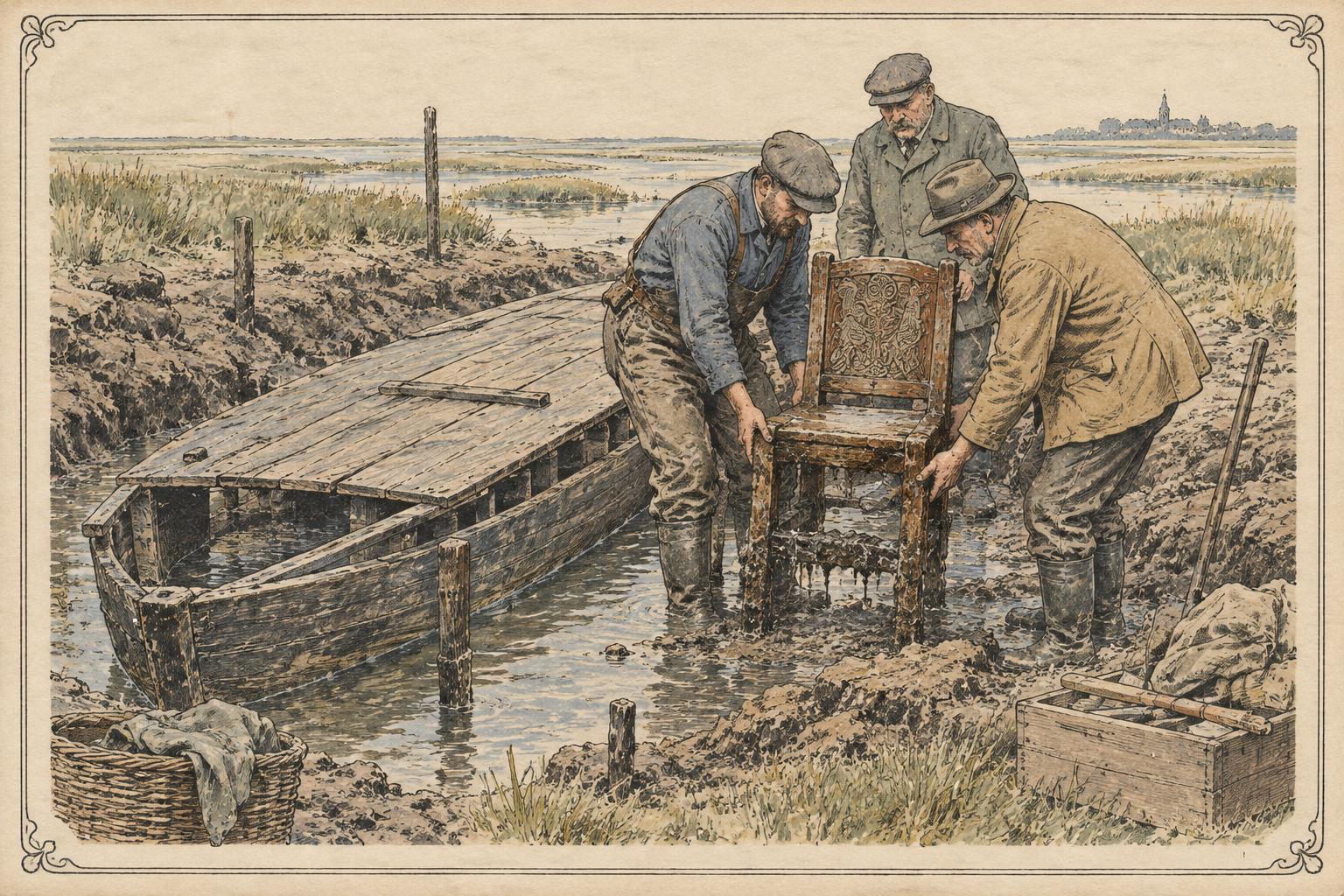
A man buried in an oak boat at Fallward, in the Cuxhaven district of northwestern Germany, carried a rare strain of Mycobacterium leprae. Researchers at Kiel University and the Lower Saxony Institute for Historical Coastal Research report that the strain has not been detected in Central or Northern Europe before. The work appeared in iScience.
Fallward lies near the North Sea coast between the Elbe and Weser rivers. The settlement began in the first century B.C. and declined until it served mainly as a cemetery by the fifth century A.D. Excavators in the 1990s recorded about 200 cremations and 60 inhumations. Damp soil kept wood and textiles intact, and a new project is now studying finds that were lifted in blocks and stored frozen.
The boat grave stands out. The vessel was more than 4 meters long and was closed with a roof-like cover. Inside lay a man of about 50 who died between A.D. 425 and 450. With him were a bird-shaped box, a bronze basin, and a stool of maple decorated with a hunting scene and runes. A richly carved alder chair, probably a mark of rank, was also found. He wore a late Roman military belt.
DNA from the bones tied him to the Danube region. Bone samples from the cemetery were tested, and only three gave enough data for population genetics. His case was the striking one. Leprosy DNA was preserved in a tooth and a foot bone, well enough to place the strain on its family tree. The group it belongs to has its earliest known member in Egypt, dated between the fourth and second centuries B.C.
His skeleton showed no damage from the disease. Almut Nebel of Kiel's Institute of Clinical Molecular Biology explained that leprosy is chronic and can take years to show clear symptoms. In her view he either had a form without symptoms, or the infection had so far reached only soft tissue. She said he may have traveled far while carrying it.
The team offers two reconstructions. He may have served as a mercenary in the Roman army and later settled between the two rivers. Or he may have been a trader who made long journeys. The belt could also have come through trade, inheritance or battlefield spoils. Muscular upper arms hint that he worked as a boatman or fisherman late in life.
The find shows that the northwest German coast stayed linked to distant regions after the Roman Empire fell in the West. It also shows that infectious disease moved along the same routes as people. A single grave can record both a personal journey and the spread of a pathogen across the late Roman world.
Compiled from the reports below. Read the originals.
Sources
- November 3, 2026
- November 4, 2026Archaeology MagazineRare Strain of Leprosy Identified in Boat Burial
- November 5, 2026Live Science1,600-year-old burial holds remains of man infected with a 'very rare' strain of leprosy in Germany