Clay Shrine Maiden Surfaces in Moat of Japanese Burial Mound
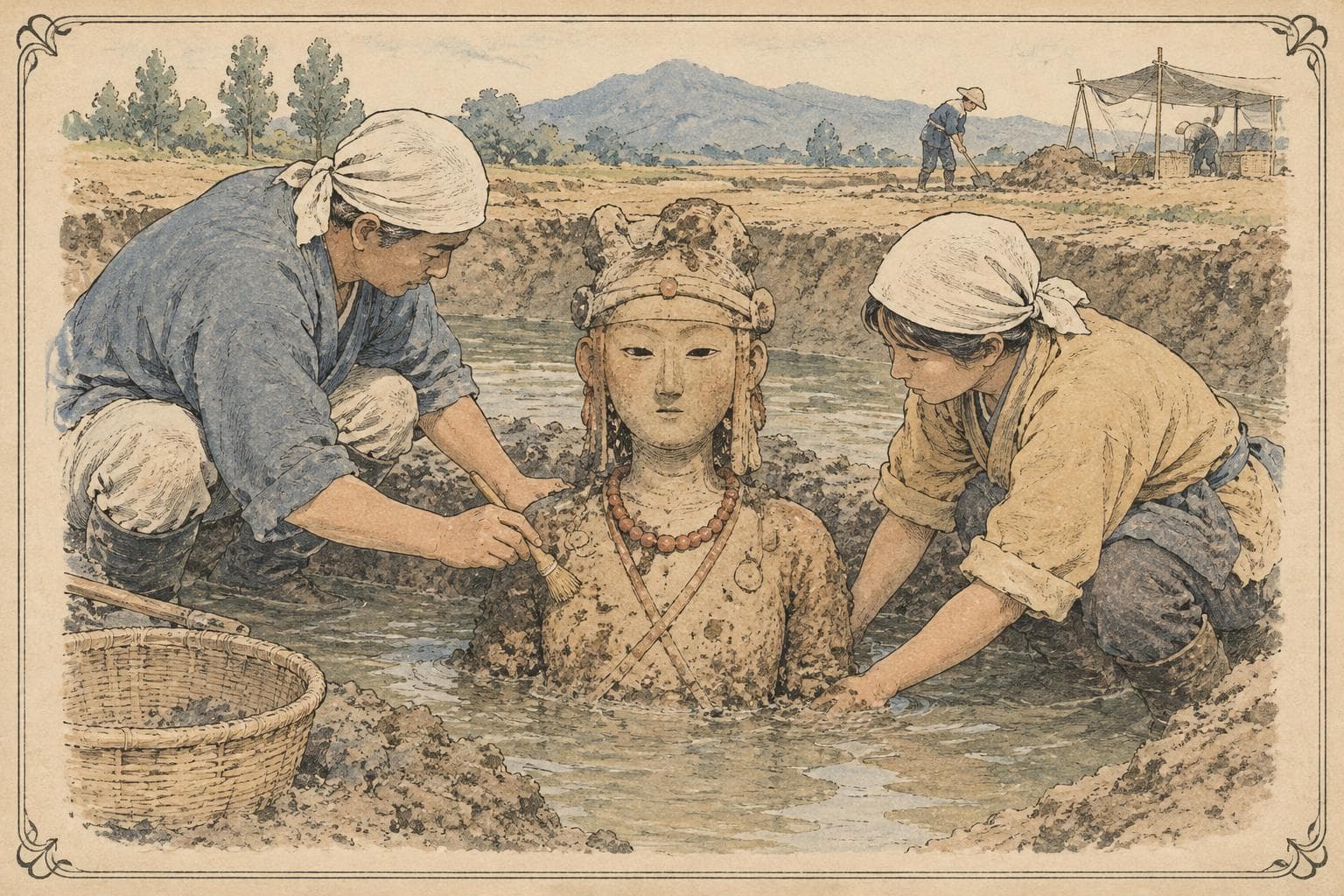
Archaeologists in Gunma Prefecture, northwest of Tokyo, have recovered the head and upper body of a clay figure from the moat of a fifth-century burial mound. The find comes from the Nishikaminomiya site on Honshu. The surviving fragment stands about 16 inches (40 centimeters) high, and the complete figure would have been considerably taller.
The mound that yielded it is a large one, roughly 145 feet (45 meters) across. It is one of nearly a dozen kofun at the site, which date to the fifth and sixth centuries. Teams have worked there since 2020, and the figure came out of this year's excavation of the main mound.
Several features led the team to read the piece as a miko, a female shaman often called a shrine maiden. Her hair is gathered in a traditional topknot known as a shimada. Both wrists carry bracelets modeled in clay and marked with red pigment. A red sash is painted across the torso, and her left hand grips a rod-shaped ritual tool. The nose is strong and the fingers are carefully shaped.
The Gunma prefectural government pointed to the workmanship. In its statement, as reported by Live Science, it said "considerable care was taken in making the figure." That care extended to details that a viewer standing far away would never see.
Figures of this kind are called haniwa. They belong to the Kofun period, which began around A.D. 300 and takes its name from the mounds themselves. Haniwa were set on and around tombs as offerings for the dead. Some were thought to hold the souls of the deceased. A miko was understood to mediate between the human and spiritual worlds, and in this period such women would have taken part in funeral rites.
Researchers think the figure first stood near a boat-shaped sarcophagus found in the mound. Over the centuries it likely slid down the slope and came to rest in the surrounding moat, which would explain why only part of it survives.
The fragment is now on public display at the Excavation Information Museum of the Gunma Prefectural Archaeological Research Center, in the city of Shibukawa.
Compiled from the reports below. Read the originals.
Sources
- October 31, 2026
- November 3, 2026Archaeology MagazineShrine Maiden Figurine Unearthed in 1,500-Year-Old Japanese Burial