Eland Collagen Found With Ochre at a South African Cliff Site
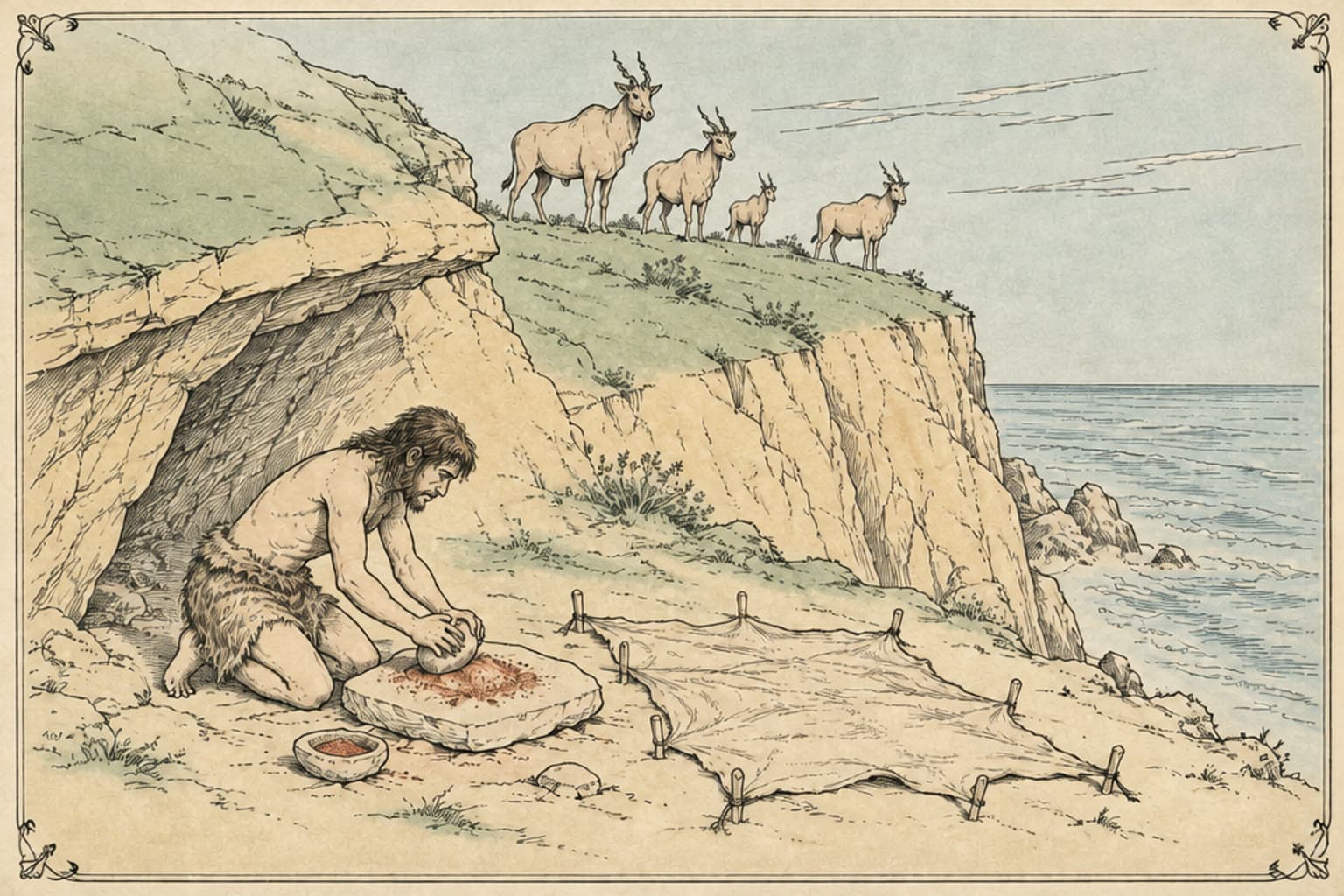
Scientists have recovered collagen from the common eland (Taurotragus oryx) in an ochre-rich surface dated to about 60,000 years ago. The surface lies at the Kilpdrift Complex, a Middle and Later Stone Age site set in the coastal cliffs of South Africa's De Hoop Nature Reserve.
The work was led by Zahra Haghighi, with colleagues from Kyushu University in Japan, the University of Bergen in Norway and the University of Copenhagen. It appears in Proceedings of the Royal Society B: Biological Sciences. The team worked with archived sediment samples that had been collected earlier from the site.
The method was paleoproteomics, the large-scale study of ancient proteins. The researchers extracted proteins from the sediment and ran them through liquid chromatography-tandem mass spectrometry. They then matched the resulting fragments against broad protein databases and a custom reference set of collagen sequences. The match pointed to type I collagen from the eland, a large plains antelope found today in East and Southern Africa.
The result gives two possible readings. People may have deliberately mixed animal-derived material with powdered ochre. Or hides treated with ochre may have been present at the cliffside spot. Either way, the ochre was linked to animal products, which fits a picture of complex technical behavior and possibly symbolic behavior among early Homo sapiens.
The find matters because direct traces of organic ingredients mixed with ochre have been extremely scarce, particularly in Africa. Ochre itself survives well. The binders, fats, skins or other substances that may have been combined with it usually vanish. Here a protein signal survived and could be pinned to a single species.
The study also shows that sediment can hold usable protein evidence in settings where ancient DNA rarely lasts. Many African environments are hard on DNA, so proteins offer another route to the biology of the past. Material that leaves no visible mark in the excavated record can still be identified at the molecular level.
For anyone reading ancient evidence, the lesson is practical. Ochre surfaces and sediments that have long been studied for their color and mineral content may carry a second layer of information. Protein analysis can reveal what else was handled, mixed or worn, and it can do so from samples already sitting in museum and university archives.
Compiled from the reports below. Read the originals.
Sources
- October 21, 2026
- October 26, 2026Archaeology Magazine60,000-Year-Old Animal Proteins Mixed With Ocher Identified in South Africa