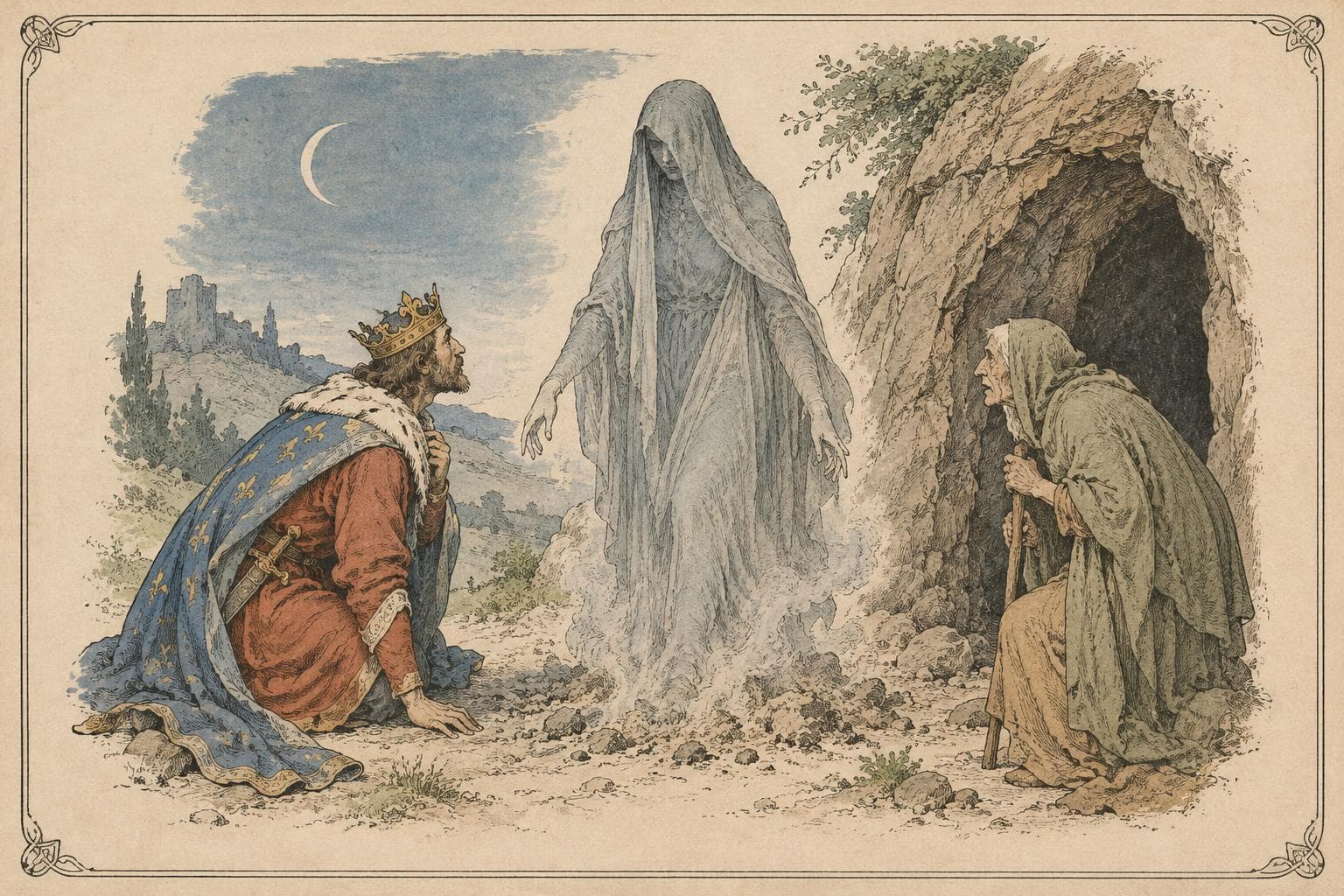
A man kneels before a king, stripped of rank and office, and the room understands something has shifted. A man kneels before a king while still wearing his own sword, his own ring of office, his own crown, and the room understands something else entirely. Revelation 11:16 gives us the second picture. Twenty-four elders, seated on their own thrones, crowned and robed with real and recognized authority, fall on their faces before God (Alohim) the moment his kingdom is announced. The 24 elders in Revelation are not background figures or decorative symbolism. They are the Book of Revelation's thrones made flesh and image, and their worship is the text's own answer to a question every generation asks: what does power look like when it finally meets the power above it?
That question drives everything that follows: Who are these elders? Why twenty-four? Why thrones and crowns at all, if the point is submission? And why does Revelation show us this scene more than once, as though the author worried we might miss it the first time.
Who Sits on These Thrones: Identifying the 24 Elders
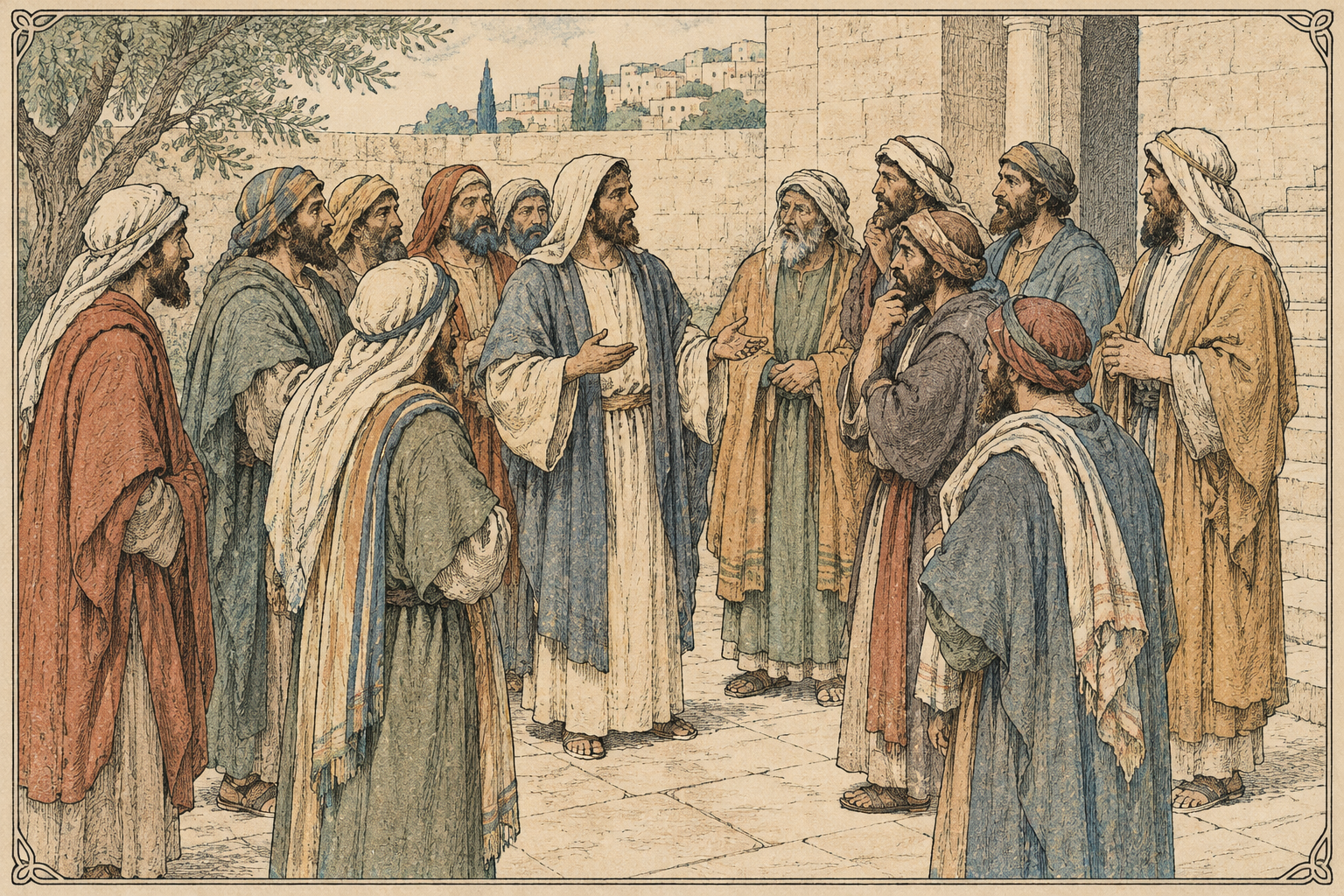
Two readings have dominated discussion of the elders since the early church began puzzling over John's vision. The first holds that they represent the whole people of God, Old Testament and New, gathered symbolically as twelve patriarchs plus twelve apostles. The second holds that they belong to a distinct order of heavenly beings, members of the divine council tradition stretching back through the Hebrew Bible, where God is pictured presiding over an assembly of spiritual beings who carry out his decrees and occasionally bear responsibility for how the nations are ordered (Deuteronomy 32:8-9 gives the classic statement of this pattern, with the "sons of God" allotted oversight of the nations at Babel). Serious scholars hold each position, and the text does not force a single answer.
What the text does insist on, regardless of which reading one favors, is that these are not spectators. Revelation never describes the elders as summoned extras who appear only to react to something happening around them. It describes them as already there, already seated, already dressed in the regalia of rule.
Revelation 4:4 as the Introduction Scene
The elders make their first appearance in Revelation 4:4, and the verse is worth reading slowly: "Around the throne were twenty-four thrones, and seated on the thrones were twenty-four elders, clothed in white garments, with golden crowns on their heads." Notice the order of information. Thrones first. Elders seated on them second. White garments third. Golden crowns fourth. By the time John tells us anything about what these figures do, he has already told us what they are.
This matters because it establishes the elders as fixed members of the throne room rather than figures dragged in for a single dramatic moment. They are not brought forward to be humbled. They arrive already elevated. Whatever happens to them later in the vision happens to beings who already possess standing, not to beings whose standing is in question.
Why Office Precedes Worship in the Text
Here is the pattern that will repeat through the whole chapter and into Revelation 11:16: authority is established first, and worship follows second. This reverses an assumption many readers bring to the text without noticing it, the assumption that worship is what the powerless do and that the strong, by definition, have no reason to kneel.
Revelation refuses that assumption from its first throne-room scene. These are beings of genuine rank, and the narrative insists on showing us their rank before it shows us their posture. The sequence is not accidental. It is the whole argument in miniature.
The Number Twenty-Four and Israel's Priestly Order
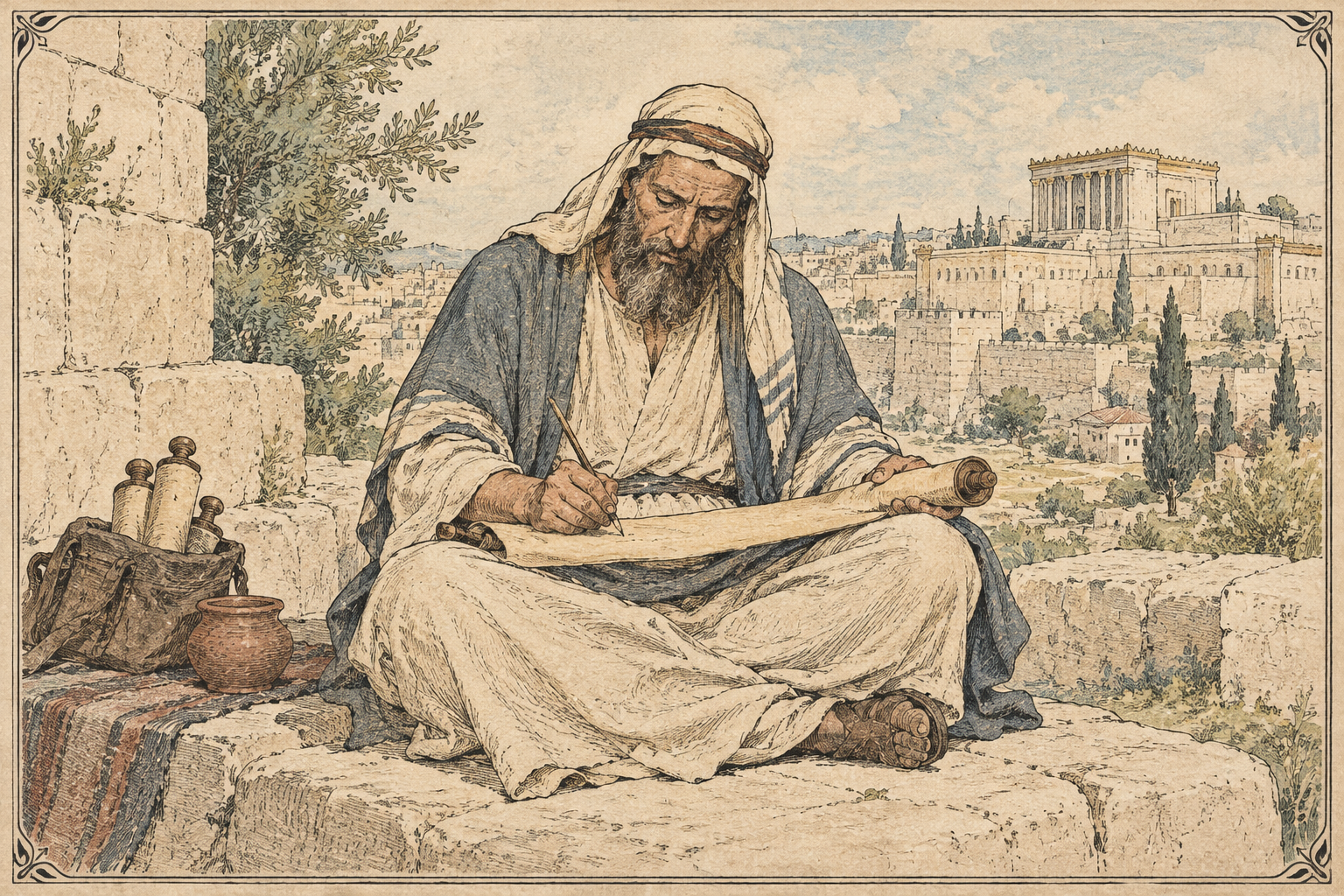
Numbers in Revelation rarely appear by accident, and twenty-four is no exception. The number draws on an established pattern from Israel's own worship structure, one that any Judean reader steeped in the Hebrew Scriptures would have recognized instantly.
David's Twenty-Four Priestly Divisions
In 1 Chronicles 24, King David organizes the descendants of Aaron into twenty-four courses, each assigned a rotation of service before the Lord (YHWH) at the sanctuary. The text names them one by one, from Jehoiarib to Maaziah, not because the names matter individually but because the structure matters as a whole. Priestly service was not left to improvisation. It was ordered, numbered, and representative, so that the entire priesthood, though far larger than twenty-four individuals, was understood to be present in the persons of its twenty-four appointed heads.
This is the key insight: twenty-four functioned in Israel's imagination as a number of ordered representation. It stood for the whole body of priestly service without requiring every priest to be present at once. The elders of Revelation, seated in a number that would have struck Judean ears as instantly familiar, carry forward exactly this kind of representative weight.
The Twenty-Four Courses of Levitical Singers
David extends the same structural logic in the next chapter. First Chronicles 25 describes the sons of Asaph, Heman, and Jeduthun, Levitical musicians set apart for the ministry of song, likewise divided into twenty-four courses by lot. Worship itself, in other words, was organized under the same numbered pattern as priestly sacrifice. Singing before the Lord was not a spontaneous outburst left to whoever happened to feel moved. It was an office, assigned, rotated, and structured.
Put these two chapters together and the picture sharpens. Twenty-four was Israel's number for ordered service before God, whether that service took the form of priestly mediation or musical praise. When Revelation places twenty-four elders on twenty-four thrones around the throne of God, it is not inventing a number out of nowhere. It is picking up a structure every Judean reader of the first century would have recognized as the shape of faithful, representative worship.
Thrones and Crowns: The Shape of Delegated Authority
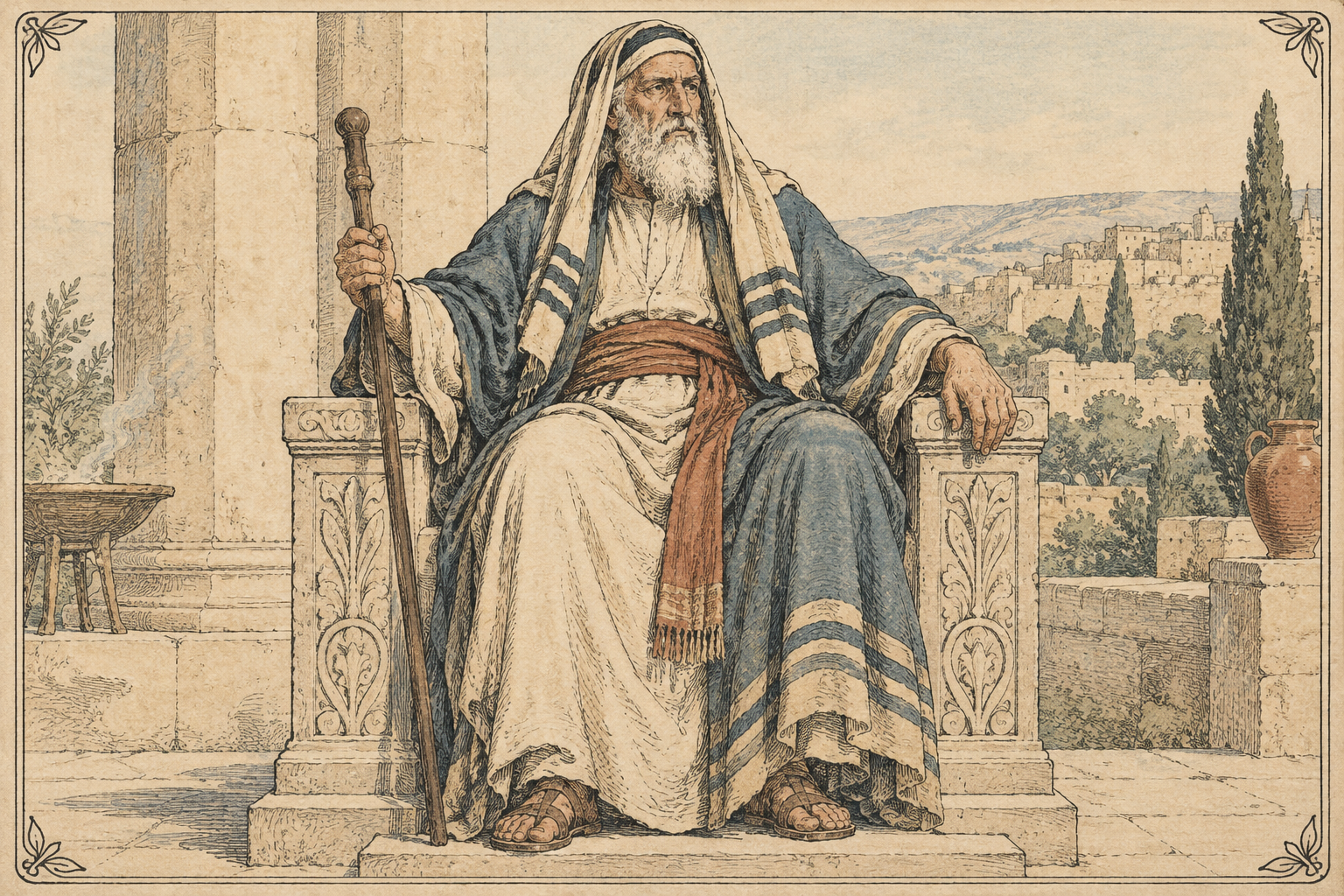
If the number twenty-four tells us something about representative order, the thrones and crowns tell us something about the nature of the authority being represented. Revelation does not give the elders these objects casually. It names them deliberately, and twice, because thrones and crowns are never idle furniture in the biblical imagination.
What a Throne Signifies in the Biblical World
Across the ancient Near East, a throne marked rule, judgment, and recognized standing. To sit on a throne was to possess the authority to decide, to govern, to render verdicts that others were bound to accept. The Hebrew Bible uses throne language the same way, whether describing the throne of David (2 Samuel 7:16) or the throne of God (Psalm 11:4). A throne is never neutral furniture. It is a claim.
This is part of what makes Revelation's picture so striking. God's sovereignty, what Scripture calls his Kingdom, is never portrayed as the abolition of all other authority. It is portrayed as the ordering of authority under its rightful head. The twenty-four elders occupy real thrones, not borrowed chairs. Their authority is recognized, not fictional. That is precisely what makes their next action worth noticing.
The Crowns Cast Down Before They Return
Revelation 4:10 describes the elders doing something easy to read past: they "cast their crowns before the throne." Not set them aside quietly. Not tuck them under a robe. They threw their own symbols of rule down in front of God's throne as an act of open, visible surrender.
And then, crucially, the crowns return. The elders are still wearing crowns when they appear again later in the vision. This detail frames every subsequent act of worship, including Revelation 11:16, as a continuation of an established pattern rather than a one-time stunt. The crowns are not lost. They are laid down and lifted back up, again and again, because that rhythm of surrendered and restored authority is exactly what the elders' worship is meant to display.
Falling Down as a Deliberate Act of Submission
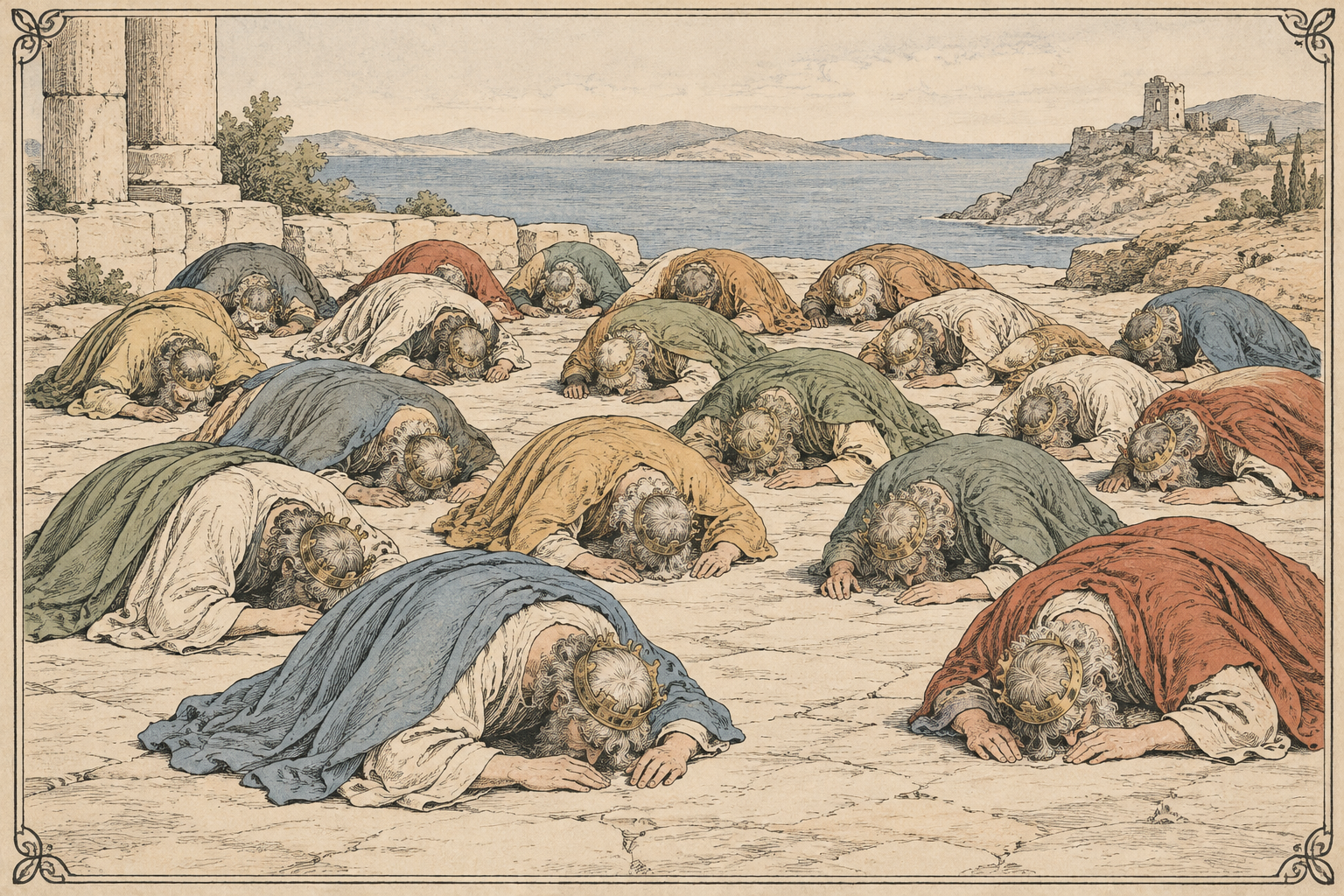
The Greek verb behind "fall down" in Revelation (pipto) describes a physical, bodily collapse, not a vague inward sentiment. This is not a poetic way of saying the elders felt humbled. It describes bodies hitting the floor. The same verb and the same posture appear throughout Revelation wherever genuine submission before ultimate authority is in view, and the consistency is worth taking seriously.
The Weight of Revelation 11:16 in Its Immediate Context
Revelation 11:16 does not occur in isolation. It arrives at the precise moment the seventh trumpet sounds and a voice from heaven declares, "The kingdom of the world has become the kingdom of our Lord and of his Christ, and he shall reign forever and ever." Immediately after this announcement, the text says, "the twenty-four elders who sit on their thrones before God fell on their faces and worshiped God." The elders are named by their office (seated, enthroned) in the same sentence that describes their collapse. The narrative will not let the reader forget, even in the act of submission, that these are figures who hold thrones of their own.
Their falling down is not a reaction to threat or judgment directed at them. It is a response to an announcement, the declaration that God's reign has decisively begun. Authority that already possesses standing responds to that announcement not with resistance or indifference but with immediate, physical acknowledgment of the throne above every other throne.
Revelation 4 as the Interpretive Key to Later Scenes
This is why Revelation 4 matters so much for reading Revelation 11:16 correctly. The earlier throne-room vision has already told us who the elders are, what they wear, and what they do with their crowns. By the time the reader reaches chapter 11, the groundwork has been laid. The repetition of the elders' posture is not confusing. It is familiar, because the book has already trained its readers to recognize what this particular collapse means.
What stands out most about this structure: Revelation does not explain the elders' worship with a sentence of commentary. It simply shows the act again, trusting that readers who paid attention the first time will understand its weight the second. That is a form of teaching through pattern rather than through explanation, and it is worth taking as seriously as any direct statement.
A Pattern, Not a Single Gesture: Worship Repeated in Revelation
The elders do not fall down only once, and this repetition is the detail most treatments pass over too quickly. A single act of submission might be read as a response to a single overwhelming moment. A repeated act, performed identically across different scenes separated by chapters of vision and judgment, signals something else: a settled disposition rather than an isolated reaction.
Revelation 19:4 and the Closing of the Pattern
Near the close of the book, the elders appear once more. Revelation 19:4 reads, "And the twenty-four elders and the four living creatures fell down and worshiped God who was seated on the throne, saying, 'Amen. Hallelujah!'" This is the same posture, the same language, the same figures, occurring near the climax of the entire vision, just as the final judgment of Babylon gives way to the announcement of the marriage of the Lamb.
This closing appearance bookends the opening scene in chapter 4. What began as an introduction to the throne room becomes, by the end of the book, a confirmed and unwavering stance. The elders who fell down in chapter 4, fell down again at the trumpet's sound in chapter 11, fall down one final time as the book's judgments reach their resolution. Three scenes, one posture, and that consistency is the point.
Why Repetition in Revelation Carries Theological Force
Revelation is a book built on recurrence. Sevens repeat (seals, trumpets, bowls). Songs repeat. Visions of the throne repeat. This is not evidence of a disorganized text but of a text using structure the way a composer uses a refrain, returning to a theme precisely because the theme carries the argument.
The repeated worship of the elders functions exactly this way. It is Revelation's way of saying, through action rather than assertion, that submission before divine sovereignty is not a mood the elders pass through on their way to something else. It is their constant stance, revisited every time the narrative needs to remind its readers what rightly ordered power looks like in the presence of ultimate power.
What Authority Submitting Reveals About the Nature of Power
This is the claim the whole passage has been building toward. A powerless figure bowing before a throne proves nothing about the nature of power, because that figure had no power to withhold in the first place. A crowned and throned figure voluntarily casting down the crown and falling on his face proves everything, because that figure had something real to surrender.
The Difference Between Powerlessness and Chosen Submission
Scripture's own vocabulary for God's rule leans toward the dynamic language of Kingdom rather than the static language of mere authority, and the distinction matters here. A kingdom is not simply a hierarchy that happens to exist. It is a sovereignty actively exercised and actively acknowledged by those under it. Coerced deference tells us nothing about this kind of sovereignty, because coercion can produce compliance from anyone regardless of what they believe about the one they are complying with. Voluntary submission is different in kind, not merely in degree.
This is why the elders' thrones and crowns are not incidental details that could be dropped from the story without loss. They are the whole reason the story carries weight. Of course powerless beings might bow before God; that would tell us he is stronger than the powerless, which nobody doubted. But when beings who hold recognized, legitimate, exercised authority choose to cast that authority down before a greater throne, the text reveals something about what authority itself is for. It is never meant to be an end in itself. It is meant to be held in a posture of readiness to be surrendered the moment the true sovereign speaks.
Created Authority Finds Its Proper Place Before the Highest Throne
This is the wider implication the elders' example presses on every reader, whether that reader occupies a throne of global consequence or the much smaller thrones of ordinary life, a household, a congregation, an office of responsibility. Every lesser authority, human or otherwise, finds its meaning only in relation to the authority it ultimately answers to. The elders do not lose their thrones by bowing. Revelation is careful to show the crowns returning. What changes is not their possession of authority but their orientation toward the one who granted it.
None of this means delegated authority is an illusion to be escaped or a burden to be shed as quickly as possible. The elders keep their thrones. They keep their crowns. What Revelation asks of them, and by extension of every reader who holds any measure of responsibility over anything, is not the abandonment of office but its right use, demonstrated in the willingness to fall down the moment the greater throne is revealed.
The question Revelation 11:16 puts to every generation is not whether power exists. It plainly does, in the text and in every structure we build. The question is whether the power we hold knows where it comes from, and whether we are willing, like twenty-four crowned and enthroned elders, to show it.