A friend of mine, trained in close reading and allergic to lazy thinking, once told me he had read the opening chapter of John's Gospel a dozen times. He never noticed the strange claim buried in its fifth verse. The light shines in the darkness, and the darkness did not comprehend it. He had read past it the way you read past a street sign in a neighborhood you already think you know. That is the puzzle this article wants to take seriously: spiritual blindness is not usually about information. It is about something that has gone dull in the human capacity to receive what is already, plainly, there. Before we get to the Greek, the history, and the theology, we need to sit with the strangeness of this fact. People walk past the obvious every day, and they do it not because the obvious is hidden, but because something in them has stopped looking.
The Wall Nobody Sees Coming
Here is the picture, stated plainly: truth can stand directly in a person's path, as solid and unavoidable as a wall in a dark room, and still be walked straight past, unrecognized and unchanged.
Stumbling Over What Should Be Obvious
Think of a man staring at a word on a page. The letters are not hidden. The ink is not faded. Nothing about the physical object withholds its meaning from him. And yet he cannot read it, because something in him, whether through injury, neglect, or simple unfamiliarity, has gone dull to what the word is trying to say. This is an uncomfortable picture to sit with, because it refuses the comforting explanation that truth is simply too obscure, too distant, too wrapped in mystery for ordinary people to find. The biblical writers, and John in particular, will not let us off that easily.
We live in an age awash with information, with more access to more data than any generation in human history, and yet confusion about the most basic moral and spiritual questions has not diminished. People collide with the same arguments, the same evidence, the same stories, over and over, and walk away unchanged. This happens not only to strangers on the street but to ourselves, in our own private moments of willful not-noticing. We have all had the experience of sensing something true was being said to us and simply letting it slide past, because receiving it would have cost us something we were not ready to pay.
Why Collision Doesn't Equal Conversion
Here lies the insight worth pausing over: encountering truth and being changed by truth are not the same event. A person can hit the wall, feel the impact, even register pain, and still get up and walk away exactly as they were before. John's Gospel treats this gap, between collision and conversion, as the real mystery requiring explanation. This is a mystery about human response, not about truth's hiddenness.
This is why the opening of John's Gospel does not begin with an argument for God's (Alohim's) existence or a catalog of evidence. It begins with a claim about light entering a world that, for the most part, did not want it. The text assumes the light is sufficient. The question the text wrestles with is why sufficiency so often fails to produce recognition. The whole prologue builds toward this point, and it is worth taking slowly rather than rushing past the way so many readers, trained to look for information rather than diagnosis, tend to do.
A Darkness With No Floor
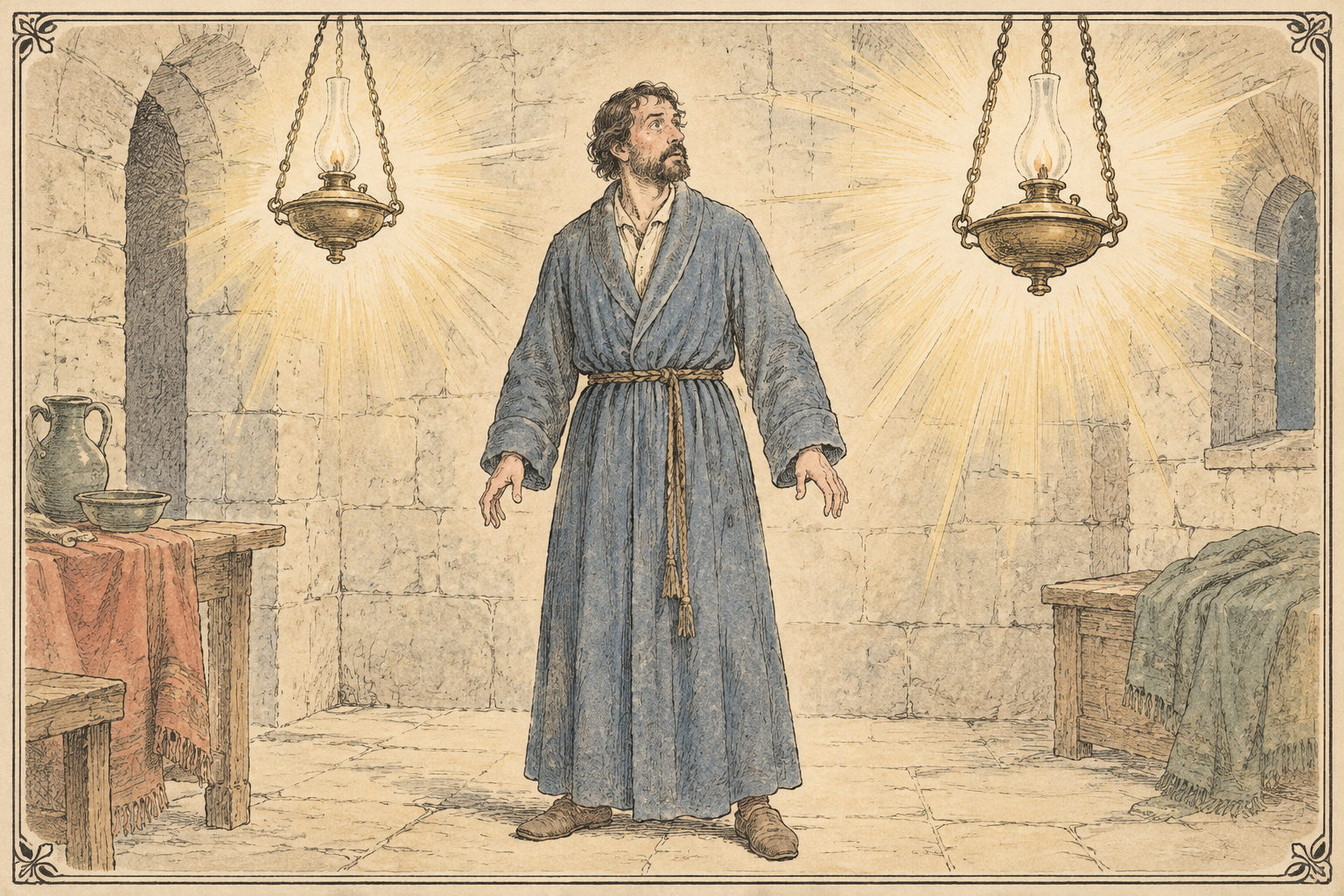
Some conditions of the human heart go further than simple missing. They sink into something closer to a bottomless pit, a darkness so deep that even brilliant light produces no response at all.
When Light Stops Registering
Picture a person standing in a room when the lights suddenly flood on, bright and unmistakable, and nothing in their face changes. No squint, no flinch, no acknowledgment. This is what spiritual numbness looks like when it has progressed past simple confusion. The light is doing exactly what light does; it has not dimmed. The eyes, through long disuse, have stopped performing the function eyes were built for.
This should trouble us more than it typically does. We tend to assume that if truth were presented with sufficient force and attraction, people would respond. The biblical diagnosis is more sobering. There comes a point at which the problem is not the clarity of the message but the condition of the receiver. A brilliant light shown into eyes that have stopped working produces exactly nothing, and mistaking this for a communication problem rather than a perception problem leads to a great deal of wasted effort and unnecessary despair among people who sincerely want others to see what they see.
Degrees of Darkness in the Biblical Imagination
Scripture is careful here, more careful than most popular readings give it credit for. It distinguishes between temporary confusion, the kind that clears with better information or a change of circumstance, and entrenched blindness, the kind that has settled into the bones. The disciples themselves experience temporary confusion throughout the Gospels, misunderstanding parables, missing the point of miracles, arguing about who will sit where in the coming kingdom. Jesus (YHWShA) does not treat this confusion as damning. He treats it as the ordinary fog of people still learning to see.
But there is another category entirely, a darkness with no floor, where repeated refusal has produced something closer to a permanent condition. This is the darkness the Johannine prologue has in view when it speaks of the world not knowing the light that made it. This is entrenchment, something far more serious than mere confusion waiting to be cleared, and it needs to be addressed by something stronger than information. The distinction matters because it changes what kind of help a person needs, and pretending all spiritual blindness is the same kind flattens a diagnosis Scripture takes pains to keep layered.
Spiritual Exile as the Root of the Blindness
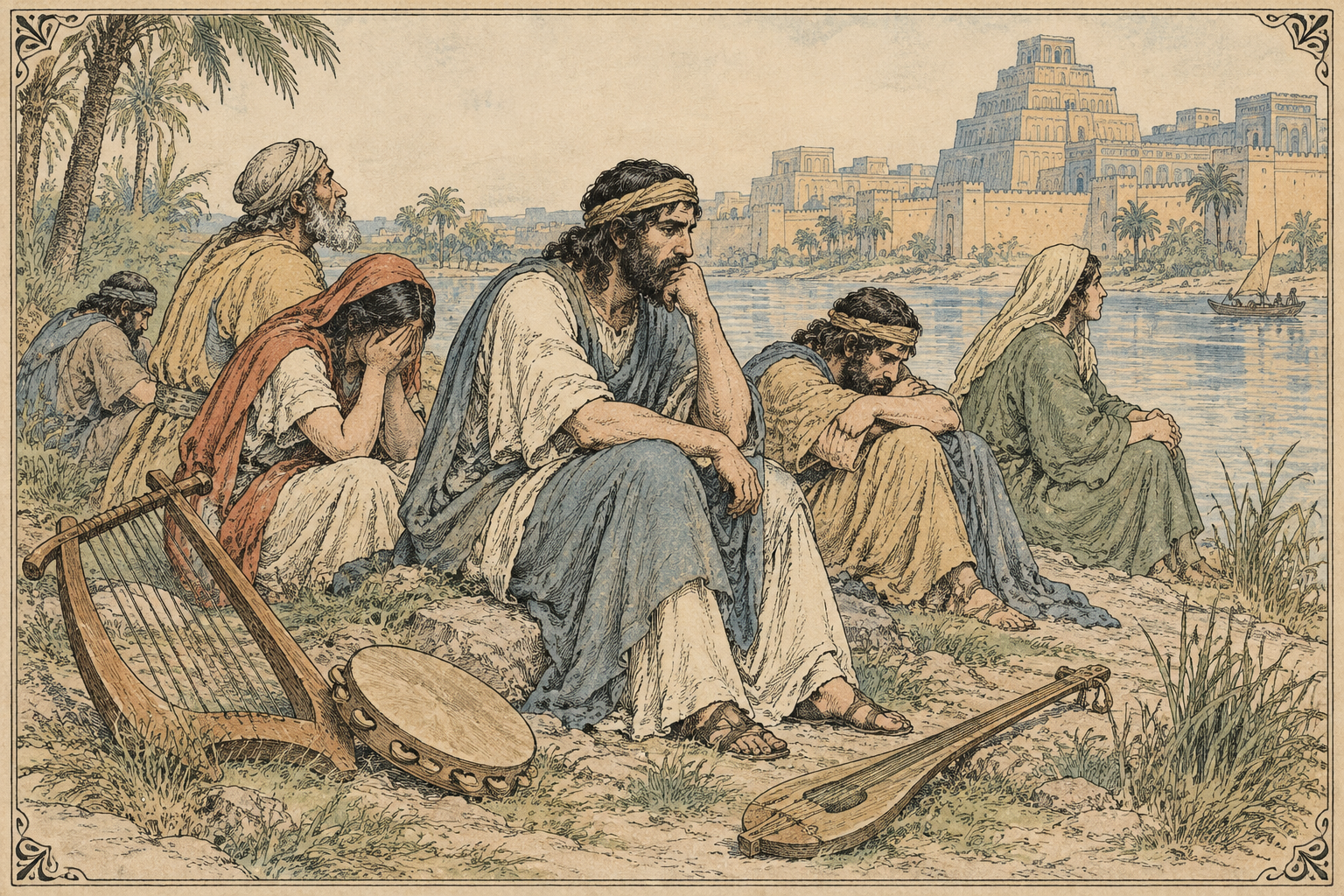
If the darkness runs this deep, the obvious question is where it comes from. The biblical answer traces the condition back to spiritual exile, a long habituation to sin that produces resistance to both seeing and hearing truth.
Exile Not as Geography but as Condition
The people of Israel knew exile as a geographic and political catastrophe, deportation from the land, the temple in ruins, rivers of Babylon running past captives who could not bring themselves to sing. But the biblical writers, reflecting on that history, came to understand exile as something that outlasted the physical return. One could be back in the land and still be, in every meaningful sense, in exile, estranged from the covenant, estranged from the God (Alohim) who had called Israel into being in the first place.
This is the sense in which spiritual exile matters for understanding why people miss truth standing before them. It is a condition that settles into the heart over time rather than primarily a location one is sent to, an estrangement from the source of life that persists even when every external circumstance suggests a person should be thriving. A person can have every comfort, every advantage, every opportunity to encounter the light, and still carry within them an exile that nothing external can touch. This kind is, if anything, the more dangerous, because it hides behind apparent normalcy.
Entrenchment: How Vice Becomes a Second Nature
Exile of this kind does not arrive all at once. It accumulates, the way habits accumulate, through a thousand small choices against the light rather than one dramatic rebellion. Each refusal to see makes the next refusal easier. Each choice to look away reshapes, in some small measure, the capacity for looking. Anyone who has watched an addiction progress knows the pattern: the first refusal costs something, feels like a decision, carries weight.
By the hundredth refusal, it hardly registers as a choice at all. It has become, in the old language, a second nature. This is entrenchment, and it explains why the man staring at the word on the page cannot simply be told to try harder. Habituation to darkness has dulled the desire that would motivate the effort in the first place. A heart that has spent years refusing to see does not wake up one morning freshly capable of sight. Something has to intervene, something has to interrupt the pattern, before perception itself can be restored. This is the deep root the rest of the diagnosis depends on.
What John 1:5 Says
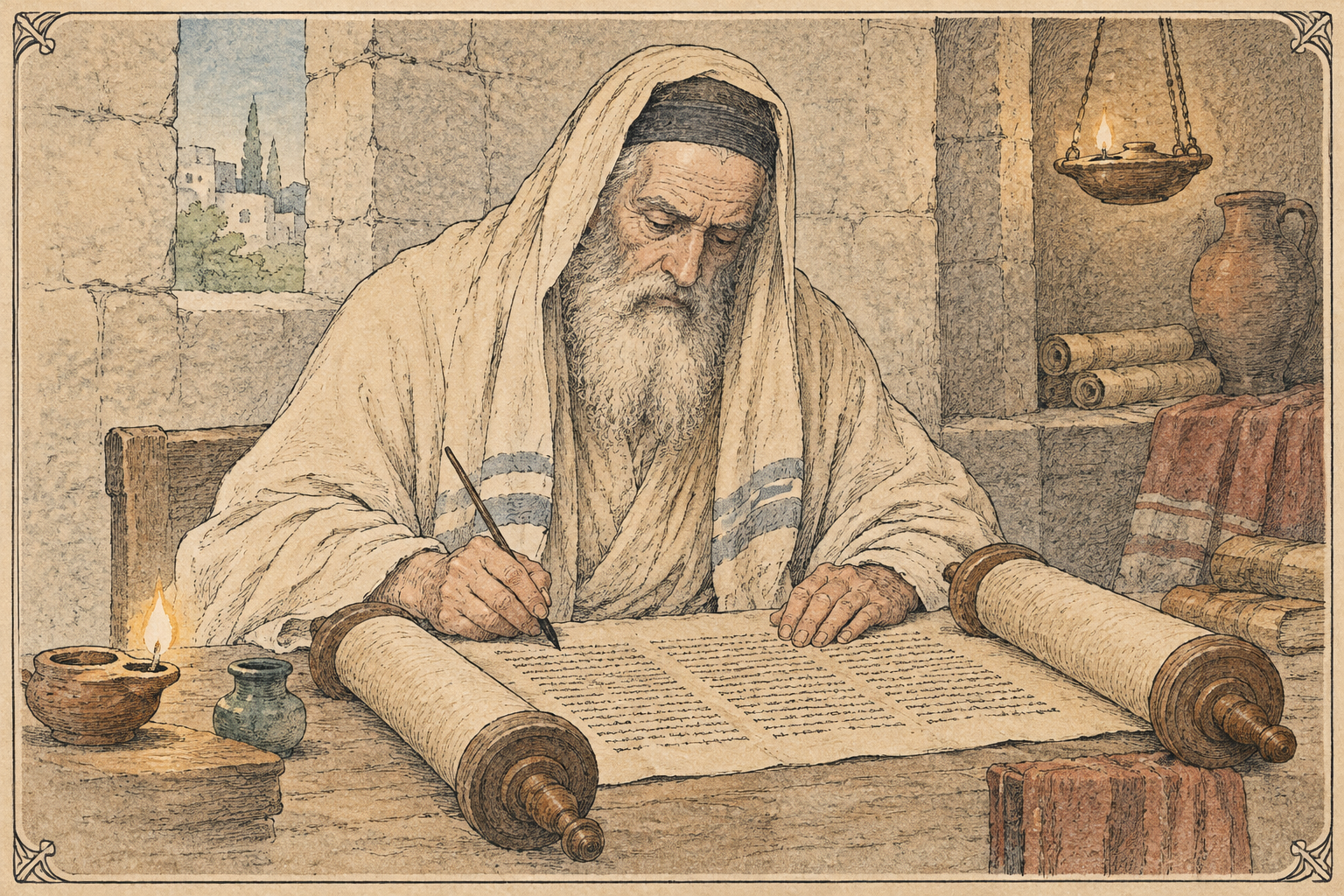
With that groundwork laid, we can turn to the verse itself and read it with the attention it deserves, inside its own context rather than as an isolated slogan.
The Prologue's Argument from John 1:1 to John 1:14
The opening of John's Gospel is doing something audacious. It begins, deliberately, with the same words that open the Hebrew Scriptures: in the beginning. But rather than describing the first act of creation, John describes the Word, present with God from before time, through whom everything that exists came into being. This Word, John tells us, was with God, and the Word was God. This is God himself in human form, the fullness of the Godhead stepping into human history rather than a separate divine being sent from elsewhere.
By verse four, John has introduced life and light as properties belonging to this Word. "In him was life, and the life was the light of men." This is the setup for verse five: the light shines in the darkness, and the darkness did not comprehend it. The prologue does not stop there. It continues through verse fourteen, where the Word becomes flesh and dwells among humanity, full of grace and truth. The abstract claim about light and darkness becomes concrete in the person of Jesus walking through first-century Judean towns, encountering people who, verse after verse, either recognized him or did not. The whole prologue builds toward an incarnational claim, and verse five sits at its hinge, explaining in advance why the incarnation itself would be met with such mixed response.
Comprehend or Overcome: The Greek Ambiguity
Here is where the text rewards patience. The Greek word behind "did not comprehend" is katalambano. In the Greek of the New Testament, this word carries two distinct shades of meaning that English struggles to hold together in one translation. It can mean to grasp intellectually, to understand or comprehend, the sense most English translations favor. But it can also mean to seize, to overtake, to overcome, the sense that lies behind the alternative rendering found in some older translations: "the darkness has not overcome it."
Commentators disagree on which sense John intended, and the ambiguity does real work rather than signaling a translation failure. If the sense is "overcome," the verse makes a claim about light's victory, a claim about cosmic conflict in which darkness tries and fails to extinguish what has appeared. If the sense is "comprehend," the verse makes a claim about human perception, about darkness failing to grasp or take hold of what it is being shown. Some readings favor the cosmic sense, since it offers a tidier theological payoff: light wins, darkness loses, the story ends in triumph. Other readings favor the human sense, and the matter is not settled among those who study the text closely.
A Claim About Refusal, Not Cosmic Combat
Stopping at the cosmic reading alone creates a problem: it lets the human reader off the hook too easily. If the verse is simply announcing a metaphysical victory that light has already secured over darkness, then the human response to that light becomes almost incidental, a footnote to a battle already decided elsewhere. The rest of the prologue will not allow this. Verse eleven and twelve are explicit: he came to his own, and his own did not receive him, but to as many as did receive him, he gave the right to become children of God. This is the language of offer and refusal, reception and rejection, playing out in real human decisions, not the language of automatic cosmic resolution.
Read this way, the ambiguity in katalambano is not a problem to be solved by picking a side. It is a double exposure, true in both senses at once. The light has indeed not been extinguished, that much is true. But the darkness's failure to overcome the light is inseparable from its failure to comprehend it, because darkness that does not understand what it is looking at has no capacity to meaningfully oppose it either. This passage diagnoses human refusal: a darkness that does not fight the light so much as fail, again and again, to recognize it for what it is. The light stands there, available, and the darkness walks past it, unchanged.
Losing the Desire to Be Found
This brings us to the most sobering layer of the whole diagnosis. Some people have not simply failed to notice the light. They have stopped wanting to be found by it.
Parallels in Yashayahu and Paul
This pattern did not begin with John, and it does not end with him either. When the prophet Yashayahu receives his commission, the instruction he is given is startling: go and tell this people, keep listening but do not comprehend, keep looking but do not understand. Make the heart of this people dull, their ears heavy, their eyes blind, lest they see with their eyes and hear with their ears and understand with their hearts and turn and be healed (Isaiah 6:9-10). It describes what happens when a people's repeated refusal of what they have already heard calcifies into an inability to hear anything further. The prophet is not causing the condition. He is describing a hardening already well underway.
Paul draws on the same pattern centuries later, writing of minds that remain veiled when the old covenant is read, a veil that is removed only when a person turns to the light himself. The veil, Paul insists, is not an external imposition but something that settles over the mind through unbelief, through a settled unwillingness to see what has been plainly offered. These parallels matter because they show this is not a strange or isolated claim unique to John's Gospel. It is a thread running through the whole of Scripture: refusal, if sustained long enough, becomes its own kind of blindness, self-inflicted rather than imposed from outside.
When Resistance Becomes a Choice
What makes this diagnosis so uncomfortable is the implication that resistance, pursued long enough, eventually calcifies into something closer to a settled will than simple ignorance. A person does not wake up one day having decided, formally and consciously, to stop wanting truth. It happens the way all entrenchment happens, through accumulated small refusals that eventually add up to a disposition. And a disposition, once formed, does not simply reverse itself because new evidence arrives. This is why presenting better arguments, sharper evidence, or more dazzling demonstrations so often fails to move someone whose heart has reached this condition. The problem was never a shortage of evidence. The problem is that the desire to be found has itself gone missing.
None of this means a person in this condition is beyond the reach of hope, and the text does not treat it that way either. But it does mean the path back cannot run through more information. It has to run through something that can address desire itself, which is precisely where the argument turns next.
The Condition Is Not Permanent
Here is where diagnosis gives way to hope, and it is worth saying plainly that this turn is not a soft add-on tacked onto an otherwise bleak picture. It is the whole point of naming the darkness honestly in the first place.
The Prayer That Asks for Open Eyes and Ears
If entrenchment comes through repeated small refusals, then the way back begins with a concrete response, one Scripture itself lays out. Peter's answer to this critical condition, when the crowd at Pentecost realized their own blindness and asked what to do, was specific: repent, and be baptized every one of you in the name of Jesus for the forgiveness of sins, and you will receive the gift of the Holy Spirit (Acts 2:38). This is not a single act of asking in isolation but a process: turning from sin, being immersed in water in the name of Yahuah's Son, and receiving the Spirit, with the speaking in tongues that accompanied that gift in Scripture serving as its evidence. This is hardly a simple request; it is the whole pattern by which habituation sealed shut is reversed. The disease was never primarily intellectual, but the remedy still carries real shape and real steps.
What makes this pattern significant is not its simplicity but its direction. It is an admission that the one seeking restoration cannot restore their own sight, that something beyond willpower and information is required, and that repentance, baptism, and the gift of the Spirit together are what Yahuah has provided to supply it. This obedience is itself the beginning of healing, because it reverses the pattern that produced the blindness in the first place. Where entrenchment was built through repeated refusal, repentance and baptism begin to dismantle it through deliberate acts of surrender and reception. The person who feels the light is dim in their own heart, who suspects their own capacity to see and hear has gone dull, is being invited to do what habituation makes hardest: turn, submit, and receive, rather than assume no help is needed.
Invitation, Never Coercion
And here the argument reaches its final, necessary edge. The light is standing there. Yahuah, the self-existing One, is calling. But coercion is not on offer, and it never has been. The same God who could, presumably, force every eye open and every ear to hear chooses instead to call and to show the way, leaving the response in human hands. This reflects respect for the thing that makes a human being a person rather than a mechanism: the capacity to say yes or no.
This is why the whole account, from the puzzle of the man walking past the obvious to the hope of restored sight, turns on human response rather than divine compulsion. Nothing in this argument suggests God is distant, uninterested, or stingy with grace. Quite the opposite. The light has been shining the whole time, through every refusal, through every bottomless pit of entrenched darkness, patient and unextinguished. The invitation stands, available to anyone willing to repent, be baptized, and receive the Spirit. It simply will not be forced on anyone unwilling to receive it.
This is, perhaps, the most honest thing that can be said about truth's failure to persuade even thoughtful, intelligent people. The failure was never primarily about evidence. John 1:5 meaning, read carefully within its own context, describes spiritual blindness not as a cosmic battle fought over our heads but as a diagnosis of the human heart, one that spiritual exile and habituation to sin can deepen into something resembling a settled refusal to be found. And yet the verse that names the darkness so starkly also insists the light has not gone out. For anyone who suspects their own eyes have gone dull, the next move is not research but repentance: turn, be baptized in the name of Jesus, and ask to receive the Spirit who alone opens eyes and ears sealed shut.