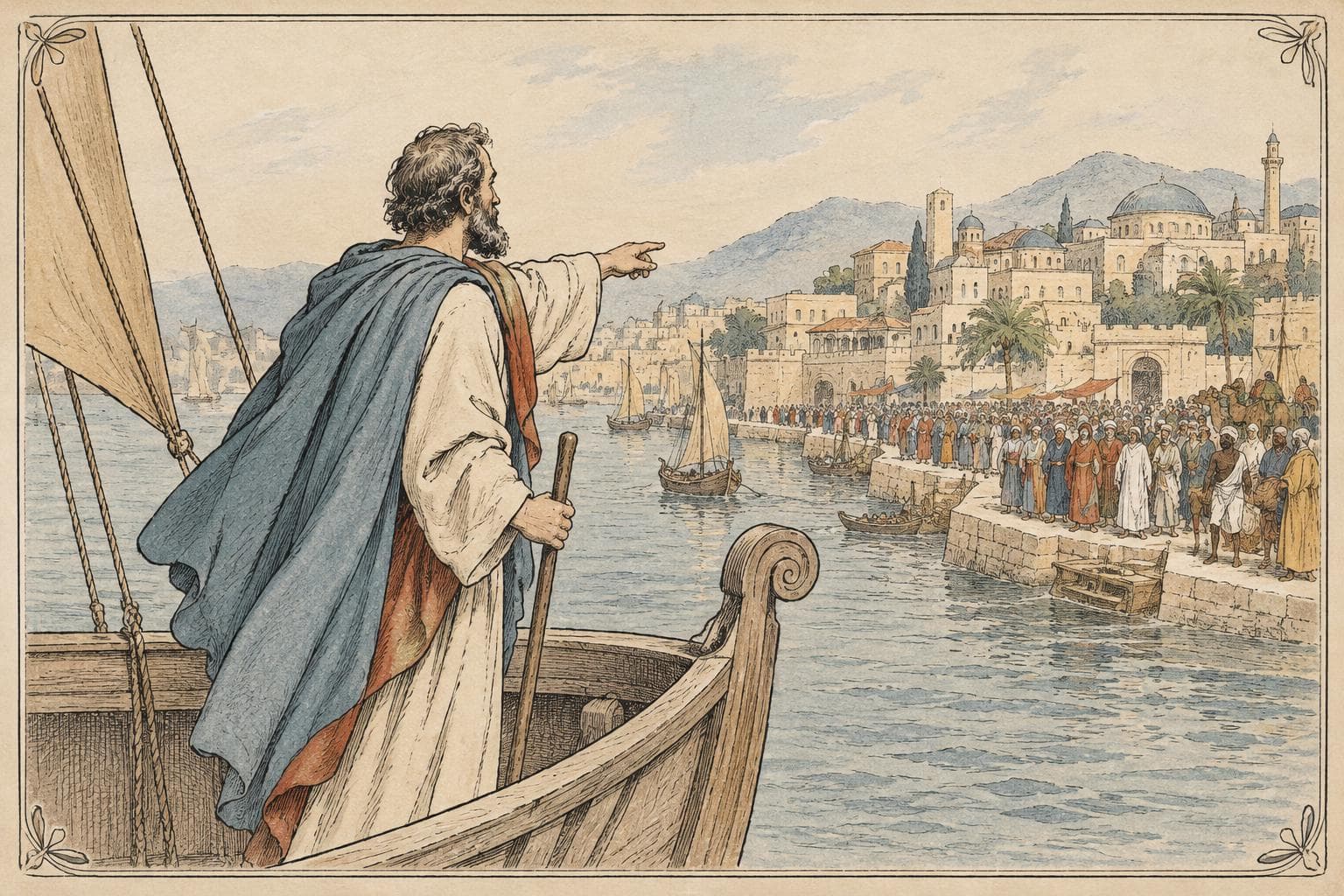
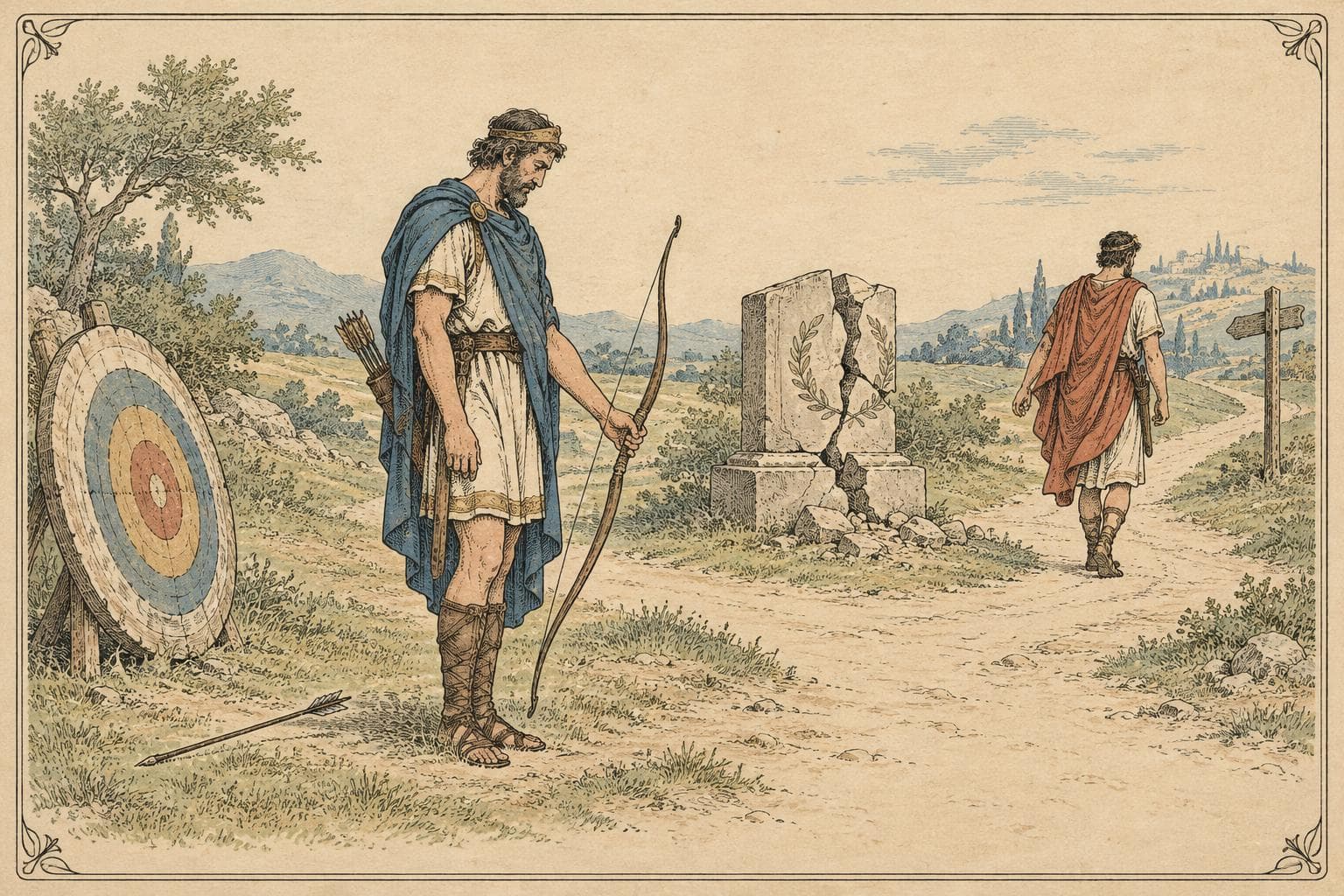
A woman reads her favorite verse aloud, slowly, letting each clause land before moving to the next. I am crucified with Mashiach. Still I live. Yet not I, but Mashiach lives in me. And the life which I now live in the flesh, I live by faith in the Son of Elohim, who loved me, and gave himself for me. The cadence stops you. A man claiming to be dead and alive in the same breath sounds like a riddle, and most readers either rush past the paradox or retreat into vague spiritual feeling. Understanding the Galatians 2:20 meaning requires something different: slowing down enough to ask what Paul meant when he wrote these words, and why.
Galatians 2:20 was not composed in a mystical fog on a mountaintop. It was written in the aftermath of a shouting match over breakfast tables in Antioch, a public falling-out between two apostles over who could eat with whom. That detail changes everything about what "I am crucified with Christ" means.
The Verse in Full, Before We Take It Apart
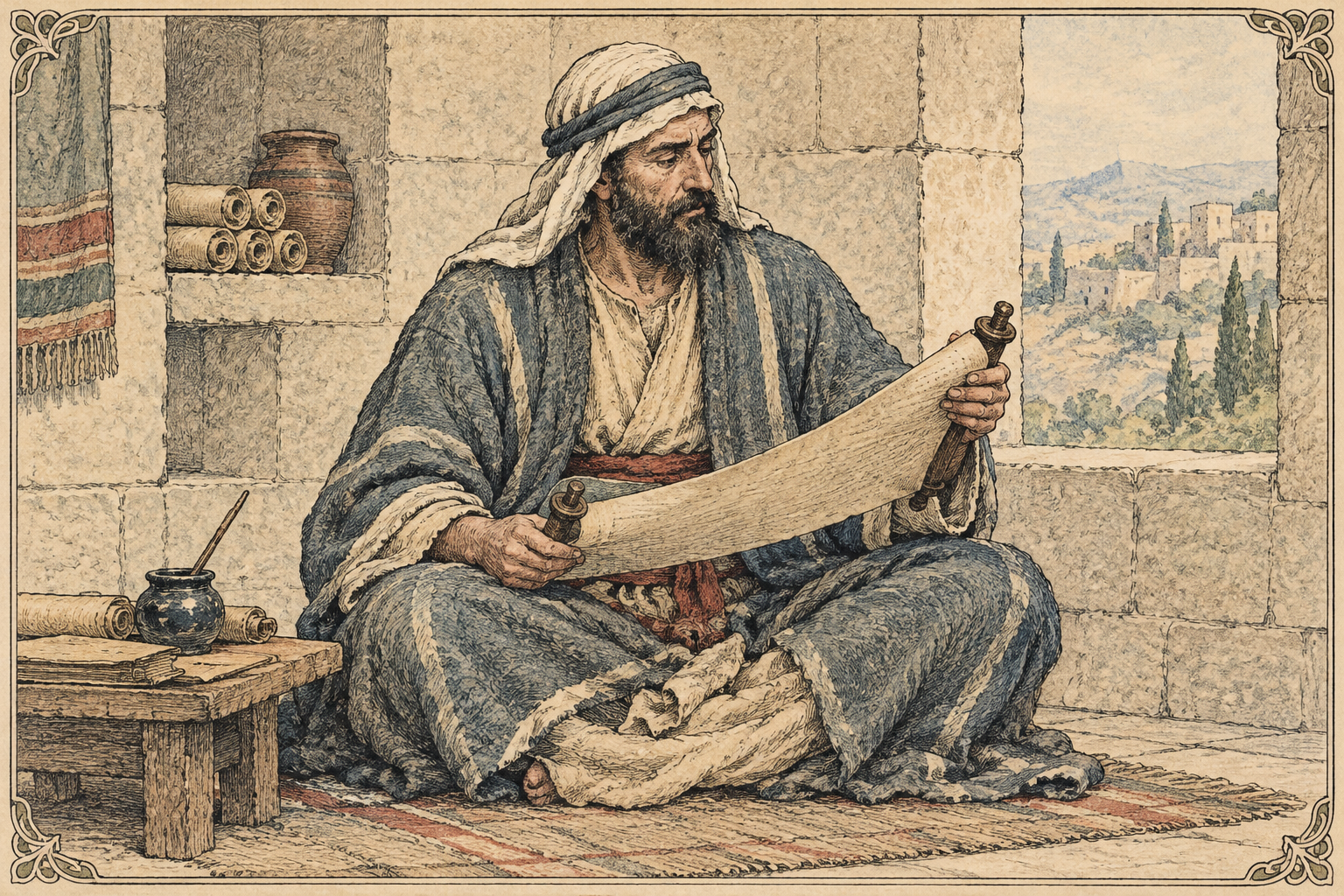
Reading Galatians 2:20 whole before breaking it into phrases
Before we start pulling the verse apart phrase by phrase (and we will, that is the whole purpose of this piece) it deserves to be heard whole, the way it sounds read aloud, with its Hebraic terms left intact. "I am crucified with Mashiach. Still I live. Yet not I, but Mashiach lives in me. And the life which I now live in the flesh, I live by faith in the Son of Elohim, who loved me, and gave himself for me." Six moves in a single breath: death, life, indwelling, embodiment, faith, love. Each one depends on the one before it.
Notice the grammar before you notice the theology. Paul does not say "I was crucified" as a past event he is merely remembering. The verb carries the sense of a completed action with continuing effect. Something happened, and it keeps happening. That is the first clue that this verse is not describing a single ecstatic moment but a settled, ongoing condition.
Why a dinner-table fight in Antioch, not a mountaintop vision, is the real setting
Popular readings often lift Galatians 2:20 out of its paragraph, treat it as a standalone devotional gem, and turn it into a private mystical experience between a soul and its Savior. There is nothing wrong with devotion. But Paul did not write in a vacuum, and the verse immediately preceding this one is not about inner feelings at all. It is about Peter pulling his chair back from a table in Antioch.
Galatians 2:11-19 describes a public confrontation. Peter had been eating with Gentile believers in Antioch, sharing meals without regard for the old dietary boundary lines. Then representatives from James arrived, and Peter withdrew, fearful of "the circumcision faction." Paul calls this what it is: hypocrisy, a failure to act in line with the truth of the gospel. This is the scene Galatians 2:20 grows out of: a dispute about who gets to sit where, and why.
So far, we understand why readers gravitate toward the mystical reading. The language of crucifixion and indwelling sounds otherworldly, and devotional traditions have trained generations of readers to hear "Christ lives in me" as an invitation to private spiritual experience. But Paul's argument has a hinge, and the hinge is Antioch. If we skip past the dinner-table fight to get to the poetry, we will misread the poetry.
"I Am Crucified With Mashiach": Dying to the Old Boundary Markers
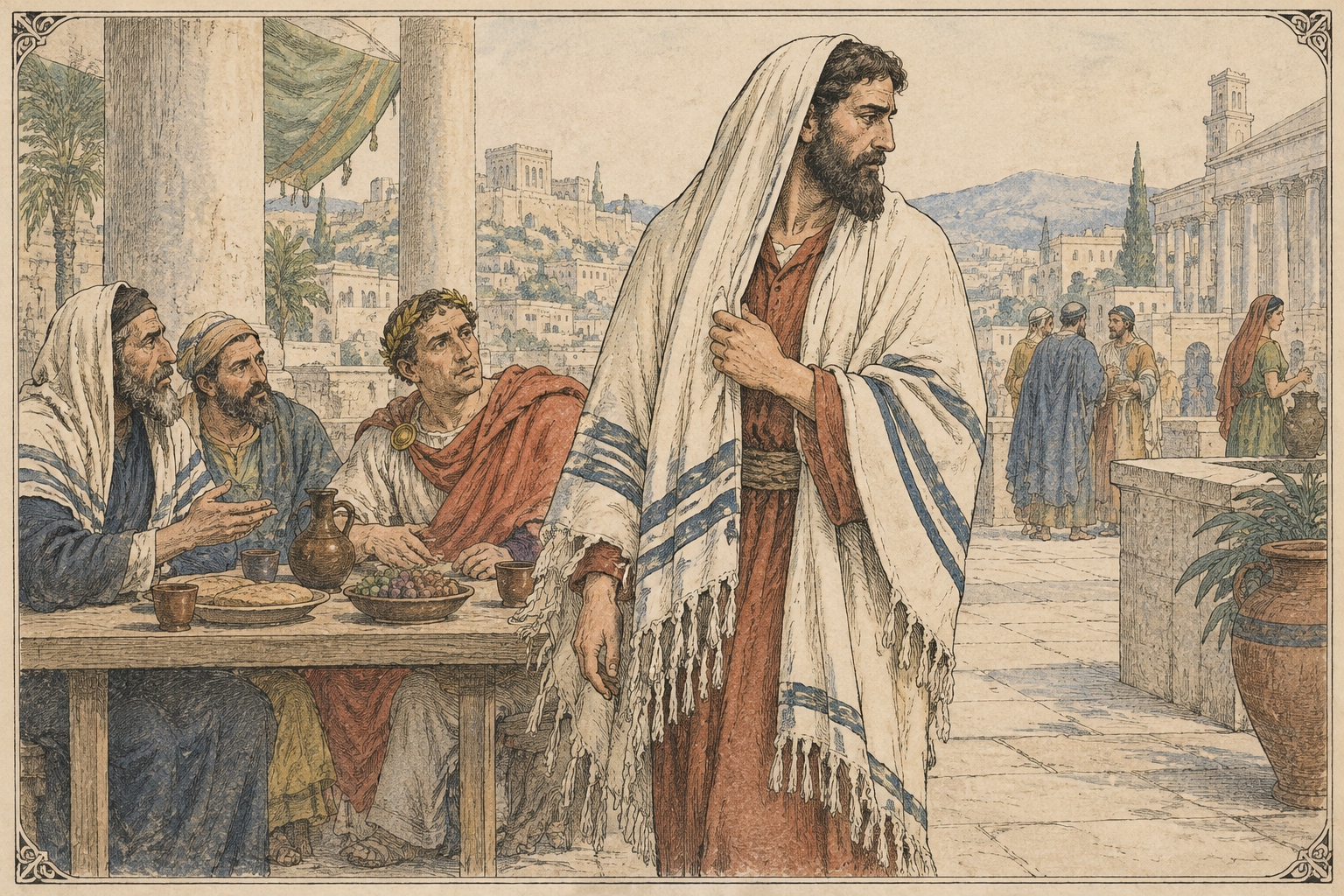
Peter's withdrawal from the Gentile table and what was truly at stake
Picture the scene concretely. Antioch was a mixed city, and the early Messianic community there had been doing something unprecedented: Judean and Gentile believers eating at the same table, under the same roof, as members of the same family. Food laws, in the ancient Judean world, were not arbitrary preferences. They were covenant markers, badges that said this is who we are, and this is who we are not. Sharing a table without those markers was a statement that something fundamental had shifted.
When Peter withdrew, he was not merely being rude. He was reinstating the old boundary. He was signaling that Gentile believers were, after all, second-class, that the badges still mattered. Belonging to God's people, by this signal, still ran through the old ethnic and legal channels. Paul saw this for what it was: a betrayal of the gospel itself, dressed up as caution. The stakes were not etiquette. The stakes were the essential definition of who belongs at God's table.
Galatians 2:16 and justification by the Messiah's faithfulness, not works of the law
This is why Paul's argument moves, in verse 16, to the heart of the matter: a person is not justified, not declared to be in right standing with God (Alohim), by works of the law, but through the faithfulness of Yahushua Himself, God manifested in flesh to walk out Israel's covenant obligations on humanity's behalf. The phrase "works of the law" here refers specifically to those boundary markers: circumcision, food laws, sabbath observance, the whole apparatus that distinguished Judean from Gentile. Paul is not attacking the Torah as evil. He is attacking the use of the Torah's boundary markers as the badge of covenant membership now that Yahushua has come.
Paul does not argue that the markers were always wrong. He argues that they have been rendered obsolete by a new reality: God, in the person of the Messiah, has acted to create a single family out of Judean and Gentile alike, and the badge of membership in that family is no longer ethnic descent plus legal performance. It is trust in, and the trustworthiness of, the Messiah himself, who is God come in the flesh rather than a separate agent sent on God's behalf. Everything Paul says next in verse 20 is the lived, personal outworking of this claim.
What dies when the old self dies: circumcision, food laws, and tribal belonging
Now we can hear "I am crucified with Christ" with the right ears. This is not a statement about feeling spiritually dead to sin in some generalized sense, though that is not absent from Paul's thought elsewhere. In this context, it is a statement about the death of an entire system of belonging. The old self that Paul describes as crucified is the self that was defined by tribal markers, by the question "are you one of us or one of them," by the whole architecture of boundary-keeping that Peter's withdrawal had reinstated at Antioch.
Think of it this way. A man converts, in the ancient world, from one trade guild to another, and in doing so he renounces the oaths, the patron gods, the social ties that bound him to his former guild. Something has genuinely ended, not metaphorically but in reality, in the eyes of everyone watching. Paul's crucifixion language works the same way. The old regime of identity, with circumcision and food laws as its passport stamps, has been nailed up and left to die. Something has ended. That is the first link in the chain.
"Still I Live": Death as Doorway, Not Destination
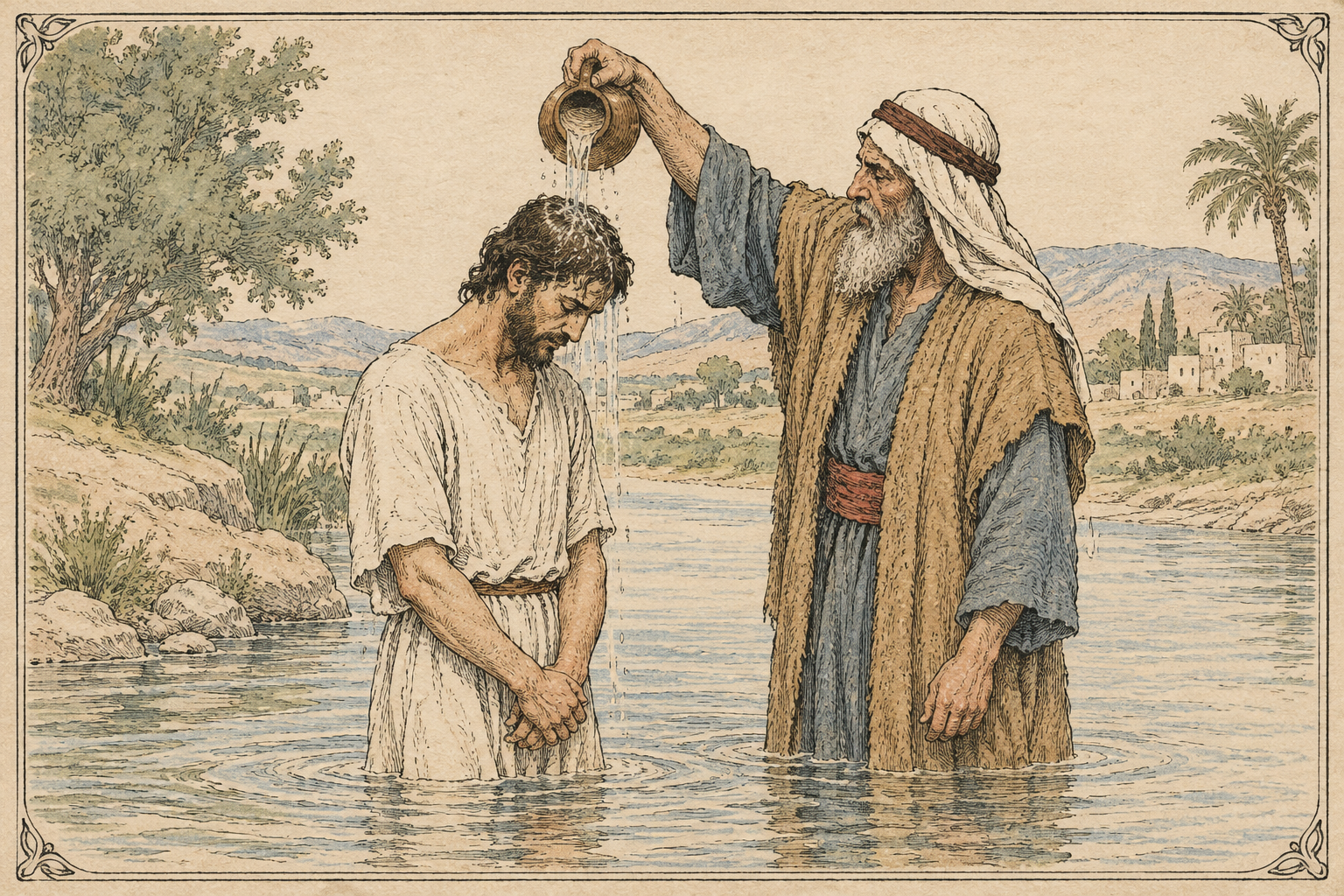
Romans 6:3-6 and baptism as burial into Christ's death
Paul refuses to let death have the final word, and this is where "still I live" enters. The move is not unique to Galatians. In Romans 6:3-6, Paul describes baptism in exactly this pattern: believers are buried with the Messiah through baptism into death, so that, just as he was raised from the dead through the glory of the Father, they too might walk in newness of life. Burial is not an end in itself. It is the necessary passage into something new. This baptism, carried out in the name of Jesus (YHWShA) as the earliest believers practiced it, is paired with repentance and the gift of the Spirit, not treated as a symbol detached from that fuller process of new birth.
The early Christian teachers who shaped baptismal practice understood this instinctively, which is why full immersion, not a token sprinkling, became the normal pattern in the earliest centuries: going under the water as a kind of burial, coming up as a kind of rising. The ritual enacts the theology. You cannot get to resurrection without passing through death, and you cannot talk about death in Paul's thought without resurrection waiting on the other side.
Inaugurated eschatology: the age to come breaking into the present
Judean expectation, in Paul's day, looked forward to a single great event: the resurrection of the dead at the end of the age, when God would set the whole world right. Paul's claim, radical in his own context and still radical in ours, is that this future event has already begun, ahead of schedule, in the Messiah's own resurrection. The age to come has broken into the present age. Those who are "in the Messiah" are not merely waiting for resurrection life. They are already, in some genuine sense, living it.
This is what is called inaugurated eschatology, a term that describes something quite ordinary once you see it: the future has started early. "Still I live" is not a vague assurance that things will work out eventually. It is a claim that new creation life is already underway, right now, in a body still subject to arguments over breakfast tables and disputes about who sits where. The story is not over, but it has decisively begun.
"Yet Not I, But Mashiach Lives in Me": The Indwelling That Isn't Metaphor
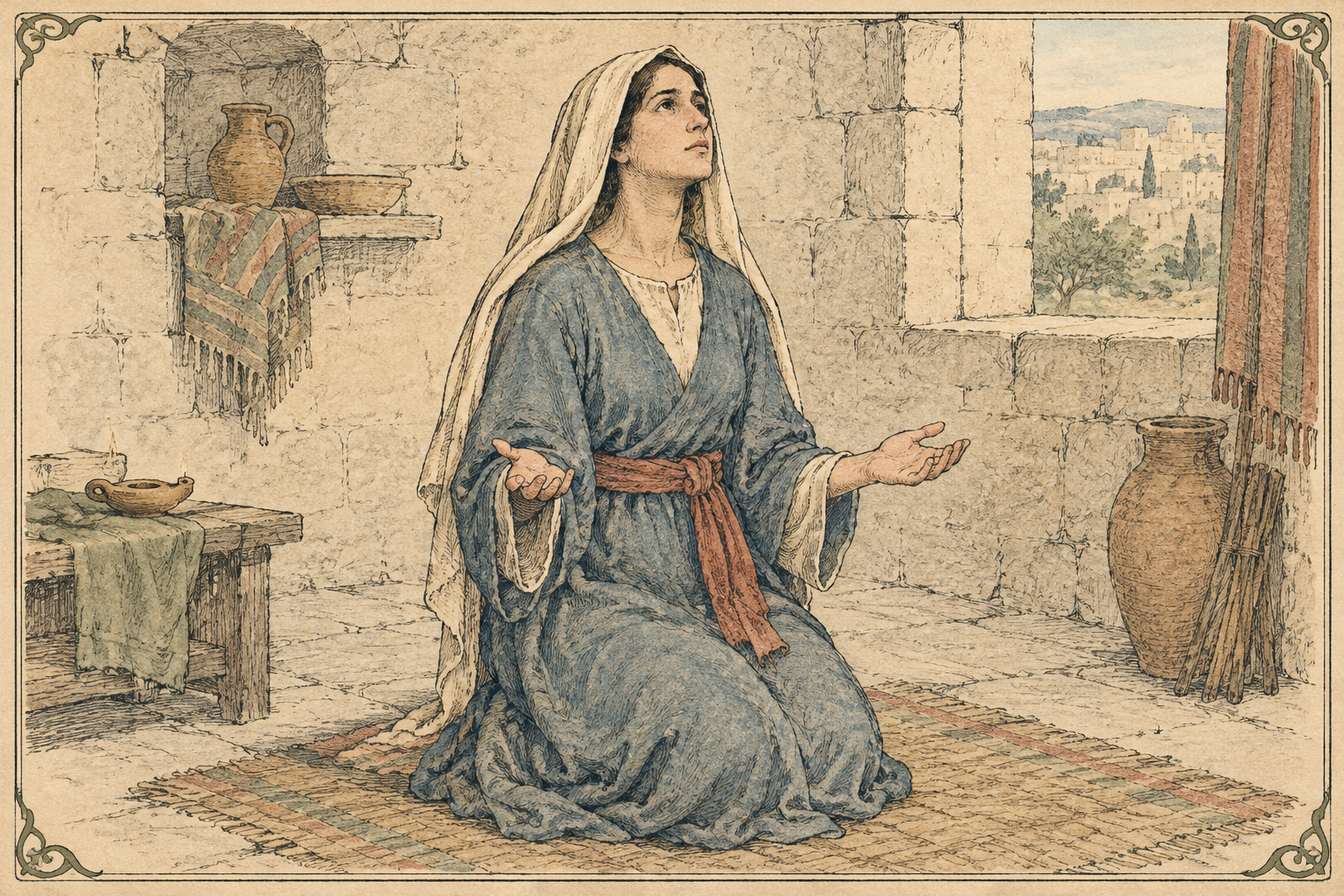
Romans 8:9-11 and the Spirit of God making a home in human bodies
"Christ lives in me" is the phrase most readers turn into a vague feeling, something like warmth in the chest during worship. Paul means something far more concrete. In Romans 8:9-11, he describes the Spirit of God as dwelling in believers, the Spirit of Jesus Himself, raised from the dead, now making a home in mortal bodies, with the promise that this same Spirit will give life to those mortal bodies as well. This is residence language, not metaphor. It is not a separate being taking up residence on behalf of another; it is God Himself, the same one who is YHWH in flesh, dwelling personally within the believer.
Of course one can read "Christ lives in me" as poetic flourish, a dramatic way of saying "I feel close to God." Many devotional traditions do exactly this, and there is no malice in it. But what you cannot do, not if you want to track with Paul's own argument, is reduce this to sentiment. Paul's whole point in Romans 8 is that a genuine, objective change has occurred: God Himself has taken up residence in ordinary human flesh. Galatians 2:20 is the first-person, singular, deeply personal version of that same claim.
Galatians 4:6 and the Spirit who cries out from within
Paul makes the same point elsewhere in the same letter. Galatians 4:6 describes the Spirit filling believers' hearts, the Spirit of God Himself, crying out "Abba, Father," naming their new identity as God's own children. The indwelling Spirit is not a passive resident. It is active, vocal, continually asserting the believer's new status against every old claim the ethnic and legal badges used to make. "Christ lives in me" and "the Spirit cries out from within" are two descriptions of the same reality: God Himself, present and unmistakable, moved in permanently and refusing to be silent.
None of this means the believer's own will or personality disappears, swallowed up into some undifferentiated mystical union. Paul still says "I live," even as he says "not I." The paradox stands, unresolved and not needing resolution, because it describes something Hebraic thought was comfortable holding together in ways later Western individualism often is not: a self genuinely present and active, indwelt by the one God who is genuinely present within it, both true at once.
"The Life I Now Live in the Flesh": Resurrection Life on Monday Morning
What "life in the flesh" rejects: deferred hope and spiritualized escape
This verse corrects a temptation nearly every generation of believers has faced: the temptation to push all the good news into the future, to treat resurrection life as a reward collected only after death, and to treat the present body as little more than a waiting room. Paul will have none of it. "The life I now live in the flesh" insists on the present tense and the physical body in the same breath. Not "the life I will one day live in glory." The life I now live, in this flesh, today.
This is not an incidental detail. Paul's whole argument in Galatians has been building toward exactly this point. If justification comes through the Messiah's faithfulness rather than through law-keeping, and if the old self has died and a new self has risen, then the place that new life gets lived out is not a future paradise. It is the kitchen table in Antioch, the argument over who eats with whom, the daily friction of embodied existence among people who do not always agree. This resurrection life is meant to be lived out concretely, day by day, not held at arm's length as an abstraction.
Carrying the death of Jesus in the body so his life becomes visible
Paul describes this same pattern in 2 Corinthians 4:10, in sharp, almost shocking terms: believers always carrying around in the body the death of Jesus, so that the life of Jesus can also be made visible in that same body. Troubled in every way but not overwhelmed, struck down but not destroyed, given over to death continually so that life might be continually manifest. This is not abstract theology. It is a description of what it looks like to live out the Galatians 2:20 pattern day after day, in a body that gets tired, gets hurt, gets misunderstood, and keeps going anyway because something more than ordinary willpower is at work in it.
Daily dying and rising is not a one-time event remembered fondly from a conversion story. It is a rhythm, repeated in every choice to release an old claim on identity (status, grievance, tribal loyalty, the need to be right) and to let a different, Spirit-given identity assert itself instead. The crucifixion was social death to an old regime of belonging. The resurrection life that follows is lived out in exactly the same social spaces: meals, disputes, friendships, the whole texture of ordinary embodied existence.
"By Faith in the Son of Elohim": Trust That Holds, Faithfulness That Lasts
The double meaning of pistis: human trust and the Messiah's own fidelity
The Greek word behind "faith" here, pistis (a word that carries the sense of both trust and loyal faithfulness), carries a double weight that English struggles to hold in one word. It can mean trust, the kind of confidence a person places in someone else. It can also mean faithfulness, steady and reliable loyalty, the kind a covenant partner shows across years of testing. When Paul writes "by faith in the Son of God," he means both at once: the believer's trust reaching toward Jesus, God Himself walking among His people in flesh, and His own faithfulness, demonstrated supremely in giving himself up to death, as the ground on which that trust can safely rest.
This double sense is not confusion in Paul's language. It is precision. The believer's trust would be groundless, a leap into empty air, if it were not answering something solid: the Messiah's own fidelity, his willingness to carry Israel's vocation to its destined end even through death. Trust that holds depends on faithfulness that lasts. Neither sense cancels the other. Both are required for the sentence to mean what Paul intends it to mean.
Why this phrase settles the Antioch argument once and for all
This phrase is not a detour from the Antioch dispute but its resolution. If covenant membership is secured by pistis, trust answering faithfulness, then the old badges (circumcision, food laws, the whole system Peter had reinstated by pulling back from the Gentile table) are no longer the currency of belonging. The question "are you one of us" collapses into a different question entirely: has the believer trusted, repented, been baptized in the name of Jesus, and received the Spirit with the evidence that marks new birth. That question draws no line between Judean and Gentile. It draws a line, instead, between those who have entered into this new life and those who have not.
This is why Paul can move, within a single compressed verse, from crucifixion to indwelling to embodied life to faith without ever losing the thread. Every clause answers back to the Antioch table. The old boundary markers die. A new, Spirit-indwelt life rises in their place. That life is lived now, in ordinary flesh. And the single thing that holds it all together, the single badge of belonging in this new family, is a trust answered by the faithfulness of the one who died, and who now lives within those who have been born again of water and Spirit.
"Who Loved Me and Gave Himself for Me": The Personal Core of the Paradox
Love with a name attached, not abstract atonement theory
Every link in this chain could, in principle, be stated as doctrine: justification by faith, a death that stood in our place, Spirit indwelling, inaugurated eschatology. Paul could have written a treatise. Instead, the verse ends on the smallest, most personal word possible: me. "Who loved me, and gave himself for me." Not "who loved humanity in general" or "who died for sin as an abstract category." One man's love for one man, named, specific, undiluted by generality.
This is the detail that keeps the whole verse from collapsing into theory. It would be possible to construct an entire system of atonement, justification, and covenant renewal, accurate in every doctrinal particular, and still miss what Paul is doing here. He is not writing a system. He is making a confession. The love in question has a face, the face of God Himself, who did not send a separate being to die in His place but who came in flesh as Jesus and gave Himself. It happened at a particular place, at a particular time, to a particular man who then wrote these words from the far side of an argument at Antioch, still working out what it meant that God had loved him enough to die.
Closing the chain: how each phrase locks into a pattern of daily dying and rising
Step back now and look at the whole chain, link by link. A dispute over table fellowship forces the question of what truly defines belonging to God's people. The old answer (ethnic descent, legal performance, boundary markers) dies, crucified alongside the Messiah. But death is not the destination. A new life rises on the other side, patterned after baptism's burial and rising, the age to come breaking into the present ahead of schedule. That new life is not a private feeling but an indwelling presence, God Himself making a genuine home in a genuine body. And that life is lived now, in flesh, among arguments and meals and ordinary days, not deferred to some future reward. It rests on trust answering a faithfulness that has already proven itself at the cross. And underneath all of it, holding every link together, is a love with a name attached.
This is political theology wearing the clothes of personal testimony, a believer working out, in public, what it costs and what it means to belong to a family no longer defined by the old badges. Daily dying and rising, for every reader who takes up this pattern, means the same thing it meant at Antioch: releasing the old claims that used to secure identity, and trusting a different, costlier love to secure it instead, the love of the God who became flesh to die and to dwell within His own.
Understanding what Galatians 2:20 means, then, is not a matter of resolving its paradox into tidy doctrine. It is a matter of letting the paradox do its work: crucified and yet living, silenced and yet indwelt, embodied now and not merely promised later, trusting and being met by a faithfulness that got there first. The woman reading this verse aloud, letting each clause land, was onto something truer than she perhaps knew. The invitation Paul extends, from a dinner table in Antioch to whatever table you sit at this week, still stands.