Ask a room full of thoughtful, Bible-literate people where demons come from, and most will say "fallen angels." It is the standard answer, worn smooth by a thousand sermons, and almost nobody stops to ask what it means or where it originates. So here is the claim this article defends: demons, according to the earliest Judean reading of Genesis 6 and the Second Temple tradition that elaborated it, are not a separately created species and not fallen angels in the simple sense most people mean. They are the disembodied spirits of the Nephilim, the corrupted offspring of rebellious divine beings and human women, left behind after the Flood destroyed their physical bodies but not their spirits.
It involves broken categories, a forbidden marriage, a flood sent to contain a spreading corruption, and a class of beings left homeless when the waters receded. This tradition has a name. It is called the Watcher tradition, and it is preserved most fully in a book that Second Temple Judeans knew well and that the modern church mostly forgot, the Book of Enoch. The answer requires going back before Genesis 6 was ever treated as an embarrassment, to a time when it was read as history.
The Boundary That Was Never Meant to Be Crossed
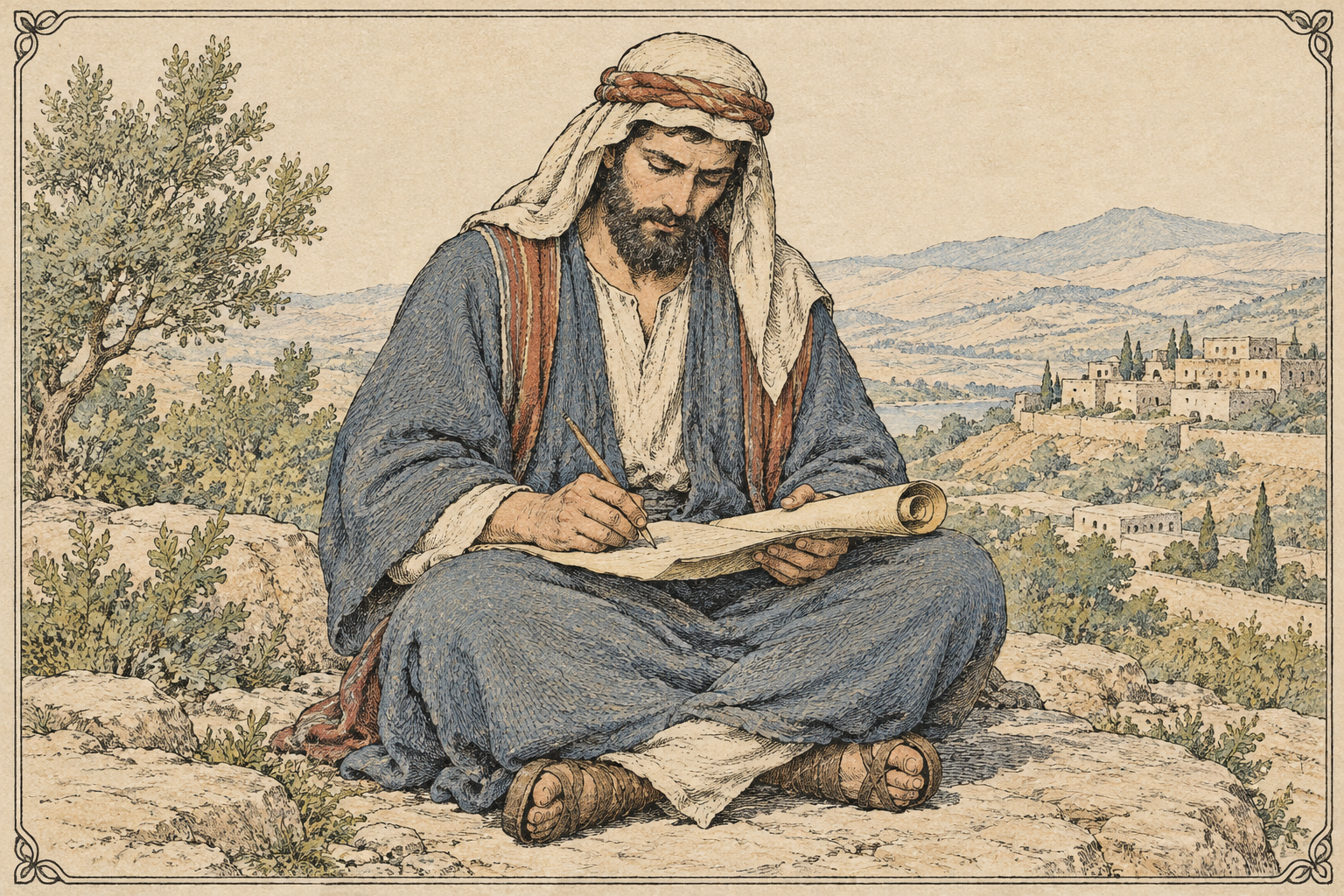
Genesis 6:1-4 is one of the strangest passages in Scripture, four verses wedged between the genealogies of Genesis 5 and the Flood narrative of Genesis 6:5 onward. Modern readers tend to rush past it, embarrassed by what it seems to say, or they allegorize it into something safer. The earliest readers did neither. They took it as a historical claim about a real rupture in the created order, and if we want to understand demons rather than simply repeat a phrase about them, we need to take it just as seriously.
Divine Beings and the "Sons of God" in Genesis 6:2
The Hebrew phrase is bene elohim, "sons of God (Alohim)" or "sons of the gods," and in every other place it appears in the Hebrew Scriptures (Job 1:6, Job 2:1, Job 38:7), it refers to members of the heavenly court, divine beings who serve under the authority of God. Later interpreters, uncomfortable with the idea of heavenly beings marrying human women, proposed that the phrase meant the righteous line of Seth, or perhaps ancient kings and tyrants exercising a kind of divine right. Those readings are understandable as damage control. They are also later. The oldest attested reading, found in the Septuagint, in the Dead Sea Scrolls, in Philo, in Josephus, and above all in the Book of Enoch, takes bene elohim at face value: these were heavenly beings, not human ones. The technical term did not confuse ancient readers. It confuses us, because we have lost the cosmology that made it obvious.
A World Ordered by the Holy One
The created order in the Hebrew Scriptures is not a flat stage where everything is the same kind of thing. It is a structured household, heaven and earth each assigned their proper place, humanity given dominion over the earth and the heavenly court given its own sphere under the authority of the Holy One. This is not a minor detail of ancient cosmology. It is the architecture the whole story depends on. When the text says the sons of God saw the daughters of men were fair and took wives for themselves, it is describing a category violation, not a lapse in personal virtue. Heavenly beings crossing into human marriage was not simply immoral. It was structurally wrong, like a support beam deciding to become a window.
Daughters of Men and the Scandal of Mixed Kind
The language of Genesis 6:2, "took wives for themselves, whomever they chose," echoes the language used elsewhere in Scripture for seizure, not courtship. This was not romance between consenting equals. It was divine beings exploiting creatures over whom they had no rightful claim, crossing a boundary never meant to be crossed between the kind of being that rules the heavens and the kind of being that walks the earth. The offense set up everything that follows. A corruption had entered the created order that did not belong there, and corruption, once introduced, does not stay contained. It spreads.
The Watchers: Rebellion From Above, Not Below
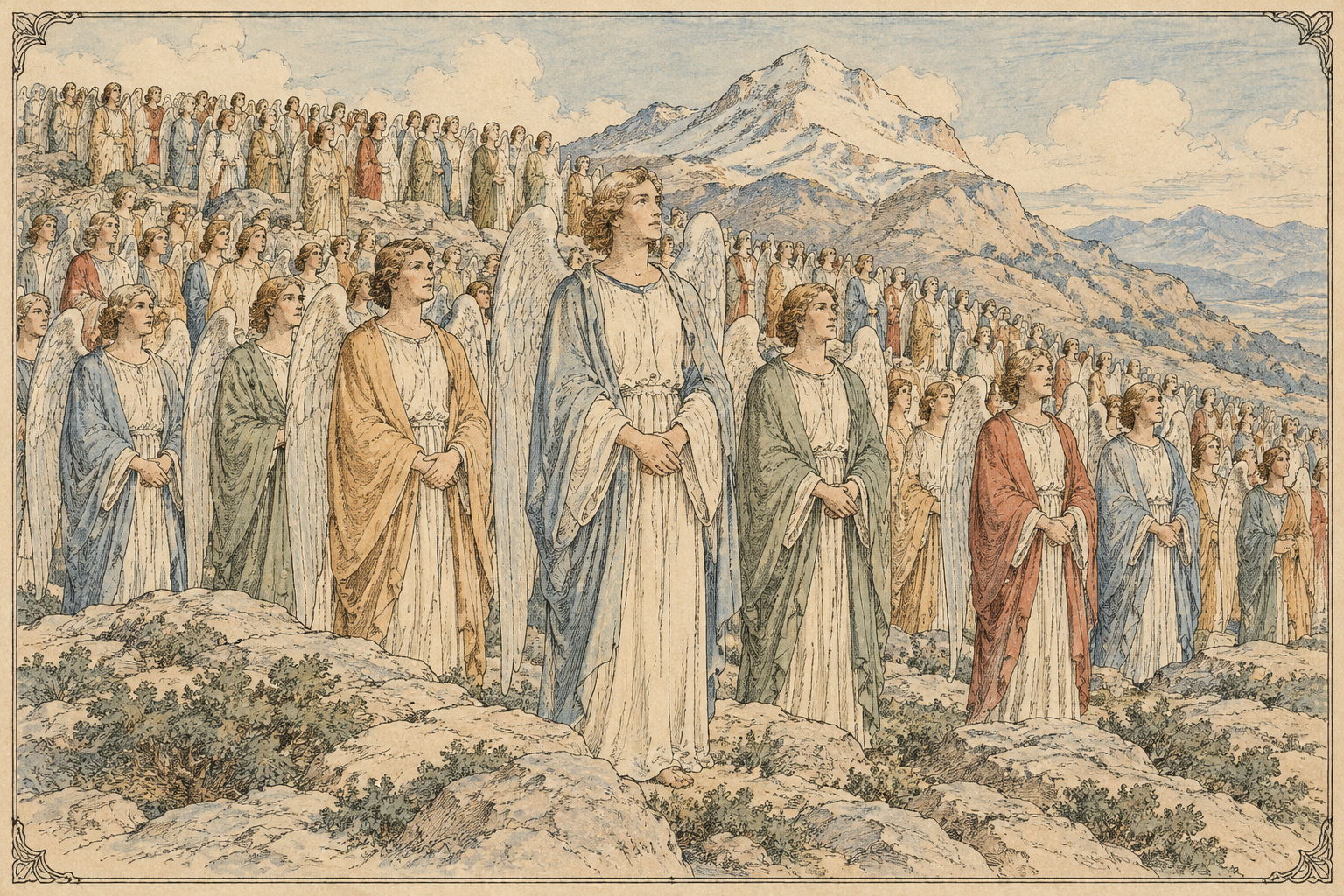
Genesis gives the reader four verses and moves on, as though assuming its audience already knew the fuller story. Second Temple Judaism did know it, and preserved it at length in a text that circulated widely and shaped much of the theological imagination of the period: the Book of Enoch, specifically its opening section, the Book of the Watchers.
Who the Watchers Were and Why They Fell
According to 1 Enoch, the Book of the Watchers names two hundred heavenly beings who descended upon Mount Hermon, bound together by a mutual oath to carry out their plan and to share culpability for it. Their leaders are named, Shemihazah chief among them, with Asael singled out for a particular and especially damaging transgression. This is not vague mythologizing. It is a narrative with geography, named leaders, a structured conspiracy, and a specific sequence of cause and effect. Whatever one makes of its historical claims, it is not primitive confusion. It is a deliberate theological elaboration of a story Genesis assumes its readers already know.
Forbidden Knowledge and the Corruption of Humanity
According to the Enochic account, the Watchers did not simply take wives. They taught. Asael is credited with instructing humanity in metallurgy and weapon-making, turning the earth's raw materials into instruments of war. Other Watchers taught cosmetics and adornment used for seduction, the cutting of roots and the use of plants for sorcery, and the reading of the stars for divination, astrology that claimed to predict and manipulate what belonged to God alone to govern. None of this knowledge was neutral. Each skill accelerated human violence, vanity, and spiritual confusion, and the text draws a straight line from this forbidden instruction to the moral collapse described in Genesis 6:5, where "every inclination of the thoughts of the human heart was only evil continually."
Why Enoch Mattered to Second Temple Judaism
It would be a mistake to treat this as some fringe text invented by eccentrics on the margins of ancient Judean life. Fragments of the Book of Enoch were found among the Dead Sea Scrolls at Qumran, in multiple copies, indicating sustained community interest across generations. The book is quoted directly in the New Testament letter of Jude, and its themes echo through 2 Peter, through portions of Revelation, and through the broader demonology assumed but rarely explained elsewhere in the New Testament. Early Christian writers treated it with real respect, and it remains canonical Scripture in the Ethiopian Orthodox tradition to this day. This was not a late or embarrassing footnote to Judean thought. It was part of the theological bloodstream from which the New Testament itself drew breath.
The Nephilim: Hybrid Offspring and the Spread of Corruption
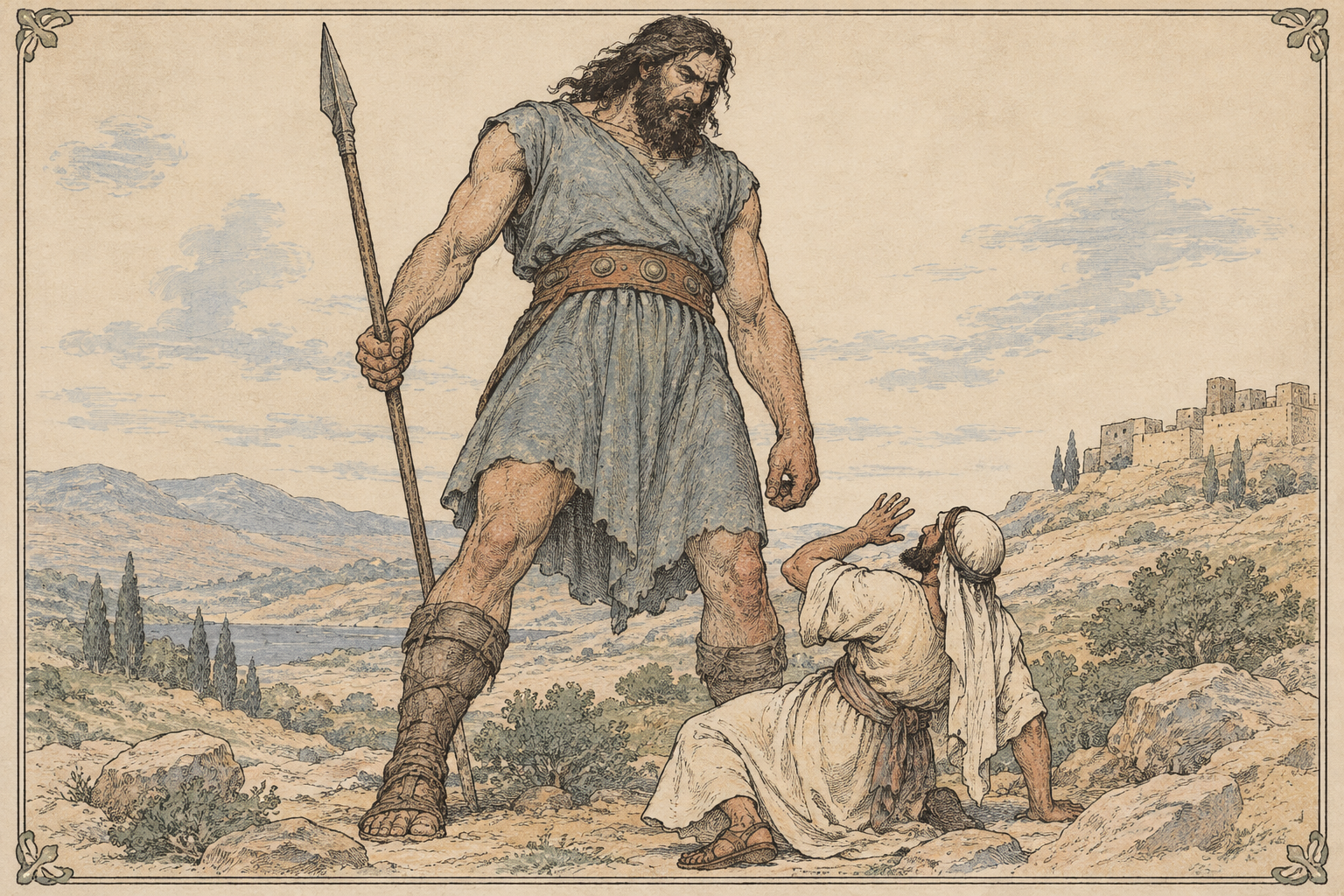
Once the transgression of the Watchers is taken seriously, the Nephilim stop looking like an isolated oddity and start looking like the predictable, horrifying result of a specific cause.
Giants, Violence, and the Filling of the Earth With Corruption
Genesis 6:4 calls them "mighty men, men of name," and later texts, including Numbers 13:33, describe their descendants as giants of such size that the Israelite spies felt like grasshoppers standing before them. Ancient Judean literature outside Scripture, along with later writers such as Josephus, preserves this same memory consistently: a race of outsized, violent hybrid beings whose existence tracked directly with the moral deterioration Genesis describes immediately afterward. The text does not present the Nephilim and human wickedness as two separate problems happening to occur at the same time. It presents them as cause and effect. The corruption of the created order produced corrupted offspring, and corrupted offspring filled the earth with violence.
Why Hybrid Existence Itself Was the Problem
The Nephilim were not condemned merely for what they did. Their existence, straddling a boundary that was never meant to be crossed between the heavenly and the human, was itself the affront. A world ordered by categories, heaven here, earth there, cannot simply absorb a being that belongs fully to neither. The Nephilim were a living contradiction of the structure God had built into creation, and a structure cannot tolerate an unresolved contradiction indefinitely. Something would have to give.
The Flood as Containment, Not Mere Catastrophe
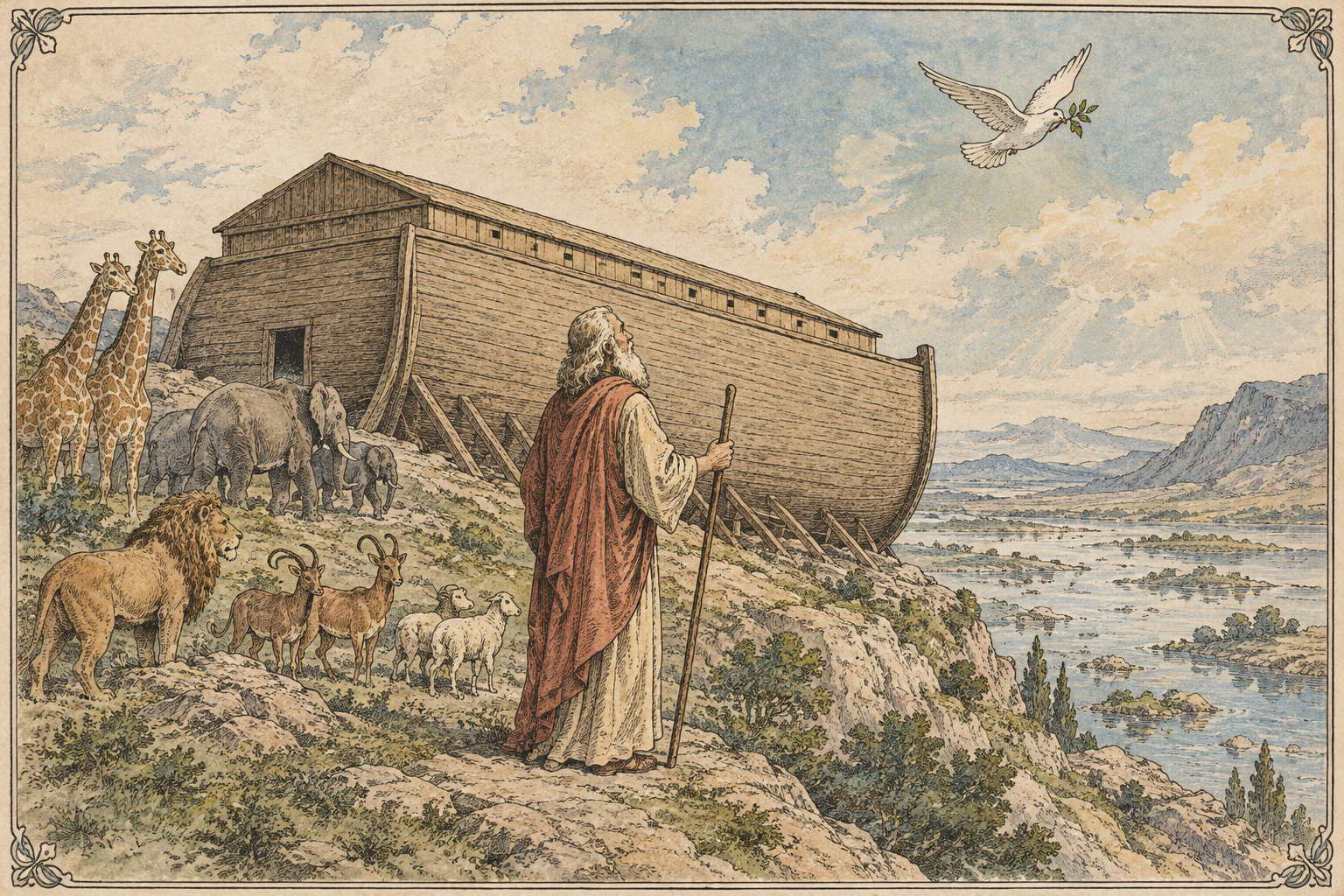
This is where the story most people know as a children's tale, animals marching two by two, a rainbow at the end, reveals itself as something far more severe. The Flood was not a general lesson about being good. It was targeted damage control.
Judgment on Bodies: What the Floodwaters Destroyed
The judgment described in Genesis 6 through 9 fell specifically on bodies and on standing. The Nephilim's physical forms were destroyed in the waters. The Watchers lost their place in the heavenly court, their authority, their freedom of movement, bound (according to the Enochic tradition) until a final judgment yet to come. What the Flood accomplished, then, was not abstract moral cleansing. It was the physical removal of a corruption that had grown past the point of containment by any lesser means. The text describes an emergency measure, not a leisurely parable.
Why the Judgment Was Real but Not Final
And yet here is the uncomfortable detail that most retellings skip past entirely. The Flood destroyed bodies. It did not erase the spirits that had animated those bodies. This is not a loose end left by sloppy storytelling. It is the hinge on which the entire doctrine of demons turns, and the Enochic tradition states it directly rather than leaving modern readers to guess.
From Dead Nephilim to Roaming Evil Spirits
The Book of Enoch does not merely gesture at this problem. It names the mechanism, plainly and without embarrassment.
What 1 Enoch Says Happens to the Spirit at the Giant's Death
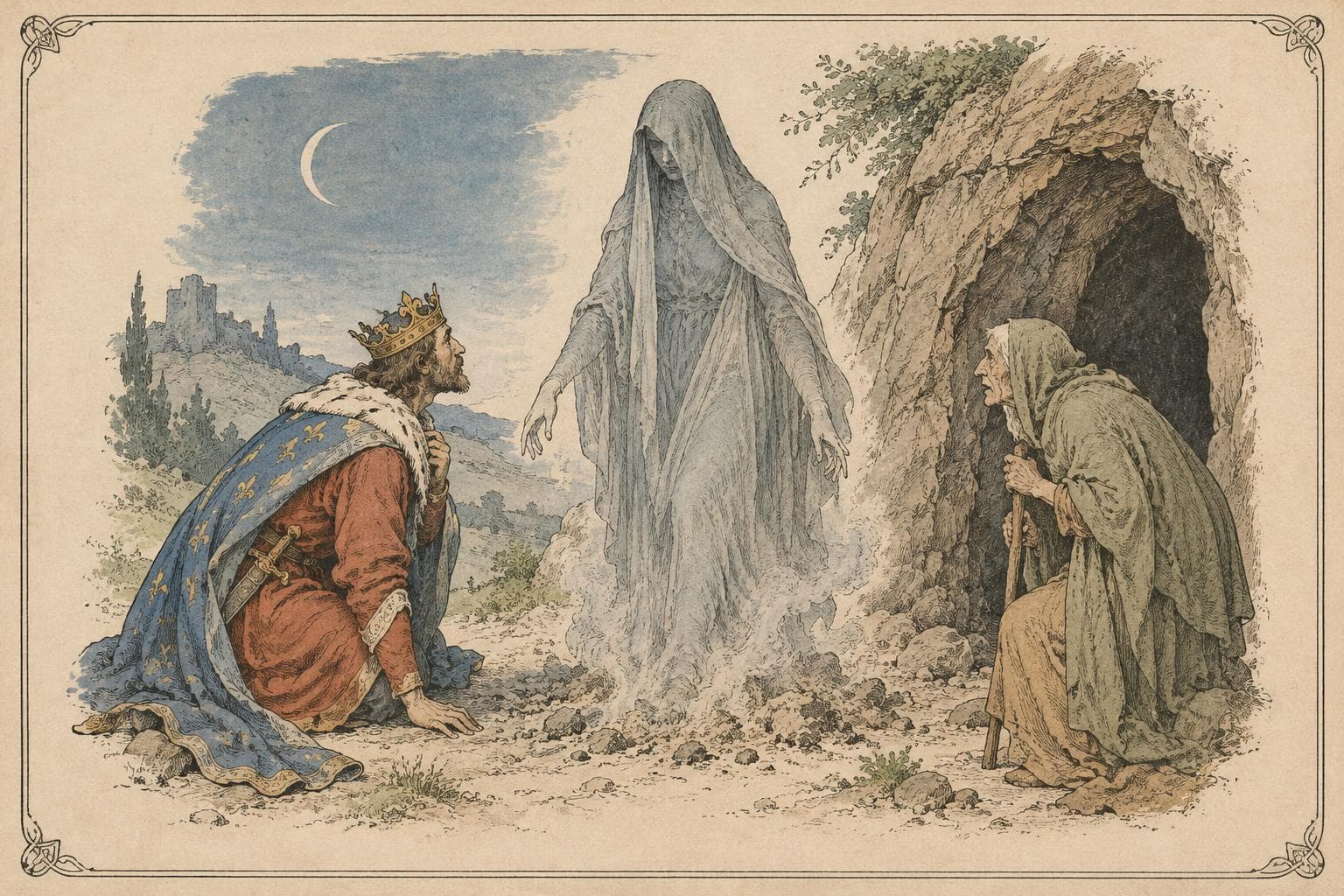
According to the Book of the Watchers, when the bodies of the Nephilim were destroyed, their spirits did not cease to exist. They went out from their bodies as evil spirits, because, the text explains, their origin was from the holy Watchers above joined to the flesh of human women below, making them a hybrid kind whose spirits had nowhere proper to go. They had no place assigned to them in creation, neither fully heavenly nor fully earthly, and so they were condemned to roam the earth, afflicting, corrupting, and seeking what they had lost. This is not a later Christian invention grafted onto an unrelated Hebrew story. It is the Second Temple Judean explanation, stated directly in the text ancient Judeans read, of where demons came from and why they behave the way the New Testament later describes.
Demons as Residue, Not Rivals
This distinction changes how several New Testament passages about demons should be read. Demons, in this framework, are not fallen angels retaining cosmic rank, strategic intelligence operating at the level of the heavenly court, or rival gods contesting the Holy One's throne on anything like equal terms. They are a defeated remnant. A leftover. The spiritual residue of beings who were already a category violation in life and became a homeless violation in death. This is the difference between facing a rival army and cleaning up after one that has already been routed. It changes what we expect a demon to be capable of, and it changes how we expect the biblical authors to describe one.
Why Demons Seek Bodies and Why God Commands Rather Than Debates
Once this backstory is in view, details in the New Testament that otherwise seem strange or underexplained snap into focus with uncomfortable clarity.
Possession as the Search for Lost Embodiment
Consider Mark 5, the man among the tombs, and the demons who beg Jesus (YHWShA) not to send them into the pit but into a herd of pigs instead. Consider Matthew 12:43, where an unclean spirit, driven out, wanders through "waterless places seeking rest" and finds none, before returning to the body it left. These are not the actions of confident, sovereign rivals executing a plan. They are the actions of beings desperate for a body, any body, because they have none of their own and never will again. Possession, read through the Watcher tradition, is not a conquering strategy. It is a kind of spiritual homelessness, a disembodied remnant seeking the embodiment it lost at the Flood and cannot recover on its own. That is why the New Testament consistently portrays demons as reactive, pleading, and fearful rather than commanding and composed.
Authority Stolen, Not Granted: Why Jesus Commands Instead of Negotiates
Notice something else. Jesus never once debates a demon. He does not reason with it, flatter it, or negotiate terms. He commands it, and it obeys, because its claim to any foothold in the human world was never legitimate to begin with. Authority that was stolen through rebellion is not authority that deserves a hearing. A thief does not get to negotiate the terms of his eviction. This is why the gospels read the way they do, short, blunt exchanges followed by immediate departure, rather than the long dialectical struggles a true rival might warrant.
Standing in the Wreckage: Answering the Charge of Primitive Mythology
Someone will object that all of this sounds like primitive mythology dressed up in theological language, giants and flying spirits and forbidden knowledge from the stars. So far, we understand the objection. It is a fair instinct in an age that has learned, often rightly, to be suspicious of folklore masquerading as doctrine. Yet the dismissal runs into a problem. The modern person who scoffs at the Watcher tradition still speaks, without hesitation, of spiritual oppression, of a house that "feels wrong," of possession and exorcism as categories that remain stubbornly real to people across cultures and centuries who have never read a page of Enoch. Those categories did not invent themselves. They are inherited, and they only cohere, only make internal sense, once you understand where the biblical authors believed demons came from. The skeptic is not standing outside the wreckage, observing it dispassionately. He is standing inside it, using its vocabulary, whether he admits the source or not.
None of this means every detail in the Enochic elaboration carries equal scriptural weight, or that modern readers must treat the Book of Enoch as flatly equal to the canonical text. It is not Genesis. It is commentary on Genesis, ancient, serious, and widely trusted commentary, the kind the apostle Jude felt free to quote directly as a known authority. What it offers is not a replacement for the biblical account but its missing middle chapter, the part that explains why Genesis 6 ends the way it does and why the New Testament's demons behave the way they behave. What are demons in the Bible? Not gods. Not rivals. Not a separate creation designed for evil. They are what is left when a rebellion collapses and its bodies are destroyed but its spirits are not, a remnant still searching for what it lost, still subject to a command it has no power to refuse. The invitation, as always, is not to be afraid of the wreckage but to understand it deeply enough to stand free of it.