The Question Every Comparative Religion Course Assumes It Has Already Answered
Here is a question worth sitting with rather than rushing past. A great many comparative religion courses teach that the God (Alohim) of the Hebrew Scriptures is simply a rebranded version of the Ugaritic supreme deity, a storm-and-council god imported from the Canaanite world and given a new coat of paint, and they teach it with confidence. The evidence, we are told, sits right there on the surface. Both traditions use the word "El." Case closed, textbook written, lecture delivered.
Except words are slippery things, especially across three thousand years, two alphabets, and two civilizations that never shared a family tree. Before accepting that the Hebrew El vs Ugaritic El comparison settles anything, it is worth asking whether the shared syllable is doing the work everyone assumes it is doing. This matters for anyone wrestling with Elohim meaning, with the Ugarit supreme deity question, or with where the Yahuwah name origin sits on the timeline. The genealogy, the alphabets, and the scribal history all point somewhere unexpected, and that is the argument this piece intends to make.
Why the "Borrowed Deity" Theory Sounds So Convincing at First
The appeal is easy to understand. Ugarit, a city on the Syrian coast rediscovered by archaeologists around 1929, produced a library of cuneiform tablets describing a pantheon headed by a god named El, father of gods and men, presiding over a divine council from his tent at the source of two rivers. The Hebrew Bible also speaks of El, also describes a divine council (Psalm 82, Psalm 89), and also uses language of a heavenly assembly. Lay the texts side by side and the parallel looks unmistakable. Many careful scholars have built entire frameworks on this resemblance, and their work deserves respect, not dismissal.
The trouble is that resemblance is not the same thing as derivation, and shared vocabulary across related language families is not the same thing as shared theology. Two cultures speaking neighboring Semitic languages will naturally use cognate words for "mighty," "lord," or "god," in the same way that English and German share "mother" and "Mutter" without either language having borrowed its concept of motherhood from the other. The real question is whether these words are functioning as the same kind of word in each language, and whether the people using them belong to the same story at all.
What Would Need to Be True for the Theory to Hold
For the borrowed-deity theory to stand, several things would need to be demonstrated rather than assumed. The Hebrews and the Ugaritic people would need to share a common ancestry close enough to explain cultural transmission. The word "El" would need to function identically in both languages, as a proper name rather than a generic title in at least one of them. The alphabets recording the word would need to show genuine phonetic equivalence rather than surface similarity in translation only. And the timeline would need to show Ugaritic religious concepts preceding, not following, Hebrew usage of divine names.
None of this means the theory is absurd on its face. It means the theory has homework to do before it gets to claim the authority of settled fact. Once we start checking that homework, piece by piece, genealogy by genealogy, letter by letter, the picture that emerges looks rather different from the one printed in the textbooks.
Two Family Trees: Noah's Sons and the Roads They Walked
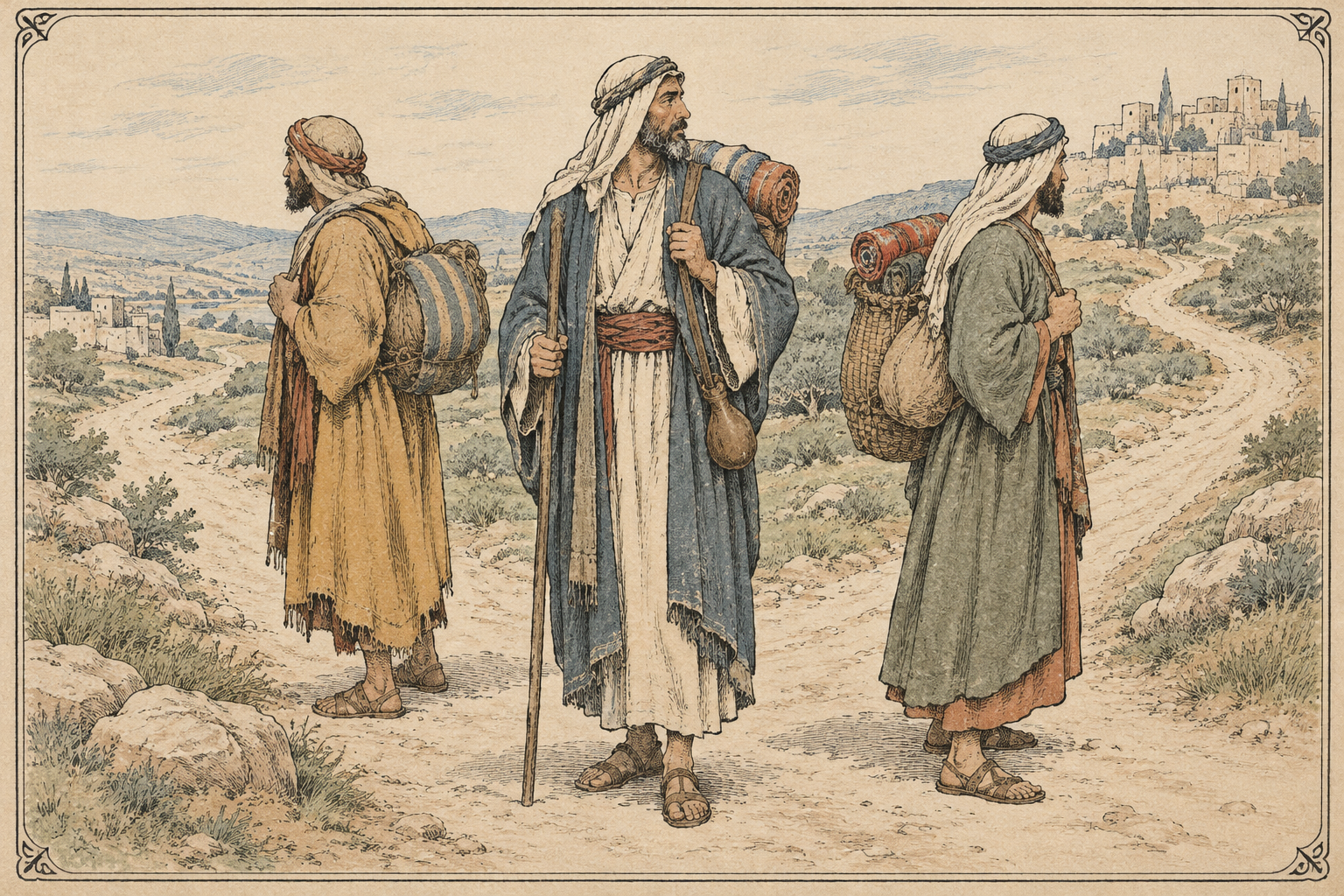
The biblical narrative itself offers the first and most basic correction, and it is a correction rooted in genealogy rather than philosophy. Genesis 9 and 10 describe the sons of Noah, Shem, Ham, and Japheth, scattering after the flood into distinct lines, each producing nations, languages, and territories that the ancient world could still trace centuries later. This is not incidental background information. It is the family map the rest of the biblical story assumes, and it tells us plainly that Hebrew and Ugaritic peoples were never branches of the same tree.
Shem became the ancestor of the Hebrews, the line from which Abraham, and eventually the nation of Israel, would come. Ham's line scattered differently, producing, among others, the peoples who would settle the Levant and the Syrian coast, including the ancestors of Ugarit. Two separate roads carrying two separate religious vocabularies, developing along parallel but distinct Semitic branches. The question is not whether these cultures interacted later (they did), but whether one's theology was simply copied from the other's at the root. Genealogy alone argues against it.
Ham, Canaan, and the Birth of the Amorite Line
Genesis 10:6 lists Canaan among the sons of Ham, and Genesis 10:15-19 traces Canaan's own descendants into the peoples who would occupy the land later promised to Abraham's offspring. Among the peoples connected to this broader Hamitic and Canaanite sphere were the Amorites, a group well attested in both biblical and extrabiblical sources, who spread through Mesopotamia and the Levant in the early second millennium BC. Many readers trace Ugaritic civilization, centered at the city of Ugarit on the Syrian coast, to this same Amorite-Canaanite world rather than to Shem, though this is a traditional inference drawn from the Genesis lineage rather than a claim the text states outright, and archaeology alone cannot settle it. Again, this lineage is a reasonable inference, not a documented certainty.
This matters for the question at hand. The god known at Ugarit as El, head of the pantheon, father of the gods, enthroned at the cosmic mountain, belonged to this Hamitic-Canaanite religious world on this reading. He was the chief deity of a specific people with a specific genealogy, a genealogy the biblical text takes pains to record precisely so later readers could see who descended from whom. Ugarit did not invent this god from nothing, but it inherited him through the Amorite line, a line with no genealogical connection to Abraham, Isaac, and Jacob.
Shem and the Separate Line That Produced the Hebrews
Shem's line runs through Genesis 11 into Terah, the father of Abraham, and from there into the patriarchal narratives that shape the rest of the Hebrew Bible. This is not a minor technical point buried in a genealogical appendix. It is the spine of the entire biblical story, the reason Israel understood itself as a distinct people with a distinct calling, descended from a distinct ancestral line. The Hebrews never understood themselves as cousins of the Canaanite peoples in any meaningful theological sense, however much later geographic proximity and political entanglement might suggest otherwise to a modern reader skimming for parallels.
Here is what strikes me as most significant about this detail. The biblical writers themselves were not naive about the existence of other gods and other religious systems surrounding them. They name Canaanite deities directly, critique them directly, and warn against them directly throughout the Torah and the Prophets. If the God of Israel had been lifted wholesale from the Ugaritic pantheon, the biblical authors picked a strange way to tell that story, one that insists from the opening chapters of Genesis onward on a separate genealogy and a separate calling, bound to a name of its own.
Ugaritic El: A Proper Name Carved in Cuneiform
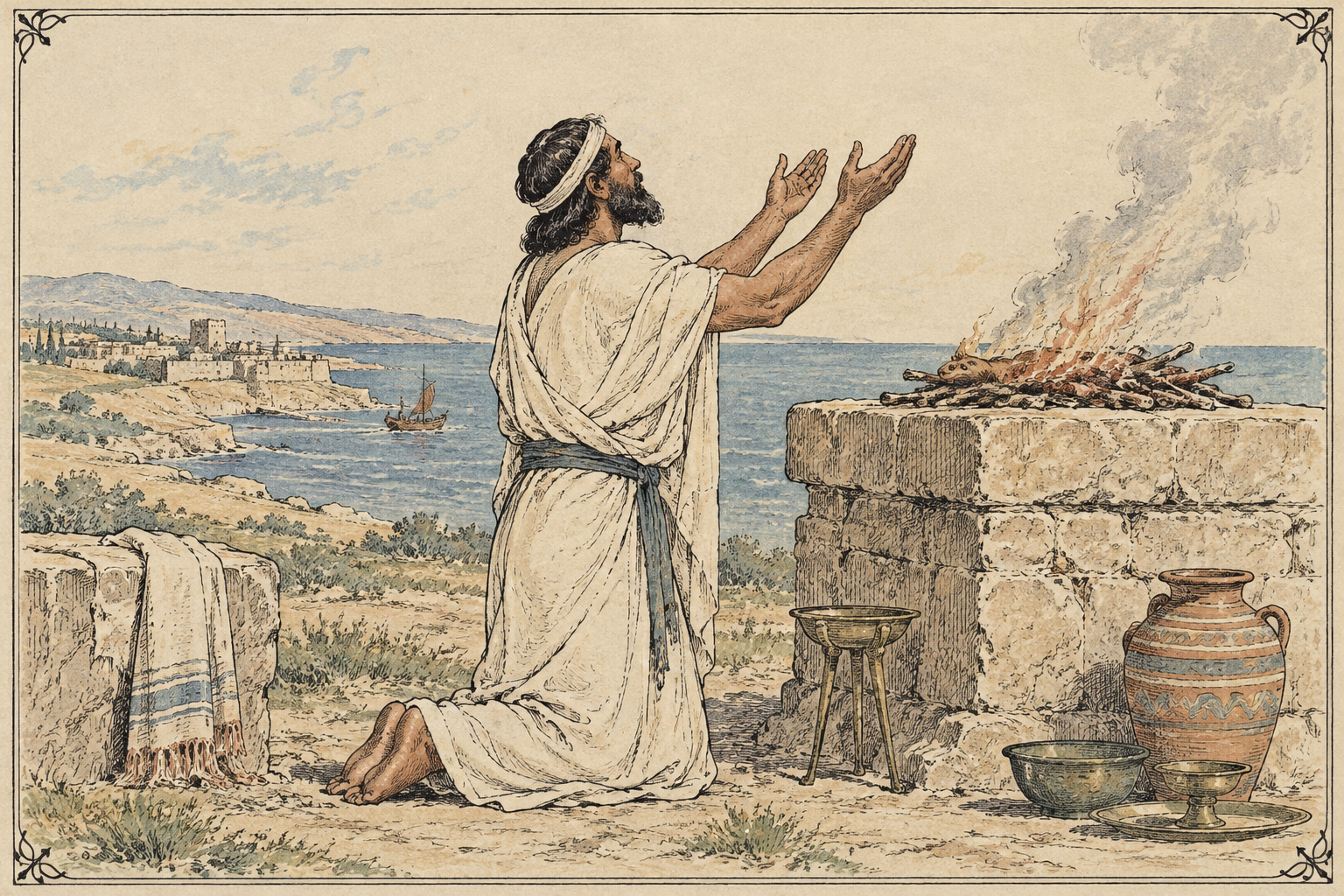
The peoples, then, were distinct. The linguistic evidence needs its own hearing next, starting with what the Ugaritic texts say about their chief god. Discovered beginning around 1929 at the site of Ras Shamra on the Syrian coast, the Ugaritic tablets are generally dated to the fourteenth and thirteenth centuries BC, though some dating questions remain debated among specialists, and they preserve a rich mythological corpus, including the Baal Cycle and the Kirta Epic, both of which feature a god named El as a central character.
In these texts, El is not a generic title scholars have applied retroactively. He is a named individual with a biography, a residence, a family, and a role within a structured divine society. He is called "Father of years," "Bull El," and "Creator of creatures," titles that mark him as a specific personality within a specific pantheon, not an abstract category floating above particular deities. This is a proper name functioning exactly as proper names function, picking out one individual among many rather than describing a quality shared by several.
The Letters Behind the Name: Ugaritic Cuneiform Spelling
Here is where the evidence becomes concrete rather than merely narrative. Ugaritic was written in a cuneiform alphabet, a wedge-shaped script adapted for alphabetic use rather than the syllabic cuneiform of Akkadian and Sumerian. When Ugaritic scribes wrote the name of their chief god, they combined a sign close to the vowel "i" with the letter "lamda," Ugaritic's rough equivalent of the Greek lambda. In plain terms, the name was built from sounds closer to "I" and "L," not from the Hebrew letters behind the English word "El."
This is not a trivial detail to be waved away in a footnote. The Ugaritic proper name El, carved into cuneiform tablets at a city with no ancestral connection to the Hebrews, uses a letter combination distinct from what appears in the Hebrew text describing the God of Israel. Two different scripts, two different phonetic histories, recording what modern English translation has flattened into the same three-letter word.
El at Ugarit as Head of a Divine Council
The Ugaritic El presided over an assembly of gods, a council of seventy divine sons, with Baal, Anat, Asherah, and others occupying various ranks beneath him. This structure, a high god ruling a pantheon of lesser deities, was common across the ancient Near East, appearing in Mesopotamian, Canaanite, and other Semitic religious systems with local variations. Ugaritic El was the aging patriarch of this system, often portrayed as somewhat removed from active rule, with younger gods like Baal taking on more dynamic cosmic functions.
None of this means the concept of divine assembly is foreign to the Hebrew Bible, which also describes a heavenly council in texts like Psalm 82 and Job 1. What it means is that the Ugaritic El functioned as one named deity among many within a polytheistic structure, a structure the Hebrew Scriptures consistently and deliberately reject in favor of a single Creator who has no rivals and no equals. The architecture is different even where surface vocabulary overlaps.
Hebrew "El": An Adjective Mistaken for a Name
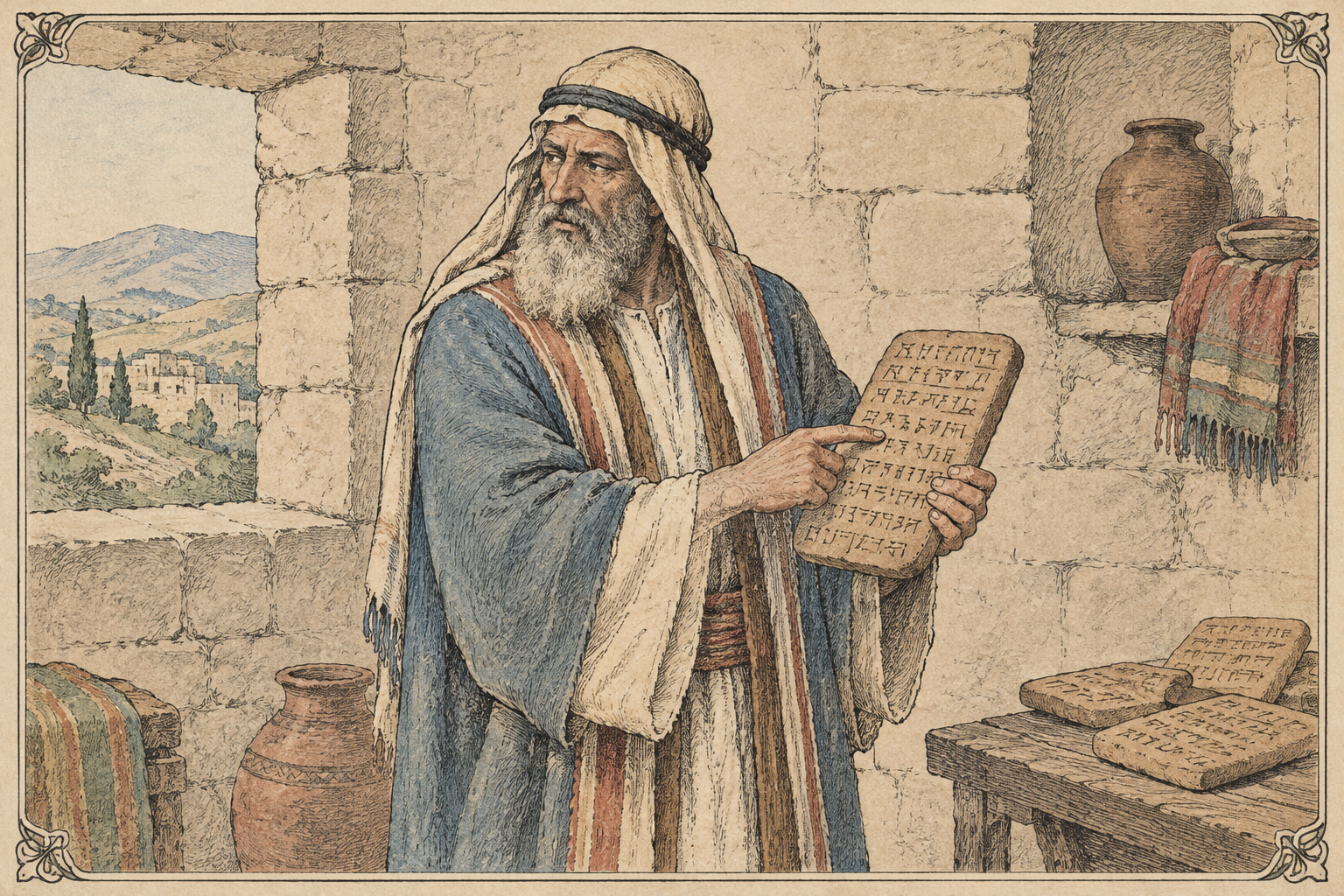
Now the argument turns to the Hebrew side of the ledger, and here the central correction of this entire piece comes into focus. In Hebrew, the word el, spelled with the two letters Aleph and Lamed, is not primarily a proper name. It functions grammatically as a common noun or adjective meaning "mighty one" or "strong one," a descriptor applicable to any deity, including false gods the biblical writers explicitly condemn.
This is why the Hebrew Bible can speak of "a foreign el" (Psalm 44:20, Psalm 81:9) or describe pagan nations worshiping their own elim, the plural form, without any contradiction. If el were a proper name belonging exclusively to the God of Israel, such phrases would be nonsensical, the equivalent of calling someone else's dog "Rover" and expecting no confusion. The word functions the way "lord" functions in English, a title that can apply to many different figures depending on context, not a name reserved for one individual.
Aleph-Lamed vs. the Ugaritic Equivalent: Why the Letters Don't Match
Here lies the insight too often skipped in comparative religion surveys. The Hebrew el is spelled with Aleph, a letter whose sound corresponds roughly to a glottal stop, a brief catch in the throat represented in transliteration by the English letter "A" in its weakest sense, followed by Lamed, corresponding to "L." The Ugaritic proper name, by contrast, uses the letter corresponding to "I" followed by its own form of "L." Aleph-Lamed and the Ugaritic Iota-Lambda equivalent are not the same word in different handwriting. They are two different words that happen to look alike in English, because translators since antiquity rendered both as "El" for the sake of readability.
Of course one can argue that related Semitic roots often shift vowels and even consonants across dialects, and that is true as a general principle of comparative Semitic linguistics. But what you cannot do, not if you want to remain coherent, is treat two words with different initial consonants, different grammatical functions, and different cultural origins as self-evidently the same word simply because an English translator in the sixteenth or seventeenth century chose the same three letters for both. The letters behind the English rendering tell a different story than the rendering itself suggests.
How English Translation Flattened the Distinction
Here is the problem with the entire modern conversation around Hebrew El vs Ugaritic El. English Bible translators, working centuries after both the Hebrew and Ugaritic worlds had already receded into history, transliterated the Hebrew common noun el as "El" whenever it appeared as part of a compound name (El Shaddai, El Elyon, Bethel) or as a stand-alone divine title. This made good sense for readability, but it had the unintended effect of making the Hebrew word look like a proper name wearing the exact same clothes as the Ugaritic deity discovered centuries later at Ras Shamra.
Once that visual equivalence was established in English print, it became nearly impossible for readers, and even for many scholars trained primarily in English-language sources, to see the distinction sitting beneath the translation. The word looked identical on the page, so it was assumed to be identical in function. This is simply what happens when translation convenience gets mistaken for linguistic identity, and it has shaped an entire field of comparative religion scholarship built on a visual accident rather than a grammatical fact.
The Sound That Changed: Aleph, Adam, and the Masoretic Scribes
The story gets more interesting once we ask how Aleph itself was originally pronounced, because the modern "A" sound most readers assume is original turns out to be a later development rather than the ancient baseline. Aleph was originally a glottal stop, a consonant, not a vowel at all. A minority of linguists studying early Semitic phonology have floated the idea, as a disputed hypothesis rather than an established consensus, that it once carried a sound closer to a rolled "R" in certain positions, a sound that shifted and softened across centuries of linguistic transmission the way consonants frequently do in every language family on earth. The idea is worth noting briefly, but it should not be mistaken for settled linguistics.
Linguists studying Semitic phonetic shift generally agree that gutturals and glottals are precisely the sounds most prone to drift, weakening, or disappearing altogether across generations of spoken use, long before any scribe ever wrote them down with fixed vowel markings. The written consonantal skeleton of Hebrew preserved the letters. It did not preserve the sound with certainty.
"Ardam," Not "Adam"? A Disputed Reading of the Original Aleph Sound
Consider the name Adam himself, spelled in Hebrew with an initial Aleph. If Aleph in its earlier form carried something closer to an "R" quality, as this minority view suggests, the name might have sounded nearer to "Ardam" than to the smooth "Adam" familiar to modern ears, though this remains a contested reconstruction rather than a settled finding, offered here only as one possibility among the ways Semitic gutturals are known to drift across related languages such as Arabic, Aramaic, and Akkadian.
If this hypothesis has any merit for Adam, it raises the question for el, a word built on the same initial letter. The smooth "eh" sound modern readers attach to Aleph-Lamed is itself a late development, layered over an older and rougher pronunciation that the consonantal text never specifies one way or the other. Hebrew, like virtually every ancient Semitic language, was originally written with consonants only, leaving vowel sounds to be supplied by the reader's living tradition rather than fixed on the page.
The Masoretes and Their Niqqud System
That living tradition eventually needed to be preserved more permanently, and this is where the Masoretic scribes enter the story. Working primarily in the centers of Tiberias and Babylon across roughly the seventh through tenth centuries AD, the Masoretes developed niqqud, a system of small dots and dashes placed above, below, and within the consonantal text to fix vowel pronunciation for future generations of readers.
This was a genuine act of scholarly devotion, an effort to preserve a reading tradition the Masoretes feared might otherwise be lost as spoken Hebrew receded from daily use. The care and the labor involved deserve real admiration. But the Masoretes were working centuries, in some cases well over a thousand years, after the original texts had been composed, and their vowel markings represent their best preservation of a tradition already in motion, not a direct recording device planted in the mouth of Moses or the patriarchs. Wherever that tradition had already shifted, softened, or standardized an older rougher consonant into something smoother, the niqqud system locked that later pronunciation permanently into the text, presenting it to every subsequent generation as though it had always sounded exactly so. The "A" sound in el is one more case of a later fix obscuring an earlier reality.
Elohim, the Dwelling of the Mighty Ones, and the Name Spoken Before Ugarit Existed
All of this converges on the related Hebrew term Elohim, built on the same root as el but extended and pluralized, a word appearing well over two thousand times across the Hebrew Bible. Elohim functions as the common word for "God" throughout the Scriptures, but its grammatical form deserves far more attention than it typically receives in casual reading. The ending -im is the standard Hebrew masculine plural marker, the same ending found in ordinary plural nouns throughout the language.
This plural form signifies something closer to a domain or a category than a single proper name, something like "the mighty ones" or "the domain of the mighty." Its grammatical shape can describe plural pagan deities (Exodus 12:12, Psalm 82:6) in one sentence and the singular Creator in the next, with Hebrew verb conjugation determining whether a singular or plural sense is intended in each specific context. Elohim is a category word pressed into service, by the biblical writers' own grammatical choices, to describe the one true God in a way that leaves no ambiguity about his uniqueness even while using a plural-shaped term.
Elohim as Plural Form: Domain, Not Label
This plural grammatical detail matters because it confirms, from the inside of Hebrew grammar itself, that neither el nor Elohim was ever functioning in Hebrew the way the proper name El functioned in Ugaritic cuneiform. A proper name does not pluralize to describe other beings in the same category. "Michael" does not become the common word for "archangel." But el and Elohim do exactly this kind of grammatical work throughout the Hebrew Bible, describing a category, a domain, a quality of mightiness that can belong to the truly singular Creator or to the false gods of the surrounding nations, depending entirely on context and verb agreement.
This is the linguistic heart of the matter. Ugaritic El was a name. Hebrew el and Elohim were titles, descriptors, domain-words, applied to the God of Israel because he is supremely and uniquely mighty, not because the Hebrews borrowed a Canaanite deity's business card and crossed out the old owner's information.
Enosh, Son of Seth, and the Name Yahuwah
The deepest answer to the opening question is historical rather than grammatical, and it brings us back to Genesis itself. Genesis 4:26 records the birth of Enosh, son of Seth, grandson of Adam, and closes the verse with a statement easy to read past and impossible to overstate once its weight is felt: "then men began to call upon the name of the Lord (YHWH)," rendered by many in this tradition as Yahuwah. Here the text gives not a title, not a category word borrowed from a neighboring pantheon, but a name.
This moment sits at the beginning of the human family's recorded history, generations before Noah, generations before the flood that scattered Shem, Ham, and Japheth into their separate lines, and many centuries before Ugarit existed as a civilization at all. The Hebrews, or rather the ancestors from whom the Hebrews would eventually descend through Shem, were already invoking their God by a specific personal name while the Amorite line that would eventually produce Ugarit had not yet emerged as a distinct people, let alone built a city, developed a cuneiform script, or composed a mythology around a god called El. The name Yahuwah predates the Ugaritic pantheon on the timeline itself, which makes the entire "borrowed deity" framework run backward.
This is the problem the comparative religion lecture rarely addresses. If dependency runs anywhere along this timeline, it cannot run from Ugarit to the Hebrews, because the Hebrew ancestral line was already calling on Yahuwah by name before the Amorite-Canaanite line had developed the civilization, the script, or the theology later discovered at Ras Shamra. The shared syllable "el" turns out to be a generic Semitic descriptor two unrelated family lines each applied, in their own languages, to the god each one worshiped, Ugarit to a named individual within a polytheistic council, Israel to the singular Creator already known by his own name since the days of Enosh.
The invitation here is not to dismiss the real scholarship done on Ugaritic texts, which has illumined the ancient Near Eastern world in genuine and valuable ways. The invitation is to look again at what the Hebrew El vs Ugaritic El comparison requires before accepting it as settled fact: two family trees that never merge, two alphabets that never align letter for letter, a pronunciation tradition reshaped centuries later by careful but imperfect scribal hands, and a name, Yahuwah, spoken by human lips long before Ugarit's gods were ever carved into clay. The story is not over, and neither is the conversation. It simply needs to start from the right genealogy.