Every spring, shop windows fill with bunnies and pastel eggs, and most people assume this is simply what Christians do to mark the resurrection of Jesus (YHWShA). But pull back the wrapping paper on that assumption and the Easter vs Passover question gets a great deal more interesting. Behind the chocolate and the lilies sits an emperor, a church council, and a decision made in the fourth century that quietly rewired how Christians would relate to the festival Jesus himself kept. Babel Report has traced that story to its roots, and it deserves a careful walk-through before anyone decides what to make of it.
The claim is not complicated, though its implications are considerable. Easter's separation from Passover was not an ancient apostolic practice. It was a historical decision, driven by Emperor Constantine and the Council of Nicaea. The council aimed at establishing a Christian identity distinct from its Hebrew roots, and it overrode an earlier tradition that kept Passover tied directly to the death and resurrection of Jesus.
Easter's Hidden Layers: What the Bunnies and Eggs Don't Tell You
The Modern Assumption Examined
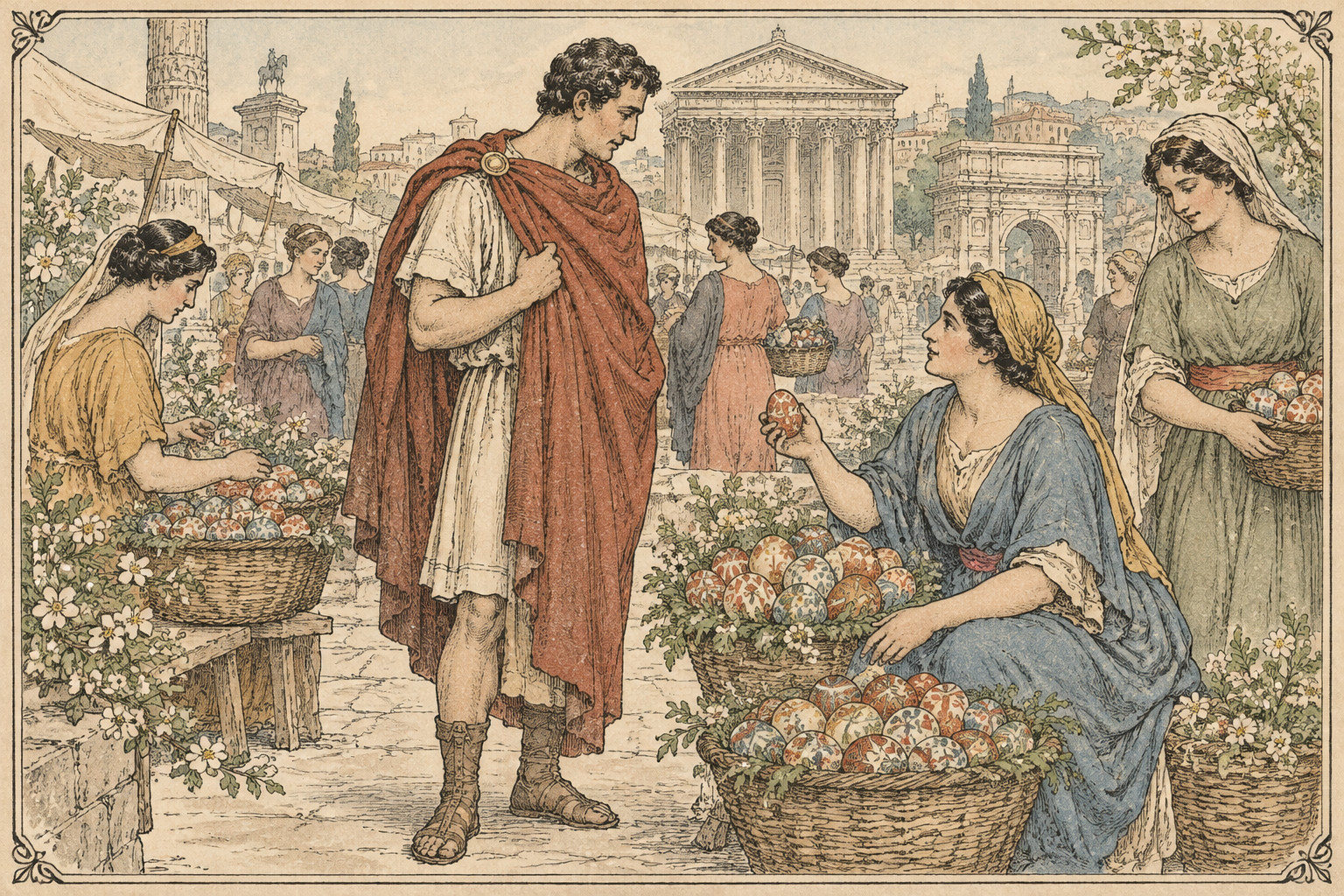
Ask the average churchgoer why Easter falls where it does on the calendar and you will likely get a shrug, or perhaps a vague reference to the first Sunday after the first full moon of spring. Few people ask why a Christian festival would be calculated by lunar phases in the first place, or why it moves around the calendar instead of landing on a fixed date like Christmas. Fewer still ask why it carries a name that has nothing to do with the man it supposedly celebrates. The tradition arrived already finished, already treated as obvious, and that is the problem worth examining.
Traditions that feel self-evident are rarely as old as they feel. Somewhere behind the appearance of settled custom there is almost always a moment of decision, a point at which someone with authority chose one practice over another and the choice simply stuck. Easter is no exception. The bunnies and egg hunts are late folk additions layered onto something far older and far more contested, a dispute that once split congregations across the Roman world and pulled bishops into open conflict with one another.
Pascha and the Lost Word
Here is a detail that gets lost in translation. The Greek word underlying the English "Easter" in most of the New Testament is pascha, which simply means Passover, carried over from the Hebrew Pesach. Wherever the King James Version renders a New Testament passage with the word "Passover," it is translating pascha. There is exactly one place, Acts 12:4, where the King James translators broke that pattern and rendered the same Greek word as "Easter" instead. This single departure stands out as a clear inconsistency in translation, whatever one makes of its cause.
That single word choice matters more than its size suggests. It planted, in the English Bible itself, the impression that Easter and Passover were always two different things, two separate festivals occupying two separate places on the calendar. Once that impression took hold, readers stopped asking why Luke, who wrote more of the New Testament than any other author, would casually confuse his own terminology in only one verse. The confusion came later, inherited through translation rather than through the text itself.
Why the Question Still Matters
None of this is a quarrel over which Sunday to mark on a wall calendar. The real question is whether Christian worship stands inside its Hebrew foundation or has been quietly rebuilt apart from it. If Passover and Easter were always meant to be the same observance, carrying forward the same story of deliverance under a new and climactic chapter, then severing them is not a neutral administrative tidy-up. It is a theological rupture dressed as a scheduling fix, and that distinction shapes the rest of this inquiry.
A Festival in Dispute: Passover or Easter in the Early Church
Two Practices, One Family of Believers
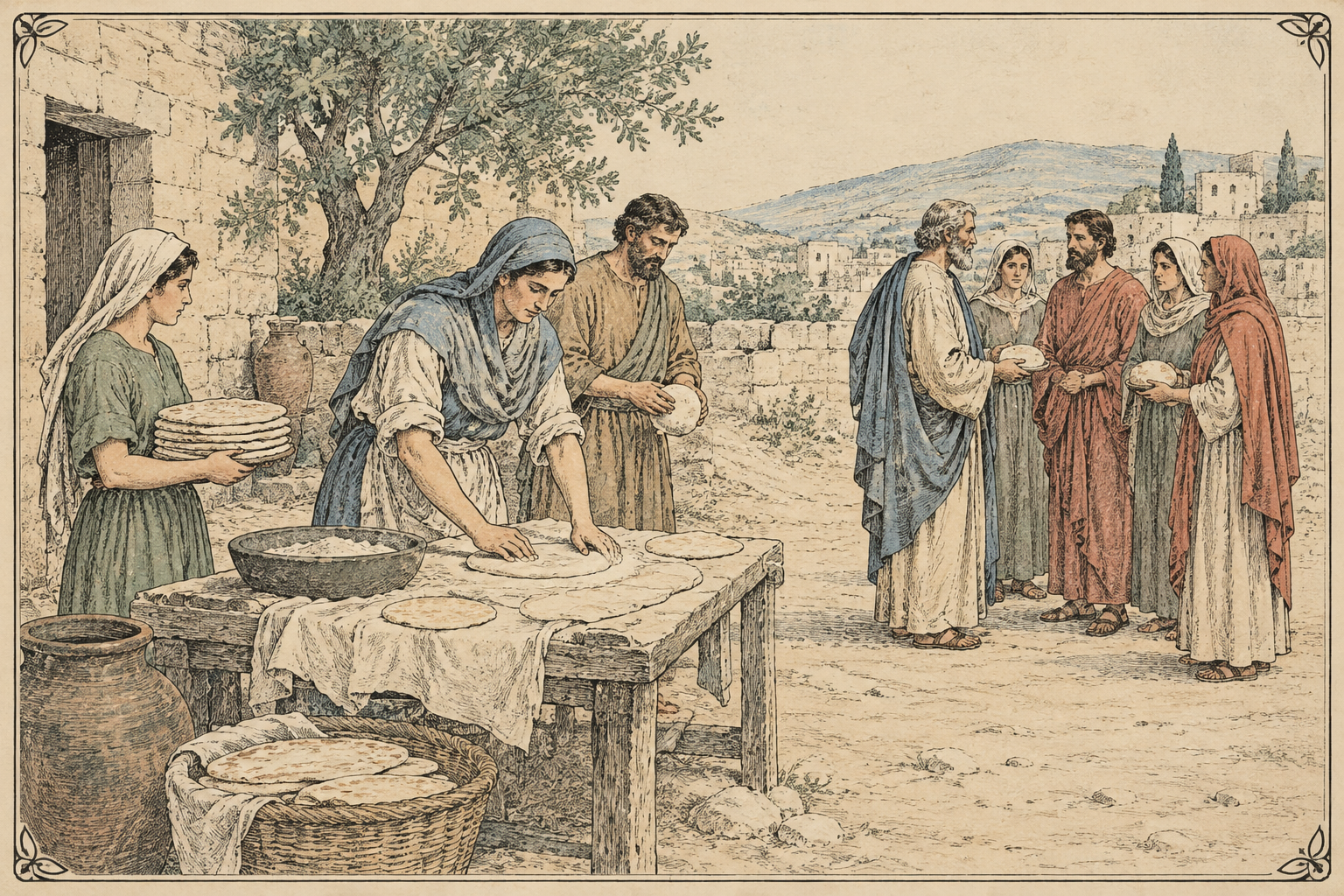
The early Christian movement was never a single, centrally administered institution issuing uniform instructions to every congregation from Jerusalem to Rome. It was a scattered network of communities, Judean and Gentile alike, each trying to work out what faithfulness to Jesus looked like in their own setting. On the question of Passover, this network held genuinely differing convictions. Some congregations, largely in the eastern provinces, continued to observe Passover on its traditional date, understanding the death and resurrection of Jesus as the fulfillment of that festival rather than its replacement. Other congregations, increasingly concentrated in Rome and the western churches, began moving toward an independent celebration, observed on a Sunday regardless of where that Sunday fell relative to the Hebrew calendar.
This was not a fringe disagreement between a handful of eccentrics. It was a live and sustained controversy that occupied church leaders for generations, eventually drawing in bishops, emperors, and entire regional councils before it was forcibly settled.
The Quartodeciman Churches of Asia Minor
The congregations that kept Passover on the fourteenth day of the Hebrew month Nisan, regardless of what day of the week it landed on, came to be known by the Latin term Quartodeciman, meaning simply "fourteenth-ers." These were not isolated holdouts. They represented a significant and well-established tradition across Asia Minor, the region that today makes up much of modern Turkey, home to some of the oldest and most historically significant Christian congregations anywhere in the ancient world.
The Quartodecimans understood themselves to be preserving, not inventing. Their claim was continuity with apostolic practice, a direct line running back through their bishops to the apostles who had walked with Jesus. In Eusebius's Ecclesiastical History, a record survives of a letter written decades after Polycarp's death, by Polycrates, a bishop representing this Asian tradition, addressed to Victor, the bishop of Rome, defending the Quartodeciman practice as something received rather than devised. The dispute between Asia Minor and Rome over this question would simmer for well over a century before Nicaea attempted to resolve it once and for all.
Polycarp's Stand on Apostolic Tradition
Among the earliest and most significant voices in this dispute was Polycarp, bishop of Smyrna, a figure of considerable weight in the early church precisely because of who had taught him. Polycarp was a direct disciple of the Apostle Yahuchanan, one of the few living links in the mid-second century between the apostolic generation and the generations that followed. When questions arose about Christian practice, Polycarp's testimony carried the authority of someone who could say, in effect, I learned this from someone who learned it from Jesus himself.
Polycarp traveled to Rome and met personally with Anicetus, the bishop there, to discuss the growing disagreement over Passover observance. Polycarp argued that Passover should continue to be kept according to the tradition he had received from Yahuchanan and the other apostles, tied directly to the timing of Jesus's death and resurrection rather than detached from it. The two bishops did not reach agreement on the practice itself, though accounts suggest they parted amicably, each continuing their own custom. What Polycarp's stand establishes, regardless of how the meeting ended, is that the apostolic generation's immediate successors understood Passover observance as something handed down, not something the church was free to redesign at will. This meeting, held decades before the later Quartodeciman controversy under Victor, shows the dispute simmering well before it escalated. That claim of apostolic succession through Yahuchanan, carried by a man who could trace his own instruction back to an eyewitness of the resurrection, gave the Quartodeciman position a weight that later centuries would find increasingly inconvenient to overturn.
Passover's Roots in the Exodus Deliverance
The Night the Lamb's Blood Marked the Door
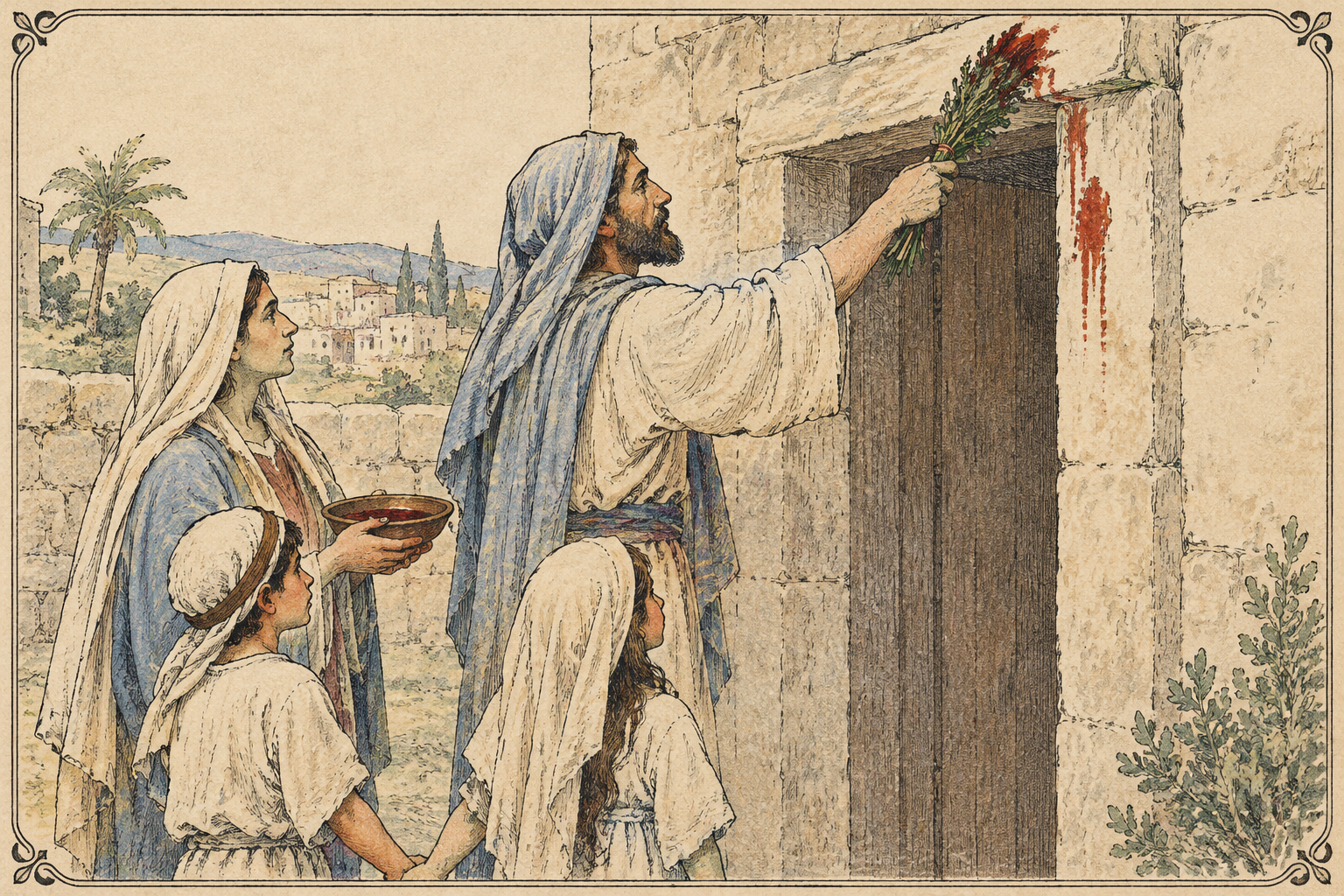
To understand why this dispute carried such theological weight, it helps to return to where Passover itself begins. Exodus 12 describes the final and decisive plague against Egypt, the night the Hebrew slaves were instructed to take a lamb without blemish, slaughter it, and mark their doorposts with its blood. Death would pass over every house bearing that mark. This was the founding event itself, the night of liberation that gave the Hebrew people their identity as a redeemed nation rather than a captive one.
Passover, from its first observance, was never an abstract ritual floating free of history. It was anchored to a specific night and a specific act of deliverance on behalf of an enslaved people. Every subsequent celebration of Passover was a deliberate act of memory, a re-entering of that same story.
A Festival Built for Remembering, Not Inventing
The Passover liturgy, developed and refined over centuries, was built entirely around retelling this story faithfully. It rehearsed Moses's confrontation with Pharaoh, the successive plagues, the crossing of the Red Sea, and the long journey toward the promised land. The Hebrew scriptures present the entire sweep of Israel's history as, at its heart, a story about the search for freedom, with Egypt as the great enslaving power and the Exodus as the answer. Passover existed to keep that answer alive in the collective memory of the people, generation after generation, so that no Hebrew family would forget what deliverance had cost and what it had accomplished.
This is a festival built for continuity, not reinvention. Its entire purpose was to transmit an unchanging center, the reality of God's rescue, forward through time without alteration.
Why This Background Makes the Later Separation Significant
Once this is understood, Polycarp's insistence before Anicetus reads differently. He was not defending a preference about which day of the week felt more fitting for worship. He was defending the claim that Jesus's death and resurrection belonged inside the Exodus story, as its fulfillment, not beside it as a separate and newly invented commemoration. To move the celebration of Jesus's resurrection away from Passover risked cutting the resurrection loose from the narrative that gave it its deepest meaning, the narrative of a God (Alohim) who delivers an enslaved people through the blood of a lamb. That was the stake Polycarp was defending, and it is the stake that would come under far greater pressure two centuries later in Nicaea.
Constantine, Nicaea, and the Birth of a Separate Easter
An Emperor with a Unification Problem
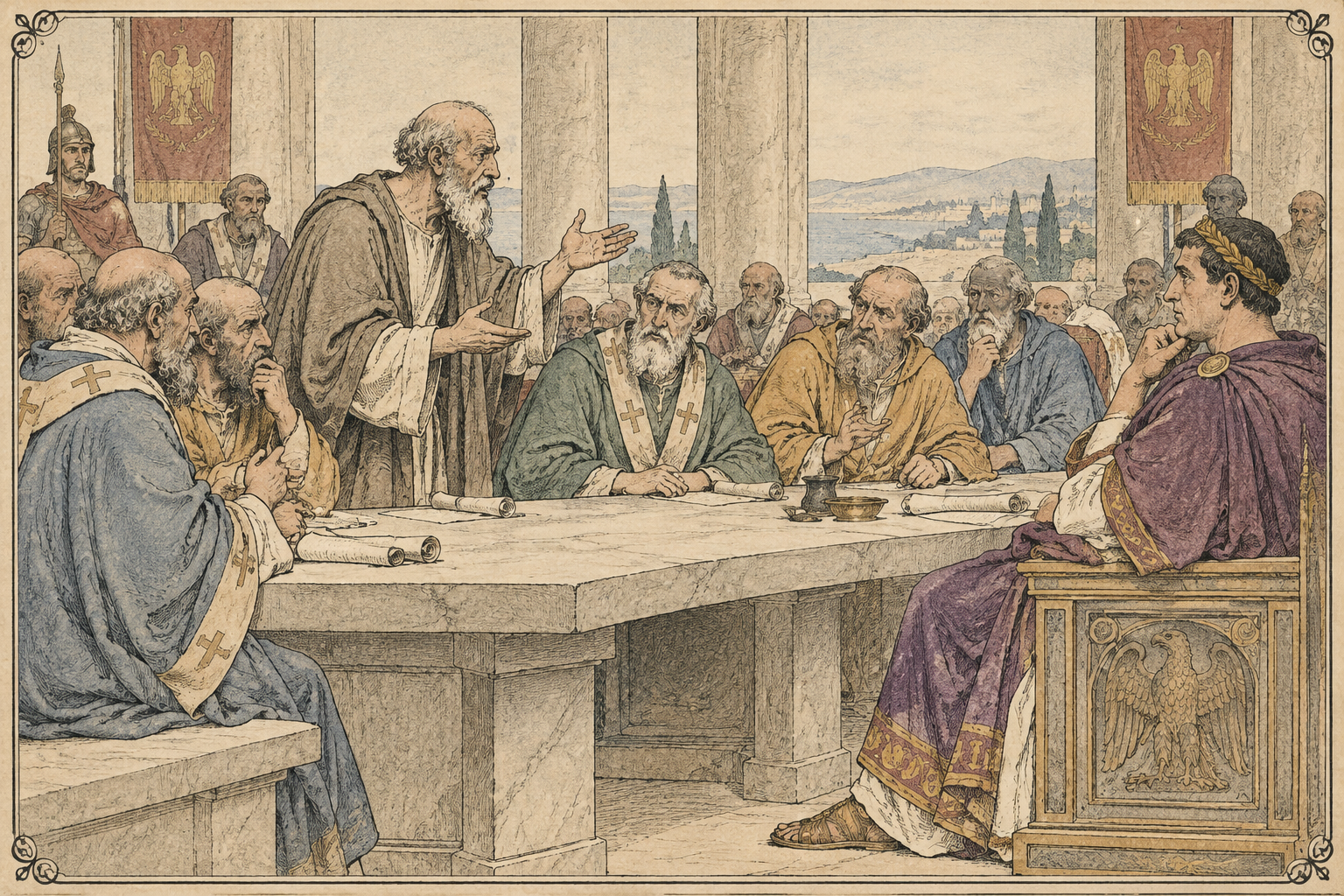
By the early fourth century, the political situation had shifted dramatically. Constantine, having secured control of the Roman Empire, found himself presiding over a Christian movement that was no longer a persecuted minority but an increasingly influential and increasingly fractured institution. Christian communities across the empire disagreed not only about the date of Easter but about core doctrinal questions concerning the nature of Christ himself. For an emperor interested in a stable and unified church, religious fragmentation was a political liability as much as a theological one.
Constantine's solution was to convene a council, bringing bishops from across the Christian world together in one place to settle these disputes by collective decree. In AD 325, somewhere between roughly 250 and 318 bishops, by traditional estimates, gathered in the city of Nicaea, in what is now northwestern Turkey, at Constantine's invitation and under his sponsorship. Unity of practice, not unity of belief alone, was on the agenda.
Inside the Council of Nicaea's Decision
The Council of Nicaea is best remembered for its statement on the nature of Christ, but it addressed a wider range of administrative and liturgical questions as well, and the timing of Easter was among them. The bishops gathered there were acutely aware that different regions of the Christian world were observing the resurrection on different dates, calculated by different methods, with the Quartodeciman churches of Asia Minor still tying their observance to the fourteenth of Nisan on the Hebrew calendar.
For an emperor seeking a single, empire-wide Christian practice, this variation was precisely the kind of inconsistency the council had been called to resolve. The bishops debated the matter and ultimately sided against the Quartodeciman position, moving toward a fixed method of calculating Easter's date independently of the Hebrew calendar altogether.
The Nicaean Decree and Its Deliberate Distance from Passover
What later tradition refers to as the Nicaean Decree formalized this decision, establishing that Easter would be calculated using its own reckoning, a lunar formula tied to the spring equinox rather than to the Hebrew month of Nisan. Later church historians described the aim as ensuring the Christian celebration would no longer coincide with Hebrew Passover reckoning. The precise wording and intent behind the council's decision remain disputed among historians, since no verbatim canon on the matter survives. Whatever the exact language, the effect was not treated as a minor technical adjustment. It functioned as a deliberate act of distancing.
The decision at Nicaea was not simply about choosing a more convenient formula for calculating a date. It represented a conscious institutional choice to build Christian practice on a foundation independent of its Hebrew origin, severing a link that Polycarp, two centuries earlier, had defended as apostolic and non-negotiable. A calendar question had become an identity question, settled not through gradual consensus but through imperial convocation and formal decree.
Luke 22 and the Upper Room: What Was Being Observed
Jesus's Earnest Desire to Eat the Passover
Turn now to the scene the entire dispute ultimately concerns. Luke 22:15 records Jesus telling his apostles, as they gathered for what Christian tradition calls the Last Supper, "I have earnestly desired to eat this Passover with you before I suffer." The wording is not incidental. Jesus does not say he desired to share a meal loosely inspired by Passover, or a farewell dinner that happened to coincide with the festival season. He names the meal directly as Passover, and he frames his own coming suffering as something to be understood from within that Passover observance.
The historical details surrounding this meal reinforce the point. It took place at night, within the city of Jerusalem, at a time when Jesus and his followers would ordinarily have returned to Bethany to sleep. Passover meals, by requirement, had to be eaten within Jerusalem's city limits after nightfall. The meal concluded with the singing of a hymn, almost surely the Hallel psalms traditionally sung at the close of a Passover meal. Every incidental detail points toward the same conclusion: this was a Passover meal, observed according to Passover custom, by a man who told his closest followers he had longed to share it with them before his suffering began.
The Apostles at the Table of Deliverance
The apostles gathered that night were not witnessing the invention of a new and separate holy day. They were sitting at the table of Hebrew deliverance, the same table their ancestors had gathered around since the night in Exodus 12, hearing Jesus speak of bread and wine in language that deliberately echoed that older story of rescue. His suffering, which he knew was imminent, was being placed by his own words inside the framework of Hebrew redemption, not alongside it as something new and disconnected.
The men in that room were Judeans observing their own ancestral festival. Nothing in Luke's account suggests that Jesus was establishing a rival observance meant to supersede Passover on a different date, calculated by a different method. He was locating his own sacrifice inside the festival his nation had kept for well over a thousand years.
The Lamb of Egypt and the Lamb of Calvary
The connection the earliest believers drew between these two scenes was neither forced nor subtle. The Passover lamb of Exodus 12, slaughtered so its blood could mark the doorposts and turn aside death, stood in the clearest possible relationship to the death of Jesus himself, understood by the earliest Christian community as the Lamb whose sacrifice turned aside judgment once for all. This was not a connection later theologians had to strain to construct. It was close to self-evident to Polycarp, the apostles in that upper room, and Judean believers reading Luke 22 in its original setting, built into the night Jesus chose for his final meal with his apostles.
Once Easter came to stand as its own independent festival, calculated by its own formula and deliberately distanced from Passover's reckoning, that line between the lamb of Egypt and the Lamb of Calvary became far easier to lose. The two had never needed drawing together artificially. They had always belonged to a single unfolding story. Separating their calendars made it correspondingly easier to separate their meaning.
What the Separation Cost: Identity Rebuilt Apart from Hebrew Roots
From Calendar Change to Identity Shift
It is worth returning, with all this history now in view, to the claim at the center of this whole discussion. The decision made at Nicaea was not merely an administrative tidying-up of an inconvenient scheduling inconsistency. Over subsequent centuries, it set a trajectory in which Christian identity would increasingly be defined apart from its Hebrew origins, rather than understood as their fulfillment and continuation. Polycarp's generation had fought to keep those origins visible and intact. The Nicaean Decree fought, with the authority of an emperor and a formal council behind it, in the opposite direction.
This is not a matter of assigning villains. Constantine faced a genuinely fractured religious terrain and sought genuine unity. The bishops at Nicaea were addressing a real and long-running controversy. None of this means their motives were cynical or their intentions malicious. But intention and consequence are not the same thing, and the consequence of Nicaea's decision was a Christianity increasingly comfortable standing at a distance from the Hebrew story that had given it birth.
A Symbol Unmoored from Its Source
Consider what becomes harder to see once Passover and Easter are no longer observed as a single continuous story. The deliberate theological link between the Exodus deliverance and the resurrection of Jesus, obvious to Polycarp, obvious to the apostles gathered in that upper room, obvious to Judean believers reading Luke 22 in its original setting, requires active excavation for believers today. The symbol remains in church tradition in fragments, the language of the Lamb, the imagery of blood and deliverance, but increasingly disconnected from the specific night in Exodus 12 that first gave that imagery its force.
A eucharist that recites Jesus's death without reference to the Passover liturgy it was born from retains its power, but it retains that power as an echo of something whose source has grown faint. The earliest Christian eucharistic practice tied the story of Jesus's death as tightly to the Exodus narrative as the Passover liturgy itself had always done. That tightness of connection is precisely what the Nicaean separation made easier to loosen.
Weighing What Was Gained and What Was Lost
Nicaea gained a unified, empire-wide, easily administered Christian calendar, no longer dependent on Hebrew lunar reckoning and no longer vulnerable to the kind of regional disagreement that had divided Rome from Asia Minor for generations. That is a real gain, and it is not difficult to understand why an emperor overseeing a vast and religiously fractured territory would have valued it. What was set aside in exchange was a living, calendrical connection between the Christian celebration of resurrection and the Hebrew celebration of deliverance from Egypt, a connection the apostolic generation, through Polycarp, had explicitly defended as non-negotiable.
Whether that trade was worth making is a question each reader must weigh for themselves. What the historical record does not support is the comfortable assumption that Easter's separation from Passover was simply how things always were, an organic development nobody ever debated. It was a decision, made by named individuals, in a named place, in a named year, over the objections of a tradition that traced its practice directly to the apostles. The question of Easter vs Passover, in the end, is not a question about calendars at all. It is a question about whether the Christian story can be fully understood apart from the Hebrew story it grew out of, or whether, like the apostles in that upper room, it needs that older story close at hand to make any sense at all. Readers can look at the record and decide for themselves.