A promotional piece has been making the rounds online, and it opens with a question worth taking seriously: what was the original name of God's Son Jesus (YHWShA), and does it matter that English speakers use a different one? The piece argues that because the letter J did not exist until the 1500s, the name "Jesus" is a late invention, and true reverence requires going back to the name he was called. It is a compelling claim, built on a real historical fact wrapped around a much larger question about language, translation, and worship.
Babel Report wants to take up that claim properly, not to wave it off, but to give it the grounding it deserves. The instinct behind it, the desire to know and honor the name by which the Lord (YHWH) himself came to us in flesh, is a good instinct. But a good instinct still needs good history. What follows traces the real story: the Hebrew name behind the Greek, the Greek behind the English, and the English alphabet behind the controversy that started this whole conversation.
When Names Cross Borders: What the Beatles in Latin America Teach Us About Honoring a Name

When the Beatles toured Latin America in the 1960s, something interesting happened to their names, or rather, didn't happen. John Lennon remained John Lennon in Mexico City. Paul McCartney stayed Paul in Buenos Aires. George Harrison was never rebranded Jorge for Spanish-speaking fans, even though Jorge is the perfectly natural Spanish equivalent of George. Crowds who spoke not a word of English screamed "John! Paul! George!" at the top of their lungs, and nobody thought to translate.
Preservation as a Form of Respect
This was not an accident. When a name belongs to a particular person, something in us resists swapping it out for a local equivalent. It feels as though translating it would obscure who they are. A name is not simply a sound. It is a tag fixed to an identity, and identities do not always travel well through translation. Ringo Starr complicates the tidy version of this rule a little, since "Ringo" was already a stage name built from an English word for the rings he wore, so his case was never quite parallel to the others.
The broader pattern holds regardless: when a name carries weight, cultures tend to preserve it rather than convert it, even across language barriers that would make translation easy enough to do.
The Question This Raises for Sacred Names
Here is the question worth sitting with. If audiences across Latin America, Asia, and Africa left John, Paul, and George in their original form out of simple respect, what should we make of the way his name has moved through Hebrew, Greek, Latin, and English over two thousand years? That movement is not neglect, the kind of casual renaming nobody would tolerate for a touring musician. It is a different kind of honor, working according to a different set of rules. That is the real question underneath the promotional claim, and it deserves a real answer rather than a slogan.
The Name Everyone Knows, and Why That Is Worth Pausing Over
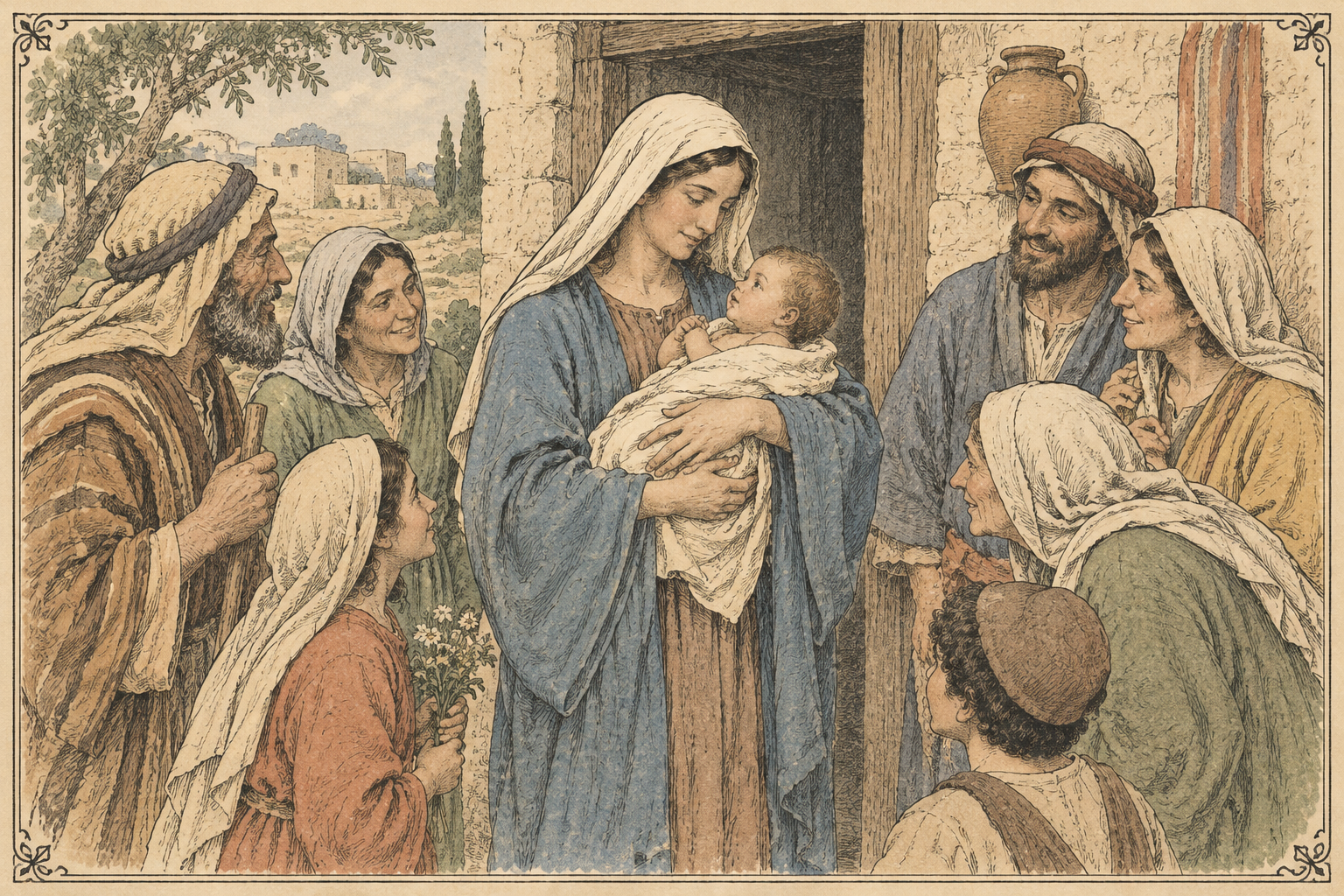
Whatever conclusion we reach, one fact stands untouched: "Jesus" is the name hundreds of millions of English-speaking believers have prayed, sung, and wept over for centuries. It is the name on gravestones, in hymnals, in the quiet desperate prayers of people who have nothing else left to say. If that name turned out to be a late invention with no authentic connection to who he is, that would be no small thing to uncover.
A Name Spoken in Worship for Generations
Think of what the name "Jesus" has carried in English alone. It is there in the Wesley hymns, in the deathbed prayers of plague victims in seventeenth-century London, in the whispered name on the lips of persecuted believers in places where saying it aloud could cost them everything. Whatever the linguistic history turns out to be, that devotion was not aimed at nothing. It was aimed, however imperfectly rendered through centuries of alphabet and pronunciation, at the one who walked first-century Galilee and was raised from among the dead.
Why the Question Deserves a Real Answer, Not a Slogan
This is precisely why the question deserves patience rather than a viral hook. If reverence and accuracy both matter, and they do, then the right response to a claim like this is neither defensive dismissal nor uncritical acceptance. It is to go and look. So let's look.
The Letter J and the Real History of the English Alphabet

Here is where the promotional claim gets something genuinely right, and it is worth saying so plainly. The letter J, as a distinct letter from I, did not exist in English, or in most European languages, until roughly the 1500s and into the 1600s. This history is well documented, though some of the finer details, including exactly how and when the distinction took hold in different regions, are debated among linguists rather than settled down to the year.
How I and J Became Two Letters Instead of One
For centuries, Latin and the languages descended from it used "I" to represent both the vowel sound we hear in "machine" and the consonant sound we now spell with "J" (as in "yes" transitioning toward "jam" through various medieval pronunciations). Scribes in the medieval period began elongating the "I" at the start or within certain words as a stylistic flourish, a kind of calligraphic habit rather than a new sound. Over time, especially as printing presses standardized spelling in the 1500s, that elongated "I" hardened into its own letter, J, with its own distinct sound in English and other languages. Some printers in Italy are credited with distinguishing I and J as separate letters as early as the 1520s, and English printers gradually followed suit over the following century, though the process was uneven and took different shapes across regions.
What This Fact Does Not Prove
So the history of the letter J is real. What it proves is a fact about scribes, printers, and the gradual standardization of the Latin alphabet. It says nothing at all about when believers began using his name, or whether that name has been faithfully carried across the centuries. The letter J is young. The tradition of naming him by what that letter eventually came to spell is not.
From Yehoshua to Yeshua to Iesous: One Name, Three Alphabets
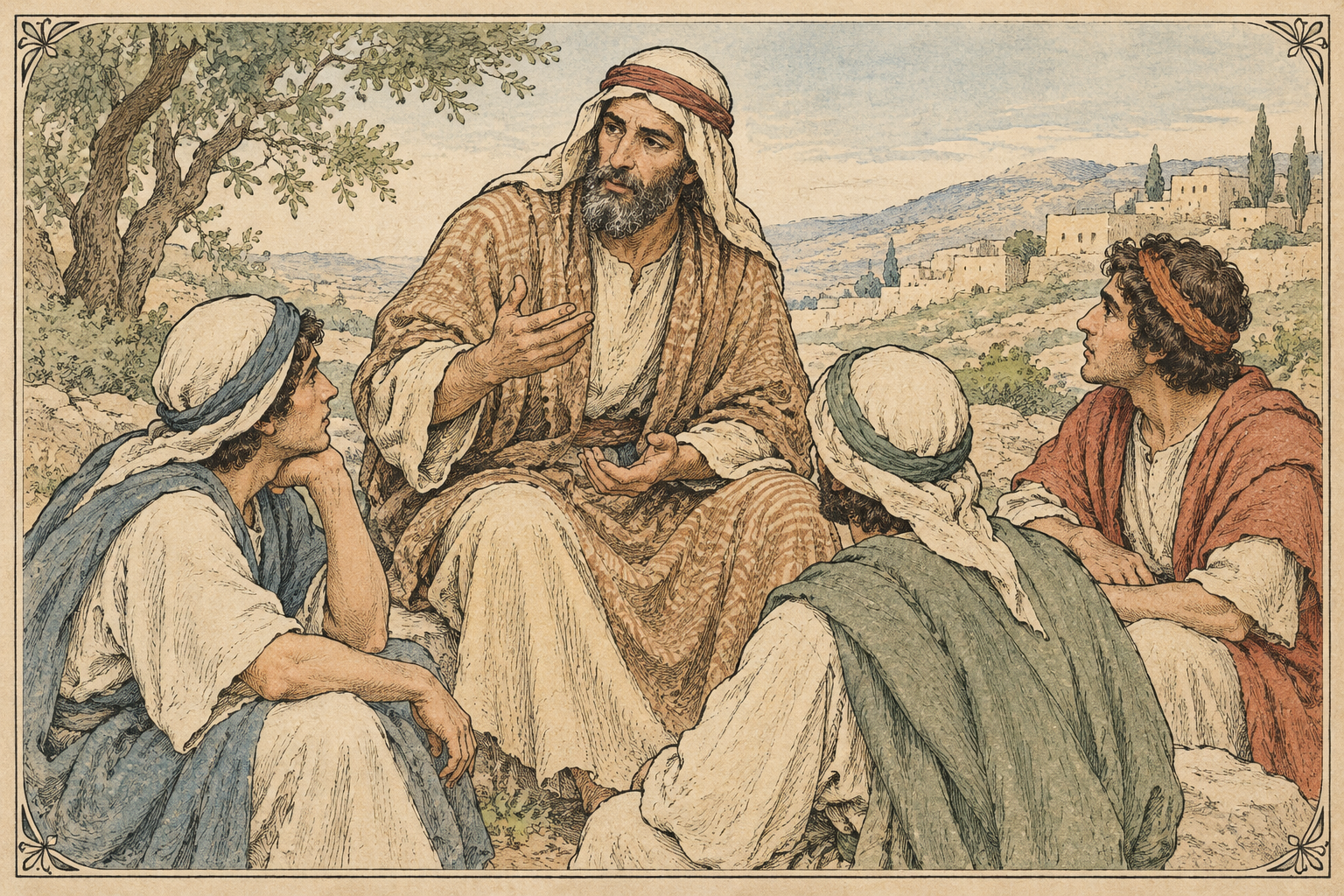
To understand what happened, we need to trace the name itself, not the letter, backward through three language systems: Hebrew, Greek, and English.
What Yehoshua and Yeshua Mean
The name behind "Jesus" begins in Hebrew as Yehoshua, the same name borne by the successor of Moses who led Israel into the promised land. Yehoshua is built from two elements: a shortened form of the divine name, and the Hebrew root yasha, meaning "to deliver" or "to save." Put together, the name means something like "the Lord saves" or "the Lord is salvation." By the first century, in the Aramaic-speaking world of Galilee and Judea, this name had worn down through common speech into the shorter form Yeshua, the way names often contract in everyday use. This was simply how a well-worn name sounded on the lips of ordinary people in first-century Judean villages, mothers calling their sons in for supper, friends greeting each other in the marketplace.
How Yeshua Became Iesous in the Early Church
When the earliest Christians began writing and circulating their accounts in Greek, likely within a few decades of the resurrection, they faced the same problem every translator faces. Greek has no sound that matches the Hebrew letter ayin at the end of Yeshua. Greek grammar also requires a nominative ending for proper names to function correctly in a sentence. The solution the earliest Greek-speaking Judeans and Christians settled on was Iesous, a transliteration that preserved as much of the original sound as Greek phonology allowed while making the name usable in Greek sentences. People who knew Yeshua personally, or had received the testimony about him directly, made this choice, including Greek-speaking Judeans who had every reason to carry his name faithfully into their own language. The Gospel of Matthew itself, in its earliest Greek form, already renders the name this way.
How Iesous Became Jesus in English
From there, the chain continues in an entirely unremarkable way. Latin took the Greek Iesous and rendered it Iesus, since Latin likewise needed its name forms to decline properly within sentences. English inherited Iesus from Latin through the long process of Bible translation and liturgical use, and when the English alphabet eventually separated I and J as distinct letters in the 1500s and 1600s, words that had been spelled with an initial "I" consonant sound, including this name, shifted their spelling to the new letter J. "Jesus" is not an invention of the 1500s. It is the English alphabet catching up to a spelling that had existed in Latin and English manuscripts for well over a thousand years, simply updating which letter shape represented the sound. The name itself, the continuous thread of reference running from Yehoshua through Yeshua through Iesous into Jesus, never broke. It changed its clothing three times, as names do when they cross from one language into another.
What Scripture Says the Name Carries
If the linguistic history shows continuity rather than invention, the theological texts go further still. They tell us the power of this name was never located in its pronunciation to begin with.
Matthew 1:21 and the Meaning Woven Into the Name Before Any Greek or English Letters Existed
The Gospel of Matthew records the angelic instruction given to Joseph before Jesus was born: "You shall call his name Jesus, for he will save his people from their sins" (Matthew 1:21). Notice what the angel does here. He does not simply assign a label. He ties the name directly to its Hebrew meaning, "the Lord saves," and then announces that this meaning is about to become historical fact in the person of the child Mary carries: God (Alohim) himself come to save his people, wrapped in flesh and given a human name. The weight of the name was embedded in Yehoshua and Yeshua centuries before a single Greek or Latin letter had anything to do with it. Whatever alphabet eventually spelled the name, the meaning came first, and the meaning was the message.
Acts 4:12 and Philippians 2:9-10: Authority Tied to Identity, Not Phonetics
The apostle Peter, standing before the Judean council, declares that "there is no other name under heaven given among men by which we must be saved" (Acts 4:12). Paul writes to the Philippian church that he has been given "the name that is above every name, so that at the name of Jesus every knee should bow... and every tongue confess that Jesus is Lord" (Philippians 2:9-10). Read carefully, neither passage grounds the saving power of the name in a required sound or spelling. Both ground it in identity and accomplishment, in who he is and what he has done. Peter is not instructing his Greek-speaking audience to recite a precise Aramaic phoneme. He is declaring that salvation belongs to this particular person, the one crucified and raised, regardless of what alphabet a given hearer uses to say so. This salvation is not merely a matter of believing the right facts or saying the right words; Scripture ties it to a whole process, repentance, baptism in his name, and the gift of the Spirit, through which a person comes to know and belong to him. Paul writes to a Greek-speaking church in Philippi and expects every tongue, Greek, Latin, Aramaic, or otherwise, to confess him, which only makes sense if the confession is about identity rather than pronunciation.
Holding the History and the Reverence Together
Two histories need to be held side by side rather than collapsed into one another.
What the Promo Gets Right and What It Flattens
The claim that the letter J is a late arrival in English deserves full credit. It is true, it is well documented, and it is the kind of detail that rightly surprises people who assume our alphabet has always looked the way it looks now. But the leap from that true fact to the conclusion that "Jesus" is a late invention, disconnected from who he is, does not hold up under examination. It mistakes a question about English typesetting history for a question about theological and linguistic continuity. The name Yeshua became Iesous in the first century, among people who had every reason to carry it faithfully, and Iesous became Jesus through an unbroken, if winding, path of translation that never once represented an attempt to replace him with someone else. The Beatles analogy, in the end, cuts both ways. Fans around the world preserved John, Paul, and George because the names mattered; the church has preserved this name across three alphabets because it mattered too much to lose. Honest translation is itself a form of preservation.
Understanding the Original Name Without Demanding a Verdict
None of this means the original Hebrew and Aramaic forms are unimportant, or that curiosity about Yeshua and Yehoshua is misplaced. Knowing that his name meant "the Lord saves" before it meant anything else gives weight to Matthew's account that an English reader could easily miss. It roots the gospel announcement in a promise older than the child himself, a promise stretching back to the Yehoshua who led Israel into the land centuries earlier. Understanding the original name deepens reverence. It does not require abandoning the name by which generations of English-speaking believers have known him, prayed to him, and called on him for salvation. The history of the letter J tells us something true and interesting about scribes and printers. It does not tell us that the church has spent two thousand years worshipping the wrong name. What it tells us, if we let it, is how far a single name can travel through Hebrew lips, Greek pens, Latin manuscripts, and English presses, without ever losing what it was first spoken to mean.
Wherever your own prayers find their words, this history is worth sitting with. If this kind of question interests you, the history behind the names, the texts, and the translation choices that shaped the story we inherited, Babel Report exists to keep digging into exactly this kind of ground. The invitation stands to come look further.