Ezekiel's Radical Vision: Prophet of Exile & Divine Judgment
Ezekiel's radical vision reveals crisis theology for exiles who thought God had lost. Explore the throne chariot, watchman warning, and glory's departure.
Suppose your city fell, your temple burned, and everyone around you agreed it was because your God (Alohim) had lost. Not lost a battle. Lost, full stop. Beaten by a bigger god, on his own ground, in front of witnesses. What would it take to talk you out of that conclusion? Not a lecture, and not a calm theological essay slipped under your tent flap in the refugee camp outside Babylon. You would need something loud enough to break through the noise of your own despair. This is the problem Ezekiel's radical vision was built to solve. He was not handed a message so much as a demolition job, clearing the rubble of a false theology before anyone could lay a true one down. That is why the book feels so strange to us, never meant to feel comfortable, but meant to feel like an interruption, because an interruption was the only thing left that might work.
A Priest Trained for the Temple, Sent to Babylon Instead

Before we look at what Ezekiel said, it is worth pausing on who Ezekiel was, because the man himself is an argument.
The Vocation He Trained For
Ezekiel was born into a priestly family, which meant his entire boyhood pointed toward one future. He would learn the calendar of sacrifices, the choreography of clean and unclean, the careful business of standing between ordinary Judeans and the holiness of God in the Jerusalem Temple. Priests were not free spirits. They were technicians of order, trained to keep a precise machine running without deviation. Everything about his formation prepared him for repetition, not disruption.
The Vocation He Was Given
Now set that training beside what happened to him. Instead of standing at an altar in Jerusalem, Ezekiel found himself among the deportees on the banks of a Babylonian canal, and instead of performing sacrifice, he was told to perform his own body as a sign. Lie down. Shave your head. Pack a bag as though you were fleeing, and dig through a wall as though escaping in the night. In the first life, holiness meant precision within a fixed system. In the second, holiness meant becoming a walking, wordless sermon in a foreign land. Notice that the gap between those two callings is not a footnote to his ministry. It is the ministry.
Why the Timing Matters
Here is a detail easy to miss and essential to hold onto: Ezekiel was already in Babylon, already among the exiles, years before Jerusalem finally fell, around 586 BC (some scholars place the date closer to 587 BC). He was not writing after the fact, offering tidy explanations once the dust had settled. He was speaking into a community still arguing about whether the city would survive, still hoping their situation was temporary, still telling themselves comforting stories about how God would surely rescue his own house before it came to that. Ezekiel's prophecy had to function as crisis communication delivered in real time, not calm instruction delivered in hindsight. That is no small matter. It explains the urgency in his every gesture.
Rewriting the Meaning of a National Catastrophe
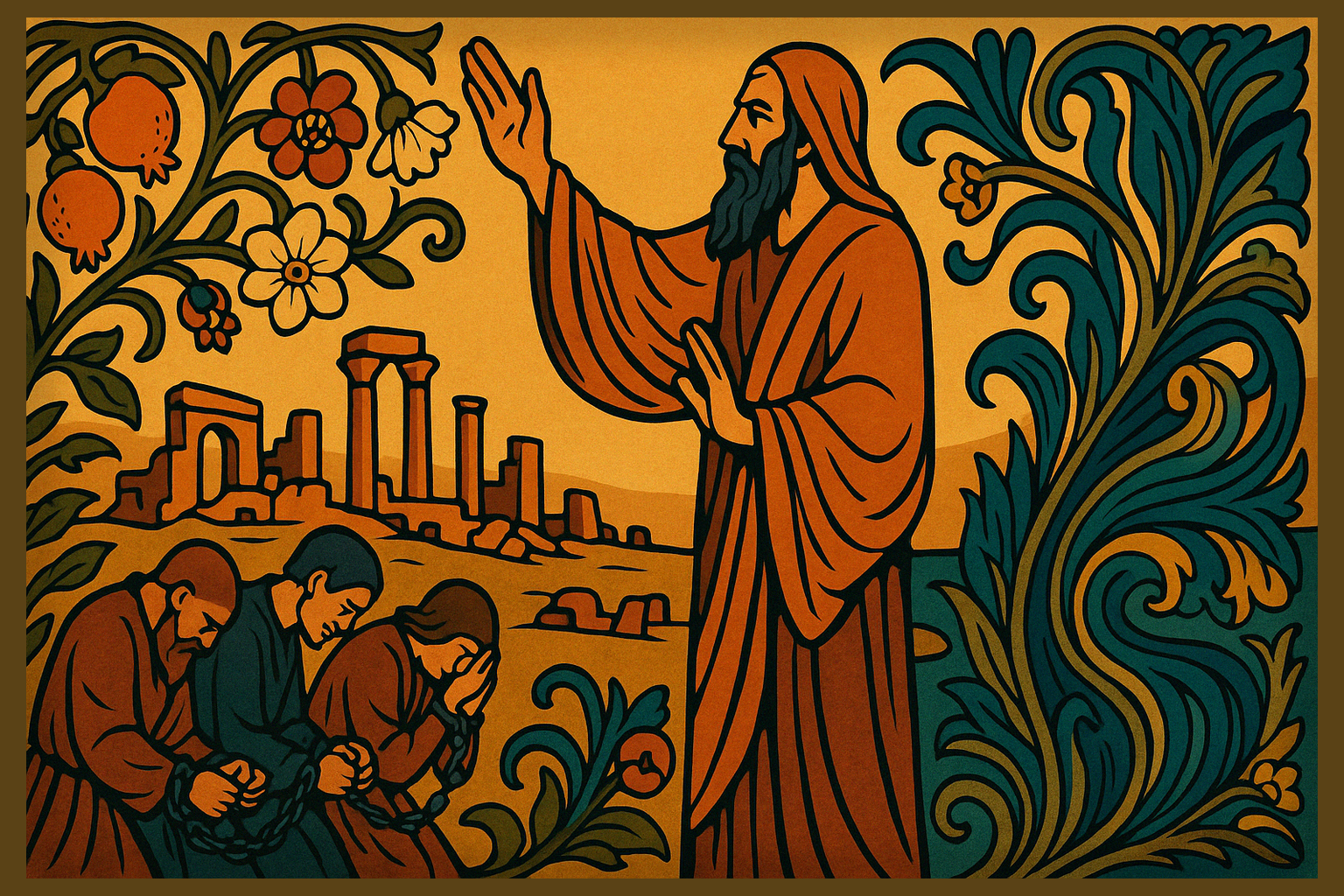
Before anything else could be rebuilt in the exiles' minds, one assumption had to be pulled out by the roots.
The Assumption Ezekiel Had to Dismantle
In the ancient Near East, gods were largely understood as territorial. Each nation had its patron deity, and when one nation conquered another, the natural reading was theological before it was military. The winning god had proven stronger than the losing god, on the losing god's own soil. Babylon's armies had taken Jerusalem, burned the Temple where the Lord (YHWH) was believed to dwell, and marched his people off in chains. By every convention of the age, that meant one thing. YHWH had lost. Marduk, the god of Babylon, had won. The exiles were not being irrational when they drew this conclusion. They were being ordinary people of their time, reading events the only way their culture had taught them to read events.
Judgment as Divine Decision, Not Divine Defeat
Ezekiel's task was to take that reading apart piece by piece and replace it with something almost unthinkable to a defeated people. The exile, he insisted, was not something that happened to YHWH. It was something YHWH did. The Babylonians were not the victors in a contest of strength. They were, without knowing it, an instrument in the hand of the God they thought they had beaten. In the first version of events, YHWH is a casualty. In the second, YHWH is a judge, and Babylon is his gavel. That distinction changes everything that follows. A defeated God offers no future. A judging God, however severe, is still sovereign, still present, and still capable of restoring what he has rightly torn down.
Book of Ezekiel Prophecy as Reframing, Not Merely Prediction
This is why so much of the Book of Ezekiel prophecy reads less like a forecast and more like a correction of a story already told wrong. Ezekiel spends chapter after chapter reviewing Israel's history, not to inform people of facts they didn't know, but to reinterpret facts they thought they already understood. He is not merely predicting what will happen. He is insisting on why what already happened, happened. A people convinced their God has been beaten will eventually stop believing in that God altogether, or transfer their loyalty to the god who apparently won. Ezekiel's real target in those early chapters was not Babylon, but despair dressed up as theology.
The Throne Chariot and a God Who Cannot Be Contained

If the exile needed reinterpreting, the exiles also needed a new picture of where God was, and this is where Ezekiel's throne chariot vision does its heaviest lifting.
Wheels Within Wheels, and Why the Detail Is the Point
The vision in Ezekiel's opening chapter is famous for its strangeness, four living creatures, wheels within wheels, an expanse like ice, a throne of sapphire blazing above it all. Readers across the centuries have treated this as raw material for speculation, and it has fed an entire tradition, sometimes called merkabah mysticism (Jewish mystical writing that tries to map the architecture of heaven using this "chariot" vision), of digging through its details for hidden secrets. That mysticism, engaging as it is, was likely not the point Ezekiel was making to a Judean farmer sitting by a Babylonian canal. The point was mobility. The wheels moved in whatever direction the creatures faced, without turning, which is a deliberately impossible image built to say one thing: this throne goes wherever it wills. For a people convinced their God was a fixture of a burned building in Jerusalem, that single detail was the whole sermon.
A Direct Answer to Babylonian Imperial Theology
Babylon had its own theology of power, expressed everywhere in its architecture and art. The winged, composite guardian figures that stood at the gates of Babylonian temples and palaces, the shedu, are thought by some to have broadcast an imperial claim: our gods are settled here, established, and stronger than whatever came before them, though scholars of Mesopotamian religion still debate exactly what these figures meant to those who carved them. Ezekiel's vision borrows some of that same visual vocabulary of composite creatures and thrones, and then turns it against its source. In Babylon's version, divine power sits still and guards a fixed territory it has already conquered. In Ezekiel's version, divine power moves, and moves specifically into Babylon, uninvited and unstoppable. It reads as a quiet but total rebuttal of the empire's own imperial theology (the belief that a nation's gods, and by extension its king, are proven supreme by military victory), delivered in the empire's own visual language.
Presence Without a Postcode
Once that idea landed, the exiles' despair had nowhere left to stand. If YHWH's throne rides on wheels, then he was not left behind in the rubble of the Temple. He rode into Babylon alongside his people, present in the place they assumed he could never reach. That is the hidden engine running underneath every strange image in this book. Divine presence, portable rather than territorial, changes the entire emotional logic of exile. The ground beneath their despair is no longer there. A god who can be defeated on his home turf demands one kind of response. A God whose throne has wheels demands another entirely.
Symbolic Street Theater: When Preaching Becomes Performance
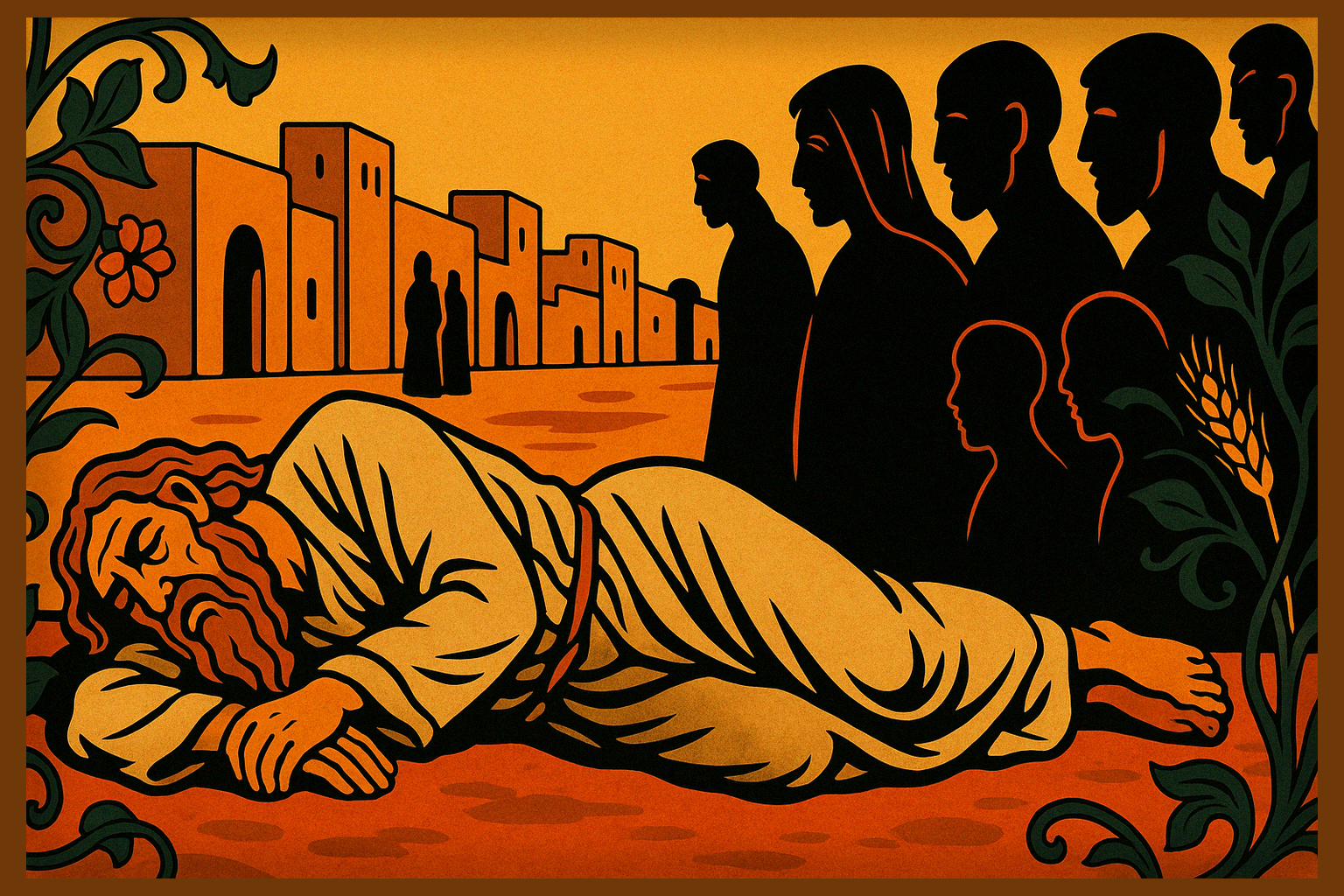
Once you understand what Ezekiel was fighting against, his bizarre behavior stops looking eccentric and starts looking calculated.
Lying on His Side for Over a Year
Ezekiel is told to lie on his left side for three hundred and ninety days, and then on his right side for forty more (Ezekiel 4:4-6), bearing in his own body the years of Israel's and Judah's guilt. Read quickly, this sounds like the behavior of a man in crisis himself. Read carefully, it is closer to an ancient billboard, planted in the middle of a refugee settlement, that nobody walking past could avoid for over a year. In a world without newspapers, without any means of mass communication beyond word of mouth, sheer duration was itself a broadcasting strategy. The message did not fade after a single sermon, because the sermon simply refused to stop happening.
Shaving with a Sword, Cooking Over Dung
Then come the details designed to embarrass rather than merely inform. Ezekiel shaves his head and beard with a sword, an act loaded with humiliation for a priest whose appearance was meant to signal dignity and order. He is told to cook his food over human excrement, a detail so degrading that even Ezekiel objects, and YHWH relents slightly, permitting animal dung instead. Neither detail is there for shock's own sake. Both are aimed precisely at an audience that had stopped listening altogether to every dignified warning a prophet could offer. You do not choose humiliating symbols for people who are still listening politely. You choose them for people who have stopped listening.
Why Shock Was the Only Language Left
This is the real answer to the question every new reader eventually asks: why is Ezekiel so extreme? Ezekiel's symbolic street theater only makes sense once you accept that shame, not eloquence, was the tool suited to that particular moment. A people numbed by disaster and busy rationalizing their own defeat had grown deaf to ordinary rebuke. Shock was not Ezekiel's personality. It was his medicine, dosed to match the size of the disease. And here is the interesting part. It is the kind of medicine we still recognize today. A protester lying across a road, an artist smashing a public sculpture, a whistleblower risking everything to make one point visible. Extreme communication is what happens when a message has been ignored in every gentler form.
The Watchman's Warning and the Weight of Silence
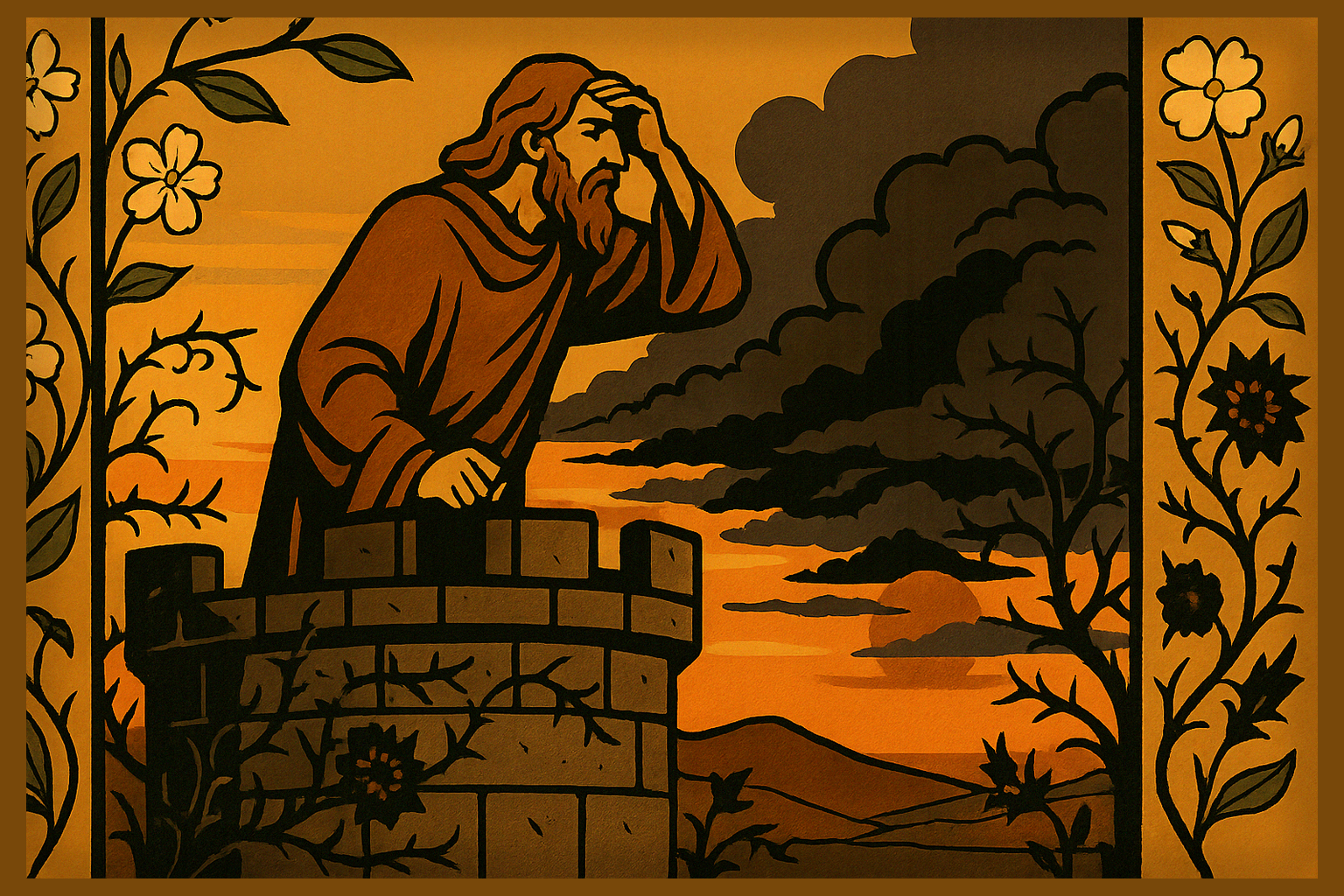
From public spectacle, the book turns suddenly inward, to a single man's personal accountability, and the change in register is worth noticing.
The Terms of the Watchman's Commission
In one of the most sobering passages in the entire book, YHWH tells Ezekiel that he has been appointed a watchman over the house of Israel (Ezekiel 3:17; 33:7). If Ezekiel sees danger coming and warns the people, and they ignore him, their fate is their own responsibility. But if Ezekiel sees danger coming and says nothing, their blood is required at his hand. Let us consider what that means plainly. The prophet is not offered a message to pass along if convenient. He is placed under a debt that only speaking can discharge.
Prophetic Silence as Moral Failure
This reframes something we often treat as optional. We tend to think of prophecy, or any hard truth-telling, as a kind of gift offered freely, which the speaker can choose to give or withhold. Ezekiel's watchman warning insists otherwise. Silence, in this framework, is not neutral. It is itself a failure, an active dereliction with a cost measured in someone else's life. That is a heavy claim to make about speech, and Ezekiel makes it without apology.
What the Watchman Metaphor Asks of Us Now
Here is the question the illustration has answered for you, if you let it. What responsibility do you carry when you see harm coming toward someone and say nothing, telling yourself it is not your place to speak? The structure Ezekiel describes was never confined to prophets standing on Babylonian riverbanks twenty-six centuries ago. It belongs to any parent who sees a child heading toward disaster, any friend who watches another drift toward ruin, any citizen who sees injustice forming and calculates that silence is safer. The watchman's burden is difficult to leave behind as merely ancient history, because we keep finding ourselves standing on the same wall.
The Glory Departs, the Bride Is Named, and Ruin Gives Way to Renewal
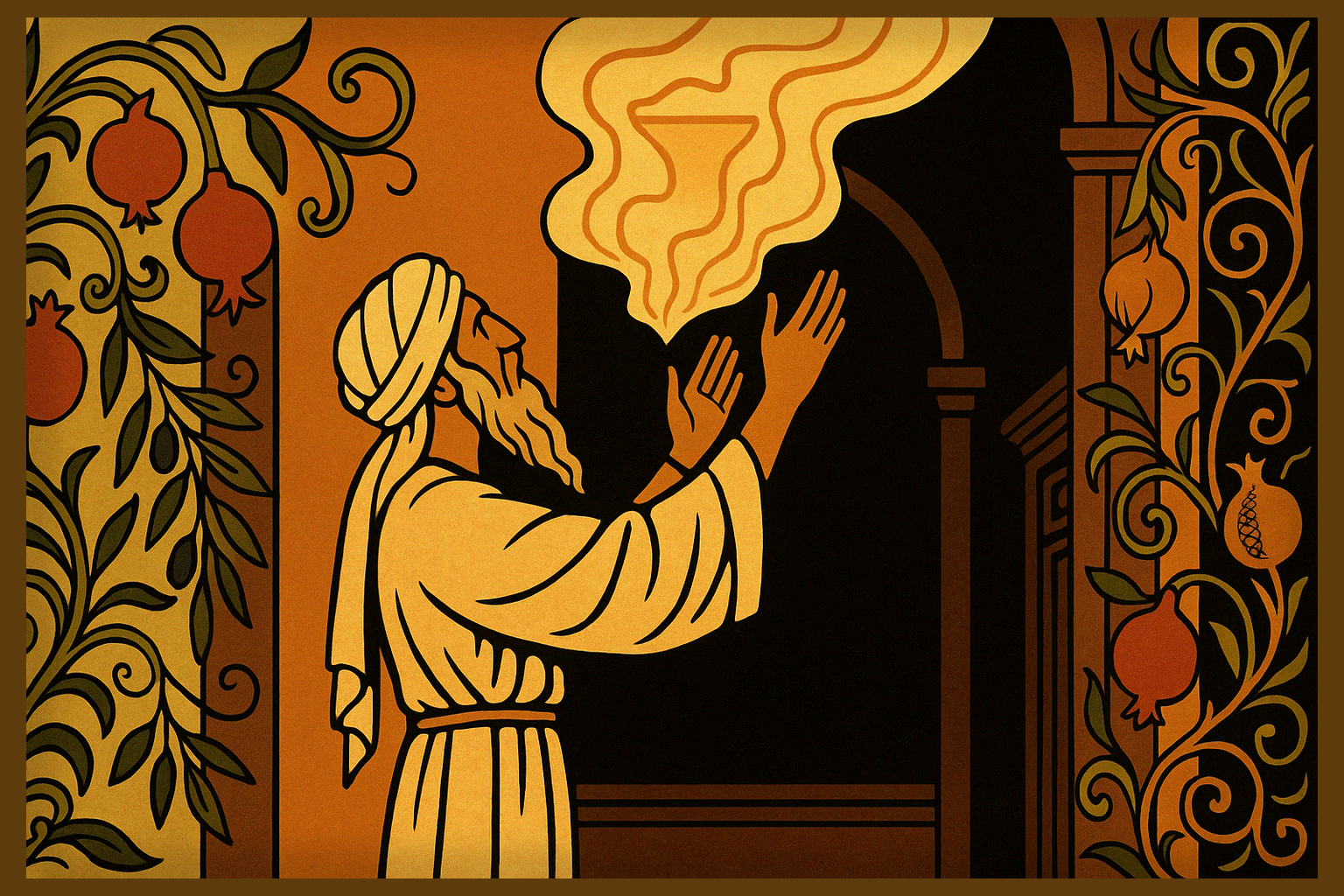
We come now to the sequence that ties every earlier thread together, the departure of glory, the naming of Jerusalem's unfaithfulness, and the promise waiting on the far side of both.
The Slow, Deliberate Exit from the Temple
In chapters nine through eleven, Ezekiel is shown something almost unbearable to watch. The glory of YHWH, his kabod (the visible weight of divine presence, understood in Hebrew thought as the outward sign of God being there), had filled the Temple since Solomon's day, and now it begins to leave. It does not vanish in an instant. It moves from the inner sanctuary to the threshold, then to the east gate, then finally up and away from the city entirely, pausing as though reluctant, before departing for good. In the first telling of exile, the Temple was destroyed and God was presumably trapped inside, defeated along with the building. In the second telling, the one Ezekiel gives us, the building was vacated before it was ever destroyed. God left on his own terms, in his own time, by his own will. The Babylonians burned an empty house.
The Allegory of the Adulterous Bride
Chapters sixteen and twenty three then turn from architecture to marriage, and the language becomes graphic almost past the point of comfort for modern readers. Jerusalem is portrayed as a bride rescued from abandonment, lavished with everything a covenant partner could offer, who then turns to prostitute herself with every passing nation and idol. This is not decorative language chosen for literary flourish. It is deliberate, designed to make shame accomplish what centuries of gentler correction had failed to do. Israel's prophets before Ezekiel had warned, appealed, and reasoned. This generation needed something closer to a mirror held up without mercy, because subtlety had been tried and had failed.
Restoration Promised Even to Sodom and Samaria
And yet, having gone further into judgment than almost any other book in scripture dares to go, Ezekiel does something noteworthy with it. He tells Jerusalem that her sisters, Sodom and Samaria, the two great bywords of the ancient world for corruption beyond redemption, will themselves be restored, and Jerusalem's own fortunes will be renewed alongside them. In the first frame, catastrophe is the end of the story, a judgment so severe it forecloses any future. In the second frame, judgment is the corridor grace walks through to reach a people who could not have received it any other way. That is the point. Ezekiel never lets ruin have the last word, however loudly ruin shouts through most of the book.
Ezekiel's Radical Vision, Read Rightly
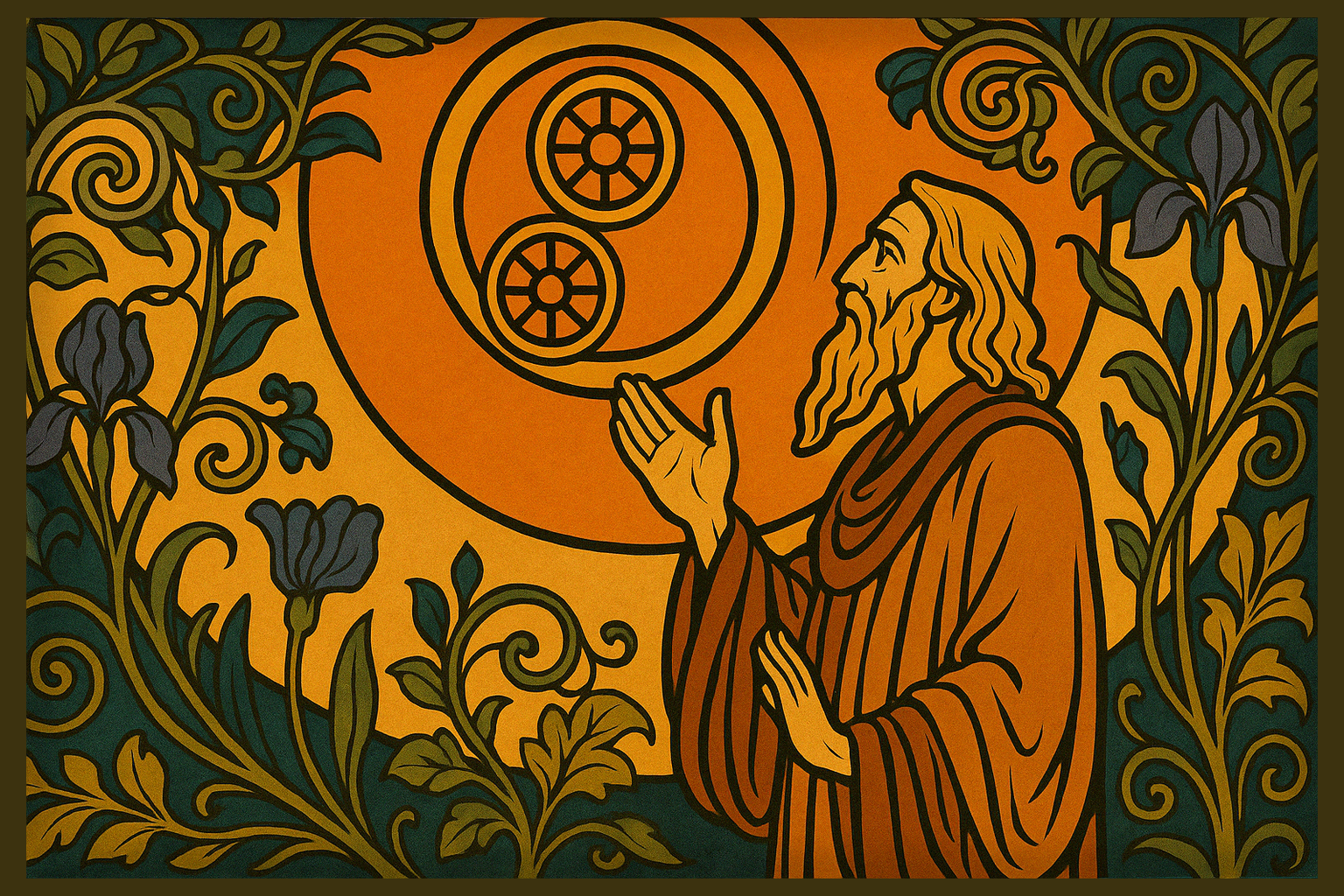
Ezekiel's radical vision has too often been treated as a museum piece, a strange curiosity from an ancient prophet fond of hallucinatory imagery and public humiliation. That reading misses almost everything that matters. What Ezekiel offers is not mysticism for its own sake but crisis theology (a way of speaking about God shaped for people in the middle of catastrophe, not calm reflection after it), built for people who had lost the ground under their feet and needed something more radical than comfort to stand on again. The wheels within wheels declare a God too large for any single postcode. The sword and the dung declare a message too urgent for polite language. The departing glory declares a God who leaves by choice, never by defeat. And the promise stretched even to Sodom declares that judgment, however severe, was always meant to clear space for something better on the other side.
If your own life has felt like exile, a place you never chose and cannot yet see the end of, this is exactly the condition Ezekiel wrote for. His vision does not explain away your suffering. It insists on something simpler: the God who allowed it has not lost control, has not walked away, and is not finished writing the story. Whatever you currently believe about this God, that claim is worth sitting with for a moment.
A Close Reading
A close reading of the passage through Story, Symbol, and Praxis.
Want to read the passages behind this article in their original language?
Read the Greek and Hebrew behind this passage yourself, verse by verse, through the same scholarly lenses as Babel Report.
Explore Babel Lens →babellens.aiMore in origins


Explore the full gallery of essays and meditations
Browse the Collection