Every week, in churches and homes and stadiums full of raised hands, people sing "Hallelujah" without a second thought about what the word contains. They take it as an exclamation, a kind of sacred cheer with no further content to examine. But what if the word is a linguistic fossil, carrying inside it the name that centuries of scribal tradition worked to obscure? This is the question behind a growing body of investigation into Yahuwah Yahusha sacred name pronunciation, and it begins not with speculation but with a first-century eyewitness who stood where the name itself was worn on human flesh.
The eyewitness is Josephus, a Judean historian and former priest who watched the Second Temple's final decades with his own eyes. His testimony, paired with the work of medieval Hebrew scribes centuries later, opens a case that deserves careful attention rather than dismissal. Babel Report has taken up this case in detail, and what follows traces the argument from a golden plate on a high priest's forehead to a word sung by congregations who have never been told what they are saying.
The Priest's Breastplate: Josephus and the Golden Plate of the Name
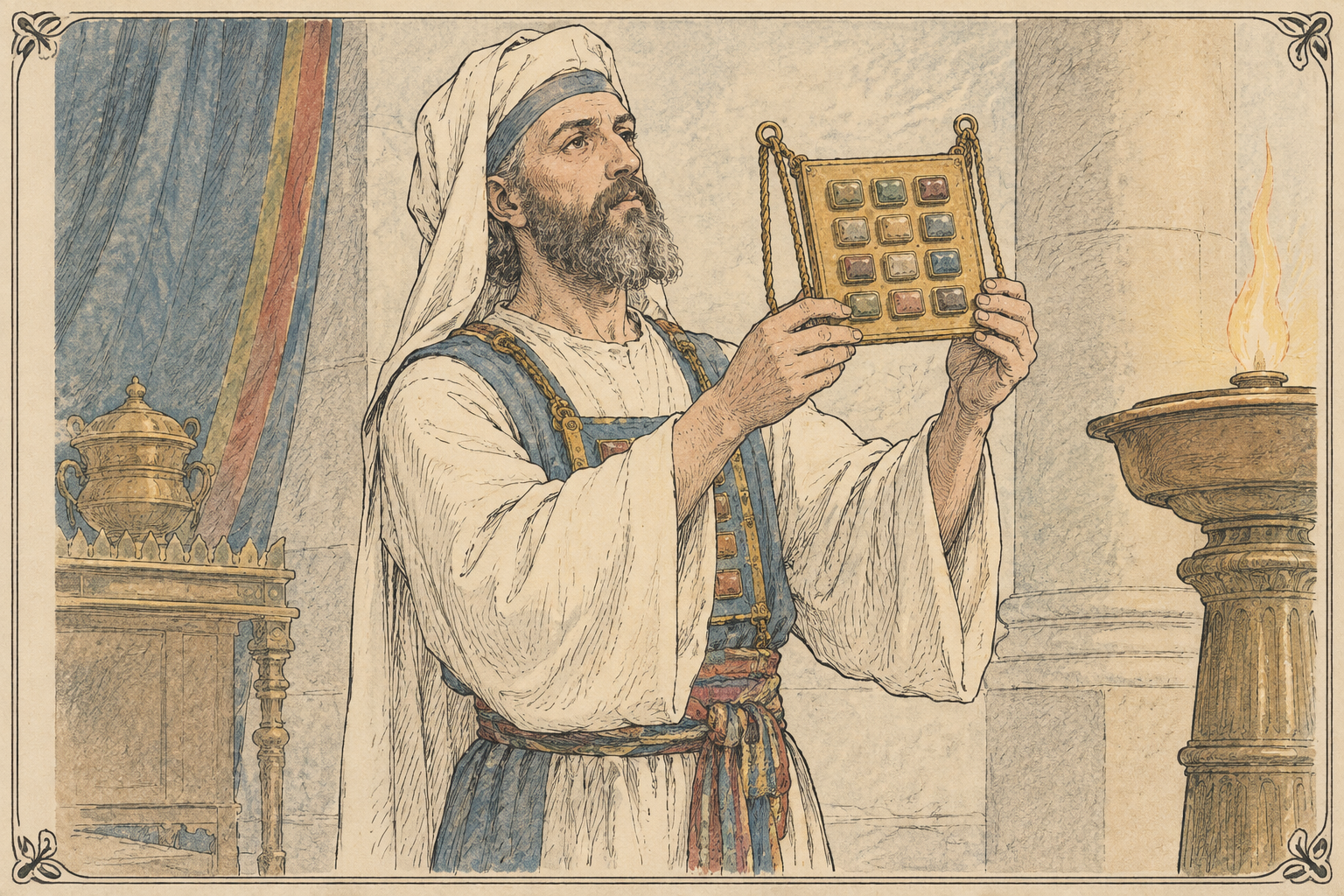
A first-century eyewitness account in Wars of the Judeans 5.5.7 places a sacred name at the center of Second Temple worship. Some readers take this as evidence of a vowel-based name rather than a consonantal code, though that interpretation remains disputed. Even so, the historical detail is worth examining closely.
What Josephus Saw in the Temple
Josephus was no outsider speculating from a distance. Born into a priestly family around AD 37, he lived through the final generation of the Second Temple before its destruction in AD 70, and he wrote as a man who had stood inside the structures he described. In Wars of the Judeans, Book 5, Chapter 5, Section 7, he describes the high priest's headdress in detail: a blue ribbon encircling the head, and upon it a golden plate bearing the sacred name of God (Alohim). He was a historian reporting what he watched priests wear in a building that no longer exists, not a theologian constructing doctrine centuries after the fact.
That distinction matters more than it might first appear. A document written by someone who stood in the Temple courts carries a different kind of authority. He watched priests process in their garments and understood Hebrew and Aramaic as living languages, not museum pieces. That authority differs from a system built centuries later by scribes who never set foot in Jerusalem's sanctuary. Josephus is reporting something he witnessed; later tradition, however learned, is reconstructing it from a distance.
A Name Built of Breath, Not Merely Letters
Josephus's account becomes genuinely significant for one reason. His description of the sacred name points toward something built from vowel sounds, a name carried on breath rather than merely stamped in silent consonants, in the view of those who read this passage this way. Ancient Hebrew, like its sister Semitic languages, was written without vowel markings for most of its history. Readers supplied the vowels from memory, from oral tradition passed down through families and priestly lines who had heard the name spoken aloud in worship. Josephus, writing from within that oral tradition while it was still alive, describes a name that functions as spoken sound, not as an abstract code waiting for scholars to crack centuries later.
This is the point the Masoretic project eventually could not fully replicate, because sound carried in living memory is not the same thing as sound reconstructed from manuscripts. A name spoken for a thousand years by priests who heard it from their own teachers, who heard it from theirs, carries a continuity that a written record alone cannot capture once that chain of living speech is broken. Josephus stands at the far end of an unbroken chain. The Masoretes stood centuries after that chain had already snapped.
Why an Eyewitness Outweighs a Later Convention
Of course one can argue that Josephus offers no vowel points of his own, no technical transcription system, nothing a modern linguist could put under a microscope. That limitation is real. But here is the problem with dismissing his testimony on those grounds: Josephus did not need a vowel-pointing system because he lived in a world where the name was still spoken, still heard, still carried in the mouths of priests who used it daily in Temple service. He was not reconstructing a lost sound. He was describing a living one.
Set that against the Masoretes of Tiberias, who began their formal vowel-pointing work several centuries after the Temple's destruction and well after Josephus himself wrote. That gap between an eyewitness and a written convention built long after living memory had faded deserves serious weight. An eyewitness account from within a functioning priesthood should carry more evidential weight than a scribal system assembled by scholars who inherited a language already fractured by exile, dispersion, and centuries of non-use in daily speech.
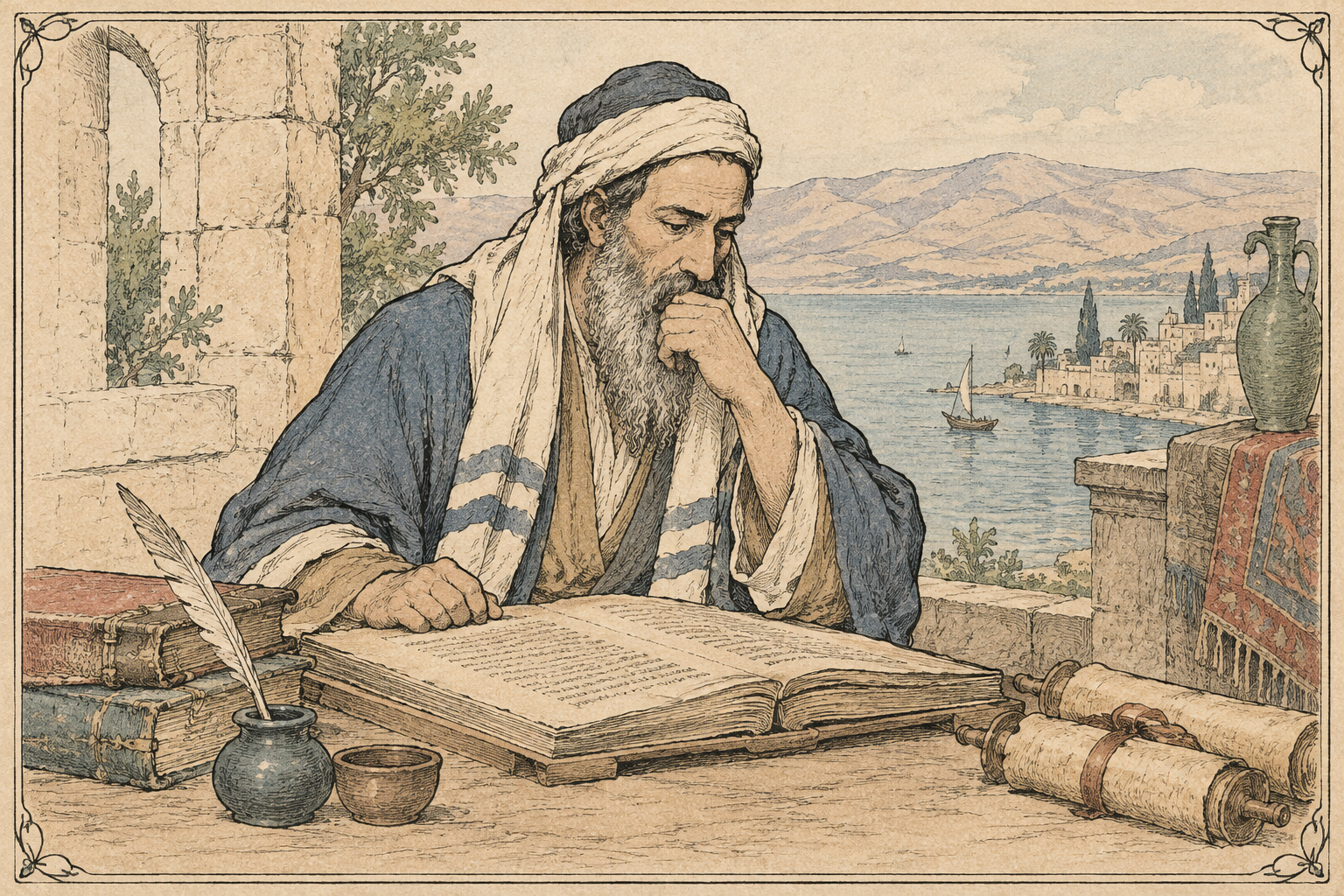
Tiberias, the 7th Century, and the Birth of the Nikud
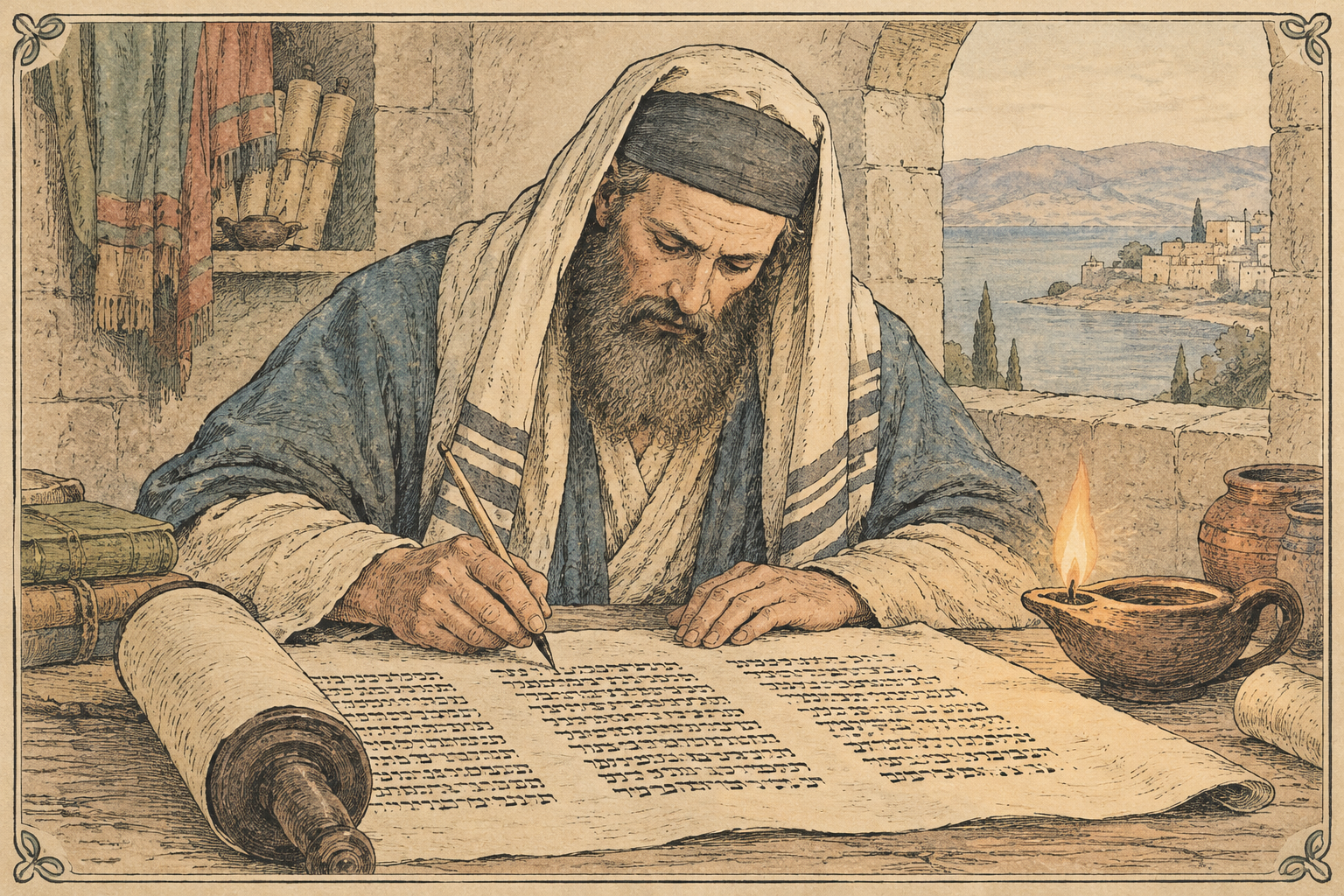
The Masoretes of Tiberias built the Nikud vowel-pointing system, a set of marks added to the Hebrew consonantal text (the Hebrew Scriptures copied with consonants only and no vowel marks) to indicate vowel sounds, beginning around the seventh century AD, and what that invention did to a name that had, until then, traveled by memory and breath deserves far more scrutiny than it usually receives.
Who the Masoretes Were and What Problem They Were Solving
The Masoretes were a guild of Hebrew scribes working in and around Tiberias, a city on the western shore of the Sea of Galilee, beginning roughly in the seventh century AD and continuing their refinements for several centuries afterward. They inherited a genuine crisis. Hebrew as a spoken, native tongue had been in decline for generations among Judean communities scattered across the Mediterranean world and the Persian territories to the east. The consonants-only text had been preserved faithfully for a thousand years, but the pronunciation tradition that once lived in the mouths of native speakers was thinning with every generation born in Alexandria, Babylon, or Rome rather than in Judea itself.
So the Masoretes set out to solve a real problem, and nobody should pretend otherwise. They wanted future generations, increasingly disconnected from spoken Hebrew, to be able to read the sacred text aloud with some consistency. The Nikud, their system of dots and dashes placed above, below, and inside consonants, was born from that genuine pastoral concern. These were careful, devoted scholars doing meticulous work across generations. None of this means their system simply recorded what had always been there without alteration.
Pointing as Interpretation, Not Mere Preservation
Here is the question that matters: is adding vowel points to a text already circulating for over a thousand years a neutral act of preservation, or is it an interpretive act, a decision about what the correct reading ought to be? The honest answer is that it has to be the latter, at least in part. By the time Tiberian scribes sat down to formalize their pointing system, the living oral tradition connecting readers directly to Second Temple pronunciation had been broken by exile, by the destruction of Jerusalem, by the scattering of Judean communities across three continents, and by centuries during which the sacred name itself had become something many scribes considered too holy to pronounce at all.
That last detail is not incidental. Reverence for the name had, by the time of the Masoretes, hardened into active avoidance of speaking it. Readers were instructed to substitute other words when they reached the four consonants of the Tetragrammaton, the four-letter Hebrew name of God rendered Yod-Hey-Waw-Hey, in the text. A vowel-pointing system constructed in that environment, where the goal was partly to prevent pronunciation rather than preserve it, cannot be assumed to have innocently recorded the original sound. A number of scholars have proposed that the points applied to the sacred name instead reflect the vowels of a substitute word, layered onto consonants that originally carried a different sound entirely. This remains a disputed minority position, but if it is correct, pointing in this one specific case functioned as a kind of linguistic camouflage rather than a transparent window into the past.
The Gap Between the Temple and Tiberias
Consider the span of time involved. Josephus wrote his account of the Temple and its priesthood within living memory of the building's destruction, sometime in the AD 70s. The Masoretic vowel-pointing tradition took shape over several centuries beginning around the seventh century AD at the earliest, with the most influential manuscripts (the Aleppo Codex, dated to around AD 930, and the Leningrad Codex, dated to around AD 1008) following still later. That gap spans several centuries of transmission during which pronunciation could have shifted considerably.
Centuries of exile, persecution, religious reform, and avoidance of utterance could easily have shifted a spoken name's pronunciation. When the surrounding culture actively discourages speaking a word aloud for generation after generation, the eventual "correct" vowels applied to that word by scholars working centuries later deserve serious scrutiny rather than automatic deference.
Strong's H3050 and H3068: Two Forms, One Root, One Alteration
A walk through the Concordance entries shows "Yah" and the fuller Tetragrammaton diverging under Masoretic pointing in a way that should make any careful reader pause.
H3050: Yah, Built from Yod and Hey
Strong's Concordance entry H3050 identifies the short form "Yah," built from only two Hebrew letters: Yod and Hey. This short form appears throughout the Hebrew Scriptures, most famously in poetic and liturgical contexts, and its vowel sound has remained stable across the manuscript tradition. There is little scholarly dispute that H3050 is pronounced with an open "ah" sound following the Yod. Even the Masoretes themselves pointed this short form consistently as "Yah," never disguising it with a different vowel structure.
This consistency matters. If the Masoretes were simply recording an unbroken oral tradition with full accuracy across every instance of the divine name's root, we would expect the short form and the long form to share a harmonious vowel pattern, since both are built from the same underlying root letters. Instead, something curious happens when we move from the short form to the full four-letter name.
H3068: The Tetragrammaton and Its "Ye-" Pointing
Strong's H3068 identifies the Tetragrammaton itself, the four consonants Yod-Hey-Waw-Hey that form the proper name of God throughout the Hebrew Bible, which appears several thousand times across the Hebrew Scriptures. When the Masoretes applied their vowel points to this four-letter name, the resulting pronunciation pattern begins with a "Ye-" sound rather than carrying forward the "Yah-" sound so well preserved in the shorter H3050 root. This is the pointing that eventually produced the commonly recited reading many readers recognize today, but it sits awkwardly beside its own shorter cousin.
The same root, Yod and Hey, is pointed one way in its short form and differently in its full four-letter form. One explanation offered within Masoretic scholarship, though it remains a disputed minority position rather than settled consensus, is that the vowels applied to the Tetragrammaton were deliberately borrowed from an entirely different word, a substitute title used by readers who had been instructed never to pronounce the actual name aloud. If that explanation is correct, then the pointing under H3068 could reflect an intention to replace the name's true sound rather than represent it.
Reading the Two Entries Side by Side
Here is the oddity worth sitting with. Strong's Concordance preserves both entries side by side, H3050 and H3068, without resolving the tension between them. The shorter root sits quietly on the page, carrying its stable "Yah" sound across hundreds of poetic and prophetic occurrences, while the longer form carries a pointing tradition that some scholars believe was shaped by religious avoidance rather than straightforward transmission. The shorter, unaltered root quietly sits alongside the longer, pointed one, generation after generation, in the same reference work.
This is the kind of detail that gets lost when readers treat a concordance as a flat list of definitions rather than a record of layered history. The two entries are not neutral twins. One preserves what the tradition never felt the need to disguise. The other preserves what the tradition, on this reading, actively worked to conceal.
Yehuda's Hidden Letters: A Patriarch's Name as a Clue
The wordplay that strips the Dalet from Judah's Hebrew name reveals something close to the divine name itself, and this is not a coincidence invented by modern readers looking for patterns, though the theological weight placed on it remains speculative.
The Spelling of Yehuda and What Remains Without the Dalet
The Hebrew name rendered in English as "Judah" is Yehuda, spelled with the consonants Yod, Hey, Waw, Dalet, Hey. Remove the single consonant Dalet from the middle of that name, and what remains is Yod, Hey, Waw, Hey, the same four consonants that make up the Tetragrammaton itself. The resulting sound, once vowels are supplied according to the pattern already established by H3050's stable "Yah" root, comes close to "Yahuwah." This reading is not universally accepted among Hebrew scholars, but it is sitting in plain sight within one of the most important patriarchal names in the entire Hebrew Bible.
Some will object that this is merely a coincidence of consonant clusters in a language with a limited alphabet. That objection deserves a fair hearing. But proponents of this reading point to precisely this near-identical construction as their strongest evidence: the same letters, in the same order, with one additional consonant inserted. Whether or not that overlap is intentional, it is striking enough that it should not be dismissed outright.
Hebrew Naming Conventions and Names Built on Elohim's Name
Ancient Hebrew naming conventions make this pattern far less surprising than it might first appear to readers unfamiliar with how Hebrew names function. Hebrew parents regularly built their children's names directly from the divine name or its shortened forms, embedding theological statements into personal identity itself. Names ending in "-yah" or beginning with "Yeho-" (Yashayahu, Jeremiah, Jehoshaphat, Elijah) carry the divine name as a structural element, not decoration. A name was a sentence, and that sentence frequently named the God of Israel directly.
Given that convention, it would be strange if the twelve sons of Jacob, patriarchs of the entire nation, carried names with no connection whatsoever to the God their family worshipped. Yehuda's construction, far from being an isolated curiosity, fits a pattern so common throughout Hebrew Scripture that its absence would be the surprising thing.
A Tribe, a Kingdom, and a Name Carried in Plain Sight
Yehuda became more than a patriarch's name. It became a tribe, then a kingdom, then the word from which "Judean" identity derives across the following centuries. An entire people has carried this name across roughly three thousand years of history, and embedded within it, once the Dalet is set aside, sits a sound some readers hear as nearly identical to the name of the God that tribe's descendants worshipped at the Temple Josephus described. It is a detail hiding in the open, carried by every person who has ever answered to the name Judah or been called a Judean, long before anyone thought to look closely at what the letters were saying.
Hallelujah: The Praise Word That Already Contains the Name
H1984 (halal) and H3050 (Yah) combine into the word believers sing without recognizing what it holds, and once this is seen it cannot easily be unseen.
H1984, Halal, and the Meaning of Praise
Strong's H1984 identifies the Hebrew root halal, a verb meaning to praise, to boast, to shine, to celebrate aloud with unrestrained enthusiasm. It is the root behind much of the vocabulary of worship found throughout the Psalms, carrying connotations of radiant, almost reckless celebration rather than quiet reflection. When the Psalmist calls the congregation to "hallelu," he is calling them to an outward, vocal, visible act of praise.
The Second Half Nobody Notices
Here is what strikes many readers as most notable about this word. The compound "Hallelujah" is built from halal (H1984) joined directly to Yah (H3050), the same stable short form of the divine name examined earlier. The "-jah" ending familiar to English speakers is not decorative filler. It is the sacred name itself, carried in plain sound at the end of a word sung for roughly three thousand years across languages, continents, and traditions that could not be more different from one another in almost every other respect.
It is sitting on the surface of the word, audible to anyone who separates the two halves and asks what each one means on its own: halal, Yah, praise Yah. That is the content of the word.
Worship Carrying the Name Without the Worshipper's Knowledge
Consider what this means practically. Congregations in Seoul, Lagos, São Paulo, and rural Appalachia have sung this word for generations, often believing it to be a simple exclamation with no further content, a kind of sacred "hooray" without linguistic substance. And yet every time they have sung it, they have spoken the divine name, whether they knew it or not. The name survived centuries of avoidance, substitution, and reverent silence by hiding inside the one word that nobody thought to examine, because everybody assumed they already understood it.
Yahusha: Five Letters, 216 Occurrences, One Declaration
"Yah" (from H3068) combined with H3467 (yasha, "saves") produces the five-letter name whose occurrences some concordance studies place at roughly 216, a figure distinct from the Tetragrammaton's own several thousand occurrences, and this construction states its own theology without requiring a single word of commentary.
Yasha and the Hebrew Root for Deliverance
Strong's H3467 identifies the Hebrew root yasha, meaning to save, to deliver, to rescue from genuine danger. This is not an abstract theological category invented by later doctrine. In Hebrew thought, salvation is concrete: rescue from enemies, rescue from famine, rescue from bondage, rescue from death itself. When the Hebrew Scriptures speak of being "saved," they are almost always describing a real deliverance from a real threat, not a philosophical state of being.
Building the Compound Name and Counting Its Occurrences
Combine Yah with yasha and the result is a five-letter Hebrew construction, commonly rendered Yahusha, meaning "Yahuwah saves." This construction, built from the divine name fused directly to the verb of deliverance, is said by some researchers to appear roughly 216 times across the Hebrew Scriptures in various grammatical forms, though that figure comes from sacred-name advocacy sources rather than mainstream concordance data and should be treated with caution, long before it becomes attached to a single individual in the Second Temple period. These readings remain speculative and are not accepted by mainstream Hebrew scholarship. It was, before anything else, a statement, a theological sentence compressed into a personal name.
A Name That States Its Own Theology
This is not a slogan layered on top of the name by later theology. It is the literal content of the name itself, visible to anyone who looks at the Hebrew letters and asks what they mean. "Yahuwah saves" is not an interpretation requiring elaborate argument. It is the plain grammatical sense of the five consonants placed in that specific order, a sentence wearing the disguise of a name, carried by one who, according to the Hebrew Scriptures themselves, embodied exactly what his name declared. Jesus (YHWShA), as this figure is known in English translation, carries that declaration in his distinctive name.
For further study tracing each thread laid out here, from Josephus's Temple description through the full Hebrew word study connecting Yehuda, Hallelujah, and Yahusha, Babel Report has assembled the sources and the reasoning in greater depth.
What began as a puzzle about a word sung without thought turns out to be a recovery project centuries in the making. The question of Yahuwah Yahusha sacred name pronunciation is not a fringe curiosity invented by modern restorationists looking for novelty. It rests on a first-century eyewitness who stood in the Temple itself, a documented gap of centuries before any vowel-pointing system existed, and a Concordance that preserves the evidence of its own layered history in plain view for anyone willing to read both entries side by side. The invitation stands open to anyone willing to look at the letters themselves and ask what they have been saying all along.