There is a scene that plays out again and again in modern crime drama, and you have watched some version of it. A man who has clawed his way to the top looks at his frightened partner and says, in effect, trust me, I am the one who knocks, the one nobody touches. It plays well on screen. It plays well right up until the episode where it stops playing well, right up until the empire collapses into dust and a bullet. Psalm 2 meaning has been pointing at exactly this pattern for three thousand years, long before anyone imagined a meth lab in the New Mexico desert or wrote a line of dialogue for a character named Mr. White.
Psalm 2 was written about kings who believed they were untouchable, and it was written to say they were not. The psalm's question reaches past ancient Judean kingship to every throne, every cartel, every regime that has convinced itself it answers to no one. Before we get to the parts of the story that sound almost uncomfortably contemporary, we need to deal honestly with the objection most careful readers raise first.
Israel's Local Promise and Beyond: The Objection Psalm 2 Anticipates
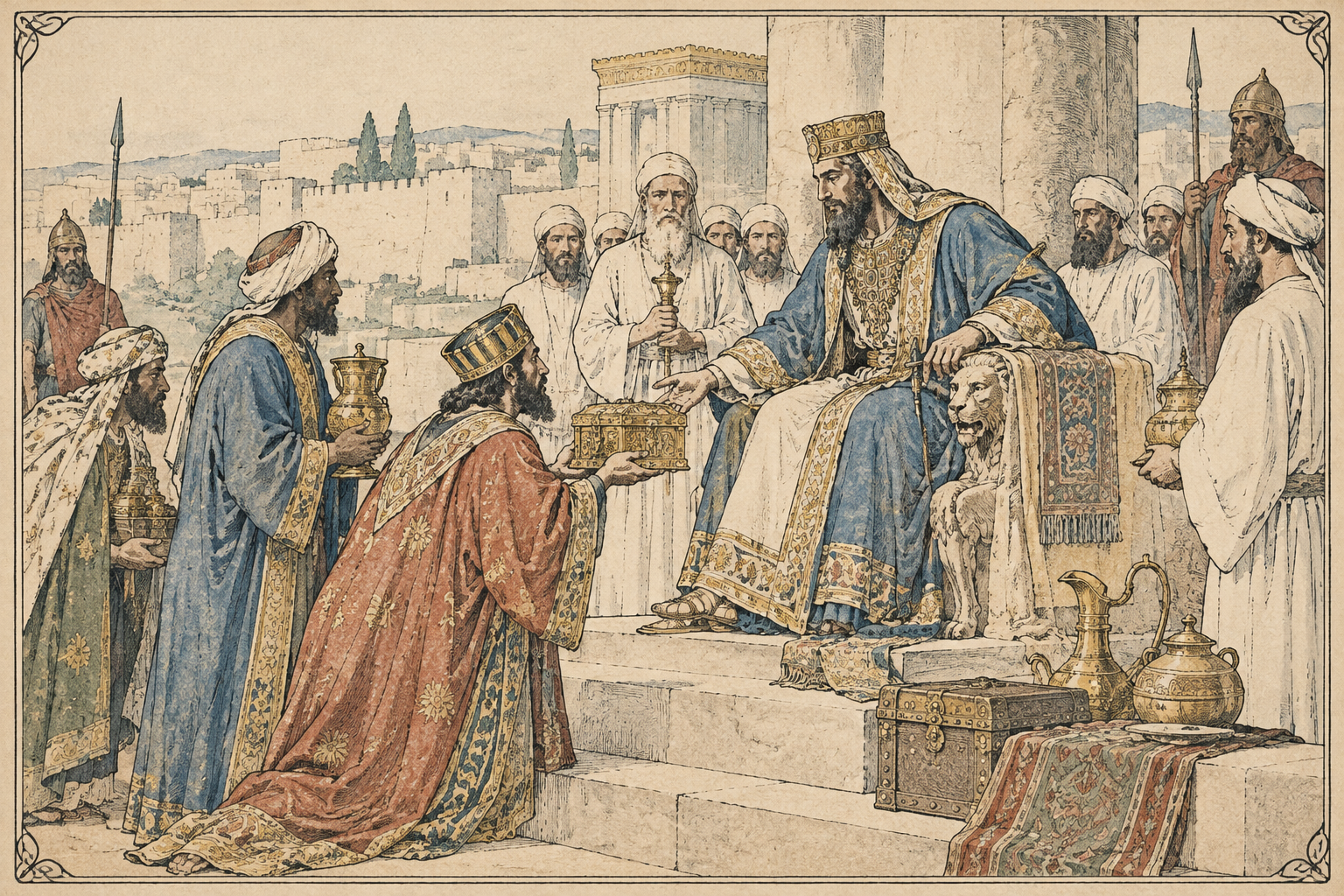
Here is the objection, and it deserves to be taken seriously rather than waved away. Psalm 2 looks, on first reading, like a coronation poem for a Judean king, written for a specific ceremony, addressed to a specific throne in a specific city. The nations mentioned in the opening lines are the surrounding powers who might conspire against the newly crowned king of Israel. Zion is named outright. Nothing in the immediate historical setting suggests the poem has Rome, or Babylon, or twenty-first century America in view. Many careful readers hold this position, and for good reason.
The Ancient Near Eastern Enthronement Pattern
Royal enthronement was not an Israelite invention. Across the ancient Near East, when a new king ascended a throne, the ceremony typically included a declaration of divine sonship, a ritual claim to cosmic backing, and sweeping language about dominion that sounded, on the surface, almost absurd given the actual size of the kingdom being described. A ruler of a modest city-state might be hailed as having wind. This was the genre. Everyone in the room understood it as the accepted vocabulary of kingship, not as a literal boast of planetary rule.
Psalm 2 belongs to this genre. It has the hallmarks of an enthronement liturgy. A decree is announced. The Lord (YHWH) declares the king his son. The nations are warned to submit. The shape of this is familiar from ancient royal poetry, and it invites caution against reading too much global ambition into language that, in other cultures, was mostly ceremonial exaggeration.
Why the "Local King" Reading Feels Reasonable
Given this background, it is entirely reasonable that generations of readers, Judean and Christian alike, have assumed the psalm's horizon stops at the borders of the promised land. The original setting was likely a Davidic coronation, perhaps for David himself, perhaps for Solomon, perhaps for a later king in the line. In that setting, "the nations" meant Moab, Edom, Philistia, the regional powers that pressed against Israel's borders. "The ends of the earth" could be read as rhetorical flourish, the kind of thing court poets said to make a modest kingdom sound larger than its tax base.
The objection misses half the psalm. The psalm itself, read closely and without the assumption that ancient poets never meant what they said, pushes past this local reading in ways that are difficult to explain away.
The Correction Hiding in the Text Itself
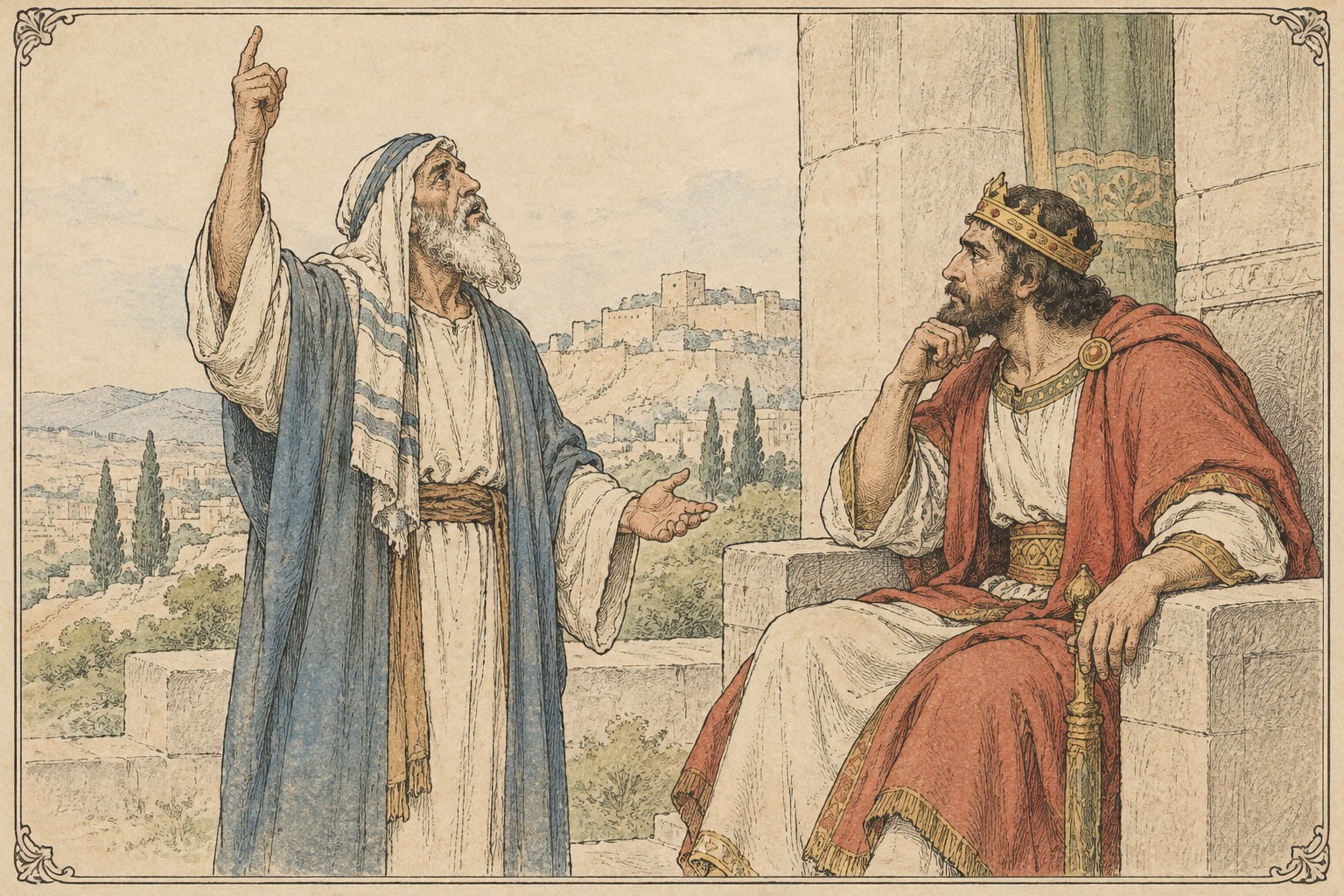
Here is the problem with stopping at the local reading. The psalm's own language refuses to stay inside the fence. "You are my son, today I have become your father," God (Alohim) declares, and then immediately: "Ask of me, and I will make the nations your inheritance, the ends of the earth your possession" (Psalm 2:7-8). A king defending his borders would ask for far less. This is an inheritance clause covering the entire planet.
Sonship as Global Mandate, Beyond Royal Title
In the ancient world, calling a king "son of God" installed him as the deity's representative on earth, the one through whom divine rule reached human beings. This was common royal ideology, shared by Egyptian pharaohs and Mesopotamian kings alike. Psalm 2 ties the declaration of sonship directly to a promise of universal inheritance in the next breath. The sonship here is no private designation or flattering ceremonial title. It is an installation into an office whose job description is the nations, plural, all of them. The sonship language describes a unique office, not a separate divine being, but the role through which the one God's will is revealed and carried out on earth.
This matters because it changes what kind of claim the psalm is making. A king merely defending Zion does not need the nations as his inheritance. He needs peace with his neighbors and a well-stocked treasury. The psalm promises something categorically larger, and it promises it as the direct consequence of sonship, not as separate wishful thinking tacked onto the coronation liturgy.
"The Ends of the Earth" as Deliberate Overreach
"The ends of the earth" is a deliberate phrase. It appears throughout the Hebrew Scriptures as a way of gesturing toward the furthest horizon of human geography, the edge of what anyone in the ancient world could conceive. When the psalm pairs "nations" with "ends of the earth," it is reaching for the largest possible canvas available to its vocabulary. This is deliberate overreach, poetry stretching past what any single Davidic monarch could plausibly claim to rule, and stretching toward a fulfillment that would eventually require someone greater than David.
The early Christian teachers who read this psalm after the resurrection understood exactly what they were looking at. They did not need to force new meaning into the text. They needed only to notice what the text had been saying all along, that Israel's true king, when he finally arrived, would be king not only of Israel, but of the whole world. Saul of Tarsus, before anyone called him Paul, must have turned this psalm over in his mind many times, wondering what it would mean for it to come true.
Already Happening: Revelation's Multitude from Every Nation
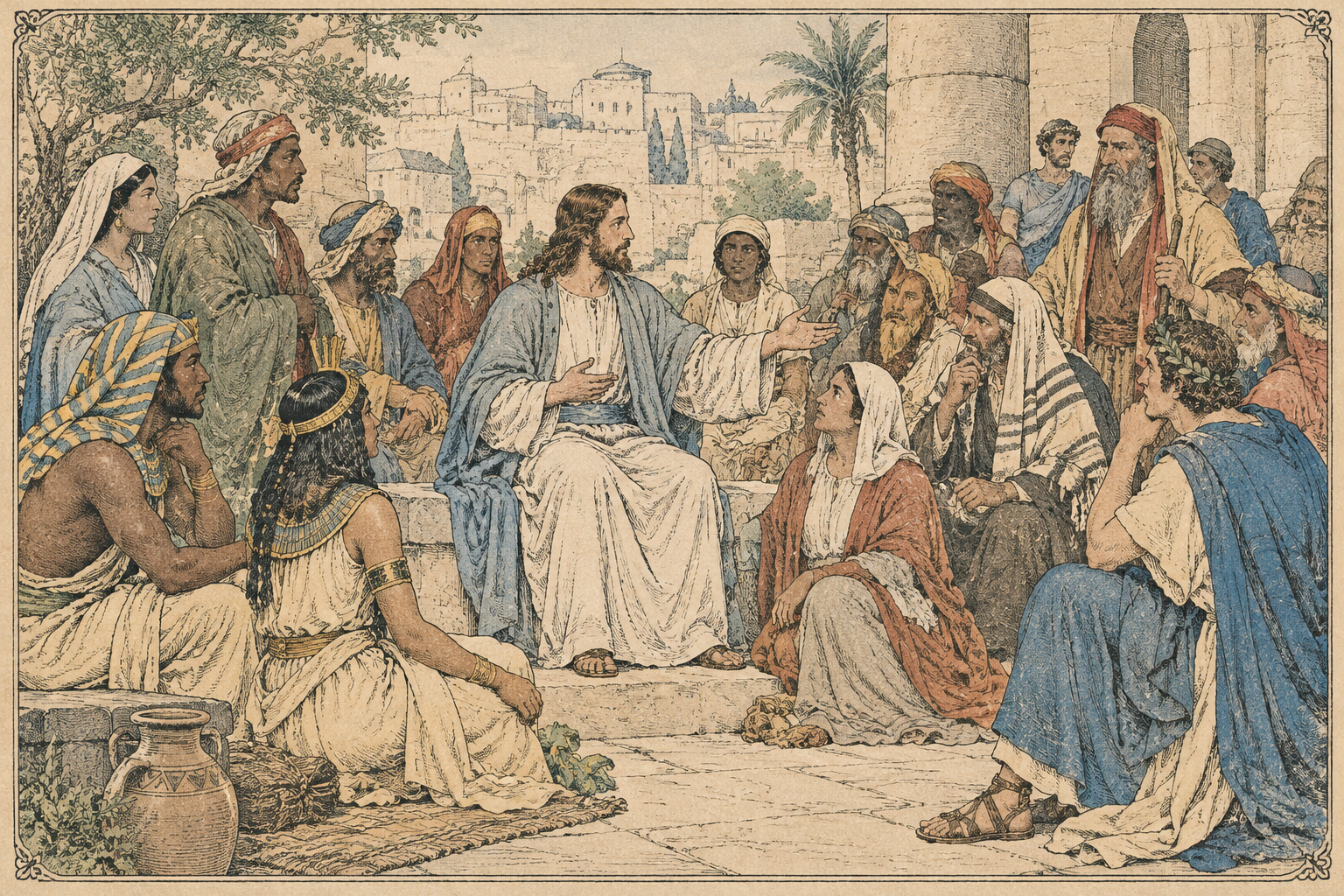
Here is where the argument moves from ancient poetry into present reality, and this is the hinge the whole piece turns on. If Psalm 2 promised the nations as inheritance, the question is whether that promise remains a future rumor or has begun to come true. The New Testament answers with striking specificity.
From Prophecy to Present Reality
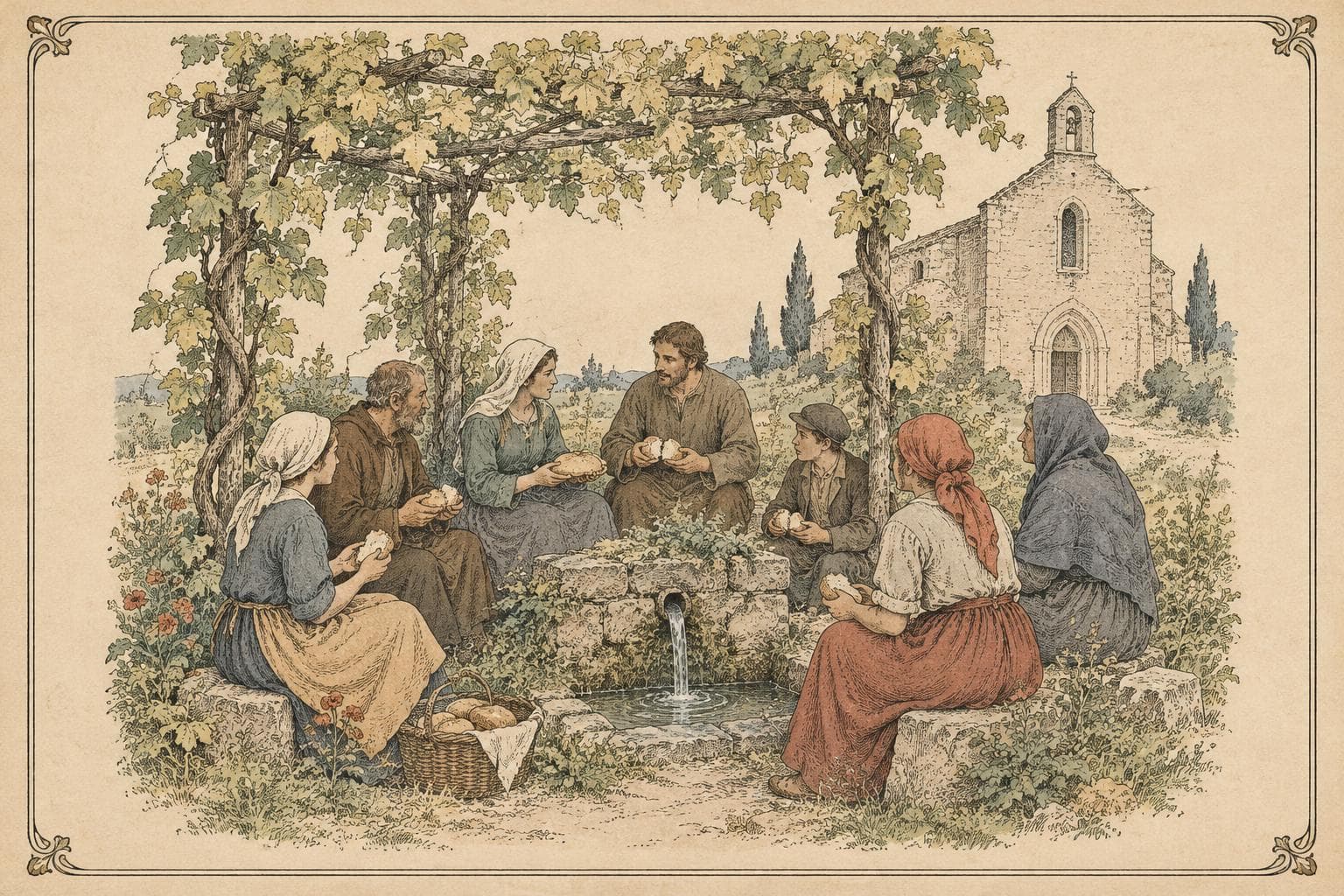
The book of Revelation describes a vision of "a great multitude that no one could count, from every nation, tribe, people and language, standing before the throne and before the Lamb" (Revelation 7:9). The vision reaches far past Israel's twelve tribes. It is an explicit, almost defiantly comprehensive statement that people from every corner of humanity are already gathering around the throne of the one Psalm 2 called God's son. Revelation depicts the gathering of the nations, promised as inheritance in an ancient Davidic coronation poem, as a scene already populated, already singing, already real, not as a future hope dangling at the end of history.
This matters more than it might first appear. The expectation that all nations would come to acknowledge the God of Israel runs throughout the Psalms and the prophets, tied to the conviction that this God alone rules over the whole world. Revelation is reporting the fulfillment of an old promise.
Why This Collapses the "Someday" Excuse
Most treatments of Psalm 2 push its global claims entirely into the future, a problem to be solved when Christ returns, a promise still waiting on the shelf. This is understandable, but it misses what Revelation depicts. If the multitude from every nation is already gathering before the throne, then the question is no longer "when will this king rule the nations?" The question has already changed. It is now "will you submit to a rule that is already in motion?"
This shift removes the most comfortable excuse available to the skeptical reader, the suggestion that Christ's kingship is a future event one can safely postpone considering. Readers who hold other views on the timing of these events still have to reckon with this: if the inheritance is already being collected, the postponement option grows harder to defend.
Borrowed Time: Every Throne Answers to a Higher One
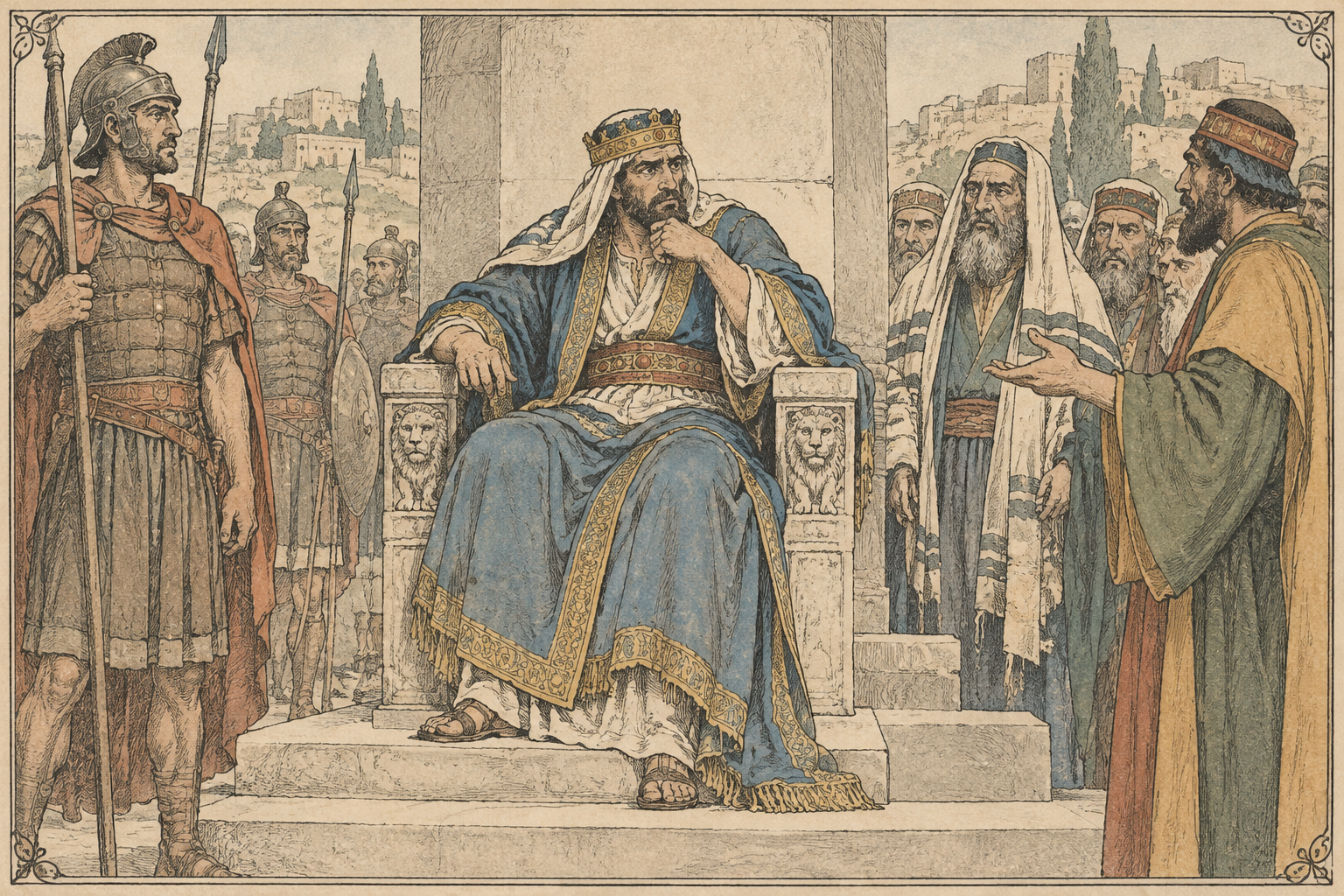
Once the global scope of the psalm is established, its opening scene reads differently. It describes the permanent condition of every human power structure that has ever existed, not an isolated border skirmish.
Kings of the Earth Setting Themselves Against Him
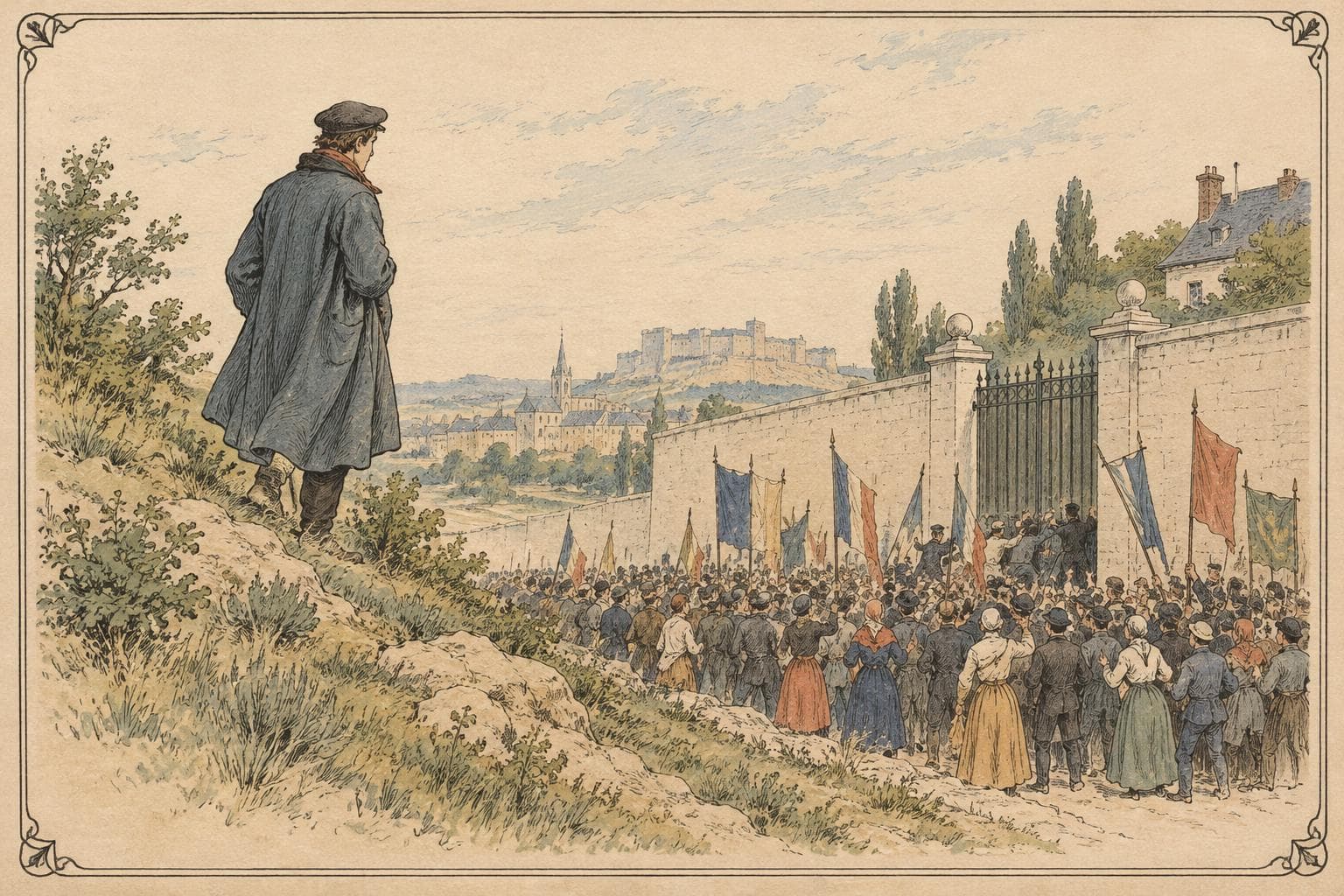
"Why do the nations rage and the peoples plot in vain? The kings of the earth rise up and the rulers band together against the Lord and against his anointed one" (Psalm 2:1-2). This is the opening scene of Psalm 2, and it describes something that happens in every century, not something confined to the specific geopolitics of ancient Israel. Rulers conspire. Empires consider themselves self-sufficient. Every throne eventually convinces itself it answers to nothing beyond its own ambition.
The psalm's response to this raging is not alarm but something closer to laughter. "The One enthroned in heaven laughs; the Lord scoffs at them" (Psalm 2:4). Human power, loud as it is, is operating on a timetable it did not set and cannot extend.
History's Graveyard of Untouchable Regimes
The biblical record is full of kingdoms that looked permanent and proved otherwise. Babylon, which razed Jerusalem around 586 BC and carried off its temple vessels, fell to the Persians 47 years later, in 539 BC. Rome, which crucified Jesus (YHWShA) as a political threat and considered itself eternal, eventually fractured under pressure from the peoples it had once dismissed as barbarians. Empire after empire in the historical record has fallen, and none has escaped the pattern.
Hector and Tuco Salamanca: Borrowed Power on Screen
It is worth pausing here on a modern illustration, not because television carries scriptural authority, but because good storytelling sometimes dramatizes old truths with unusual clarity.
Fear Mistaken for Permanence
In Breaking Bad, Tuco Salamanca is a cartel enforcer whose volatility makes everyone fear him. Even hardened criminals know better than to provoke him. Hector Salamanca, his uncle, built an entire criminal reputation over decades, a man so feared that his name alone functioned as a warning. Both men, within their narrative world, seemed untouchable. That power turned out to be entirely conditional, dependent on circumstances neither of them controlled, and both met ends that no one watching the early episodes would have predicted.
The Pattern Repeats Because the Psalm Is Right
This recurs in fiction because it recurs in life, and it recurs in life because Psalm 2 correctly diagnosed something true about illegitimate human power from the beginning. Power that answers to nothing beyond itself always eventually answers to something. The screenwriters did not need to read the Psalms to get this right. They needed only to observe how human power behaves, which is precisely what the ancient poet had already done three thousand years earlier.
The Rod of Iron: Judgment Without Loopholes
The psalm specifies exactly what happens to power that refuses to submit, and the language is deliberately total.
Pottery, Not Stone: The Fragility Behind the Facade
"You will break them with a rod of iron; you will dash them to pieces like pottery" (Psalm 2:9). Notice the image chosen here. Not stone, which might merely crack. Pottery, which shatters completely and cannot be reassembled. This is a deliberate contrast between the appearance of strength that illegitimate power projects, hardened, confident, seemingly unbreakable, and the underlying fragility that judgment exposes. Tuco's volatility looked like strength. Hector's decades of fearsome reputation looked like permanence. The rod of iron reveals both for what they always were: pottery dressed up as stone.
No Diplomatic Exit from This Verdict
The psalm offers no negotiated settlement between these two outcomes. There is no clause allowing a ruler to retain partial sovereignty in exchange for partial submission. The psalm's closing lines make the binary explicit: "Kiss his son, or he will be angry and your way will lead to your destruction" (Psalm 2:12). One might look for a third option, a diplomatic middle ground between submission and judgment, but the text itself offers none. The choice the psalm presents is submission or destruction, and nothing else is on offer.
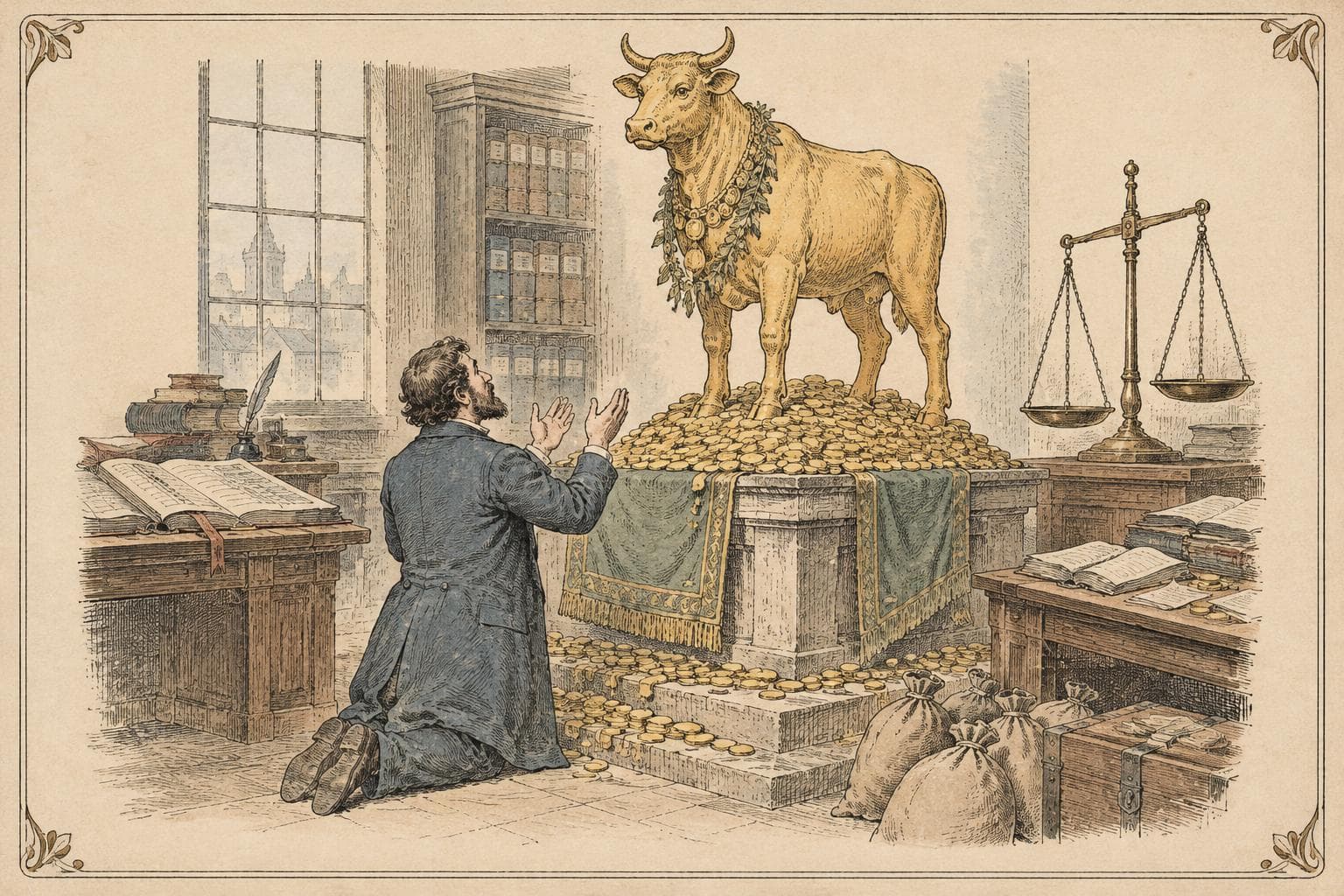
Real Security Is Not Money, Drugs, or Guns
This is where the argument stops being about ancient kings and fictional cartel bosses and starts being about the reader.
The Illusion of Self-Made Empires
Walter White's empire was built on chemistry, fear, and money, and it felt, for a time, genuinely secure. Most readers of this article will never cook methamphetamine, but the underlying illusion is far more common than the specific vice. Wealth feels like security. Status feels like security. Control over one's circumstances feels like security. The psalm's claim is that none of it is, because all of it exists under an authority that none of these things can bargain with, bribe, or outlast. Jesus Christ is already Lord of the world, and every knee, eventually, bends to him. Taking that claim seriously means recognizing that every alternative security system we build is, at best, borrowed time.
Submission as the Only Coherent Response
Once the psalm's claims are taken seriously, on their own terms, submission becomes the only logically coherent response. It is glad recognition that the authority described in Psalm 2 is the rightful king whose "dominion" exists, as the wider Psalter insists, to defend the needy, deliver the oppressed, and establish justice for the poor. This dominion is exercised for the good of those under it, not exploited for its own sake. Submitting to it is not defeat but a homecoming to the only throne that was never going to collapse.
Scripture is clear that this submission is not a one-time mental assent but a real turning: repentance from sin, baptism in the name of Jesus for the forgiveness of sins, and the gift of the Holy Spirit, which the book of Acts repeatedly shows accompanied by speaking in tongues as the Spirit gives utterance (Acts 2:38, Acts 2:4). This is the new birth Jesus described to Nicodemus, being born of water and the Spirit, and it is the pattern the earliest believers followed as the normal entry into the kingdom whose king Psalm 2 describes.
Jesse's Objection and the Real Good News
Here is where a fair question needs to be asked, the kind of question a character like Jesse Pinkman might raise if someone preached this sermon at him straight. That's bleak. Is there anything besides judgment?
That question deserves a real answer. The weight of what has been said is heavy, and anyone feeling it is feeling something the psalm intends them to feel. The good news does not arrive as a loophole in the verdict. It arrives as a person.
"I Am the Resurrection and the Life"
In John's Gospel, standing outside the tomb of his friend Lazarus, Jesus says to a grieving sister named Martha: "I am the resurrection and the life. Whoever believes in me will live, even though they die, and whoever lives by believing in me will never die" (John 11:25-26). This is the same figure the psalm calls God's son, the one whose inheritance is the nations, the one who wields the rod of iron against illegitimate power. Belief in him is where this new life begins, and Scripture calls that belief to express itself fully through repentance, baptism in his name, and the gift of the Spirit, the complete response the rest of the New Testament describes. What he offers is not merely an escape from judgment but life itself on the other side of death.
Life Beyond Every Collapsing Empire
This is the resolution the psalm's own warning makes necessary. If every throne is borrowed time, if every empire eventually shatters like pottery, then any security built on this world alone is security built on something scheduled for demolition. Resurrection hope reframes the entire argument. It moves the reader from the fear of being crushed by judgment to the invitation to join a kingdom that cannot be shaken, because its king has already walked through death and come out the other side.
The invitation stands, and it has stood since a crucified rabbi was raised on the third day. Psalm 2 was never about ancient border disputes, and it was never primarily a message of bleak judgment either. It is the announcement of a king whose reign over every nation is already in motion, already gathering a multitude from every tribe and language, already offering the one security this world cannot manufacture or revoke. The question the psalm leaves on the table is whether you will submit to this king now. And if you want to walk through the rest of this argument more fully, more resources exploring the biblical story await at BabelReport.com.