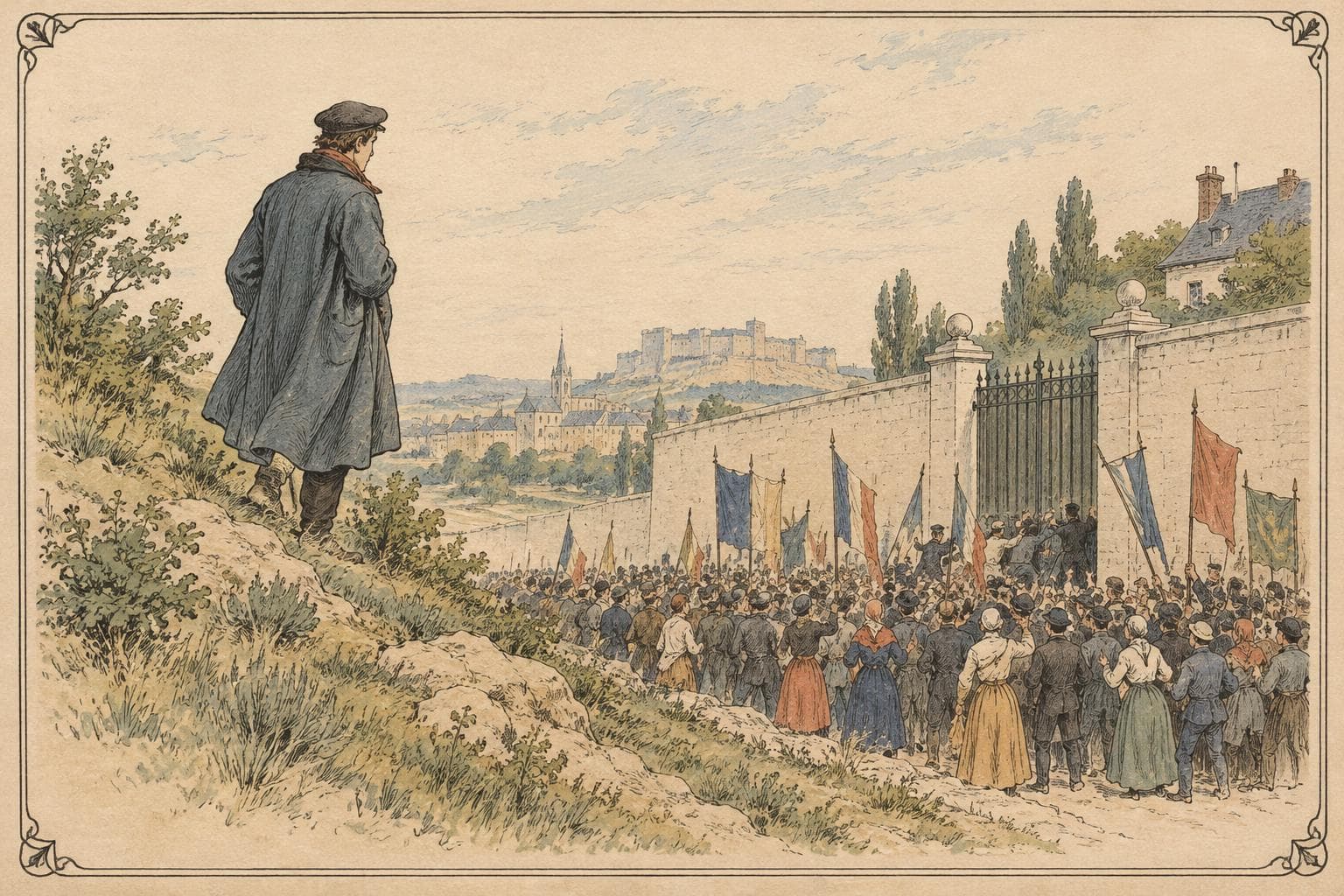
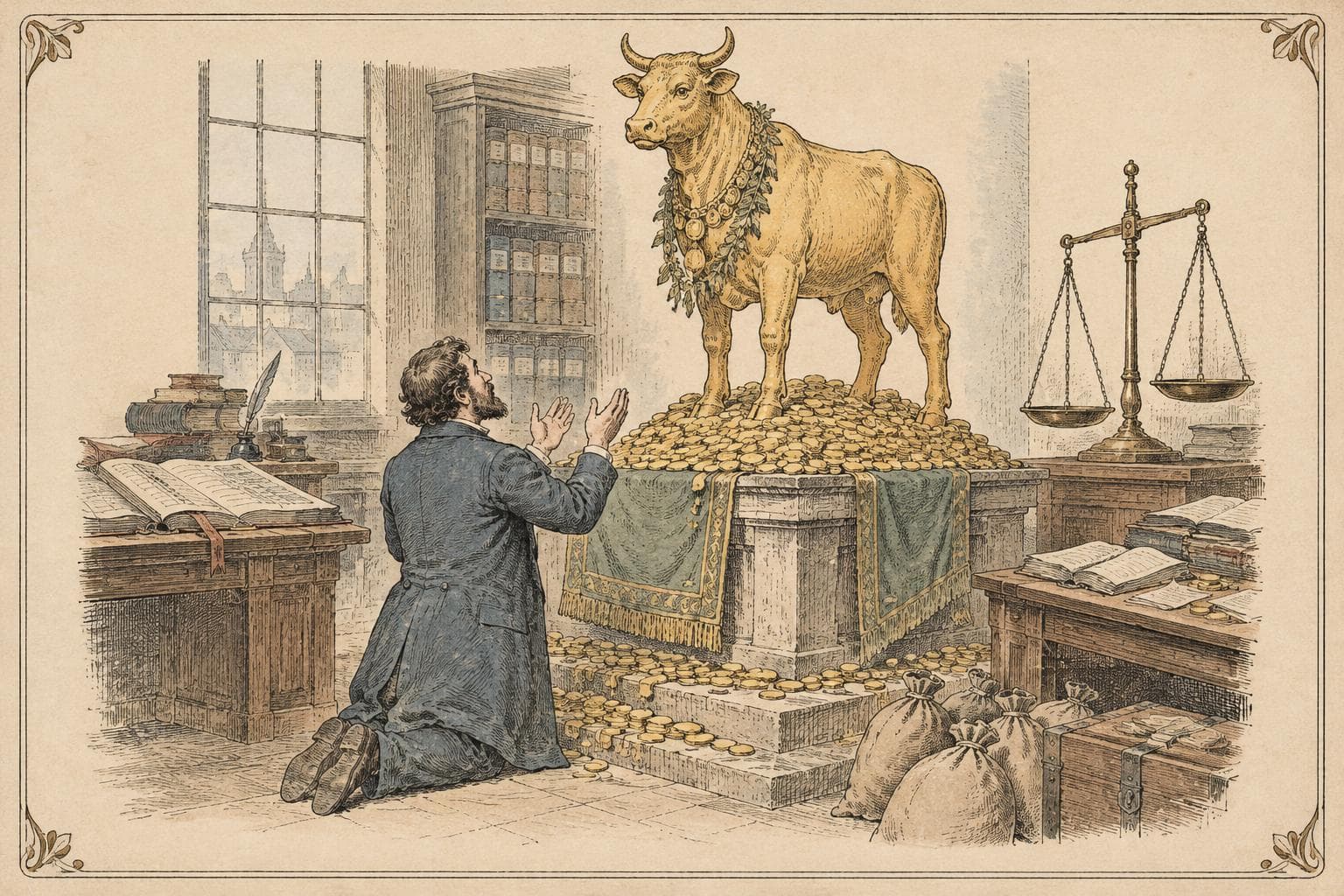
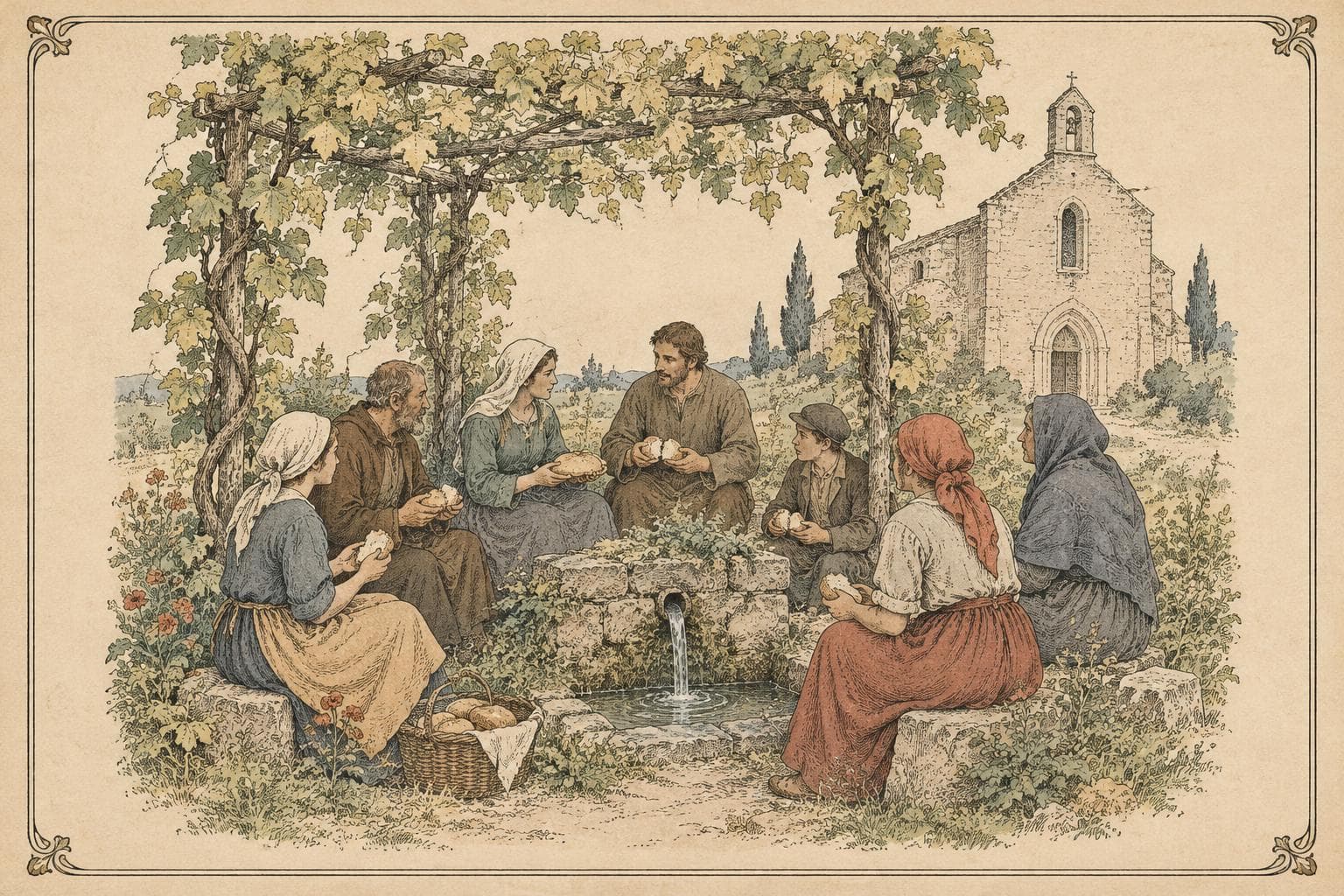
Something strange happens when you sit across the table from a Mormon neighbor, open the door to a Jehovah's Witness, and share a holiday meal with an Apostolic cousin, and realize that each one is holding something true. Not everything. Something. The instinct of most believers is to pick a side and defend the wall around it, but the biblical story suggests a stranger and more hopeful possibility: that truth was never meant to live behind competing walls at all. It was meant to be whole, and somewhere along the way, restoring the whole truth became the task every generation inherits, because somewhere along the way, the whole was broken.
This is the central claim worth stating plainly before we go any further: truth was originally one complete, unified whole, but over time it was broken into fragments now scattered among competing denominations, none of which holds the full picture, and believers are called to keep seeking until the whole is restored. That is not a comfortable claim. It asks something of everyone who hears it, regardless of which fragment they currently call home. But it is, I think, the claim Scripture itself keeps making, from the first garden to the last city.
The Stone That Was Never Meant to Crack
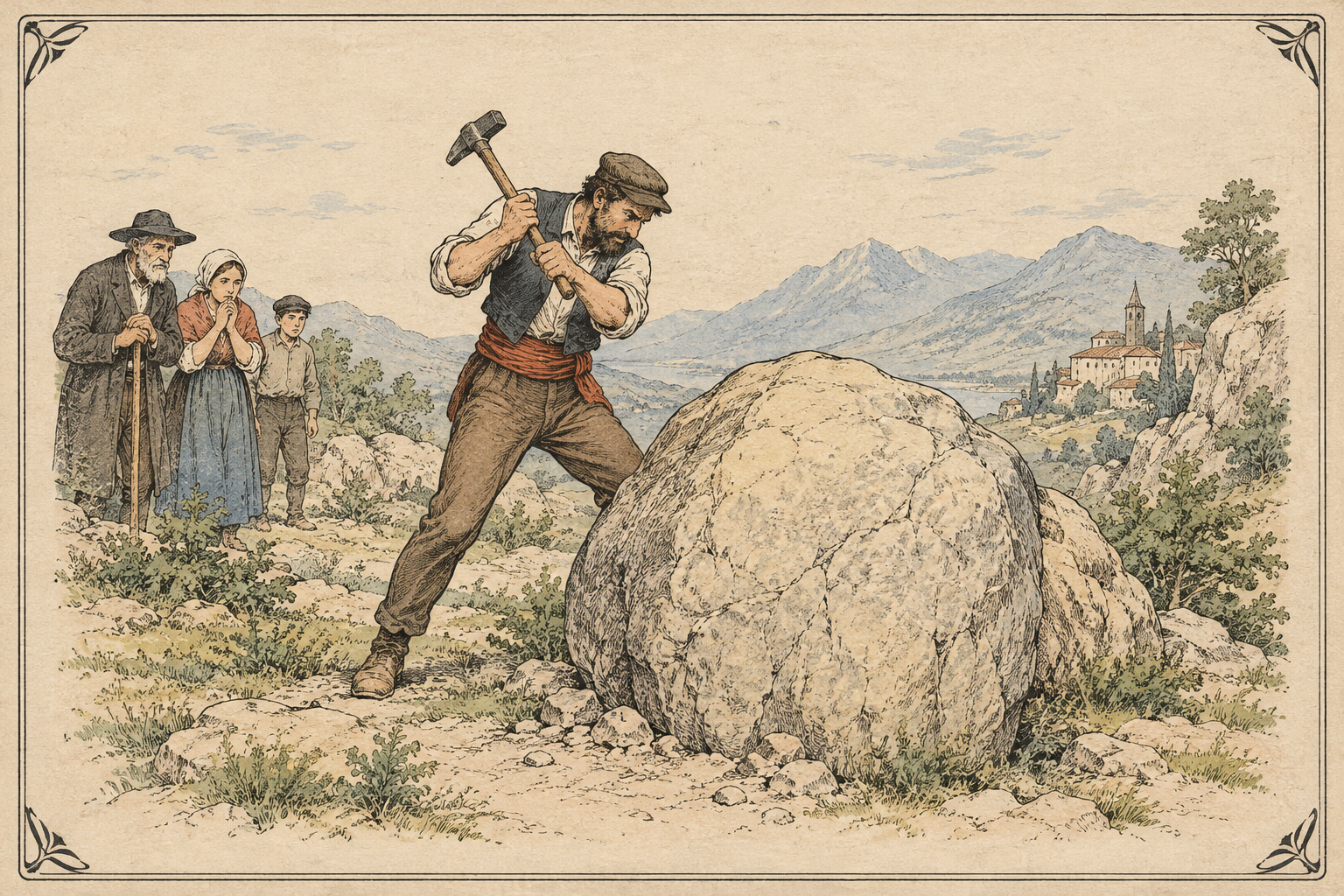
Picture a mosaic. Not a pile of colored tiles waiting to be arranged, but a finished work, already complete, stretching across an entire wall of some ancient building. Every stone in its place. Every color speaking to the ones beside it. No piece makes sense alone. That is roughly how the biblical writers seem to have understood truth itself: not a collection of competing opinions to be weighed and sorted, but a single, seamless whole already given, already coherent, already complete in the mind of God (Alohim) before human hands ever touched it.
One Story, Not a Thousand Opinions
Modern readers tend to approach the Bible the way they approach a buffet, selecting a doctrine here, a verse there, building a private theology that suits their temperament. But that is not how the biblical writers worked, and it is not how they expected their readers to work either. Genesis assumes Exodus. Exodus assumes the Prophets. The Prophets assume a final restoration that only arrives in Revelation. Pull on any thread and the whole garment moves, because it was woven as one garment, not stitched together from scraps.
This is the thing most modern theological debate misses entirely. We argue over isolated verses as though truth were a courtroom exhibit, submitted piece by piece for cross-examination. But the biblical writers thought in story, not in soundbites. A single image, like the stone rejected by the builders that becomes the cornerstone, echoes across centuries, picked up by the Psalms, then by the prophets, then by Jesus (YHWShA) himself standing in the Jerusalem Temple, then by the earliest Judean Christian preachers trying to explain what had happened to their crucified and risen teacher. One story. One stone. Many voices telling the same unbroken truth from different angles.
From the Garden to the City
The Bible, famously, begins in a garden and ends in a city. Eden opens the story with humanity walking with God in the cool of the day, heaven and earth woven together without seam or strain. Revelation closes the story with the New Jerusalem descending, heaven and earth woven together once more, this time permanently, this time without the possibility of unraveling. Everything between those two bookends, the covenants, the exile, the prophets, the incarnation, the cross, the resurrection, is the long and winding road from the first wholeness to the final one.
That arc matters enormously for how we think about fragmentation. If the story began whole and ends whole, then whatever brokenness appears in the middle, including doctrinal brokenness, is not the final word. It is a wound on the way to healing, not the permanent shape of things. The New Jerusalem is not a metaphor for denominational merger. It is the promise that the scattered pieces of a story (and a truth) that was always meant to be one will, in the end, be one again.
Why Wholeness Matters Before We Talk About Breaking
It would be easy to skip straight to the fragments, since that is where most of us live. But the order matters. You cannot meaningfully talk about something being broken unless you first understand what it looked like whole. A shattered vase only makes sense as tragedy if you know vases are meant to hold water, not lie in pieces on the floor. The same is true of truth. Calling denominational fragmentation a loss only makes sense against the backdrop of a truth that was never meant to fragment in the first place.
So before we walk into the harder conversation (the one involving names, movements, and honest disagreement) we need this standard fixed firmly in view. Truth, in its original and intended form, is one. The garden and the city testify to that. Everything else must be measured against it.
Whose Hands Did the Breaking

Here is where the story gets uncomfortable, because the breaking did not happen by accident, and it did not happen because some outside enemy snuck in and smashed the mosaic while no one was watching. It happened through human hands. Well-meaning hands, often. Sincere hands, frequently. But human hands nonetheless, chipping at the stone generation after generation until pieces began to come away.
Generation After Generation, Chip by Chip
Consider how it happened historically. The early Judean followers of Jesus held something remarkably whole: a single community gathered around a crucified and risen Messiah, eating bread together, holding possessions loosely, worshipping as one body across ethnic lines that had never been crossed before. Within a few centuries, councils were drawing lines, creeds were multiplying, and the Western and Eastern halves of the church were drifting toward a split that would eventually become permanent in 1054. Five hundred years after that, the Reformation cracked the Western half again, and the pieces have been multiplying ever since. Lutheran, Reformed, Anabaptist, Anglican, and from those roots a thousand further branches, each one convinced it had recovered something the others had lost, each one often right about that and wrong about something else.
None of this means the reformers or the council fathers were acting in bad faith. Many of them were trying, with real courage, to protect a fragment of truth they could see being obscured or abused. But protecting a fragment, however sincerely, is not the same as holding the whole. Chip by chip, council by council, movement by movement, the single stone became a field of scattered shards.
Pride, Error, and the Mixture of Lesser Things
What caused the chipping? Rarely was it outright malice. More often it was pride dressed as conviction, certainty mistaken for completeness, or sacred truth mixed carelessly with cultural assumptions, political ambition, or personal grievance until the lesser thing became indistinguishable from the greater one. A bishop defending his authority. A reformer reacting so strongly against one error that he overcorrected into another. A movement so eager to recover a neglected truth that it began treating that single truth as though it were the entire gospel.
This is a sobering pattern to name, because it applies to every tradition that exists today, including whichever one the reader currently calls home. Nobody breaks the stone on purpose. Everybody breaks it while reaching for a piece they believe matters enough to defend.
A Pattern Older Than Any Denomination
It is worth saying that this is not a uniquely Christian problem, nor a uniquely modern one. Second Temple Judean society itself had splintered into Pharisees, Sadducees, Essenes, and Zealots, each certain they alone understood what faithfulness to the covenant required. The pattern long predates denominations as broken fragments of a later age. Human communities, given a sacred and complete truth, seem almost constitutionally inclined to grab hold of one corner of it and mistake their grip for the whole. The question is not whether fragmentation will happen. History suggests it reliably does. The question is what we do once we notice it has.
Naming the Fragments Honestly
This is the part most writers avoid, because naming specific movements by name invites accusations of arrogance or unkindness. But pretending the fracture never happened, or speaking only in vague generalities about "division," is its own form of dishonesty. Love does not require silence. It requires honesty held together with respect.
What the Mormons Preserved, and What They Added
The Mormon tradition, formally the Church of Jesus Christ of Latter-day Saints, preserved a genuine hunger that much of modern Western Christianity had quietly abandoned: the conviction that God still speaks, that revelation did not slam shut with the final page of the New Testament, and that ordinary families and communities are meant to live out sacred purpose together rather than compartmentalizing religion into a Sunday hour. That hunger is not nothing. It touches something real in the biblical picture of a God who walks and talks with his people.
But the tradition then added material, the Book of Mormon, the Pearl of Great Price, additional revelation through Joseph Smith, that reshapes the biblical story's own claims about who God is and what happened at the cross. Where biblical faith insists on God's exclusive and eternal nature, Mormon theology introduces a view of god hood as a process many can eventually enter. The glimmer of truth (God still speaks, community still matters) got mixed with an addition the whole mosaic was never designed to carry.
What the Jehovah's Witnesses Saw, and Where the Picture Narrowed
The Jehovah's Witnesses recovered something the wider church had too often let go slack: reverence for the divine name itself, and a seriousness about the coming kingdom that refuses to spiritualize away its concrete, earthly hope. Anyone who has spent time with a Witness at the door knows the sincerity is not performance. The conviction runs deep, and the emphasis on God's name and coming reign echoes something genuinely present in the prophets.
But the picture narrowed considerably around the identity of Jesus, denying that he is YHWH manifest in flesh, the fullness of the Godhead dwelling bodily, and reducing him instead to a created being. That narrowing is not a small adjustment. It touches the center of the stone, the place where the whole mosaic turns, because the entire biblical story insists that God himself came in the person of Jesus to do for the world what no creature could do. A true glimmer, set inside a frame too small for it.
What the Apostolics Recovered, and What Still Waits
The Apostolic movement, particularly the Oneness strand within Pentecostalism, recovered something vital that had grown cold in many older traditions: the conviction that God is not divided into separate persons but is one, revealed fully in Jesus, who is YHWH incarnate, and that the Spirit's power is not a historical artifact confined to the book of Acts but a living reality available now, to ordinary believers, in ordinary rooms. The emphasis on encounter, on the baptism of the Spirit, on holiness lived out rather than merely professed, carries real weight. It recovers urgency that polished, institutional religion often loses.
But even here, pieces of the mosaic still wait to be gathered. A movement that emphasizes experience can drift toward measuring spiritual legitimacy by visible manifestation alone, narrowing the fullness of doctrine into a single confirming sign. A tradition that prizes holiness can slide into legalism, mistaking outward conformity for inward transformation. Having recovered real fire does not mean having recovered the whole stone. No tradition, including this one, gets to claim that.
The Danger of a Comfortable Shard

Here is the deeper danger, and it has nothing to do with which fragment anyone happens to hold. It is the temptation to stop walking.
The Temptation Common to Every Tradition
Every tradition, without exception, faces the same quiet seduction: mistaking certainty for completeness. A congregation settles into its particular emphasis, its particular reading, its particular cultural comfort, and over time stops asking whether there might be more to see. This is not a failure unique to the groups named above. It is equally present in the confident Reformed scholar who has stopped reading outside his tradition, the Catholic who assumes the Magisterium has closed every question worth asking, and the nondenominational church that mistakes its lack of formal doctrine for having transcended the need for doctrine altogether. Certainty, left unchecked, curdles into complacency. And complacency is the quiet killer of the search.
Truth as Path, Not Possession
The biblical writers never describe truth primarily as something to be owned. They describe it as something to be walked toward, hungered after, sought with the whole heart. "You will seek me and find me, when you seek me with all your heart," the prophet Jeremiah records God saying (Jeremiah 29:13) to a people in exile, uncertain, scattered, far from home. That is the posture Scripture consistently commends: not the satisfied grip of a possession already secured, but the ongoing reach of a traveler still on the road. Doctrinal restoration is not a trophy. It is a journey nobody completes alone and nobody completes by sitting down.
Walking the Emmaus Road Again
If there is one passage that captures the right posture for this search, it is tucked into the twenty-fourth chapter of Luke's gospel, often remembered simply as the road to Emmaus.
Disillusionment as the Starting Point
Two companions are walking away from Jerusalem, away from the place where everything had collapsed. Their teacher had been executed days earlier. Whatever they thought they understood about God's plan for Israel had, as far as they could tell, died with him on a Roman cross. They are not defending a confident theology on that road. They are grieving the collapse of one. "We had hoped," they say to the stranger who falls into step beside them, and that phrase carries the weight of every disillusioned believer who has ever watched a tidy system fail to hold up under the pressure of real life.
This is worth sitting with, because so much denominational fragmentation begins in exactly this kind of disillusionment. Someone raised inside a fragment encounters its limits, its contradictions, its failures to account for the whole of Scripture, and walks away confused, sometimes angry, often grieving. The Emmaus road suggests that disillusionment is not the end of the story. It can be, oddly enough, the exact condition in which the risen Jesus chooses to draw near.
Eyes Opened, Not Arguments Won
Here is the detail that should arrest anyone tempted toward polemic. Jesus does not win the argument on the road. He walks alongside these two travelers for miles, listening to their confusion, opening the Scriptures to them from Moses and the Prophets, and still they do not recognize him. Recognition does not come through superior reasoning or a clever rebuttal. It comes later, at a table, over broken bread, in an ordinary act of hospitality. "Their eyes were opened, and they recognized him."
This is the detail most denominational debate misses entirely. We assume the path to truth runs through winning the argument, out-reasoning the opponent, marshaling better proof texts. But the Emmaus road suggests something humbler and more mysterious: recognition is given, not conquered. The seeker's job is to stay on the road, to keep listening, to keep setting a place at the table, not to out-argue every rival fragment into submission.
The Burning Heart as Evidence
After Jesus vanishes from their sight, the two travelers turn to each other and ask, "Did not our hearts burn within us while he talked with us on the road, and opened the Scriptures to us?" That burning is not sentimentality. It is a form of confirmation that precedes full understanding, an inward witness that something true has brushed against the soul even before the mind can fully articulate what has happened. This is the pattern worth carrying into every honest search for doctrinal restoration: truth confirms itself not only through argument won, but through hearts set alight, minds quietly persuaded in ways that outrun our ability to prove them on demand.
Seeking as a Posture, Not a Credential
If the Emmaus road gives us the biblical pattern, a different kind of story can help us picture what the ongoing posture of seeking feels like from the inside. J.R.R. Tolkien's Middle-earth saga was never written as allegory, and it would be a mistake to flatten it into one. But its characters, precisely because they were shaped by a mind steeped in the biblical imagination, model something true about the seeking life.
Frodo's Prayer for Light Rather Than Ease
Frodo Baggins, carrying a burden he never asked for, does not pray for the road to become easy. He prays, in the darkest stretches of his journey, simply to see, to have light enough for the next step rather than certainty about the whole path. That is a truer picture of biblical faith than the demand for instant, total clarity. Seeking biblical truth rarely means asking God for the whole map all at once. More often it means asking for enough light to take the next honest step, even when the destination remains obscured.
Sam's Hunger for Hope Beyond the Visible
Samwise Gamgee, in the bleakest hour of the entire story, looks up and sees a single star shining above the darkness of Mordor, and finds in it a hope that outlasts every visible evidence to the contrary. His hunger for that hope does not wait for proof. It feeds on a glimpse and keeps walking. That is the shape of a seeking faith: hungering for a wholeness not yet fully seen, trusting that the glimpse is real even when the darkness presses in from every side.
Bilbo's Knock at the Door of Adventure
And before either of them, there was Bilbo Baggins, comfortable in his hobbit hole, perfectly content with his fragment of a quiet, settled life, until a knock at the door and a wizard's invitation pulled him into something larger than he had planned for. Bilbo's story begins with a willingness to step past the comfortable threshold into the unknown. That willingness, more than any special expertise, is what the seeking life requires: a readiness to leave the familiar shard behind, not because it was worthless, but because it was never the whole picture.
Ask, and keep asking. Seek, and keep seeking. Knock, and keep knocking. Jesus framed these not as one-time transactions but as a continual posture, a shape the seeking life takes for as long as the road lasts.
The Mosaic Restored
None of this honest reckoning with fragmentation is meant to leave anyone in despair. The biblical story does not end with the stone in pieces on the ground.
The New Jerusalem as the Picture of Wholeness
Revelation's closing vision describes a city coming down out of heaven, radiant, whole, with the leaves of its tree given for the healing of the nations. It is the picture of unified doctrine made concrete: every tribe, every tongue, every fragment of genuine truth gathered into a single structure where nothing clashes and nothing is missing. The New Jerusalem is not merely a future address. It is the promise that the scattering we have traced through councils and reformations and movements is not the final chapter.
Restoration Through Gathering, Not Conquest
Here is the hinge the whole argument turns on. The hope held out is not that the Apostolics will one day defeat the Mormons in a doctrinal war, or that the Jehovah's Witnesses will simply be absorbed by the correct denomination once it finally asserts itself. That is the old, exhausted model of competitive polemic, and it has produced centuries of division without producing one inch of genuine restoration. The biblical hope is gathering, not conquest. Shards collected patiently, piece by piece, by seekers willing to recognize a genuine glimmer wherever it appears, even inside traditions they would never call home.
An Invitation to Keep Gathering Fragments
This is the invitation standing at the center of everything written here. Restoring the whole truth is not a project finished by councils or completed by any single tradition declaring victory. It happens through ordinary people who refuse to settle for a comfortable shard, who walk the Emmaus road with open eyes, who pray like Frodo for light rather than ease, hunger like Sam for a hope not yet fully visible, and knock like Bilbo on doors that lead somewhere larger than where they started. Babel Report exists to walk that road alongside you, gathering fragments from every honest corner of the Christian story, testing them against Scripture's own whole, unbroken witness. The archive is there to be explored, not as a finished answer but as a continuing conversation.
The stone was never meant to crack. But cracked stones can be gathered, and gathered stones can be set again into something whole. The search continues, and the invitation stands.