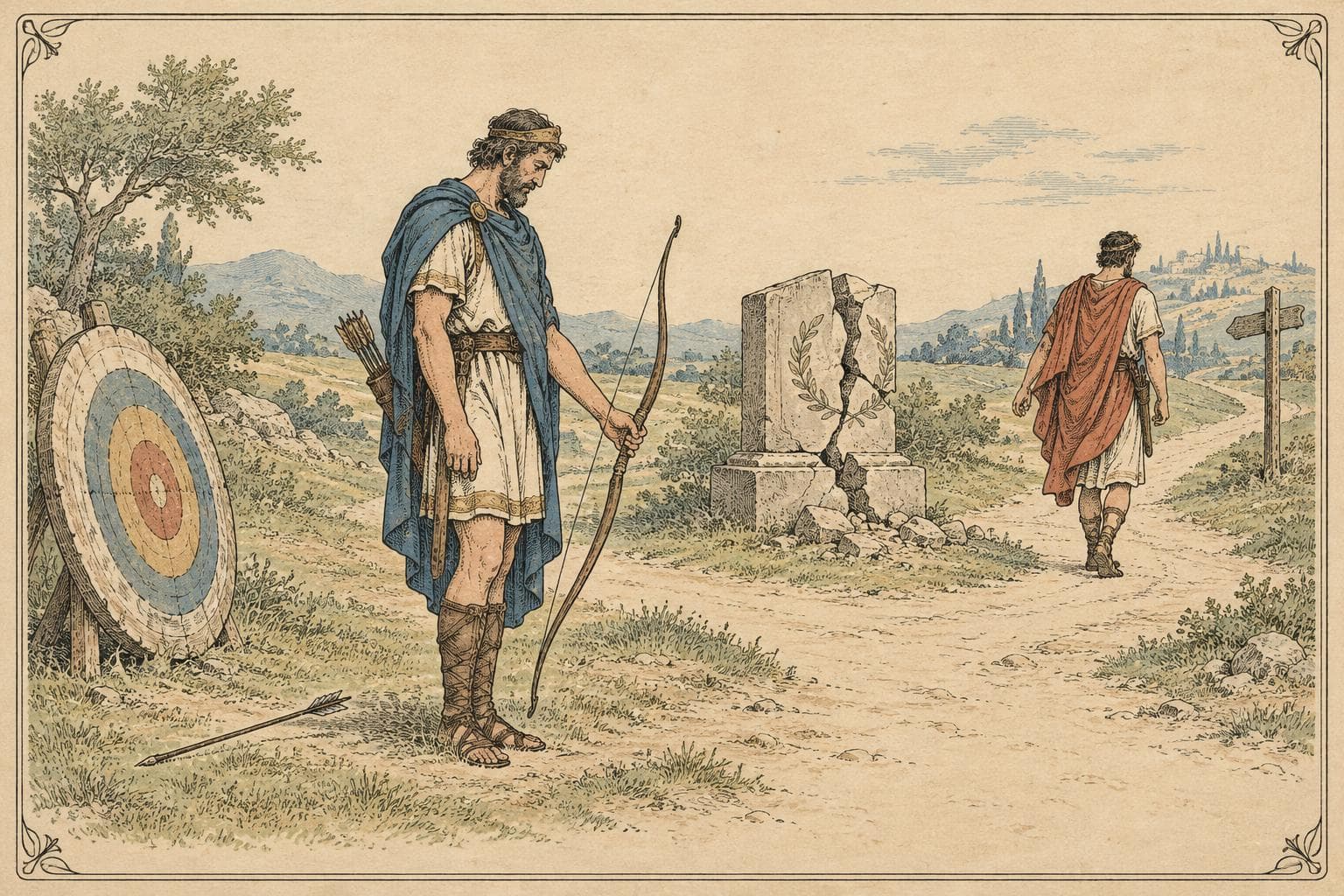
Picture two witnesses to a car accident, standing on opposite corners of the same intersection. One saw a red car run the light. The other saw a cyclist swerve without signaling. Put their statements side by side and you might conclude they are contradicting each other, until you remember they were watching different things happen at different moments. This is roughly what happens every time someone opens James 2 and Romans 3 back to back and declares the New Testament at war with itself over faith versus works, and justification by faith in God (Alohim).
The James Paul contradiction has become one of those pieces of received wisdom that gets repeated so often nobody checks it anymore. James 2:24 says a person is justified by works and not by faith alone. Paul, in Romans 3:28, says a person is justified by faith apart from works of the law. Two verses, two apparently opposite claims, and an entire tradition of commentary built on reconciling (or refusing to reconcile) them. But the supposed conflict dissolves the moment you ask a more basic question: what was each man discussing?
The Collision That Everyone Assumes Is There
Most readers encounter this "contradiction" before they encounter either letter in full. It arrives secondhand, usually in a sermon illustration or a skeptic's gotcha list, framed as the New Testament's own internal civil war. James, we are told, thinks you need good works to be saved. Paul thinks faith alone does it. Pick a side.
This seems obvious at first glance. The vocabulary overlaps. Both men use the words "faith," "works," and "justified." Both men quote Genesis 15:6 and Abraham's example almost in the same breath. If you were building a case for contradiction, you could not ask for better raw material.
Faith Versus Works as the "Central Fault Line"
Much of the modern instinct to read James and Paul as rivals comes from debates that happened fifteen centuries after either man picked up a pen. The Reformation controversies over justification by faith, Paul Romans 3:28 against medieval sacramental systems, trained generations of readers to hear every biblical statement about faith and works as a move in that specific chess match. One influential reformer struggled badly with the Epistle of James, reportedly dismissing it because it seemed to undercut his reading of Paul on faith alone. That verdict, whatever its merits at the time, has shaped how ordinary readers approach these texts ever since.
The result is a kind of theological optical illusion. Soteriology, the study of how a person comes to be saved, is often treated as having one single fault line: faith against works. Once you are trained to see that divide as the heart of the matter, you cannot help but read James 2:24 and Romans 3:28 as if they were sentences in the same conversation, spoken to the same room, answering the same question. They were not.
Reading Verses Without Their Letters
Here is the oddity. Nobody treats other ancient correspondence this way. If a modern historian found two letters, one written to factory owners about exploiting workers and another written to immigrants asking whether they needed a specific passport stamp to stay in the country, no one would declare the authors in conflict simply because both letters use the word "requirement." You would ask who wrote to whom, and why.
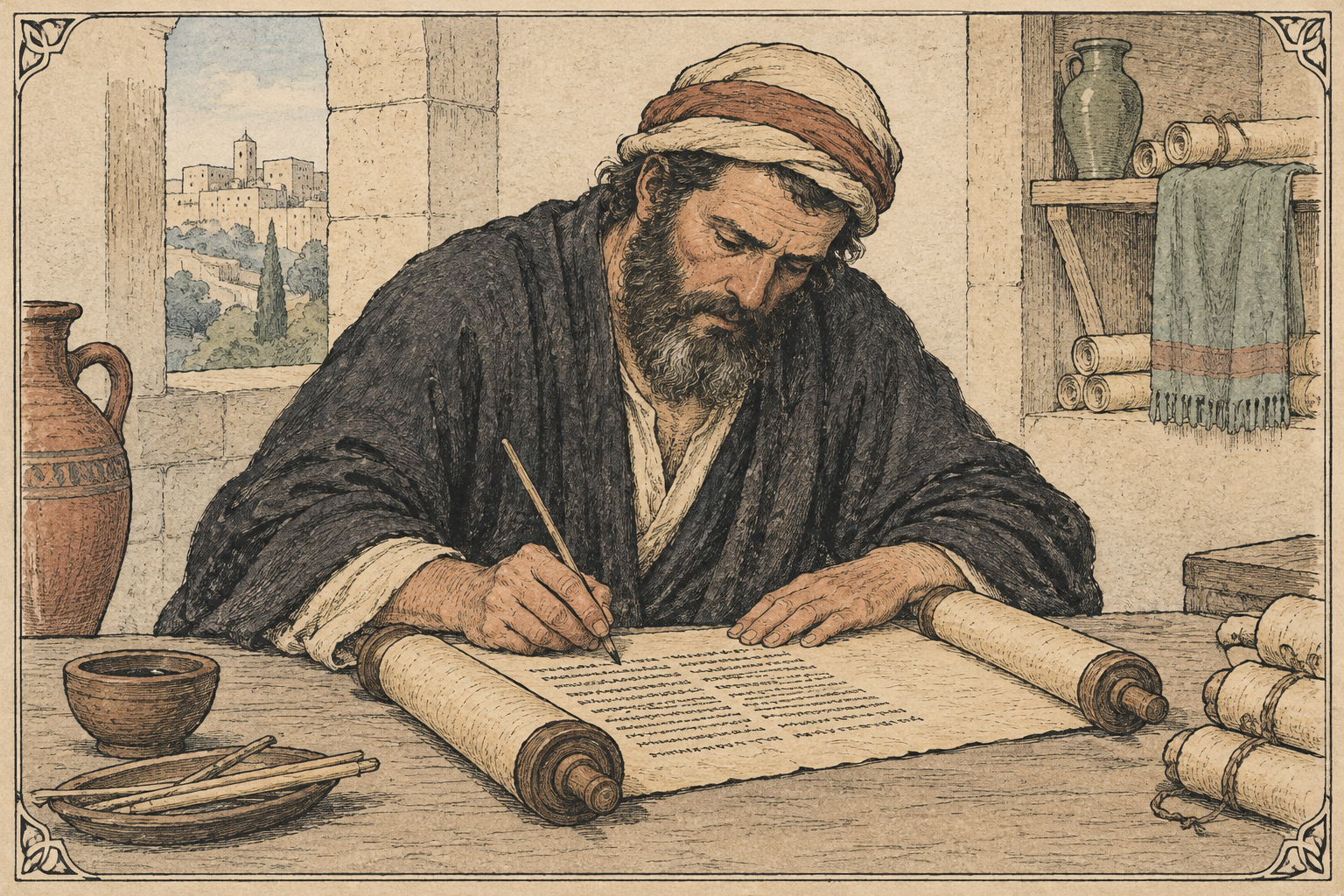
The Epistle of James and Paul's letters to the Galatians and Romans deserve the same courtesy. Lift James 2:24 out of its paragraph, lift Romans 3:28 out of its argument, and set them side by side on a page with no context, and of course they look like they are fighting. That is what happens to any two sentences stripped of the conversation that produced them. Put them back into their letters, and the apparent fight becomes two different men solving two different problems with some shared vocabulary.
The Real Question: Not Who Wins, But What Each Man Was Solving
None of this means the texts are saying identical things dressed in different words, as though a clever enough paraphrase could flatten them into one voice. They are not identical. They are addressed to different people facing different pressures. The real question is not "which apostle is right about justification," as though we are forced into a theological boxing match. The real question is: what problem was James trying to solve for his readers, and what problem was Paul trying to solve for his? Answer that, and the collision everyone assumes is there starts to look like a trick of the light.
James and the Wealthy Who Shoved the Poor Aside
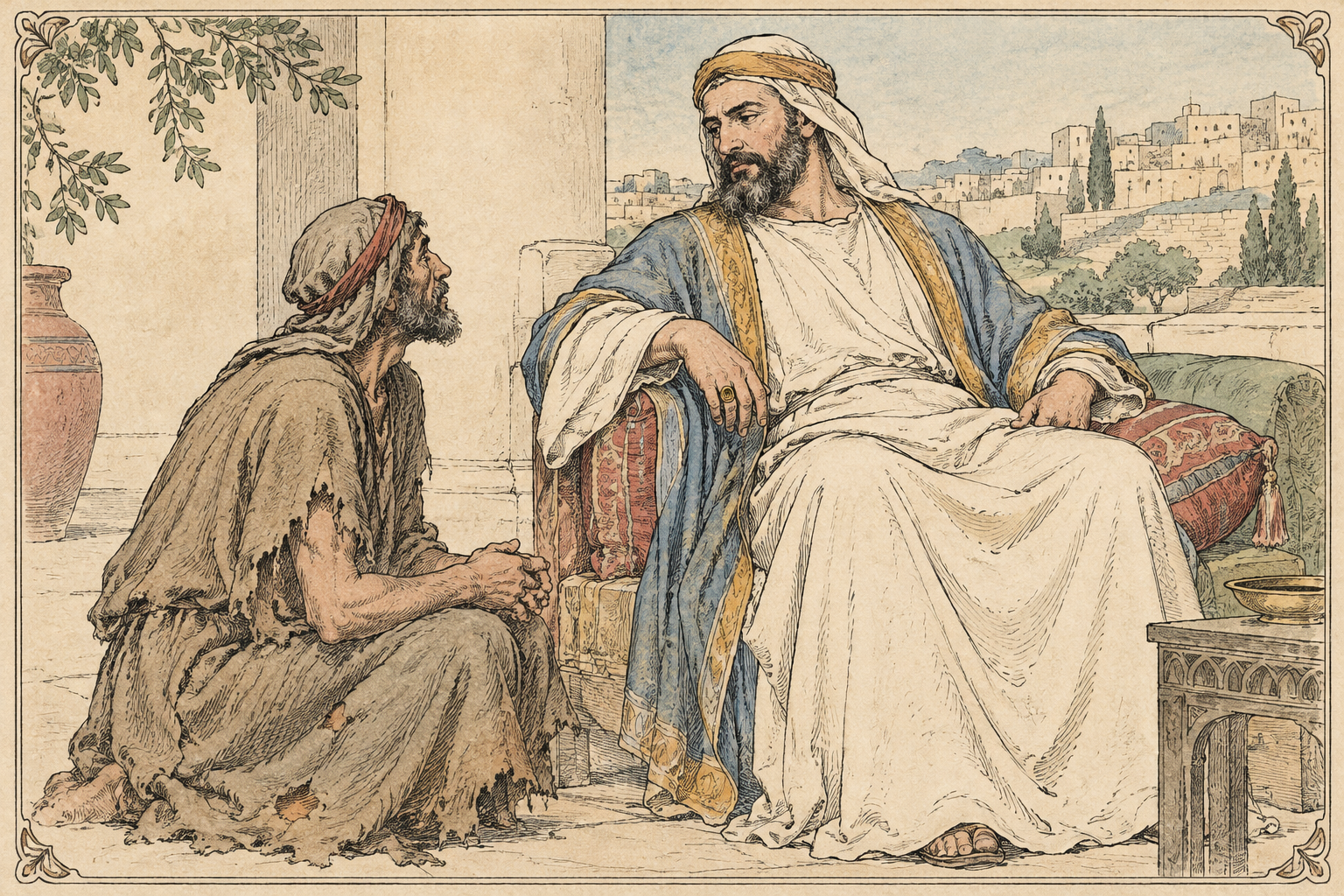
To understand James, you have to stop treating his letter as an abstract theological treatise and start reading it as what it is: a blistering pastoral sermon aimed at a specific social crisis in a specific community.
The Scene in James 2:1-13: Gold Rings and Dirty Clothes
James opens the passage everyone quotes with a scene, not a syllogism. Picture the gathering. A man walks in wearing a gold ring and fine clothes, and the congregation falls over itself to give him the best seat. A poor man walks in wearing dirty clothes, and someone tells him to stand in the back or sit on the floor. James does not soften this. He calls it what it is: favoritism, and a betrayal of the royal law that commands love of neighbor as oneself.
This was not a hypothetical. James gets sharply pointed later in the letter, in chapter 5, accusing wealthy landowners of withholding wages from laborers who harvested their fields. The language echoes Jesus's own parables about the rich and the poor, including the story of the rich man and Lazarus. James writes to a community where economic inequality had become a theological crisis, not merely a social inconvenience. The poor, James insists, are the ones God has especially chosen and honored, heirs of a kingdom that the wealthy in the room seemed to have forgotten existed.
"Faith Without Works Is Dead" (James 2:14-26)
This is the setting into which James drops his most famous line. "What good is it, my brothers and sisters, if someone claims to have faith but has no deeds?" he asks, before pressing further: can such faith save them? He is not constructing a doctrine of how a sinner is declared righteous before God in some abstract legal sense. He is asking a painfully practical question: if a brother or sister has no food or clothing, and you say "go in peace, stay warm and well fed" without giving them anything, what good is that?
Faith without works is dead, James 2:26 tells us, and the illustration is not subtle. A faith that produces no mercy toward the poor, no justice toward the mistreated, is not an inferior kind of faith. A faith with no mercy behind it is dead. James is not debating how a person enters a right relationship with God. He is exposing a congregation that assumed its religious profession excused it from caring for people in front of them.
Who James Was Writing To and Why It Matters
The audience matters more than most popular treatments admit. This letter addresses Judean Christians, likely among the earliest Christian communities, and was possibly written quite early, perhaps even before several of Paul's major letters, though the exact dating remains debated among scholars. These were believers who already considered themselves part of God's covenant people, who had grown up steeped in Torah and synagogue life, and who now needed to be told that their inherited religious confidence had curdled into something ugly: favoritism toward the rich, contempt for the poor, and a faith that talked without walking.
James's readers were not asking "do we need to keep the law to belong to God's people." They already assumed they belonged. James's problem was that belonging had become an excuse for moral complacency. That is an entirely different pastoral emergency than the one Paul was called to address.
Paul and the Circumcision Knife
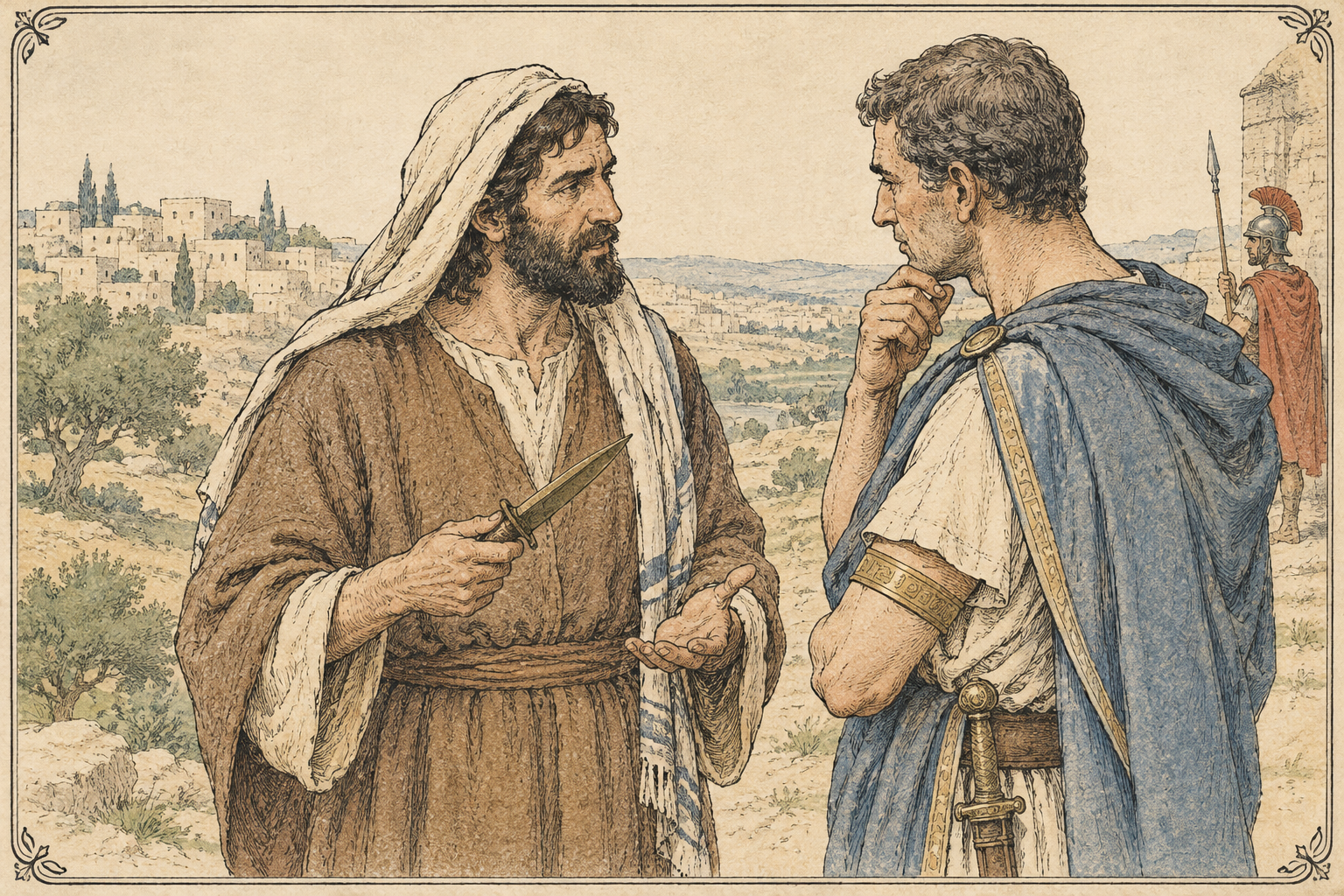
Paul's letters, by contrast, emerge from a controversy that had nothing to do with wealthy believers ignoring poor ones. His crisis involved a knife, a covenant sign, and a question that threatened to split the early church in two.
Galatians, Romans, and the Question Gentiles Were Asking
A group of Judean Christian teachers was telling Gentile converts throughout Galatia and beyond that faith in Jesus (YHWShA) was a good start but not sufficient. To truly belong to the people of God, they needed to be circumcised and take up observance of the Torah. This was not a fringe opinion. It represented a coherent, serious theological position, rooted in centuries of Judean conviction that circumcision was the sign God Almighty gave Abraham as the mark of covenant membership, going back to Genesis 17.
This position made sense on its own terms. Circumcision was not arbitrary ritual trivia to these teachers. It was the "touchstone," a visible, bodily sign of loyalty to the covenant, the defining thing that had historically distinguished the people of God Almighty from the surrounding nations. For a Gentile man in Galatia wondering if he truly belonged among God's people, the question of circumcision was not academic. It was the whole ballgame.
"Works of the Law" Is Not a Synonym for Good Deeds
Here is where so much popular reading goes wrong. When Paul writes about "works of the law" in Galatians and Romans, he is not talking about good deeds in general, the kind of ethical fruit James has in mind. He is using a technical phrase pointing to the specific identity markers of Judean covenant life. Circumcision, dietary restrictions, and Sabbath observance functioned as badges, boundary lines marking off who was in Israel and who was outside it.
Paul's argument in Galatians is relentless on this point. Gentile believers, he insists, do not need to get circumcised to belong to Abraham's true family. If they do submit to circumcision as a requirement for belonging, they put themselves back under the entire burden of law-keeping and cut themselves off from the grace that had already included them. Paul even plays with the language elsewhere, speaking of "circumcision of the heart," redefining the defining terms Judean tradition used for covenant identity. It argues about who counts as a member of God's family and on what basis.
Justification by Faith in Romans 3-4 and Galatians 2-3
This is the context for Paul's famous statements on justification by faith. Romans 3 and 4, and Galatians 2 and 3, build a sustained case that both Judean and Gentile believers are brought into right standing with God through faith, not through the badge of law-observance that had previously marked out covenant membership. Abraham himself, Paul points out, was counted righteous by faith before he was ever circumcised, which means circumcision cannot be the precondition for belonging to Abraham's family.
Paul is answering a question James never raised: must a Gentile become culturally and ritually Judean in order to belong fully to the people of God? Paul's answer is no, emphatically no, and his doctrine of justification by faith apart from works of the law is the theological engine driving that answer. This is not a referendum on whether good deeds matter for believers who already belong. It is a ruling on who gets to belong in the first place.
The Jerusalem Council: Where James and Paul Met
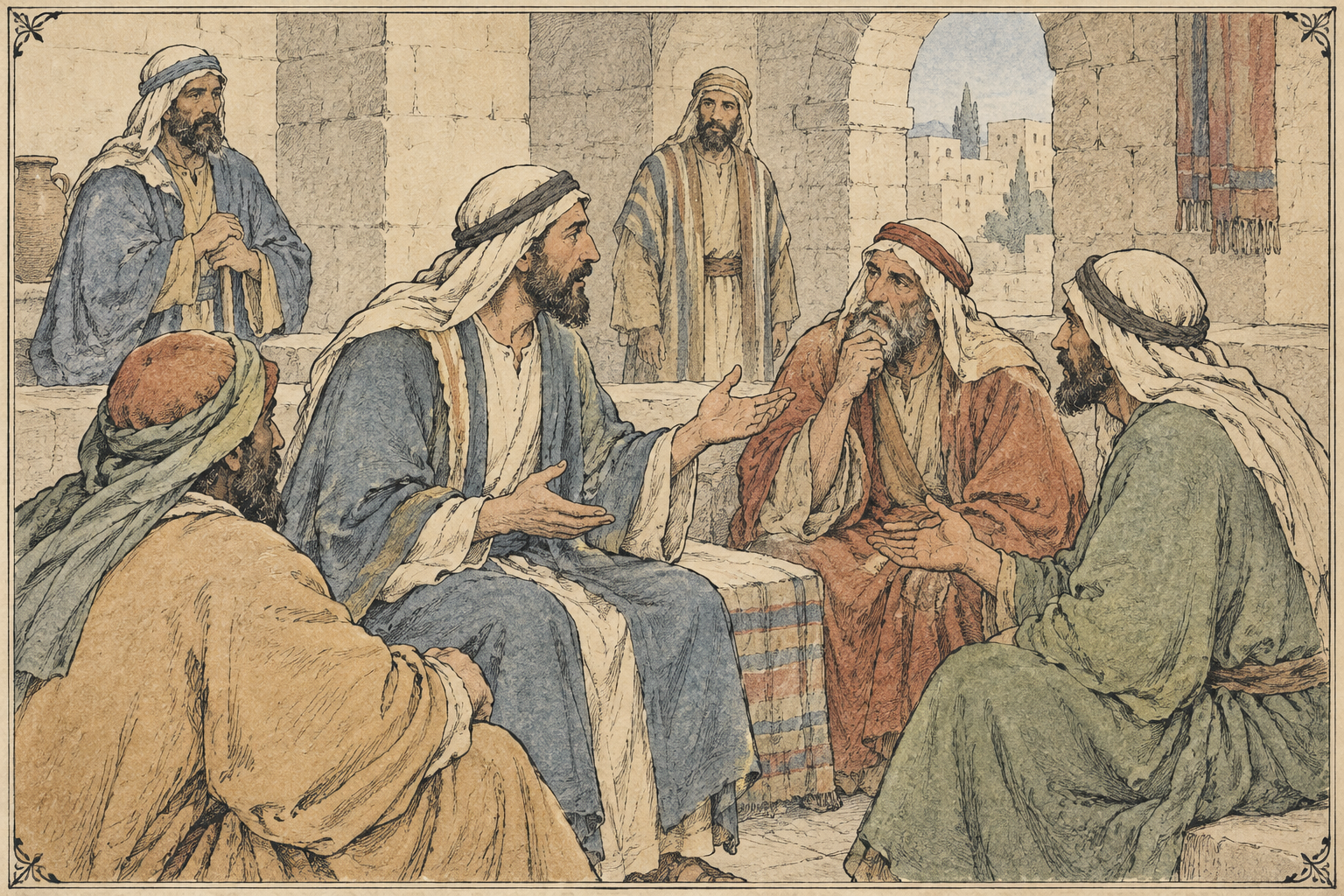
If James and Paul were running a secret theological feud, you would expect some evidence of it. Instead, the historical record shows them in the same room, discussing this defining question, and reaching the same conclusion.
What Was Decided About Circumcision and Gentile Believers
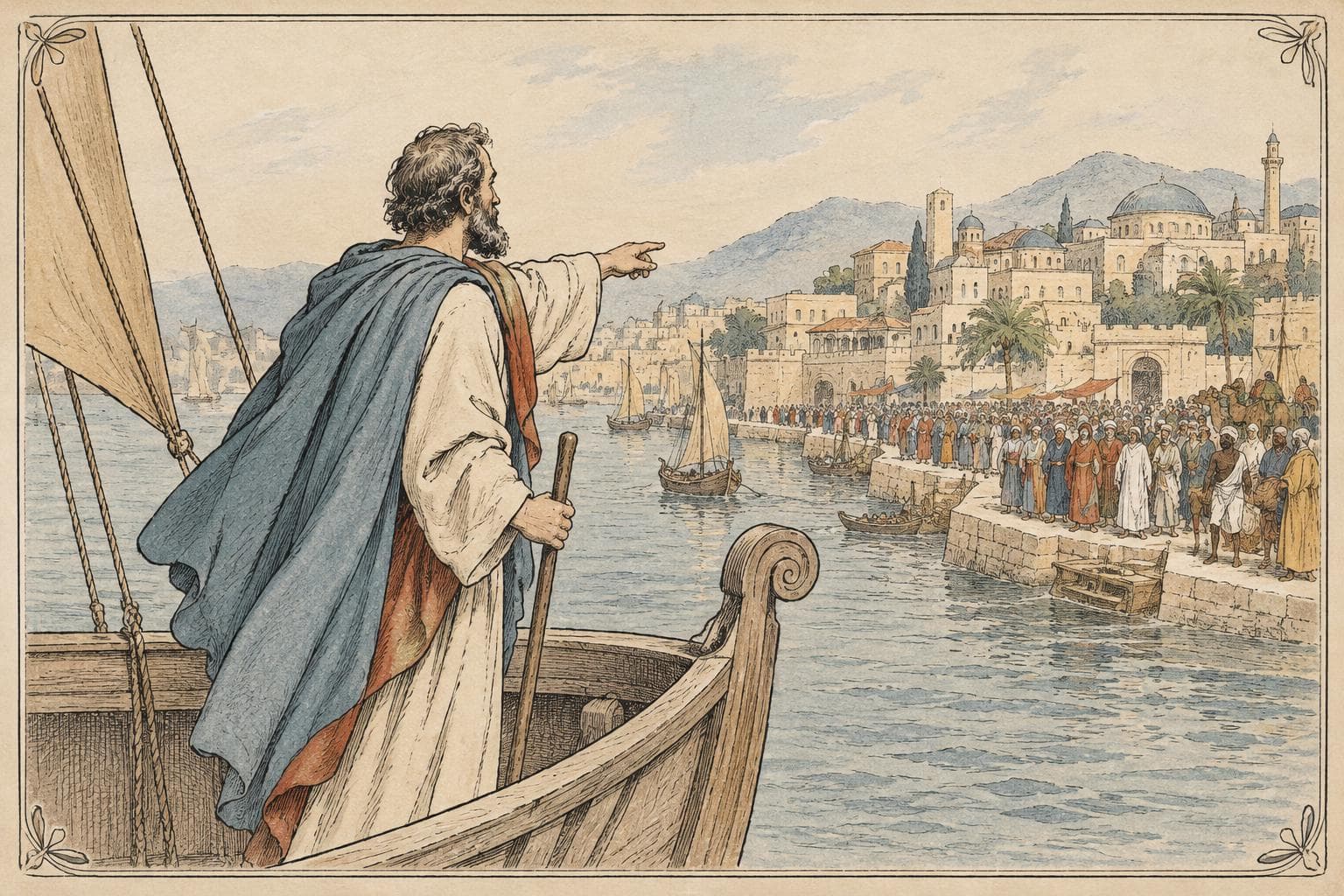
Acts 15 records the Jerusalem Council, convened precisely because the circumcision controversy had grown too large to ignore. Paul and Barnabas arrived from Antioch, where the question of whether Gentile converts needed circumcision had caused what Acts calls "no small dissension and debate." Peter spoke. Paul and Barnabas reported on their mission to the Gentiles. And James, the brother of Jesus and leader of the Jerusalem community, rendered the decision: Gentiles need not be circumcised to belong to the community of believers.
Galatians 2 gives Paul's own firsthand account of a related meeting, where he describes presenting his gospel to James, Peter, and John privately, and receiving their endorsement. James, Peter, and John extended Paul and Barnabas "the right hand of fellowship," agreeing that Paul would go to the Gentiles while they continued their work among Judeans. It was a working agreement among leaders who recognized they were serving the same mission for different populations.
Why a Secret Rivalry Is Historically Implausible
Now, the question is not whether James and Paul had every theological emphasis in common, because they did not. The question is whether the documented, public cooperation between these two men makes sense alongside a theory that their letters represent a hidden doctrinal war. It does not. James, present and presiding at the council that settled the circumcision question in Paul's favor, is a strange candidate for Paul's secret theological opponent.
Of course one can argue that private agreement on circumcision does not guarantee agreement on every nuance of how salvation works. That is fair as far as it goes. But what you cannot do, not if you want to remain historically coherent, is posit a fundamental clash between two men whom the earliest sources show shaking hands and dividing missionary labor rather than trading theological blows.
Two Words, Two Worlds: Why "Works" Doesn't Mean One Thing
Strip away the history for a moment and look simply at the vocabulary, because this is where the illusion of contradiction does most of its work.
James's "Works": The Fruit That Proves a Living Faith
When James speaks of works, he means visible acts of mercy and justice, the kind of concrete care that proves a professed faith is alive rather than dead. Feeding the hungry, clothing the naked, treating the poor with the same honor shown the rich. For James, works are the fruit, the evidence, the thing you would expect to find growing on a tree that is alive.
Paul's "Works of the Law": Identity Markers, Not Ethics
When Paul speaks of works of the law, in the specific, loaded sense that dominates Galatians and Romans, he means the ritual boundary markers of Judean covenant identity, circumcision chief among them, that some insisted Gentile believers needed in addition to faith. This is not a statement about whether ethical behavior matters to Paul. His letters are full of ethical instruction, often strikingly similar in substance to what James demands. The specific phrase "works of the law," in its controversial Galatians and Romans usage, is pointing at something narrower and more particular: the badges of Judean identity being imposed on Gentile believers as a precondition for belonging.
Same Word, Different Target
What stands out most about this whole episode is how little the two men were arguing about each other. Two different communities, facing two entirely different pressures, produced two letters that share vocabulary without sharing a target. James's readers needed to hear that empty profession without mercy is worthless. Paul's readers needed to hear that circumcision is not required for full membership in God's family. Both letters use words like "faith," "works," and "justified," because both men were drawing on a shared pool of Judean theological language. But overlapping vocabulary is not the same as overlapping subject matter. A tax lawyer and a divorce lawyer both use the word "settlement," and nobody assumes they are debating the same case.
Different Audiences, Different Diagnoses
Draw the threads together and the picture sharpens considerably.
James's Diagnosis: Judean Christians Tempted Toward Empty Profession
James writes to Judean Christian believers who already assumed their covenant standing was secure, and who had let that assumption curdle into favoritism toward the wealthy and contempt toward the poor. His diagnosis: a faith that produces no visible mercy is not genuine faith at all, whatever it calls itself. The cure is not a new doctrine of salvation. It is a demand that faith show up in how you treat the person in dirty clothes sitting in the back row.
Paul's Diagnosis: Gentile Christians Tempted Toward Law-Keeping as Entry Fee
Paul writes to Gentile believers being told that faith in Jesus was necessary but insufficient, that genuine belonging required submission to circumcision and the ritual markers of Judean identity. His diagnosis: God Almighty has always counted people righteous through faith, as Abraham's own story shows, and no one needs to become culturally Judean to belong fully to God's family. The cure is not a rejection of ethics. It is a rejection of the idea that ethnic and ritual boundary markers determine who belongs to the people of God.
Where the Contradiction Lies
Return to the two witnesses on opposite street corners. One saw a red car run the light. The other saw a cyclist swerve. Neither is lying. Neither is confused. They were simply watching different things. James watched wealthy believers humiliate the poor while congratulating themselves on their faith. Paul watched anxious Gentile converts being told their faith counted for nothing without a knife and a law code. Strip both scenes of their context, reduce each to a single sentence, and you can manufacture a contradiction. Restore the context, and the contradiction disappears.
The James Paul contradiction, in the end, is not a crack in the foundation of the New Testament. It is a crack in how modern readers have been taught to read. Faith versus works never needed to become the defining divide people assume it is, because James and Paul were never standing in the same courtroom arguing the same case. One was confronting hollow religion that ignored the poor. The other was confronting a false barrier keeping Gentiles from the family of God. Read them in their own settings, with their own audiences and their own crises in view, and what looked like a collision turns out to be two faithful witnesses, standing on different corners, describing two different scenes with total honesty.