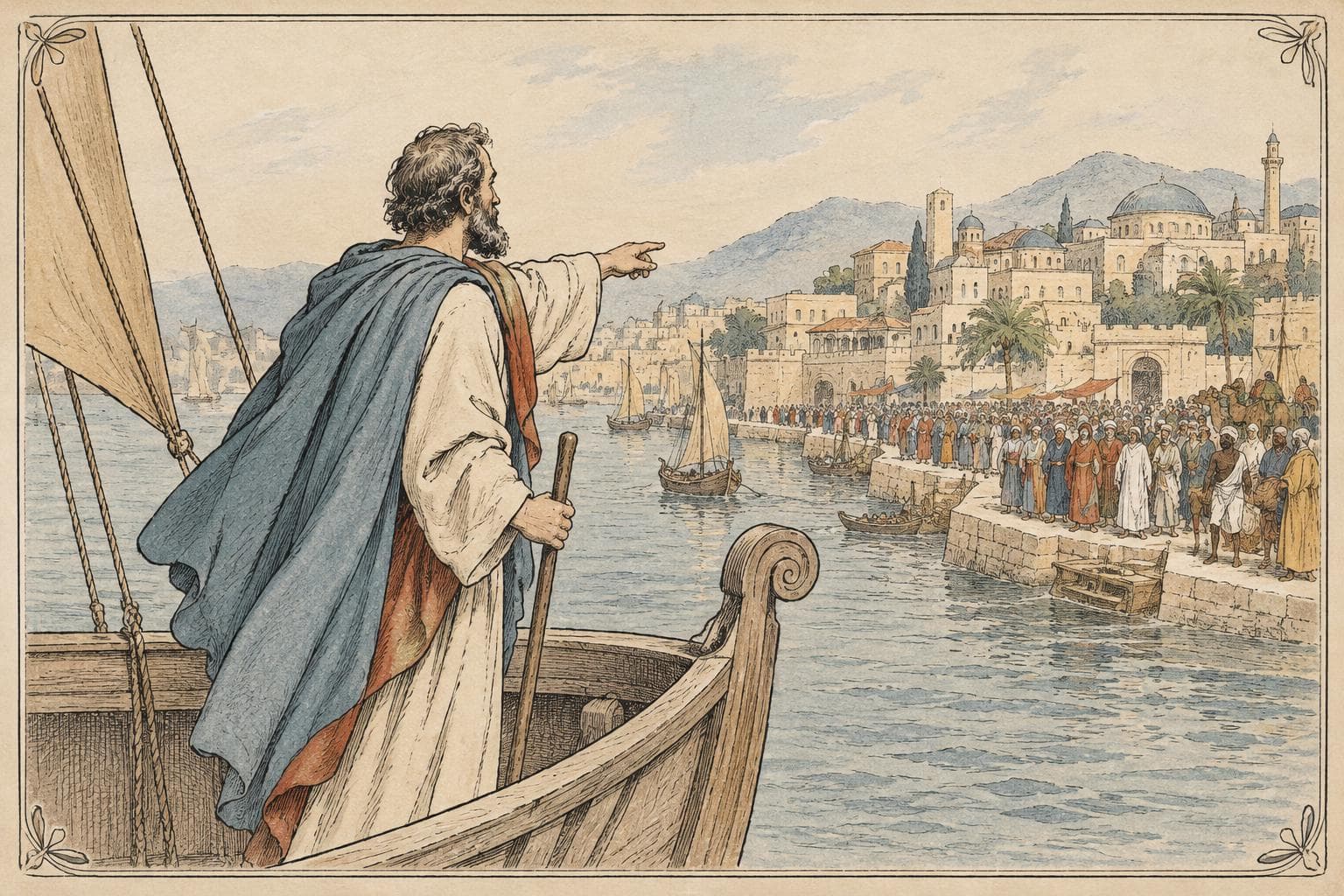
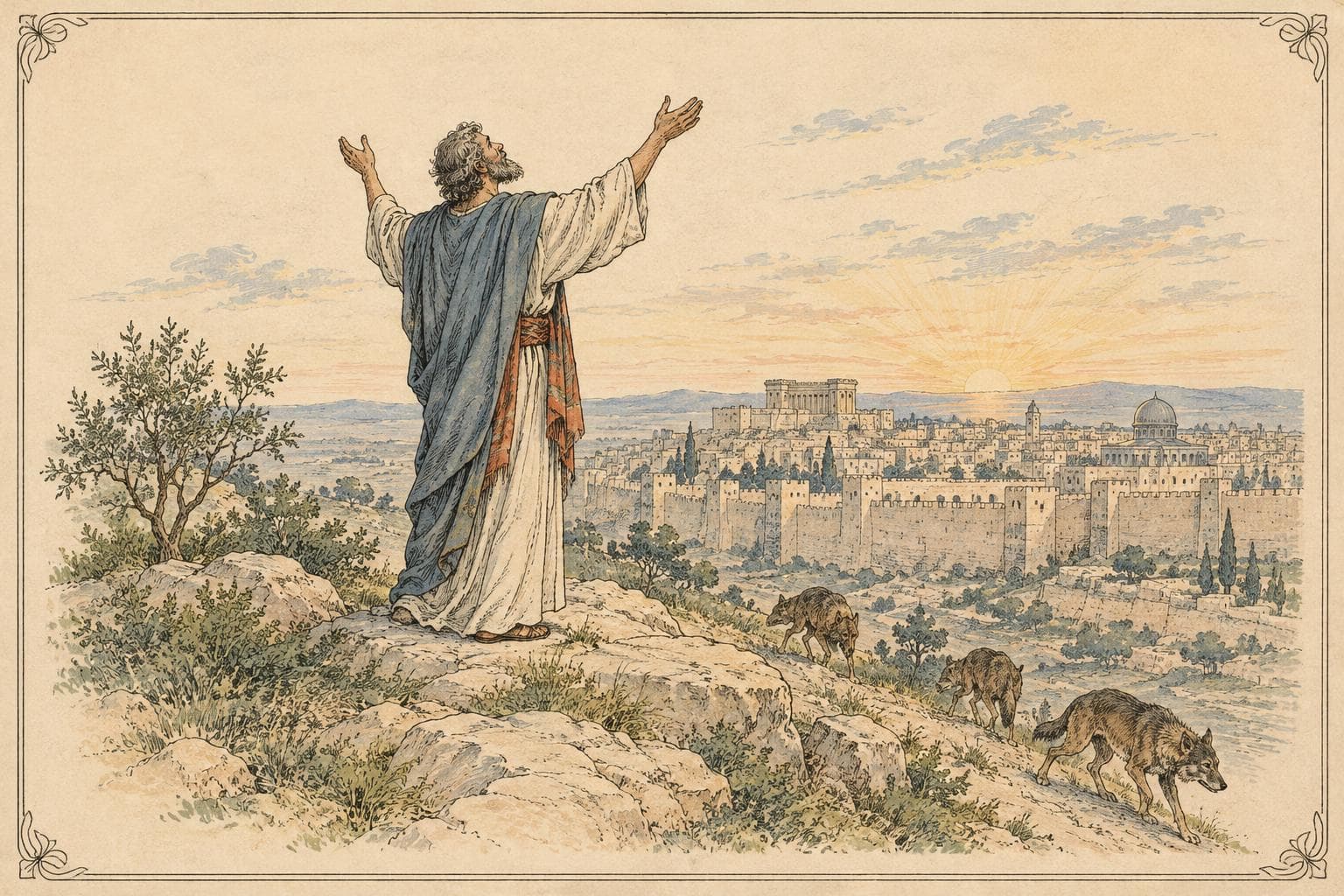
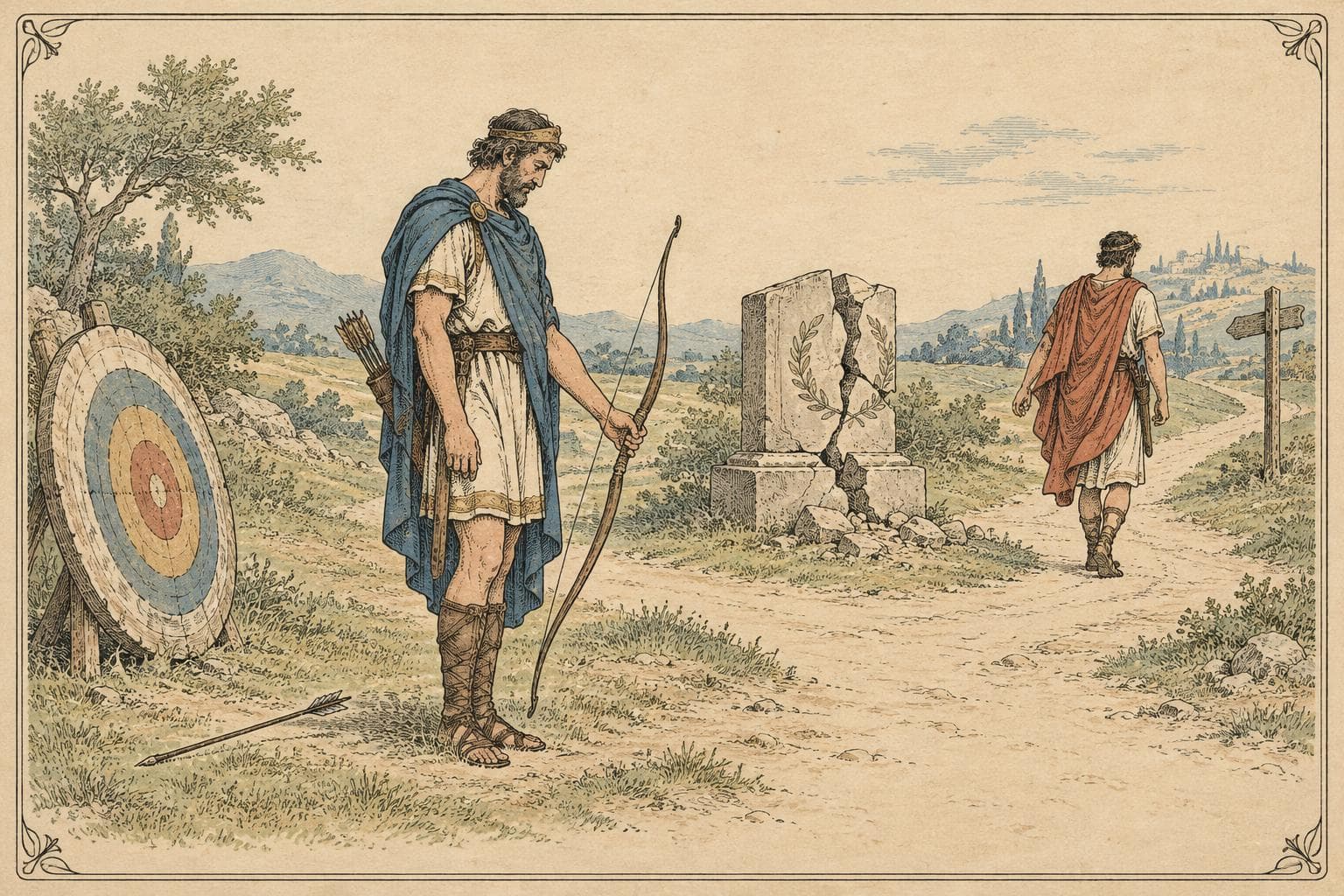
Walk into almost any conversation about the Ten Commandments and you will find two camps standing at a distance from each other. One treats them as a museum piece, quaint moral furniture fit for courthouse lawns but not much else. The other reduces them to a checklist of private virtues, as though "don't steal" and "don't lie" floated free of any larger story. Both camps miss what the text itself makes plain the moment you read Exodus 20 and Deuteronomy 5 side by side. These ten statements are not a loose pile of rules. They are a structure, deliberately built, moving from devotion to the Creator toward care for one's neighbor, and the architecture itself makes the argument.
This matters because the Ten Commandments explained as mere morality miss their covenant logic entirely. They were given at Sinai to a people rescued from slavery, and they describe what it means to belong to the God (Alohim) who rescued them. Properly understood, they move in two directions: first toward God, then toward the neighbor standing beside you. Grasp that movement and the whole list opens up in a way that a flat list of "thou shalt nots" never could.
The Architecture of the List: Why Order Matters
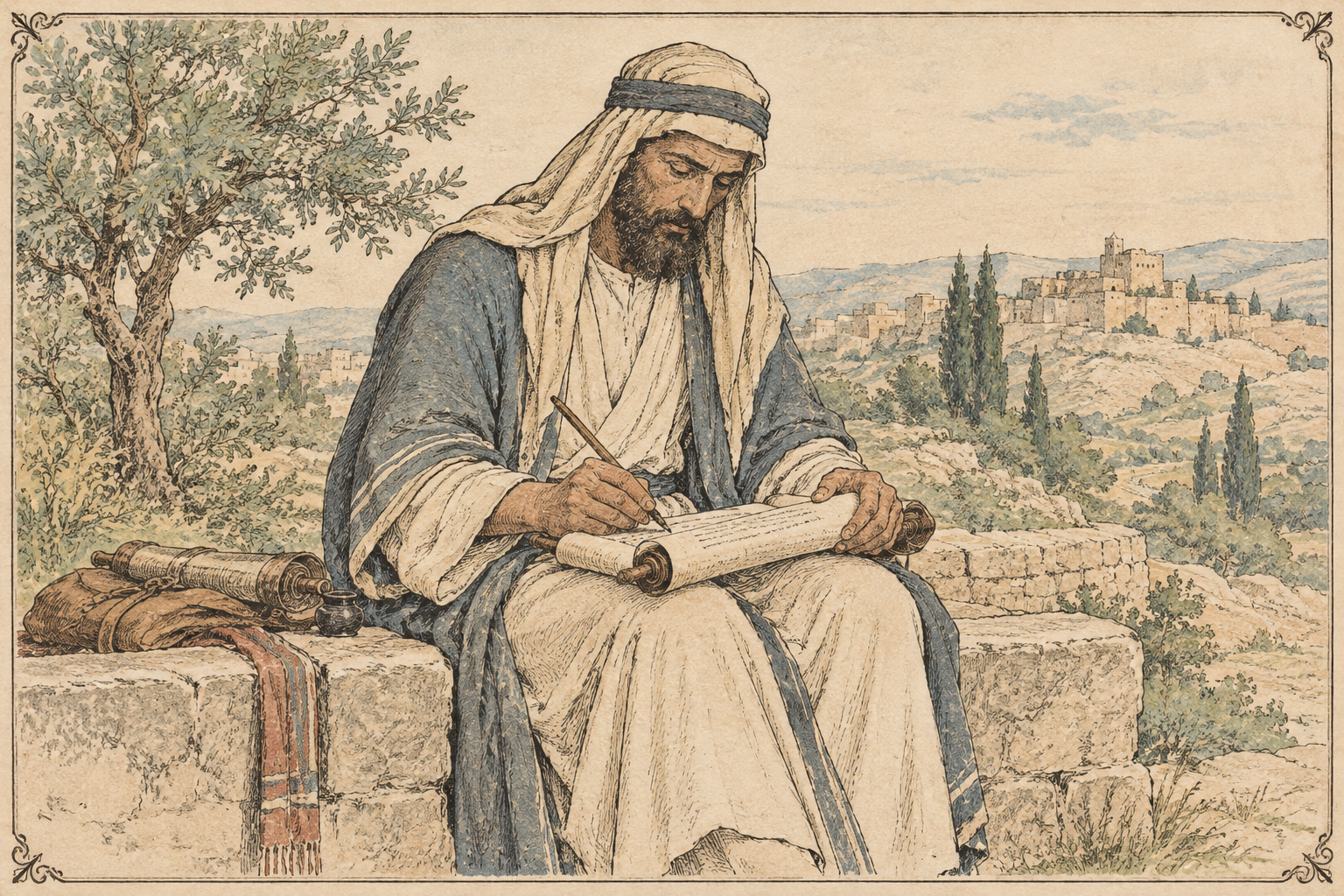
The Ten Commandments function as a single structured covenant, not a random assortment of rules, and the order in which they appear is the first clue to how they were meant to be read. Four commands address the relationship between Israel and the God who delivered them. Six address the relationships Israel would have with each other. That ordering is a claim about where ethics comes from.
From Exodus 20 to Deuteronomy 5: Two Tellings, One Covenant
The commandments appear twice in Scripture, first at Sinai in Exodus 20 and again decades later on the plains of Moab in Deuteronomy 5, as Moses rehearses the covenant for a generation about to enter the land. Readers often assume these are identical texts, but a careful comparison shows small variations, particularly around the Sabbath command, which carries one rationale in Exodus and another in Deuteronomy. The question of exactly how to divide and number the commandments has been debated for a long time, and different traditions, including those shaped by the Protestant Reformation, have split the opening and closing verses of Exodus 20:2-17 in different ways. The variation is not a contradiction to be explained away. It is two tellings of one covenant, each drawing out a dimension the other leaves implicit.
Deuteronomy was not written to replace Exodus. It was written to remind a new generation, standing at the edge of the promised land, of the covenant their parents had received at the mountain. The repetition itself teaches something: covenant law is not a document filed away after one reading. It is meant to be rehearsed and re-received by every generation that walks into a new chapter of the story.
Vertical Before Horizontal: The Logic Behind the Sequence
Most casual readings slide past an oddity here. Before Scripture says one word about murder, theft, or lying, it says something about allegiance. The first command concerns who gets worshipped, not how people treat each other. The biblical writers understood that ethics never floats free of worship. How a person treats a neighbor is downstream of who or what that person serves.
A community that worships power will eventually excuse violence. A community that worships wealth will eventually excuse theft. The Ten Commandments begin vertically, with devotion to the Creator, because love of God was understood to be the root system from which love of neighbor grows.
No Other Mighty Ones: The Command That Starts Everything
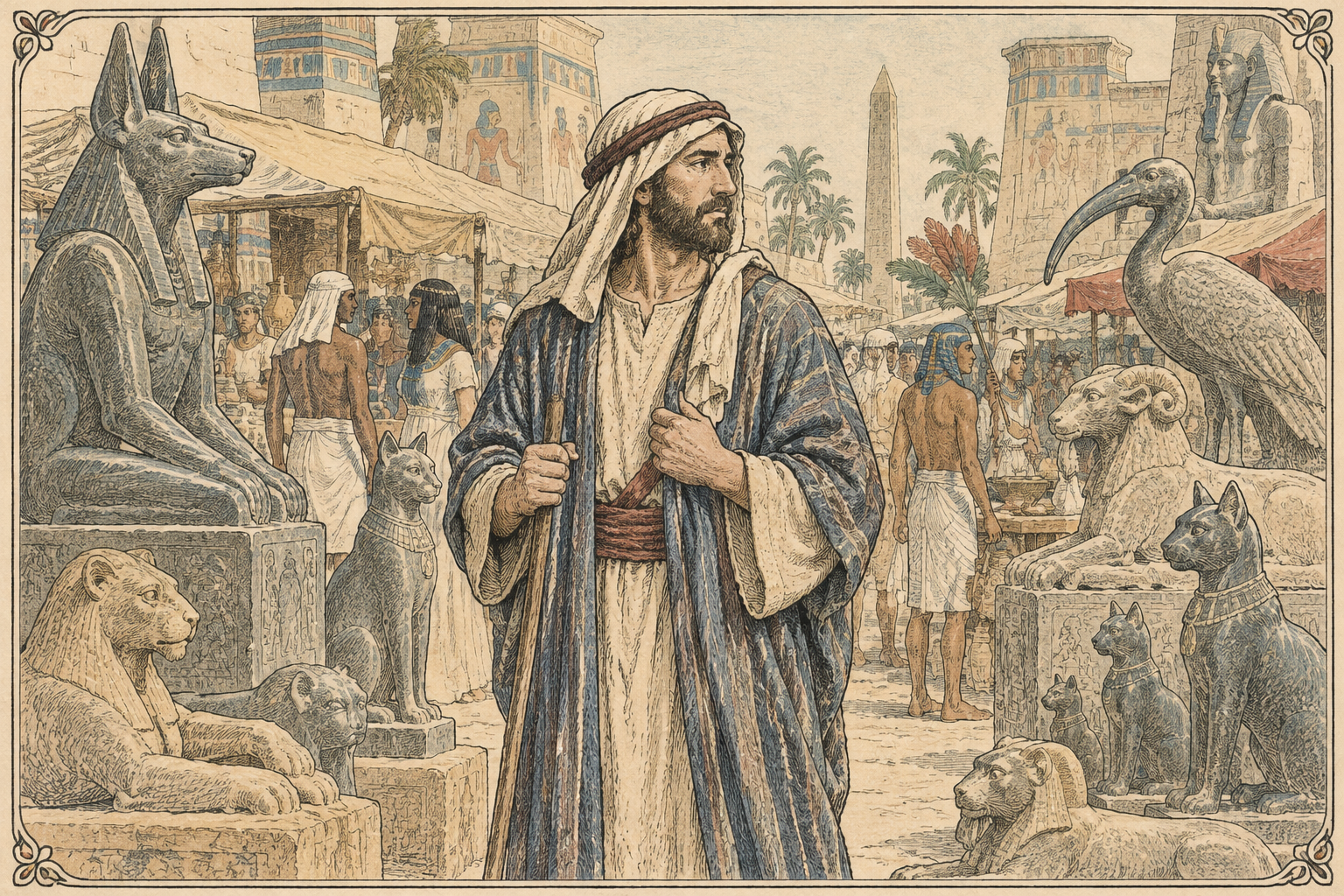
"You shall have no other mighty ones before my face." That is the opening line of the covenant, and it is worth sitting with before rushing toward the commands most people find more immediately relatable.
The Ancient Near Eastern World of Many Gods
Israel was not called out of a world of atheists. It was called out of a world crowded with mighty ones, where every nation, city, and household shrine had its own patron deity. Egypt alone worshipped gods associated with the Nile, the sun, the harvest, and the underworld, overlapping and competing claims on human loyalty. Into that world, a people freshly liberated from Egyptian bondage were told that their God alone would stand at the center of their allegiance. This was a radical covenant demand, not a quaint preference. It asked an entire nation to reorganize its loyalties around a single, invisible, image-defying deity, in a world that assumed divine power came in multiples.
Consider what this meant practically. Egypt's plagues, as the Exodus narrative presents them, were not simply disasters. Some readers connect individual plagues to the discrediting of specific Egyptian deities, such as the Nile turning to blood as a blow against the river god Hapi. The text itself does not spell out every such correspondence, so the comparison remains interpretive rather than explicit. By the time Israel stood at Sinai, they had watched their God dismantle an entire pantheon's claim to reliability. The first commandment follows as the natural conclusion of what they had witnessed.
Allegiance as the Foundation of Covenant Law
This is why the first command reframes everything that follows. Nine more commands are coming, but none of them are free-floating ethical principles. They are the shape that loyalty to this particular God takes when lived out among other people. Scripture consistently ties right worship to right behavior. Centuries later, the prophets would indict Israel as fiercely for injustice toward the poor (Amos 5:21-24) as for idolatry at the altar. Worship and ethics were never two categories. They were one covenant, viewed from two angles.
Carved Images and the Weight of the Name
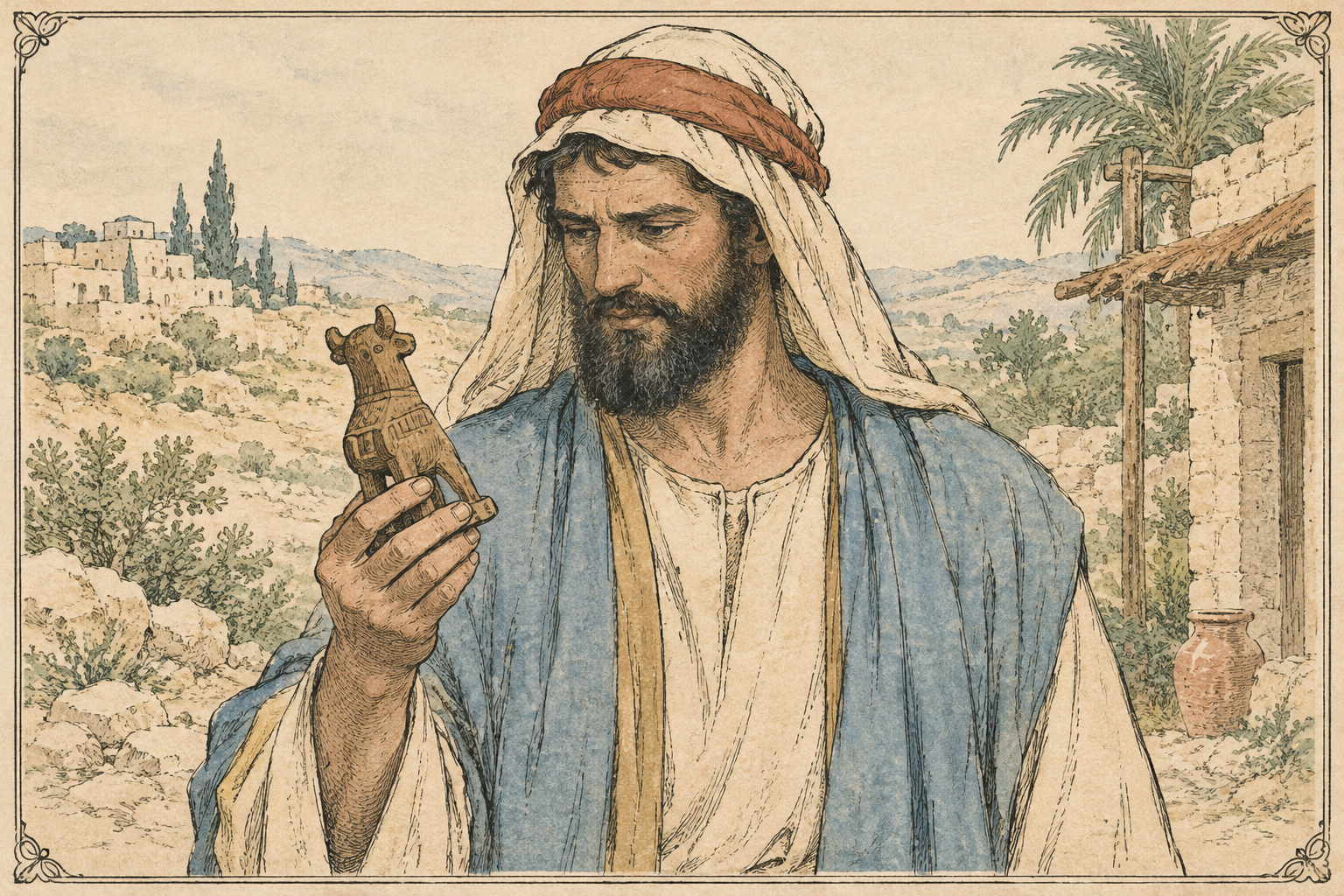
The second and third commandments are often treated as two unrelated rules, one about art and one about language. Read in covenant context, they are both about the integrity of true worship.
Why No Image Can Hold the Creator
The command against carved images is not a judgment on artistic skill. It is a theological claim about the nature of the Creator himself. No wood, stone, or metal object can contain or represent the one who spoke the universe into being, and any attempt to do so inevitably shrinks the Creator down to something manageable, something that can be carried off or controlled. The ancient world was full of such images, deities fashioned by human hands and then bowed to as though the object itself held power. Israel's God refused that arrangement entirely. The Creator who made the heavens and the earth cannot be reduced to a product of human hands, because the moment he is, worship stops being surrender and becomes a transaction.
A God you can carve is a God you can eventually set aside, repaint, or melt down for something more useful. The command protects against exactly that drift, insisting that the Creator remain Creator rather than being domesticated into an object.
Reducing Yahuwah's Name to Nothing
The third commandment, often rendered "you shall not take the name of Yahuwah your God in vain" (Exodus 20:7), cuts far deeper than casual speech. Many read the Hebrew idiom behind this command as carrying the sense of reducing the divine name to nothing, emptying it of weight through misuse, though interpreters differ on exactly how far that idiom extends. In the ancient covenant world, a name invoked in an oath was not decoration. It was the guarantee behind a promise. To swear by Yahuwah's name and then break that oath, or to invoke his name over something false, was to treat the name itself as hollow, as though it carried no binding authority.
This is why the text pairs the warning with the sober statement that "Yahuwah will not leave unpunished anyone who misuses his name" (Exodus 20:7). The concern is covenant integrity, not merely polite vocabulary. A name used in worship, in oaths, in daily speech, and in public testimony was meant to carry the full weight of who God is. Emptying it through careless or deceitful use was treated as a serious breach, not a minor lapse in manners.
Shabbat: The Command With a Double Foundation
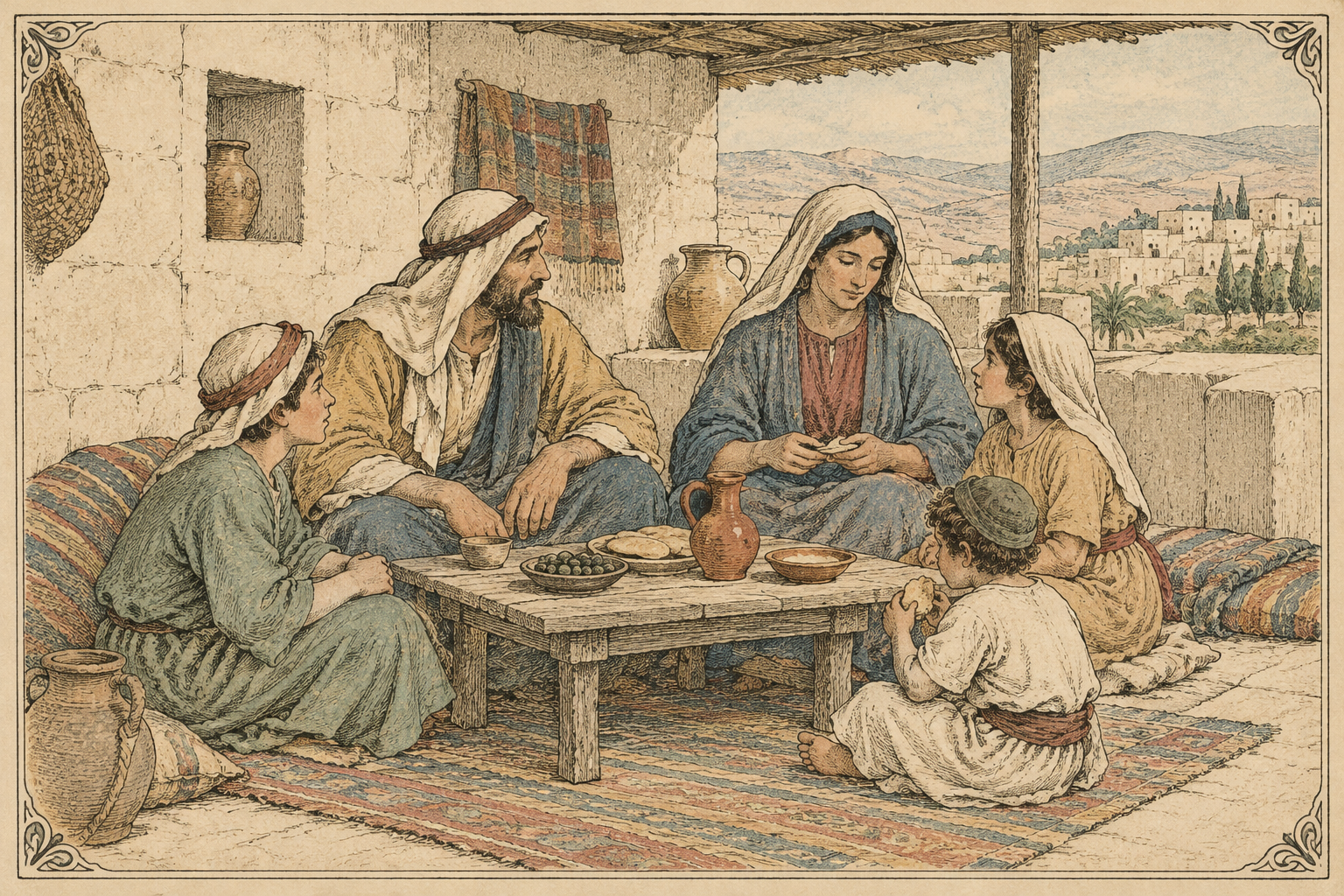
The fourth commandment, "remember the day of the Sabbath, to set it apart," stands at the hinge of the first half of the list, and it carries something none of the other nine commands carry: two distinct rationales, given in two distinct tellings.
Exodus 20 and Creation's Rhythm
In Exodus 20, Sabbath rest is tied directly to creation itself. Six days the Creator worked, and on the seventh he rested, and that rhythm became the pattern stamped into the fabric of time for every creature made in his image. This rhythm is woven into the architecture of the cosmos from the first week, not invented for Israel's convenience. A world made by a Creator who works and rests is a world in which rest is not laziness. It is an act of trust, an admission that the universe does not depend on ceaseless human striving to keep running. The heavens, as the psalmist would later write, pour forth speech day after day declaring the glory of their maker, and the Sabbath is the weekly echo of that same declaration, a reminder that the Creator remains active in sustaining what he made without needing human effort to prop it up.
Deuteronomy 5 and the Memory of Egypt
Deuteronomy 5 gives the same command a second foundation entirely. Here Sabbath rest is tied not to creation but to the exodus from Egypt: "remember that you were a slave in the land of Egypt, and Yahuwah your God brought you out from there" (Deuteronomy 5:15). Slaves do not rest. Pharaoh's economy ran on unbroken labor, and the Israelites knew that reality in their bodies before they ever heard it named in a command. Sabbath, in Deuteronomy's telling, is a weekly act of liberation, a refusal to return to the logic of a slave economy even after physical slavery has ended. It is covenant memory enacted in the body, a rhythm that declares, every seventh day, that this people belongs to a God of freedom rather than to the relentless demands of production.
Put the two rationales together and the Sabbath commandment reveals how creation and redemption were never separate categories in the biblical mind. The God who made the world in six days and rested is the same God who redeemed a people from bondage and gave them rest. Shabbat is cosmic and historical at once, which is precisely why it anchors the entire first half of the list.
Honoring Parents: The Hinge Between Two Halves
The fifth commandment, "honor your father and your mother," marks the turn from vertical devotion toward horizontal care. It is worth noticing exactly where this command sits. It is the first command concerning another human being, and its placement is not incidental.
Family Order as the Foundation of a Stable People
The horizontal half of the list begins with parents rather than, say, murder or theft, offenses that seem more severe, because the family was understood as the seedbed from which every other relationship in the community grew. A household in which authority was respected, where elders were honored rather than discarded, was a household capable of passing covenant memory, covenant practice, and covenant faithfulness to the next generation. Break that transmission and the whole community eventually unravels, not through a single dramatic failure but through slow forgetting. Leviticus 19 later places reverence for parents in the same breath as keeping the Sabbath, both introduced by the refrain "I am Yahuwah your God," showing how deeply intertwined family order was with covenant identity itself.
Family order here carries more weight than sentimentality about family values in the modern sense. Covenant community does not spring up fully formed in each generation. It must be received, and the household was the first and most basic place that reception occurred.
From Household to Community
Honor for parents extends outward in concentric circles. A household that respects legitimate authority becomes a community capable of respecting the deeper structures the remaining commandments protect: human life, marriage, property, truthful speech. The fifth commandment functions as a hinge precisely because it stands between the vertical commands and the remaining horizontal ones, carrying something of both. It is, after all, the only one of the final six commands attached to a promise, "that your days will be long in the land," linking family faithfulness to the flourishing of the whole covenant community across generations.
Life, Marriage, Property, and Truth: The Commands Among Neighbors
The sixth through ninth commandments form a tight sequence, protecting in turn the body, the household, material goods, and truthful speech, the core goods without which no community can hold together.
Guarding the Body and the Household
"You shall not murder" protects the most basic reality a person possesses, life itself, made in the image of the Creator and not available for another person to extinguish at will. This command does not merely forbid an act. It makes a theological claim that every human life carries a weight derived from its maker, a claim that would have stood in sharp contrast to surrounding cultures where life was often cheap, especially the lives of the conquered, the enslaved, or the unwanted.
"You shall not commit adultery" extends that same protection into the covenant bond of marriage. Marriage in the biblical imagination was never simply a private arrangement between two people. It was a covenant structure mirroring, in human terms, the fidelity the Creator asked of his people. To violate that bond was to tear at the fabric of trust on which households, and by extension communities, depended.
Guarding Possessions and Speech
"You shall not steal" widens the circle further, protecting what a person has built or been given, recognizing that security of property is necessary for any community to function without constant suspicion and grasping. And "you shall not bear false witness against your neighbor" protects the possibility of trustworthy speech, without which courts cannot judge fairly, neighbors cannot deal honestly, and community life collapses into a fog of unreliable claims. Leviticus 19 echoes this cluster precisely, listing commands against stealing, dealing falsely, and lying to one another, all anchored by the same refrain, "I am Yahuwah your God," reminding readers that these are not free-floating social rules but covenant obligations rooted in the character of the one who gave them.
Taken together, these four commands protect the goods every human community needs simply to survive: a body not subject to arbitrary violence, a marriage bond not subject to betrayal, property not subject to theft, and speech not subject to deceit. Trust between neighbors erodes when even one of these protections is removed, and collapses entirely when all four are gone.
Coveting: Where the Law Reaches the Heart
The tenth commandment stands apart from everything that came before it, and noticing how it differs is where the entire list finally comes into focus.
The Sin Before the Deed
"You shall not covet" addresses no outward action at all. Every other horizontal command concerns a deed: killing, committing adultery, stealing, lying. Coveting concerns desire itself, the internal wanting that precedes and often produces the outward act. A person can covet a neighbor's house, spouse, or possessions without ever lifting a hand, and yet the covenant law names that internal desire as its own form of transgression. Ancient law codes typically concerned themselves with actions that could be witnessed, adjudicated, and punished. Desire, by its nature, escapes all three. Yet here it stands, codified alongside murder and theft, as though the covenant giver cared as much about what happens in the heart as what happens in the street.
Why the Heart Was Always the Target
This final command is the quiet key to the whole structure. It reveals that covenant law was never interested merely in managing outward behavior while leaving the inner life untouched. The law aimed, from the beginning, at the heart that produces behavior. This is why, centuries later, when Jesus (YHWShA) was asked which commandment mattered most, his answer gathered the entire list into two movements: love the Lord (YHWH) your God with all your heart, and love your neighbor as yourself. He was not inventing a new ethic; he was naming what the Ten Commandments had been teaching all along, that vertical devotion and horizontal care were never separable, and that both were always, at root, matters of the heart. The command against coveting makes that explicit, exposing the desire behind the deed, and in doing so it anticipates everything the rest of Scripture would go on to say about the heart as the true battleground of covenant faithfulness.
None of this means outward behavior does not matter. It does, which is why nine commands precede this one addressing actual conduct. The tenth commandment insists that behavior alone was never the finish line. The law reaches further in, into the wanting that shapes what hands eventually do.
Read this way, the Ten Commandments stop looking like ten disconnected rules and start looking like what they are: a single covenant document, moving deliberately from devotion to the Creator toward care for every neighbor, and finally into the quiet territory of the human heart where both devotion and care begin. Yahuwah's covenant law was never a courthouse decoration or a private checklist. It was, and remains, an invitation into a coherent way of living before God and among other people, one that still asks the same question it asked at Sinai, about who and what a person will love first.