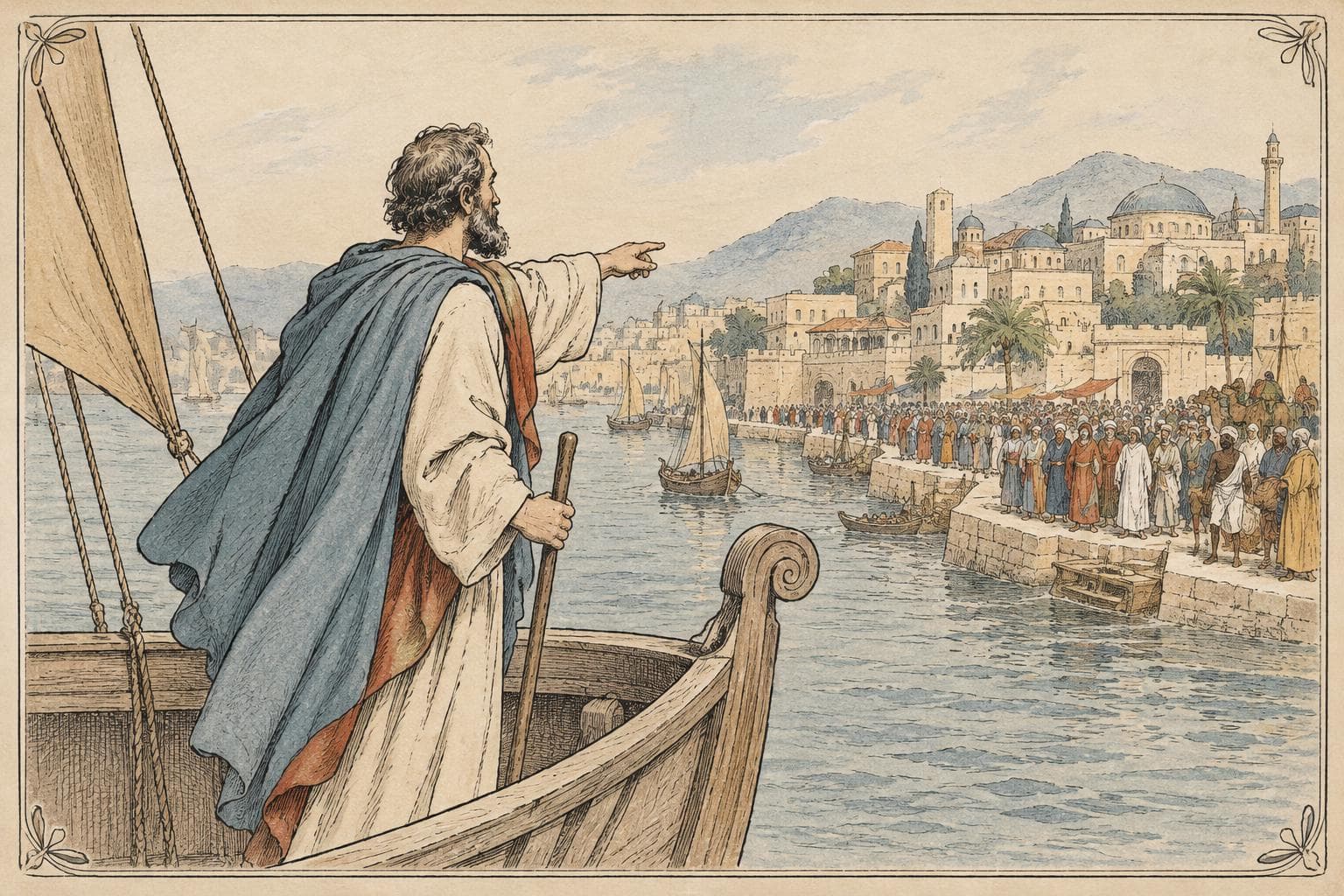
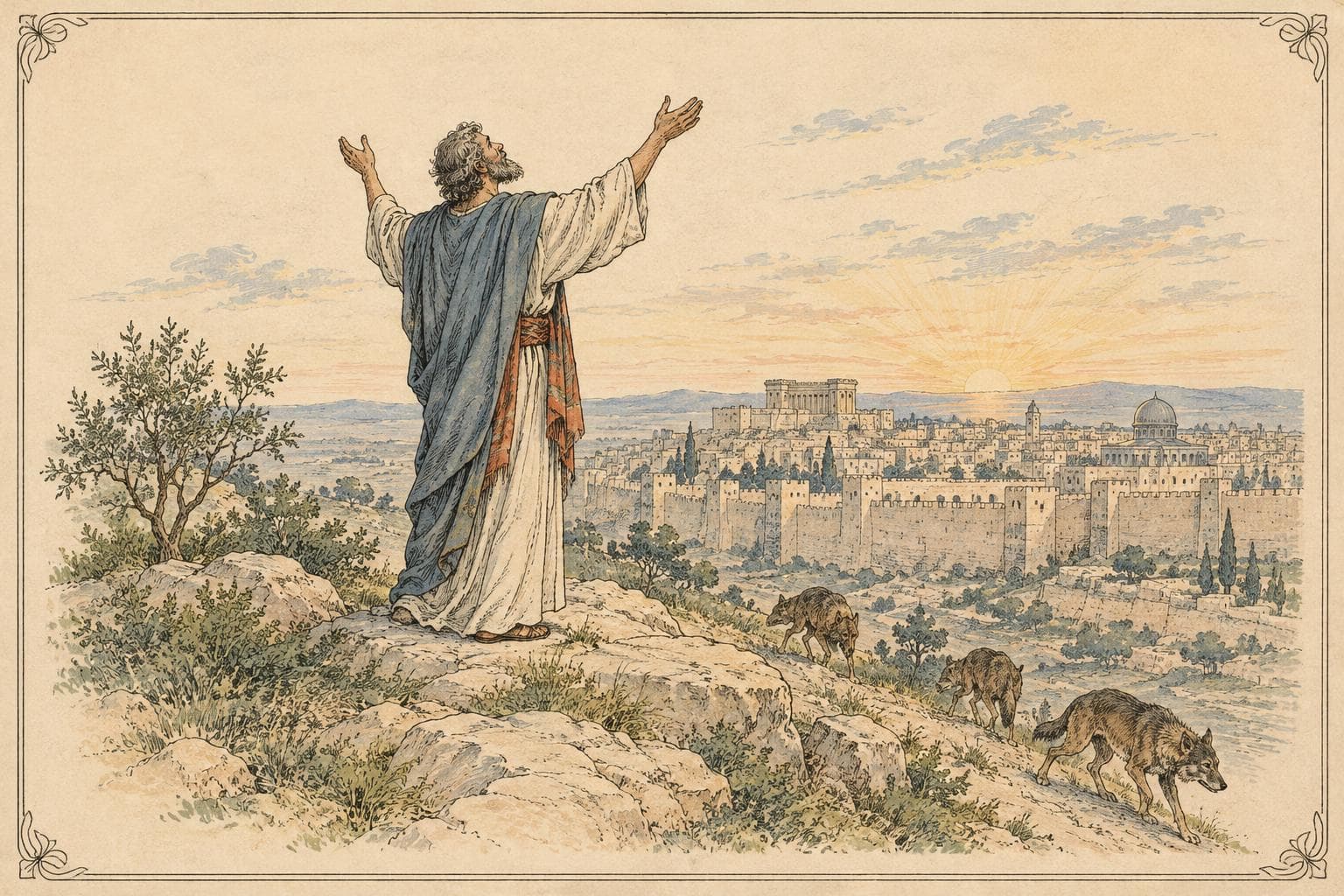
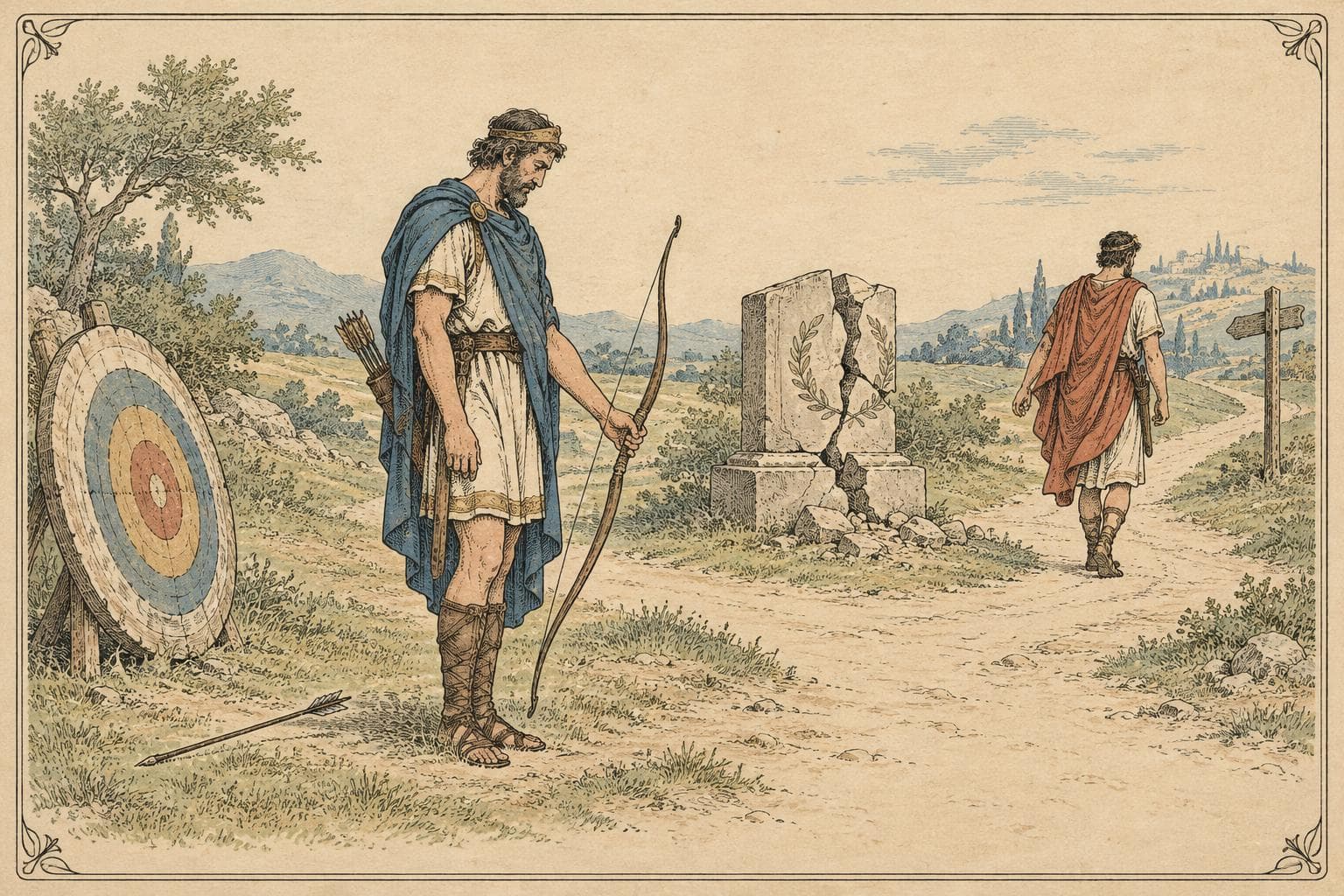
Most people encounter the opening of John's Gospel the way they encounter a favorite hymn. The words are familiar, almost soothing, and so they slide past without landing. "In the beginning was the Word." We nod and move on, rarely pausing to ask what kind of claim is being made, or why it mattered enough for a first-century Judean writer to risk everything on it. Strip away the familiarity, and you find one of the most carefully constructed arguments in the ancient world, built to answer a question every generation asks in its own way: can an ordinary person belong to God (Alohim)? That is what the Word became flesh to answer, and John 1:1 meaning hinges on it.
The Noise We Live In, and the Word That Cuts Through It
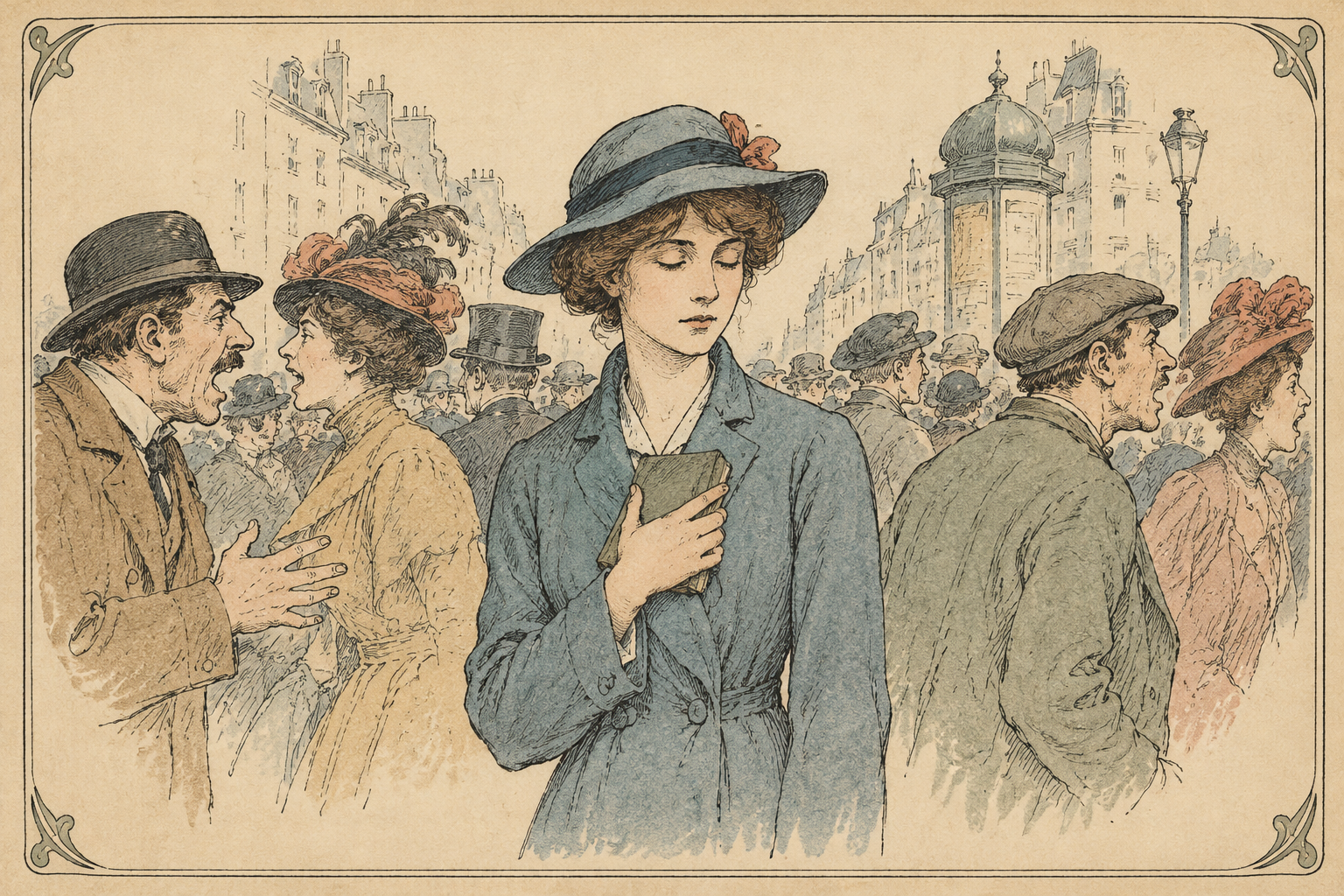
There is a particular kind of exhaustion that comes from living inside an argument that never ends. Opinions arrive faster than we can weigh them. Feelings get treated as facts, facts get treated as optional, and somewhere underneath it all sits a question most of us are too tired to ask out loud about whether any of it means anything. Into that fog, long before social media and cable news, a writer sat down and opened his account of a Judean villager with five words so dense that theologians are still working through their implications.
"In the beginning was the Word."
Why Every Generation Asks the Same Question
Strip away the particulars of any era and you find the same ache underneath. Can someone outside the priesthood, outside the bloodline, outside the inner circle, belong to God? Ancient Israelites asked it in the shadow of a Temple they could not all enter equally. Greek philosophers asked it too, through centuries of speculation about the Logos, the reason or order behind the universe. They wondered whether that reason could ever be known personally, rather than merely observed from a distance. Today we ask it through therapy, through spirituality sections in bookstores, through the quiet suspicion that religious belonging has always been reserved for people more disciplined, more devout, or more connected than we are. The question has not changed. Only the accents have.
Familiarity as a Kind of Hiding Place
Here is the oddity. The passage most capable of answering that question has become, for many readers, the passage least capable of surprising them. John's prologue gets read at Christmas services, printed on devotional calendars, and quoted in isolation so often that its sentences have calcified into religious wallpaper. We hear "the Word became flesh and dwelt among us" and feel a warm, vague sentiment rather than the force of an argument. That is a loss. The prologue was not written to be soothing. It was written to be load-bearing, holding up a claim about identity and belonging that the rest of the Gospel spends twenty chapters unpacking.
In the Beginning Was the Word: John 1:1 and the Identity of Elohim
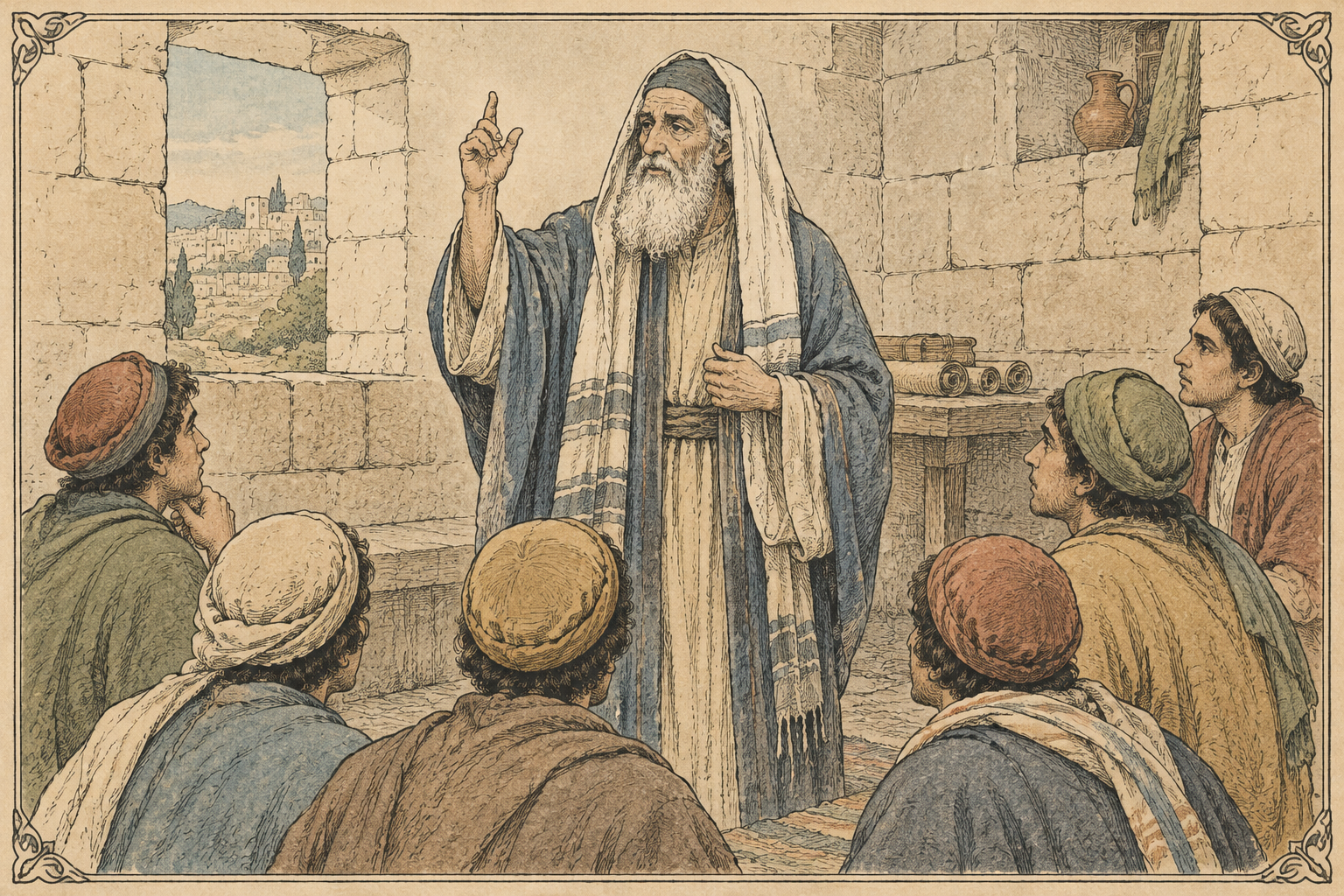
To recover the force of the claim, start where the text starts, and notice what it is doing before you even reach the content of the sentence.
Echoing Genesis on Purpose
"In the beginning was the Word, and the Word was with God, and the Word was God." No reader steeped in the Hebrew Scriptures could hear that opening line without the bells of Genesis 1 ringing somewhere in the background. "In the beginning, Elohim created the heavens and the earth." The echo is not accidental. John is writing a second account of beginnings, pointing to what follows as a new creation, centered this time not on light separated from darkness but on a person who is himself the light. The climax of Genesis 1 is the forming of humanity in the divine image. The climax of John's prologue, reached a few verses later, is the Word becoming fully human. John is not borrowing Genesis language for poetic flourish. He is telling you that the story which began in a garden is being resumed, and this time it will not stall.
Logos: A Word Judeans and Greeks Both Recognized
The term John chooses, Logos, translated "Word," was not a neutral pick. It carried weight in two distinct worlds at once. For Judean readers formed by the Hebrew Scriptures, the "word of the Lord (YHWH)" was the active, creative speech of God, the force by which the heavens were made ("by the word of the Lord the heavens were made," as the Psalmist put it) and the means by which the prophets received their message. Word was never a passive label in that world. It was power in motion. For Greek readers trained in philosophy, Logos meant something else: the rational principle holding the universe together, the structure beneath appearances that made the cosmos intelligible rather than chaotic. Thinkers across the Greek-speaking world had spent centuries trying to describe this ordering reason without ever claiming you could meet it. John takes both resonances, the Hebrew sense of divine speech and the Greek sense of cosmic reason, and fuses them into a single, audacious claim: this Word is not a force or a principle. He is a person. And you can know him.
A Claim Too Direct to Soften
It would be easy, reading this two thousand years later, to blur the sharp edge of what John wrote. He does not say the Word was godly, or god-like, or close to God in some diminished sense. He says the Word was with God and the Word was God. Two claims held together without apology: distinction (the Word was with Elohim, a real relationship, not a collapse into sameness) and identity (the Word was Elohim, not a separate being sent on God's behalf but God himself, fully present in one personal reality). There is no softer reading available here that still does justice to the Greek grammar or the rest of the Gospel's argument. John wants you to know, before you read another word, that whatever Jesus (YHWShA) does in the following chapters, he does as God manifest in flesh, not as a messenger standing in for someone else.
The Word Became Flesh: Grace, Truth, and the Tabernacle in John 1:14
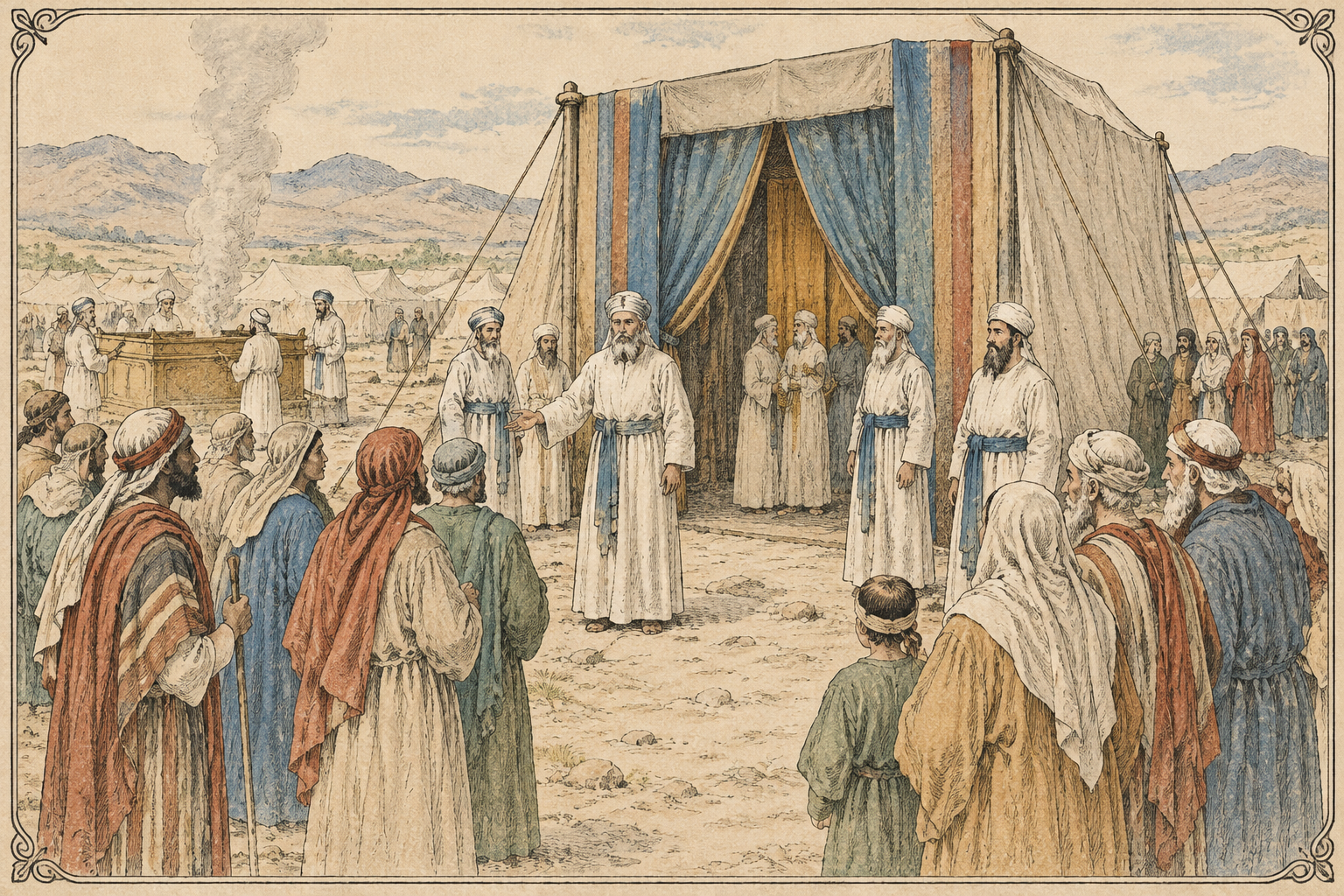
So far we have an exalted claim about identity. John 1:14 is where that claim gets its hands dirty.
Pitching a Tent Among Us
"And the Word became flesh and dwelt among us." The Greek verb behind "dwelt" is worth pausing over. It means, more precisely, to pitch a tent, to tabernacle. Any Judean reader would have felt the floor shift slightly under that word. In the wilderness, after the exodus from Egypt, God's presence did not simply hover somewhere distant. It came down and took up residence in a tent, the tabernacle, pitched in the middle of the camp, visible, located, specific. That tent was later replaced by the Jerusalem Temple, the place where heaven and earth were understood to overlap. John is telling you that the Word becoming flesh is not a metaphor borrowed loosely from religious vocabulary. It is a direct claim that the presence which once lived in a tent of skins now lives in a human body. The Temple did not disappear; it became a person. That is why, later in the same Gospel, when Jesus says "destroy this temple and I will raise it up in three days," his listeners assume he means the building in Jerusalem, and John has to clarify that "he was speaking of the temple of his body" (John 2:19-21). The pattern was set in chapter one, long before anyone in the story understood it.
Grace and Truth as a Person, Not a Procedure
John adds a second phrase worth sitting with. The Word became flesh "full of grace and truth." Under the old covenant system given through Moses, grace and truth, favor and faithfulness, were mediated through a system: sacrifices, priests, purification rites, careful boundaries around who could approach the holy place and under what conditions. None of that was arbitrary. It was how a holy God remained present to an imperfect people without consuming them. But a system, however wise, is not the same as a face. John is telling his readers that the entire architecture of approach to God has been reorganized around a person. You no longer need to navigate a procedure to find grace and truth. You need to meet him. That shift, from system to encounter, is the argument.
No Elite Required: Children of Yahuwah in John 1:12
This is where the prologue stops being an elegant theological statement and becomes something closer to an open door.
Receiving and Believing, Not Heritage
"But to all who received him, who believed in his name, he gave the right to become children of God," John writes. Read that sentence slowly, because it is doing something that would have sounded almost reckless to its first hearers. Receiving him and believing in his name are where the new birth begins, not a bloodline, not Temple access, not priestly descent, not a lifetime of ritual purity. But John himself tells us elsewhere what that reception looks like in practice: Jesus later breathes the Holy Spirit on his disciples, and the apostles who carried this gospel forward called people to repent, to be baptized in Jesus's name for the forgiveness of sins, and to receive the Holy Spirit, the mark of truly becoming a child of God. Believing is where the door opens; walking through it means answering that fuller call. In a world where religious standing was almost always inherited or earned through careful observance, this was not a minor adjustment to the rules. It was a different set of rules entirely.
Overturning the Old Boundaries
Consider what this claim would have sounded like against the backdrop of first-century Judean life, where access to the inner courts of the Temple was tiered by birth and status, where Gentiles stood behind a wall with warnings against crossing it on pain of death, where the priesthood itself was restricted to a single tribal line stretching back to Aaron. Into that world, carefully structured around who was in and who was out, John writes that the right to become a child of God was given to "as many as received him." Not the priestly caste. Not the circumcised alone. Not those with the correct genealogy carefully preserved in Temple records, but anyone who repents, believes, and is baptized into his name and his Spirit. Later in the Gospel, after the resurrection, this promise comes full circle. Jesus tells those who had received him that the Father is now, for the first time in the narrative, described as their Father too, not merely his own (John 20:17). The distance has closed. The family has opened. This is the hidden center of the whole prologue: not simply that God became human, extraordinary as that is, but that God became human in order to make ordinary people, with no credentials and no pedigree, actual members of his own family.
The Promise Behind the Prologue: Genesis 3:15 and the Serpent's Head
None of this emerges from nowhere. John is finishing an old story.
The Offspring of the Woman
Go back to the garden, to the moment after the man and woman have eaten the fruit they were told not to touch, and the serpent is cursed along with the ground. Among the consequences pronounced that day sits a strange, compressed promise, easy to read past and impossible to overstate: "I will put enmity between you and the woman, and between your offspring and her offspring; he shall bruise your head, and you shall bruise his heel." It is cryptic. It is also, on any honest reading, the first thread of hope stitched into a story that has gone badly wrong. A future offspring, born of the woman, will take a wound, but will crush the serpent's head in the process. Genesis 3:15 messianic prophecy readers across centuries have called this verse, and the label fits. It is a promise of enmity turned to eventual victory, planted in the ground before the man and woman are even sent out of the garden.
A Thread Pulled Through the Whole Story
That thread does not disappear. It runs through the entire biblical narrative, surfacing again and again under different names. Later writers understood the promised offspring to be bound up with a coming deliverer, a king, a servant who would be wounded yet ultimately triumph over the forces of chaos and death. By the time John sits down to write his Gospel, that ancient promise has had centuries to gather weight and expectation around it. When John opens his account with "in the beginning," he is not only echoing Genesis 1. He is placing his entire Gospel inside the long arc that began with Genesis 3:15, the serpent's head crushed by the offspring of Eve now presented as the climax toward which the whole story was moving. The Word becoming flesh is not a separate event bolted onto the Genesis narrative. It is that narrative reaching the moment Genesis itself predicted, the offspring finally arrived, the enmity finally resolved, the victory finally accomplished through wounding rather than despite it.
Why the Simplest Truths Are the Hardest to See
Here is what strikes me as most important about all of this. None of it is complicated.
Buried Under Speculation
The claims themselves are plain almost to the point of being austere. The Word was with God. The Word was God. The Word became flesh. Whoever receives him, repents, and is baptized into his name and Spirit becomes a child of God. A serpent's head will be crushed by a woman's offspring. These are not riddles requiring a theology degree to parse. A child could understand the shape of the claim even if the full weight takes a lifetime to absorb. And yet centuries of commentary, controversy, and competing systems have managed to bury that plainness under enough speculation that modern readers often approach John 1 assuming it must be more complicated than it looks. Surely there is a catch. Surely becoming a child of God requires more than receiving and believing. Surely the invitation has fine print somewhere. The truth is simpler and harder at once: receive him, turn from sin, be baptized in his name, and receive his Spirit.
Recovering Plain Sight
Of course one can study the Greek grammar of Logos for years, trace the echoes of Genesis through every layer of the prologue, and map the theological debates that have accompanied this text since the early centuries of the faith. That work has value, and this article has done some of it. But what you cannot do, not if you want to remain faithful to what John wrote, is let that study replace the plain claim sitting at the center of the page. The Word became flesh. He lived among ordinary people, full of grace and truth. And to everyone who receives him, believing in his name, repenting, and being baptized in water and Spirit, he gives the right to become a child of God, no elite credentials required. That is the whole argument, carried from a garden in Genesis to a villager's prologue, and it was never meant to stay complicated.
Perhaps that is exactly why it is so easy to miss. We expect the deepest truths to come wrapped in difficulty, guarded by experts, available only after sufficient study or sufficient worthiness. John 1 refuses that expectation at every turn. The Word became flesh to open a door that ordinary people could walk through, not to found another system of gatekeepers. The invitation stands exactly where John left it two thousand years ago: receive him, believe in his name, repent, be baptized in his name, and let his Spirit make you new. The right to belong to God's own family is held out to anyone willing to walk all the way through that door.