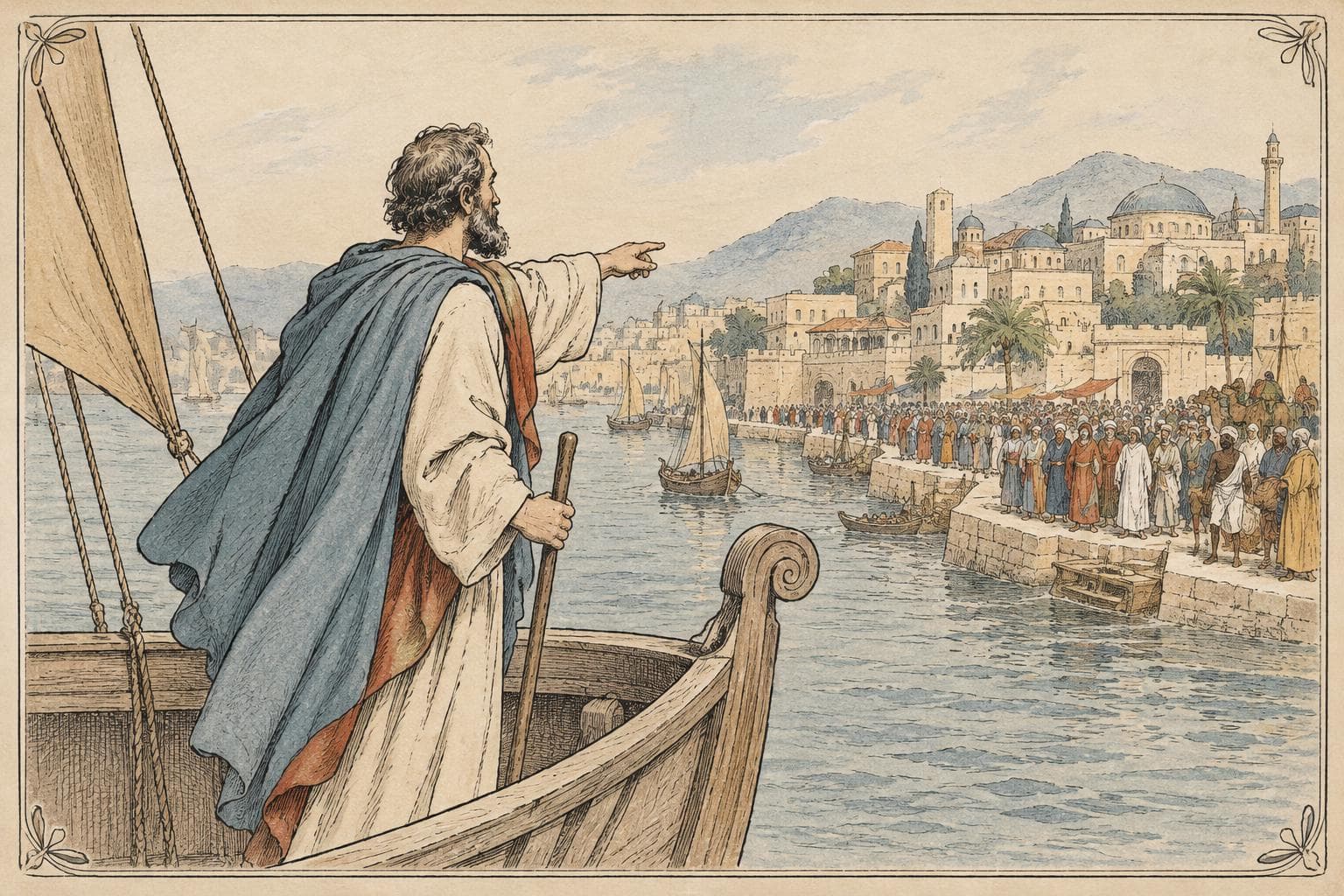
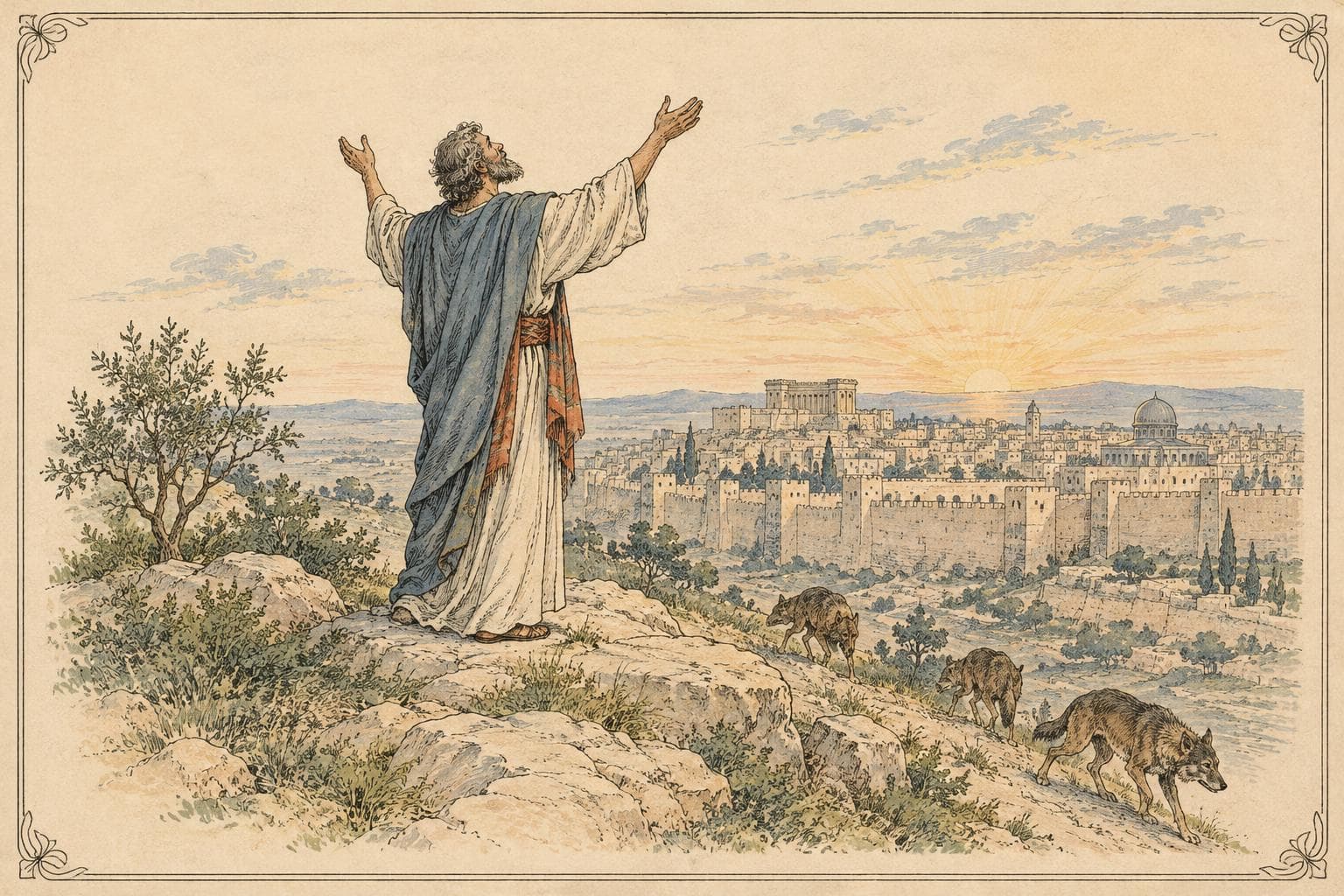
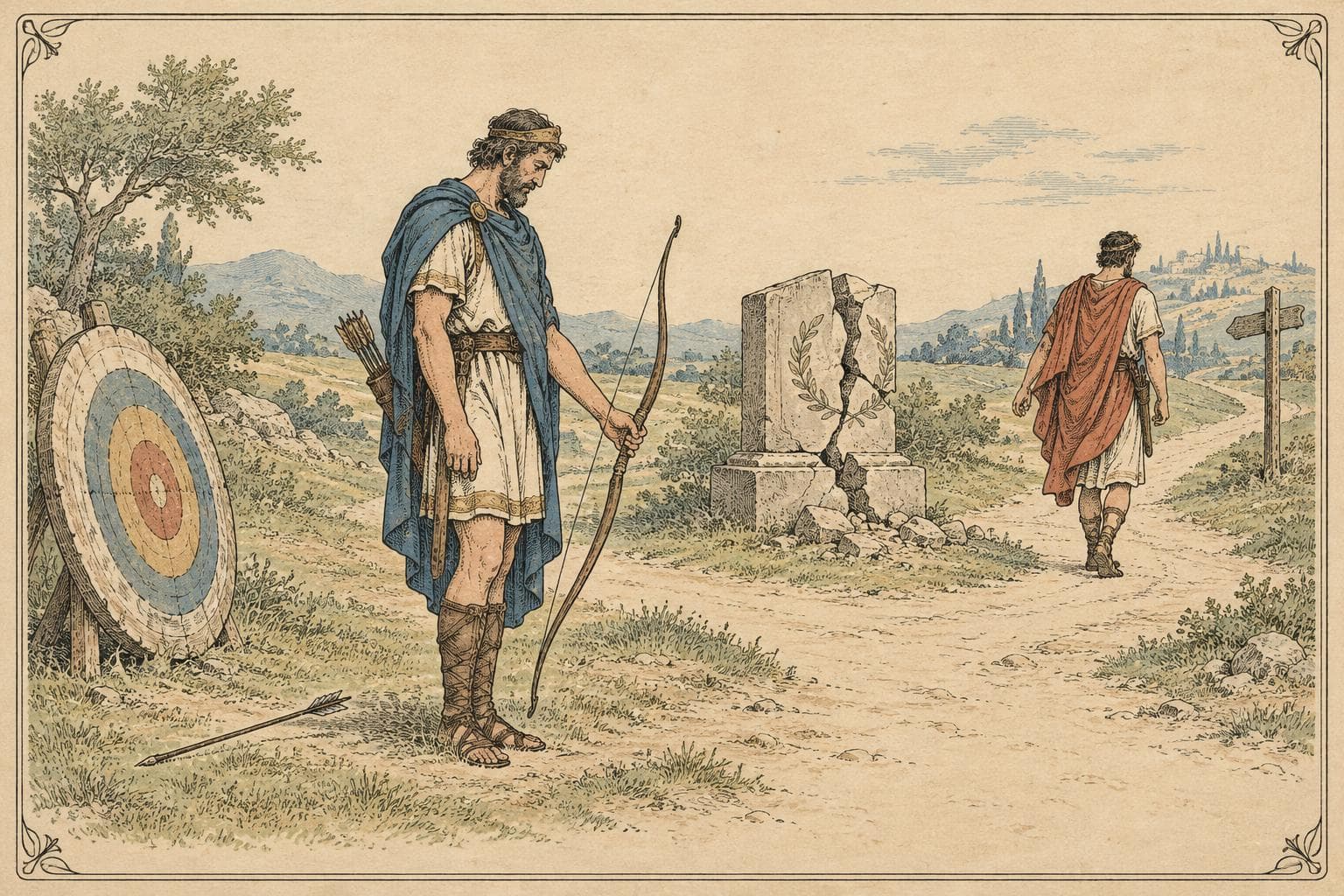
Most of us read John's prologue the way we walk past a cathedral window from the far side of the street. We admire the colors. We note the craftsmanship. We rarely step inside and let the light fall on us. For centuries this opening of John's Gospel has been mined for Christmas sermons and doctrinal footnotes, treated as a philosophical puzzle about Greek metaphysics rather than what it is: a searchlight pointed directly at a world the author believed was genuinely, dangerously dark.
Here is the claim in a single sentence, because it deserves to be stated plainly before we walk through it slowly. The world, in John's telling, is a dark and blinding prison for the human soul, but the Word, who is the Alef-Tav, who was with God (Alohim) and was God, is the eternal light that exposes that darkness, and only those who repent, receive him, believe in his name, Yahushua, are baptized in that name, and are born again of water and the Spirit are reborn as children of Alohim and set free from the world's bondage.
So let's walk through it, in the order the text itself gives it to us.
The World as a Darkened Prison: Reading John 1 as Cosmic Diagnosis
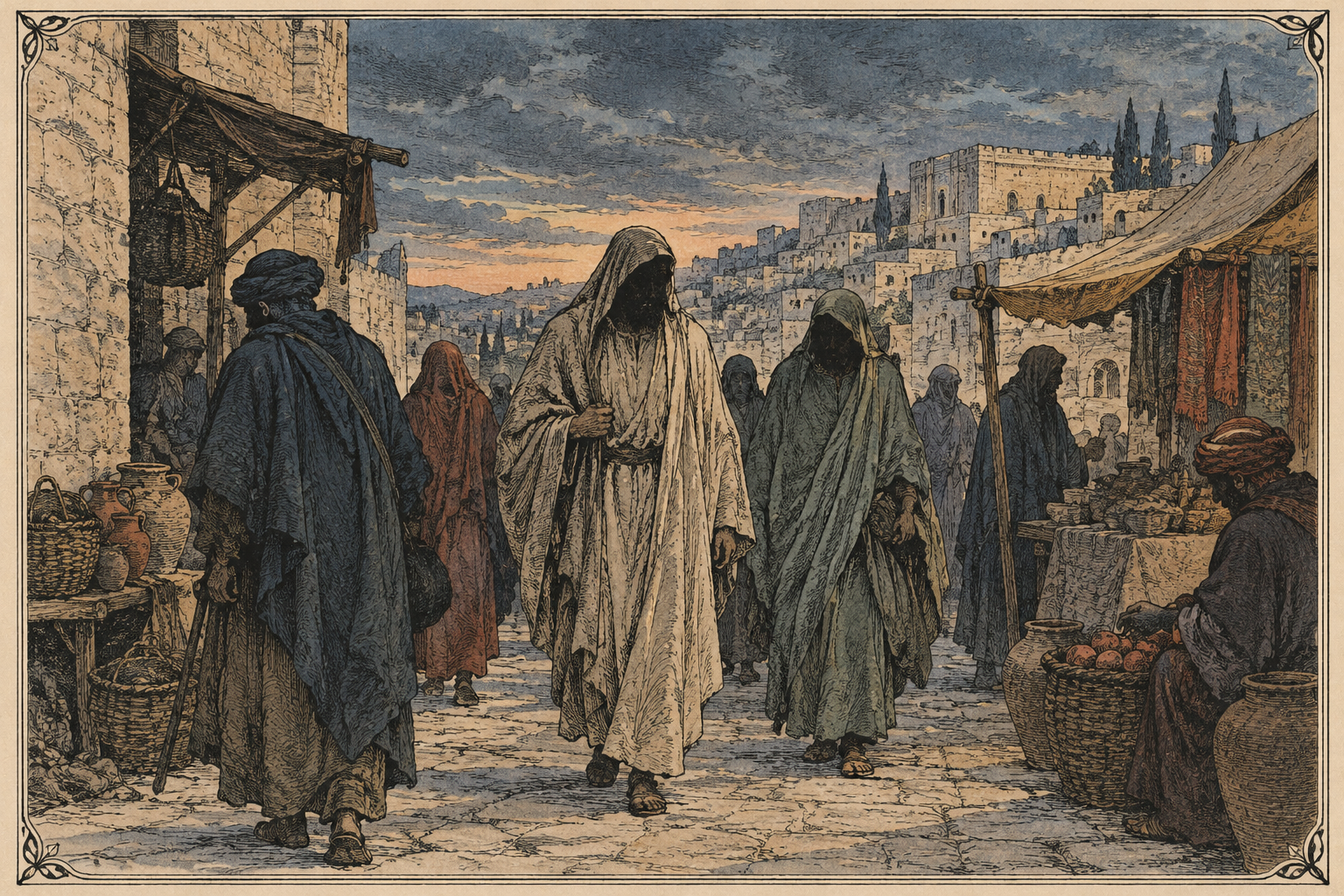
John does not open his Gospel with a travel brochure for a planet that merely needs some tidying up. He opens it with a diagnosis. The world, as he describes it, is not a neutral stage on which good and bad choices happen to occur. It is a system, a structure, something with its own logic and its own ruler, and that ruler is not God.
This is not a popular way to read the text, and understandably so. Most readers come to John's Gospel looking for comfort, for warmth, for the Jesus (YHWShA) who welcomes children and multiplies loaves. They are not looking for a cosmic indictment. And the Gospel does give comfort, eventually, but it refuses to hand it out before first telling you where you are. The light shines in darkness. That only means something if the darkness is real.
The Greek Kosmos and Its Hidden Meaning
The word John uses, kosmos, did not mean to his first readers what "world" tends to mean to us. We hear "world" and think of a globe spinning in space, populated by billable souls awaiting evangelism statistics. The Greek kosmos carried a different weight. It meant an ordered system, an arrangement, something structured and functioning according to its own internal rules.
That is precisely the point. John is not describing scattered individuals making isolated bad choices. He is describing a system, with its own gravity, its own incentives, its own blindness built into its architecture. Later in the Gospel, Jesus will speak of "the world's ruler" being judged and driven out (John 12:31), language that only makes sense if the kosmos has an actual governing power behind it, a dark and largely unnamed force of anti-creation standing behind the world's injustice and its idols. Humans worship something, John assumes, and when they worship the wrong thing, that something takes on a life and a grip of its own.
This is why the Gospel's harder sayings, the ones about judgment, about the world hating the light, tend to get skipped by readers hunting only for comfort. They are not comfortable. They were never meant to be. They are diagnostic, and a diagnosis you dislike is not thereby a diagnosis that is false.
Darkness as Active Force, Not Passive Absence
We tend to think of darkness as the simple absence of light, nothing more sinister than an unlit room. John does not let us off that easily. In his prologue, darkness does something. It opposes. It fails to comprehend. It resists comprehension even when confronted directly.
This matters because it changes what kind of problem we are dealing with. If darkness is merely the absence of light, the solution is simple: add light, problem solved, no resistance expected. But John describes a darkness that pushes back, a blindness that is not merely unfortunate but active, almost willful. The prison is not simply unlit. It has bars, and something is holding the door shut from the inside as much as the outside.
That is the world as John's prologue diagnoses it. Genuinely dark, and genuinely blind to its own condition, not neutral and not merely unfinished. This is the problem the rest of the Gospel exists to solve.
Before Genesis Began: The Word as Alef-Tav and Eternal Reality
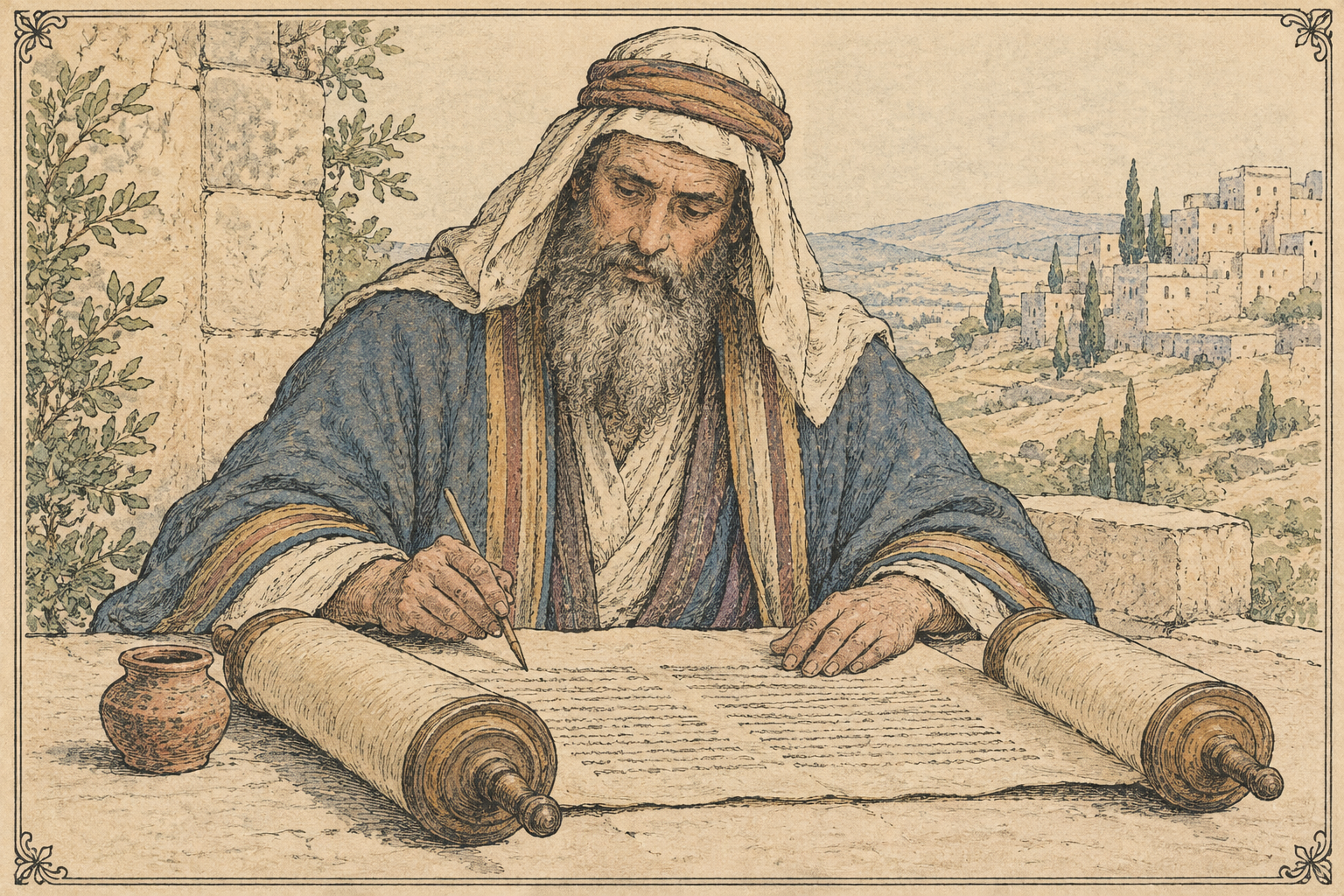
Having described the darkness, John immediately does something audacious. He reaches back before the darkness, before the world, before anything at all, and tells us that someone was already there.
"In the Beginning" as a Second Genesis
"In the beginning was the Word." Any reader of the Hebrew Scriptures in the first century would have heard the echo instantly, because it is not subtle. Genesis opens the same way: "In the beginning, God created the heavens and the earth." John is not borrowing a phrase by accident. He is writing a second Genesis, a deliberate re-telling of creation's opening line, except this time the focus falls not on the act of creating but on the one through whom the creating happened.
This is a bold literary move and an even bolder theological one. John is saying, in effect: everything you thought you knew about the beginning of all things needs to be reread through this Word. The climax of Genesis 1 is the creation of humanity in the image of the creator. The climax of John's prologue will be this same Word taking on full humanity, becoming flesh, becoming, in a sense, the true image-bearer the opening chapters of Genesis anticipated all along. John is not writing commentary on Genesis. He is writing its sequel, and insisting it was there from the first sentence.
Alef and Tav: Hebrew Bookends as a Claim of Totality
There is a detail in the Hebrew imagination worth sitting with here, even though English translations necessarily flatten it. Alef and Tav are the first and last letters of the Hebrew alphabet, bookends to the whole of Hebrew speech and writing. In Judean thought, invoking the first and last of anything was a way of claiming totality, the whole range from beginning to end with nothing left outside it.
When the Word is identified with the Alef and the Tav, with being first and last, the claim being made, on one reading of the text, is a claim of totality and sovereign reach. Nothing exists outside the Word's domain. No alternative explanation of reality, no competing source of light, no rival claimant to the beginning and the end, stands outside his jurisdiction. This is not one option among several spiritual paths. It is the claim that every other path is, at best, a shadow cast by something it cannot fully see.
This is also why the prologue insists the Word "was with God and was God." The fullness of the Godhead itself was present before anything else existed, now about to step into the darkness it diagnosed. This is not a doctrine for debate club. It is the ground on which everything else in the Gospel stands.
Life, Light, and the Logos: What Came Into Being Through the Word
"Through him all things were made, and without him nothing was made that has been made. In him was life, and that life was the light of mankind." Two short sentences, and an entire cosmology packed into them.
The Greek Logos Behind "the Word"
The term behind "the Word" is logos, and any educated reader in the ancient Mediterranean world would have heard layers of meaning in it. The Stoics used logos to describe the rational principle holding the universe together, the invisible order behind visible things. Platonists had their own uses for the term, pointing toward an ideal world standing behind the shadows of ordinary experience.
John knew this. He was writing into a world saturated with these ideas, and he was not naive about the resonance his word choice would create. But the larger context of his prologue insists that the primary meaning is not Greek philosophy. It is Hebrew. The logos John describes does not sit apart from creation as an abstract organizing principle. He speaks, he acts, he becomes flesh, he tabernacles among us. This is not Stoic cosmology dressed in new language. It is Hebrew narrative, drawing on Genesis, Exodus, the Psalms, and Yashayahu, using a term his Greek-speaking readers would recognize while filling it with content those same readers had never encountered before.
Psalm 33, Wisdom Literature, and the Word That Speaks Creation Into Being
The Hebrew Scriptures already knew a Word that creates. "By the word of the Lord (YHWH) the heavens were made, and by the breath of his mouth all their host" (Psalm 33:6). Genesis 1 itself unfolds as a series of divine speech-acts: God speaks, and it is so. The wisdom literature of the Second Temple period went further still, personifying Wisdom as present with God at creation, delighting in the world's making, offering herself to those who would listen.
John takes this entire tradition and does something no wisdom writer had dared. Where Sirach, on at least one common reading, portrays Wisdom as something a human being could never fully grasp, John announces that this creative Word, this divine Wisdom, becomes fully human. The life that was in him, the same life by which all things were made, becomes the light of mankind precisely because life and light are not two separate gifts handed out by a distant deity. One flows directly from the other. To have access to the Word is to have access to life itself, and that life, wherever it touches a human being, shows up as light.
The Light Shines in the Darkness: Cosmic Conflict, Not Sentiment
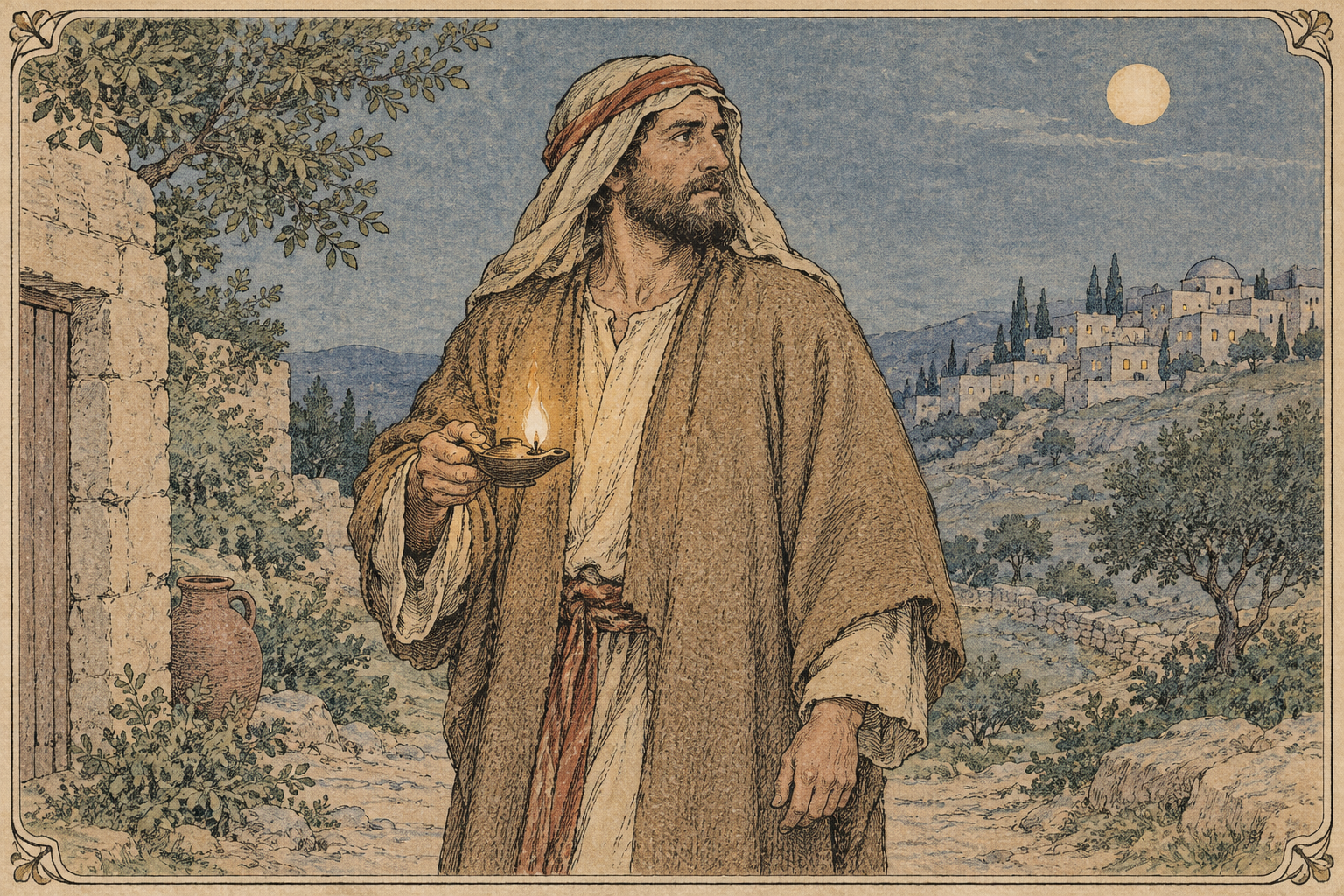
"The light shines in the darkness, and the darkness has not overcome it." This line gets quoted at funerals and printed on greeting cards, usually stripped of its teeth. Read in its own context, it is not a sentiment about hope in hard times. It is a declaration of war, and a declaration of who wins it.
Why the Darkness Cannot Comprehend the Light
The Greek verb behind "overcome" carries a double sense worth noticing, since it can mean both to defeat and to comprehend or grasp. The darkness cannot extinguish the light, and the darkness cannot understand the light either. Both senses are likely intended, and both matter. A prisoner who cannot comprehend the nature of his cell cannot find the door. A system built on blindness cannot process a light that exposes its own foundations as false.
This is the language of genuine conflict, two forces meeting and one proving unable to touch the other, not a gentle metaphor about mood lifting after a difficult season. The darkness tries. It will go on trying throughout the Gospel, culminating in a cross meant to extinguish the light permanently. And it fails, because the light was never the kind of thing darkness has the power to put out.
A Light That Exposes Rather Than Merely Illuminates
Throughout the rest of John's Gospel, light does not function as pleasant ambiance. It functions as exposure. "Everyone who does wicked things hates the light and does not come to the light, lest his works should be exposed" (John 3:20). In John, light functions forensically, showing what was hidden and forcing a response, because once something has been seen, pretending you have not seen it is itself a decision.
This is the point most domesticated readings of John 1 miss entirely. The prologue is describing an interrogation light, flipped on in a room full of people who have organized their entire lives around the dark staying exactly where it is.
Rejected by His Own: The Tragedy at the Heart of the Prologue
And here the prologue turns, abruptly and without softening the blow, to tragedy. "He was in the world, and the world was made through him, yet the world did not know him. He came to his own, and his own people did not receive him."
The World Did Not Know Him: Systemic Blindness or Willful Resistance?
Is this ignorance or hostility? John seems unwilling to choose. A kosmos organized around its own blindness will genuinely fail to recognize its maker when he arrives, in the same way eyes long accustomed to darkness will flinch and resist when a door is suddenly thrown open to sunlight. That flinch is not always conscious malice. But it is also not innocent. The world's not knowing him is the predictable fruit of a system that has spent its whole existence worshipping something other than its true source.
His Own People and the Question of Israel
The sting sharpens further. "He came to his own, and his own did not receive him." This is not a generic statement about humanity at large. It is specifically about Israel, the people chosen to carry the light of God into the world, the nation entrusted with the story the Word now walks into as its living fulfillment. The question of the creator and the kosmos becomes, in John's telling, the question of Yahushua and his own people. And it resolves with full paradox: the one who made the world, rejected at his own front door, by people who had spent centuries waiting for exactly this arrival and somehow failed to see it when it came.
This is the great irony sitting at the center of the prologue: the architect of a house rejected at his own front door, by people who had spent centuries waiting for exactly this arrival and somehow failed to see it when it came.
Born of Elohim: Receiving the Word and the Power to Become Children of God
And yet the prologue does not end in tragedy. It pivots, in the space of a single verse, from the darkest moment in the story to the most generous invitation in it. "But to all who did receive him, who believed in his name, he gave the right to become children of God, children born not of blood, nor of the will of the flesh, nor of the will of man, but born of God." John's own Gospel and the rest of the apostolic witness fill out what this receiving looks like in practice: repentance, baptism in the name of Yahushua for the forgiveness of sins, and the gift of the Holy Spirit, who marks a person as truly born again (Acts 2:38).
Not of Blood, Flesh, or Human Will
Notice the threefold denial here, because it is doing real work. Not of blood, meaning this new identity cannot be inherited through ancestry or ethnic lineage, however privileged. Not of the will of the flesh, meaning it cannot be achieved through human effort, religious performance, or sheer willpower. Not of the will of man, meaning it cannot be granted by another human authority, however formidable, however religious its vestments.
What is left standing is something that originates entirely outside these systems. To be born of God is to receive an identity that no human structure, bloodline, institution, or willpower can manufacture or revoke. This is the moment the whole prologue has been building toward: not merely information about who the Word is, but the offer of a completely new kind of existence to anyone who will repent, believe, and be baptized in his name. Later in the Gospel, after the resurrection, Yahushua will tell Mary Magdalene to go to "my brothers" and tell them he is ascending to "my Father and your Father, my God and your God" (John 20:17), the first time in the Gospel the creator is named their father too. The children have arrived. The adoption, promised in the prologue, has been finalized in the empty tomb.
The Word Became Flesh: Incarnation as Costly Entry Into Darkness
"And the Word became flesh and dwelt among us." This line, so familiar it risks becoming furniture, describes something staggering when weighed. The Word who was with Alohim, who was Alohim, entered the darkness the prologue had finished diagnosing. He came not as a tourist, not as an observer assessing the damage from a safe distance, but as flesh, as a human body capable of hunger, exhaustion, betrayal, and death.
This is costly in a way that mere visitation never is. He tabernacled among us, the Gospel says, deliberately invoking the tent of meeting from the Exodus narrative, the place where the glory of the Lord came to dwell among a people still covered in the dust of slavery. The Word's entry into flesh is not incidental to the mission. It is the mission. Only by entering the darkness fully could the light confront it where it lived, exposing its lies from the inside and offering, to anyone willing to receive him, freedom, life, and the truth the darkness had always worked so hard to hide.
This is what the prologue has been driving toward from its first line. Not an abstract doctrine to be affirmed from a safe theological distance, but a person to be received, a name to be believed, a cell door standing open in a prison most of its inmates have long since stopped noticing they are in.
The choice the prologue places in front of its reader has not changed in two thousand years. Stay in the dark, where the eyes have adjusted and the bars feel almost comfortable, or step toward a light that refuses every attempt made to put it out. Repent, receive the Word, trust his name, Yahushua, be baptized in that name, and receive the Spirit he gives, so that you are reborn as a child of Alohim, free of the blood, the flesh, and the human will that could never get you there on their own. Or remain where you are, telling yourself the darkness was never a prison at all. John does not force the choice. He simply makes sure, by the end of a single short prologue, that you can no longer pretend you were never shown the door. The light has come into the world. What comes next is yours to decide.