There is a strange thing happening in modern religious culture. People will cheerfully sing about the resurrection of Yahushua on a Sunday morning and then live the rest of the week as though it never happened. The empty tomb gets filed away as a comforting legend, a nice story about going to heaven when we die, rather than what the earliest witnesses claimed. They said a dead man got up, walked out of his grave with a transformed body, and in doing so started something that has not stopped moving since.
That gap, between what the first believers said happened and what modern believers often assume it means, is where this whole argument lives. The historical evidence for the resurrection of Yahushua points somewhere far more demanding than a private afterlife ticket. It points to a launch date. Something began on that morning outside Jerusalem that the Apostle Paul would later call "firstfruits," borrowing language every Judean farmer understood in his bones. What follows traces that claim through its historical grounding, its scriptural roots, and its unavoidable demand on anyone who takes it seriously.
The Empty Tomb and the Death of the Legend Theory
What "Resurrection" Meant to a First-Century Judean
Start with the word itself, because modern ears hear it wrong almost every time. When people today say someone "lives on in our hearts" or has "gone to a better place," they are using the soft, vague language of sentiment. No first-century Judean would have used the word "resurrection" that way. In the Second Temple period, the centuries when Judean religious life centered on the rebuilt Jerusalem Temple, the term had a fixed and physical meaning: the body that died would be given new bodily life at the end of the age, when God (Alohim) set the world right. This was not a metaphor for survival of the soul. The Pharisees who debated it with the Sadducees were not arguing about feelings. They were arguing about bodies, graves, and a future day when the dead would stand up again on a renewed earth.
So when the first witnesses said Yahushua had been raised, a Judean audience understood exactly what was and was not being claimed. They were not describing a ghost. They were not describing a beautiful memory. They were saying something had happened that Second Temple Judaism expected only at the end of history, and it had happened early, to one man, in the middle of time. The claim was not vague. It was precise, and precisely physical.
The Tomb, the Guards, and the Missing Corpse
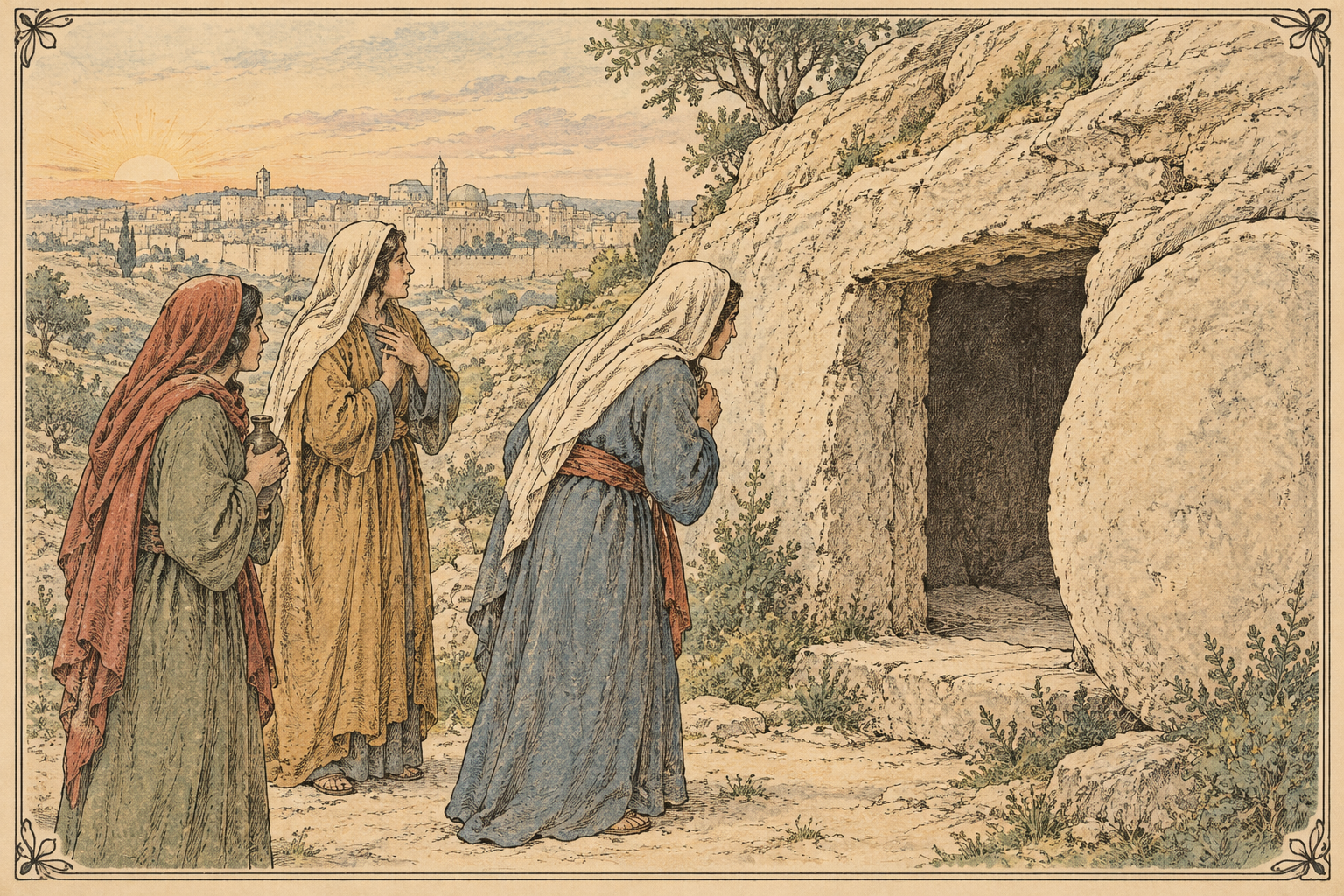
The empty tomb tradition is a location claim, not a soft detail tacked onto the story for atmosphere. Jerusalem in the first century was not a sprawling, anonymous city where a grave could vanish into rumor. It was a small, tightly networked town where people knew whose tomb belonged to whom. The Gospels report that the tomb used for Yahushua belonged to a named, identifiable man, Joseph of Arimathea, a member of the Judean council. That is not the kind of detail legend-makers invent. You do not fabricate a story and then attach it to a real address with a real owner that anyone in the city could walk over and check.
And people did check. The hostile authorities had every incentive to produce a body if one existed. A body would have ended the movement before it began. Instead, the earliest polemic, or argued attack, against the resurrection, preserved even in Matthew's Gospel, was not "there was no empty tomb" but "the disciples stole the body." Notice what that argument concedes. It concedes the tomb was empty. The debate was never over whether the grave was vacant, but over how it got that way. A legend grown slowly over decades, far from the scene, might survive without a corpse to deal with. A claim made within weeks, in the city where the man had been publicly executed, could not.
A Body That Ate Fish: The Transformed, Not Discarded, Corpse
Here is where the evidence gets strange in a way no one would have invented on purpose. The risen Yahushua is not described as a ghost. He eats fish on a beach with his friends. He invites Thomas to put a hand in his wounds. He walks miles on the road to Emmaus and sits down to break bread. These are not the details of a vision or a hallucination. Grief produces dreams and feelings of presence. It does not produce a man who cooks breakfast.
But neither is this simply a resuscitated corpse, a man brought back to the same mortal life he had before, like Lazarus, who would need to die again someday. The risen body also appears in locked rooms and is, at times, not immediately recognized by close friends. Something has changed. The body is unmistakably physical and yet is no longer bound by the old limits of decay and death. This is the oddity the earliest Christians kept insisting on, against every philosophical current of their day that would have made the story easier to tell as a spiritual survival. They had the vocabulary available to describe a disembodied soul going to paradise. They chose not to use it. That choice is itself evidence.
Heaven and Harps Versus Elohim's Renovation Project
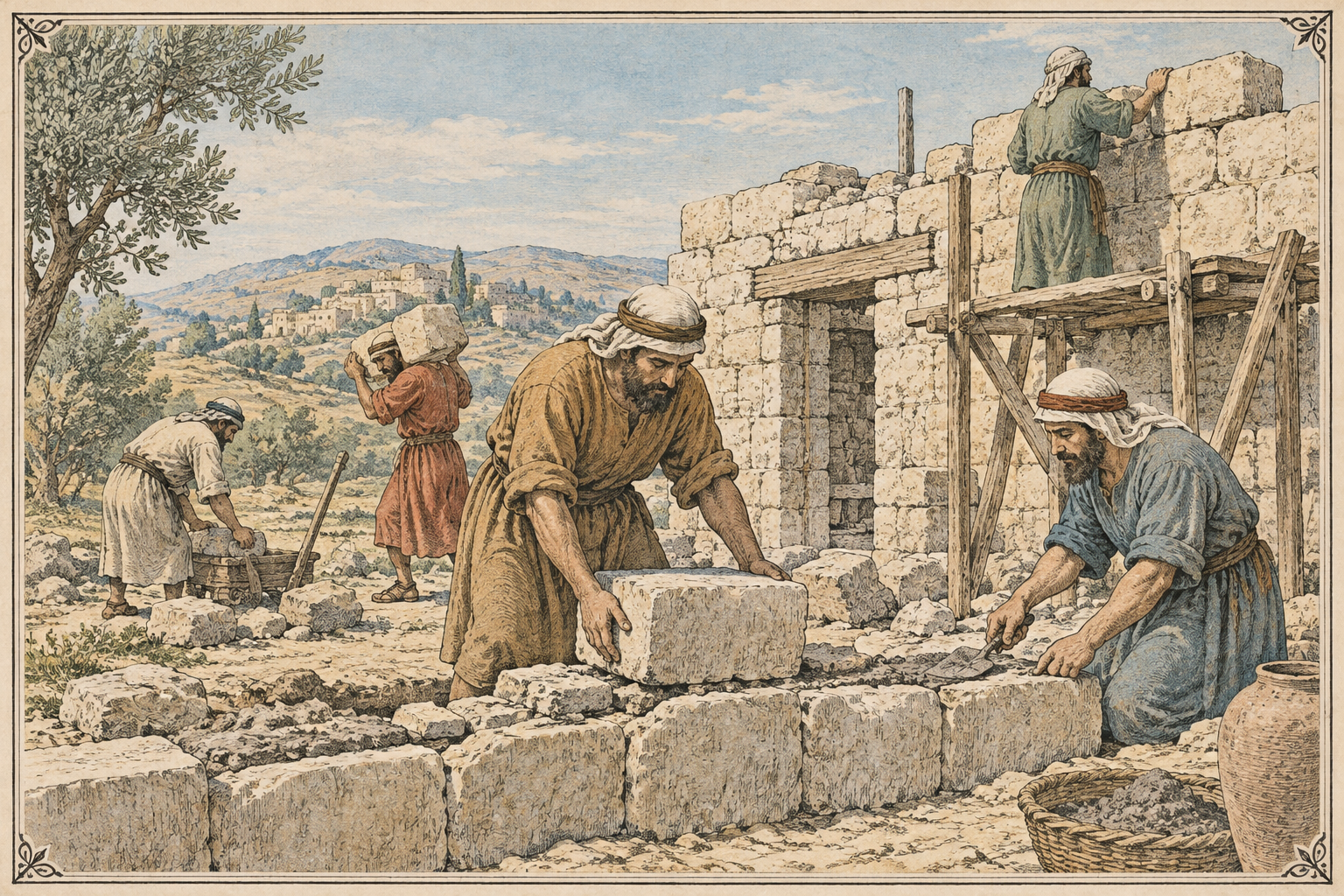
The Old Misreading: Souls Flown Away to Paradise
Here is the problem with so much popular theology. It has quietly swapped the biblical hope for a different one borrowed from Greek philosophy, and most believers never notice the substitution happened. The popular version goes like this: we are immortal souls trapped in bodies, this world is a temporary testing ground, and death is the moment our true self escapes to a disembodied heaven where we will float, play harps, and finally be free of matter altogether. It is a tidy picture. It has shaped hymns, funeral sermons, and a thousand well-meaning greeting cards.
That picture is not what the resurrection of Yahushua was ever claimed to accomplish. If the goal of salvation were escape from a physical world into a spiritual heaven, then raising a body from a tomb makes no sense as the inaugurating, or founding, event. Why give Yahushua back his body at all, if bodies are the problem to be solved? The empty tomb stands as evidence against an escape plan, not for one.
New Creation as Heaven and Earth Joined, Not Earth Abandoned
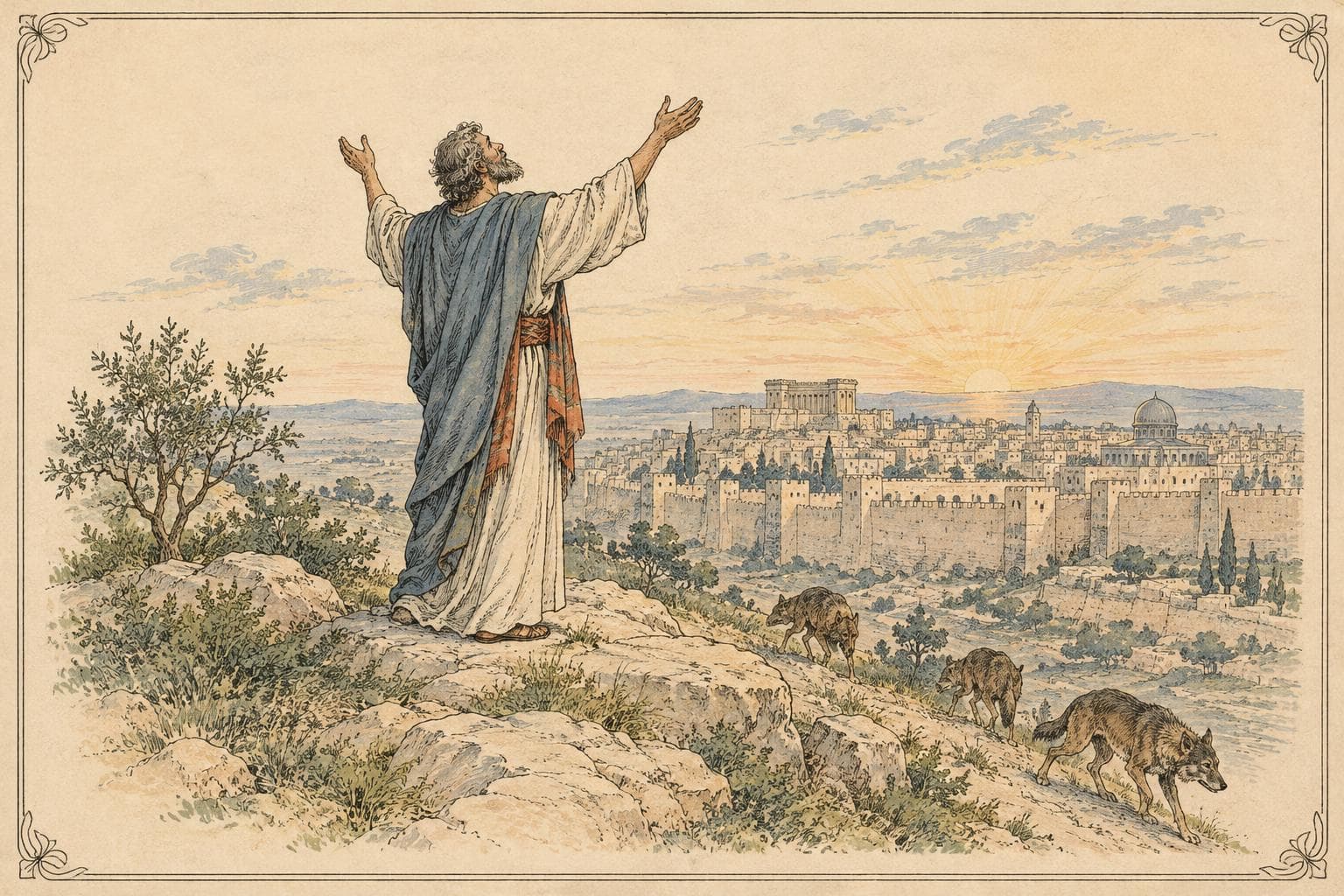
The biblical story, read on its own terms, tells something far more ambitious. The prophet Isaiah speaks of new heavens and a new earth, a renewed creation where the wolf lies down with the lamb and children do not die in infancy. That is not a description of souls evacuating earth for heaven. It is a description of heaven and earth coming together, the way they were meant to from the beginning of Genesis. The whole biblical narrative moves in one direction, from the garden to the closing vision of Revelation. There a new Jerusalem comes down out of heaven to earth, rather than the redeemed being taken up and away. Heaven and earth were never meant to be separated forever. They were meant to be joined.
This is why Paul, writing to the Colossians, holds creation and redemption together so tightly. Redemption is not an upgrade on the old creation, and it is not a rescue of spirits out of matter. It is the reconciliation of everything, visible and invisible, through the one who made it in the first place. The resurrection of Yahushua is the first renovation completed inside a house slated for full restoration, not a side door out of the building. And that, finally, is the point: new creation, not evacuation.
Firstfruits: Paul's Farming Metaphor and What It Promises
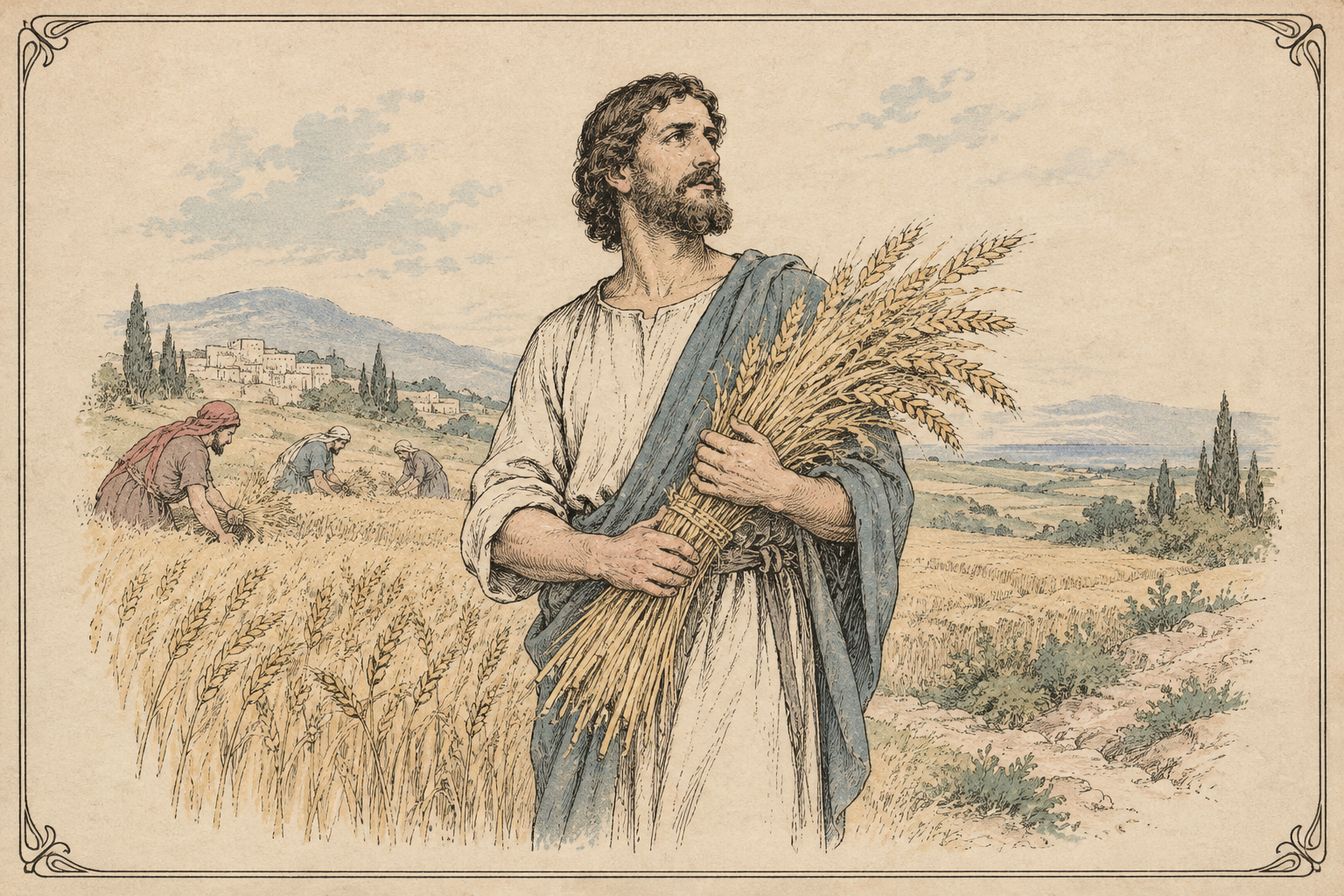
The Harvest Festival Background of "Firstfruits"
The Apostle Paul, writing to the believers in Corinth, reaches for a term that would have meant nothing abstract to his readers. He calls the risen Yahushua "firstfruits" of those who have died (1 Corinthians 15:20). This was not poetic flourish. It was a precise agricultural and liturgical reference, rooted in Judean festival practice.
At Passover, worshippers brought the first cut sheaf of the barley harvest to the Temple as an offering to the Lord (YHWH). That single sheaf was not the whole harvest. It was a sample, a down payment, a guarantee. Everyone who brought it knew the rest of the field was still standing, still ripening, still coming. Seven weeks later, at Pentecost, the firstfruits of the wheat harvest were offered in the same spirit. The offering said, in effect: this is only the beginning, and the full crop is certain to follow.
Yahushua as the Guarantee, Not the Exception
Paul takes that entire festival logic and applies it to the resurrection. Yahushua is not a strange, isolated miracle unrelated to anyone else's fate. He is the first sheaf. His resurrection guarantees, the way firstfruits always guaranteed, that a full harvest of resurrected bodies is still coming for everyone who belongs to him. This is the heart of the longest, densest chapter Paul ever wrote, 1 Corinthians 15, where he works through the logic with relentless care. If Yahushua was not raised, he says, the whole Christian claim collapses into pity and futility. But since he was raised, "firstfruits" is not an isolated event. It is the opening act of a harvest already underway.
This is a strikingly different picture than the one most believers carry around. It means the resurrection is not a private miracle performed on one man two thousand years ago, interesting but ultimately disconnected from the rest of us. His resurrection is the pattern, the proof, and the promise of what is coming for everyone joined to him. The empty tomb was never meant to sit alone in history as a curiosity. It was meant to be read as the first stalk in a field already planted.
Grudging Witnesses: Tacitus, Josephus, and the Historical Record
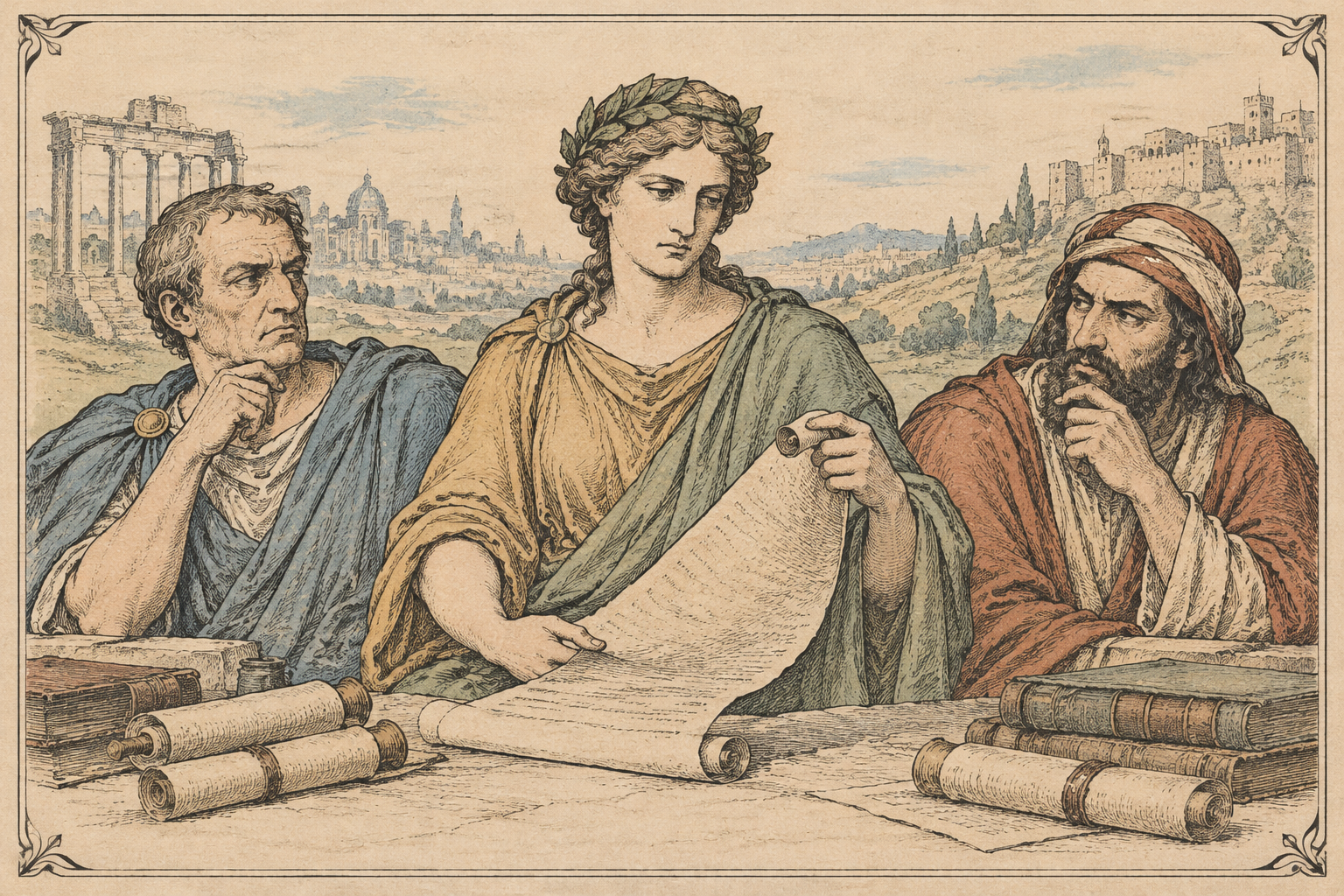
Tacitus and the "Mischievous Superstition" in Rome
Skeptics are right to ask for evidence outside the New Testament, and it exists, from writers who had no interest in helping the Christian cause along. The Roman historian Tacitus, writing his Annals around AD 116-117, describes the great fire of Rome under Nero and Nero's attempt to blame the Christians for it. In doing so, Tacitus explains who these Christians were, tracing their name back to "Christus, who suffered the extreme penalty during the reign of Tiberius at the hands of one of our procurators, Pontius Pilatus." He calls the movement a "mischievous superstition," and notes with evident irritation that despite the founder's execution, the movement had not died out but had broken out again, not only in Judea but in Rome itself.
Tacitus had no sympathy for Christians. He wrote with the contempt of a Roman aristocrat for what he regarded as a foreign superstition spreading through the empire's capital. And yet his account confirms, from a hostile outside source, the basic historical skeleton the Gospels report: a man named Christ was executed under Pontius Pilate, and the movement bearing his name not only survived the execution but spread. A grudging witness is still a witness.
Josephus and the Judean Chronicle of a Crucified Teacher
The Judean historian Josephus, writing toward the end of the first century, offers an even more direct reference. In his Antiquities of the Judeans, Josephus describes a man named Yahushua, a doer of startling deeds, who was condemned to the cross by Pontius Pilate on the accusation of the leading men among the Judeans. Scholars have long debated how much of the surviving text reflects later Christian editing, since some phrases read as more enthusiastically Christian than a non-believing Judean historian would likely have written on his own. That honest textual complication deserves acknowledgment rather than dismissal.
But even stripped to its most cautious, scholarly core, the passage preserves a striking detail. Josephus records that Yahushua's followers reported that he had appeared to them alive again on the third day, and that the tribe of Christians, named after him, had not disappeared. Here is a Judean chronicler, writing for a Roman audience, with no motive to promote the Christian movement, confirming the crucifixion under Pilate and the early, immediate claim of his followers that he was alive. Between Tacitus and Josephus, the core historical shape of the Christian claim, a real execution under a real governor followed by a real movement insisting on a real resurrection, stands confirmed by sources that had every reason to let the story quietly die if they could have.
From Cowards to Martyrs: The Apostles' Unexplained Courage
Fleeing the Garden, Denying by the Fire
Set alongside the documentary evidence a different kind of proof, the kind historians call psychological or behavioral evidence, and it is hard to explain away. The Gospels do not flatter the apostles. When Yahushua was arrested in the Garden of Gethsemane, his closest followers scattered. Peter, the boldest of the twelve, denied even knowing the man three times before a servant girl and a charcoal fire, cursing to make the denial convincing. These were not secret enemies writing hostile fiction about the apostles. These were the apostles' own communities, preserving and passing on an embarrassing story about their founders' cowardice. People do not typically invent humiliating details about their own leaders unless those details were too well known to leave out.
So the baseline is established beyond dispute. On the night of the arrest, the men who would become the pillars of the early church were frightened, confused, and unwilling to be associated with a condemned man. That is simply what ordinary human beings do when the one they followed is taken away to be executed. There is nothing unusual about it. It is what fear looks like.
Standing Before Courts and Executioners Without Recanting
What is unusual is what happened after. Within weeks, these same men were standing before the Judean council, the body that had arranged Yahushua's death, declaring publicly that he had been raised. Tradition and early church record consistently describe most of them eventually facing execution rather than recant that claim. Those who believed in the bodily resurrection were the ones burned, stoned, and thrown to lions in the centuries that followed, not those who had quietly spiritualized the claim into something safer and more private.
People will die for what they sincerely believe to be true. History is full of martyrs for sincere but mistaken convictions. What people do not typically do is die for what they know, firsthand, to be a fabrication they invented themselves. The apostles were not secondhand believers repeating a rumor. They claimed direct, physical, repeated encounters with the risen Yahushua. If they had made it up, they above all people would have known it was false, and fabricated stories rarely hold up under torture and the threat of death. Something happened between the fire in the courtyard and the courtroom before the council. The resurrection is the explanation the earliest witnesses gave, and no one has ever produced a better one.
Resurrection as Summons: Why the Empty Tomb Demands Labor, Not Mere Belief
"Your Labor Is Not in Vain": Paul's Surprising Conclusion
Now come to the pivot that most popular theology quietly skips. Paul has spent fifty-eight verses in 1 Corinthians 15 building the most detailed argument for bodily resurrection found anywhere in his letters. How might a reader expect him to close such a chapter? Perhaps with an invitation to relax, since the great hope is secure and the believer's job is simply to wait it out until heaven. That is not what he writes. He closes instead with this: "My beloved brothers and sisters, be steadfast, immovable, always abounding in the work of the Lord, knowing that in the Lord your labor is not in vain" (1 Corinthians 15:58).
That is the hinge the whole argument turns on. If resurrection were only a promise about personal survival after death, the logical response would be patience, not labor. You do not need to work for a gift that simply arrives when you die. But Paul does not say "wait." He says "work," and work hard, because the labor itself counts for something in light of the resurrection. That only makes sense if the resurrection has already started something that present effort can join and serve. The empty tomb is not a reason to sit back. It is a reason to roll up your sleeves.
Living as Colleagues in Elohim's Renewal Project
This is the shape kingdom labor, meaning the practical work of building Elohim's kingdom on earth, takes when it is understood correctly. If new creation has already begun, then everything done now to push back decay, injustice, sickness, and loneliness is not a distraction from the real spiritual business of saving souls for heaven. It is itself part of the ultimate purpose, because the goal was never escape from a physical world but the redemption of it.
Feeding the hungry, caring for the sick, building honest institutions, pursuing justice for the exploited: these are not nice things to do while waiting for the end. They are advance work on the same renovation project the resurrection of Yahushua inaugurated. This reframes the whole question of what faith requires. The real question facing every generation is not primarily which individuals Elohim intends to extract from a sinking world and carry off to heaven. It is how Elohim intends to redeem and renew his creation through human beings who become, in Paul's language, colleagues and partners in that larger work. That is a sobering reframing for anyone who has treated faith mainly as personal fire insurance. The resurrection asks for labor, not applause.
The Warning Beneath the Promise: Judgment and the Unexpected Day
None of this means the resurrection is only a cheerful call to community service, stripped of its sharper edges. The same hope that promises resurrection life to the righteous carries, throughout the New Testament, a sober warning attached to it. Yahushua himself spoke of a day of resurrection that would divide those who rise to life from those who rise to judgment, a day he said would come like a thief in the night, without advance warning for those who were not watching. The apostles who went to their deaths proclaiming the resurrection were proclaiming both halves of that message, the promise and the warning together, because they believed both were equally real.
That means the question posed by an empty tomb outside Jerusalem two thousand years ago is not a safely academic one. It is personal, and it is urgent. When the day of resurrection arrives, whenever and however it comes, will you be found among the righteous who rise to life, or among those who are not ready for what meets them? Eternity, on this account, does not politely wait for a convenient moment to introduce itself. The tomb was empty. The question left behind is not whether that is interesting history. It is what you intend to do about it before the day arrives.
If you want to keep working through these questions, BabelReport.com carries on teaching in this same vein, built for readers who want the evidence and its weight together, not sentimentality dressed up as faith. The resurrection of Yahushua was never offered as a comforting legend to file away for Sunday mornings. It was, and remains, a historical claim with a cosmic scope and a personal demand. The tomb is empty, the harvest has begun, and the invitation stands alongside the warning, with neither one waiting forever.