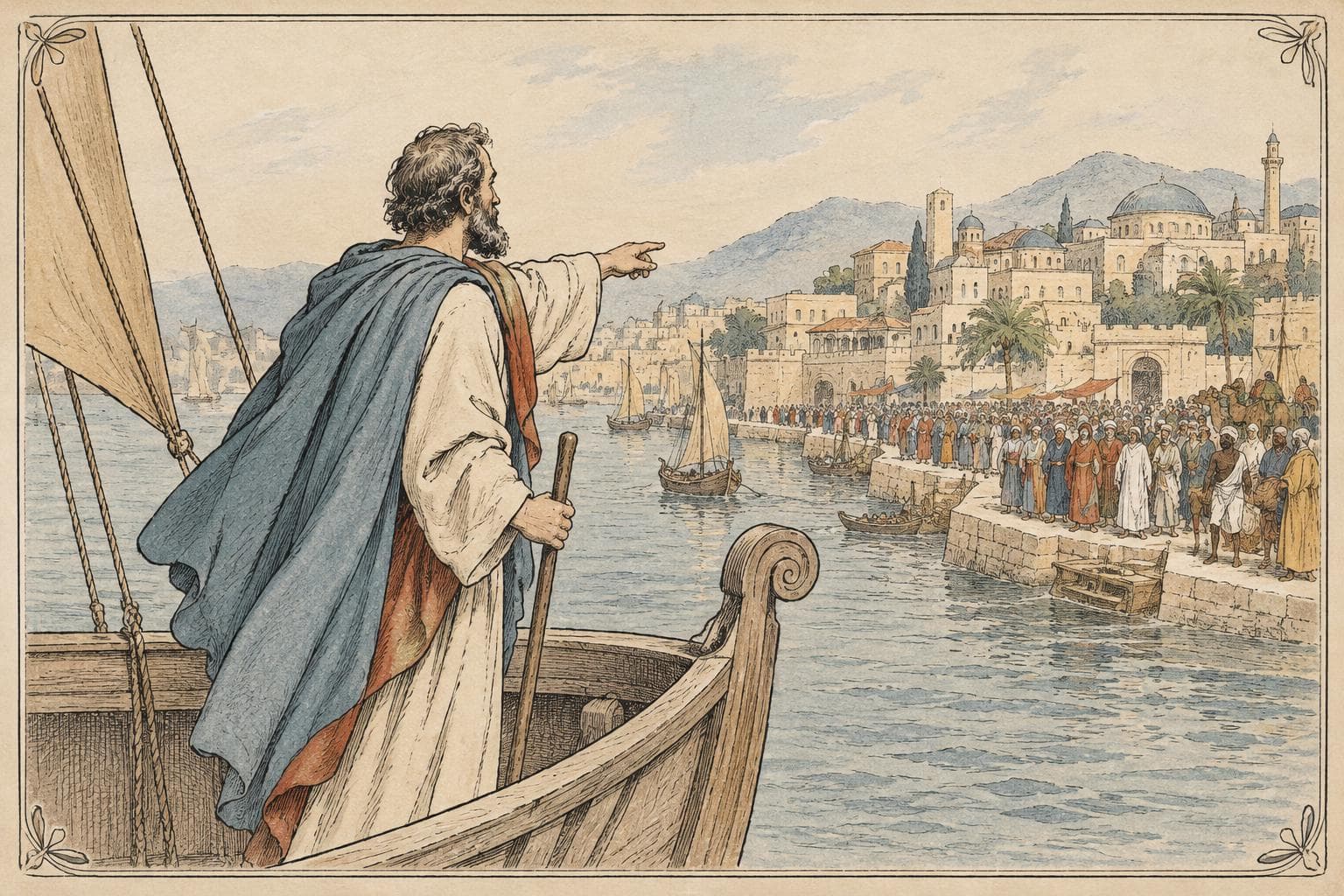
I boarded a train for London not long ago with a worn Bible open on my lap, the way one does when travel offers that rare gift of uninterrupted reading. Somewhere past the first few stops I found myself stopped cold at Matthew 11. Here was Yahushua, standing in the towns where he had healed the lame and driven out what the Gospels call unclean spirits, pronouncing a judgment so severe it still unsettles anyone who reads it with open eyes. Capernaum, his adopted home base in Galilee, receives a condemnation harsher than Sodom and Gomorrah, the two cities whose destruction became the ancient world's shorthand for divine wrath. That ought to stop us too.
A fishing town that never burned with fire and sulfur ends up worse off, on the Day of Judgment, than the cities Genesis remembers as the byword for wickedness itself. The Capernaum judgment Sodom and Gomorrah comparison in Matthew 11 is not a passing rhetorical flourish. It is one of the most theologically loaded statements Yahushua ever made, and it deserves far more attention than it usually receives. What follows traces that argument from the tabernacle's hidden glory to the streets of Capernaum, and asks what it means for truth, once revealed, to carry a debt that ignorance never does.
A Town That Should Have Known Better
Jacob's Descendants on Galilee's Shore
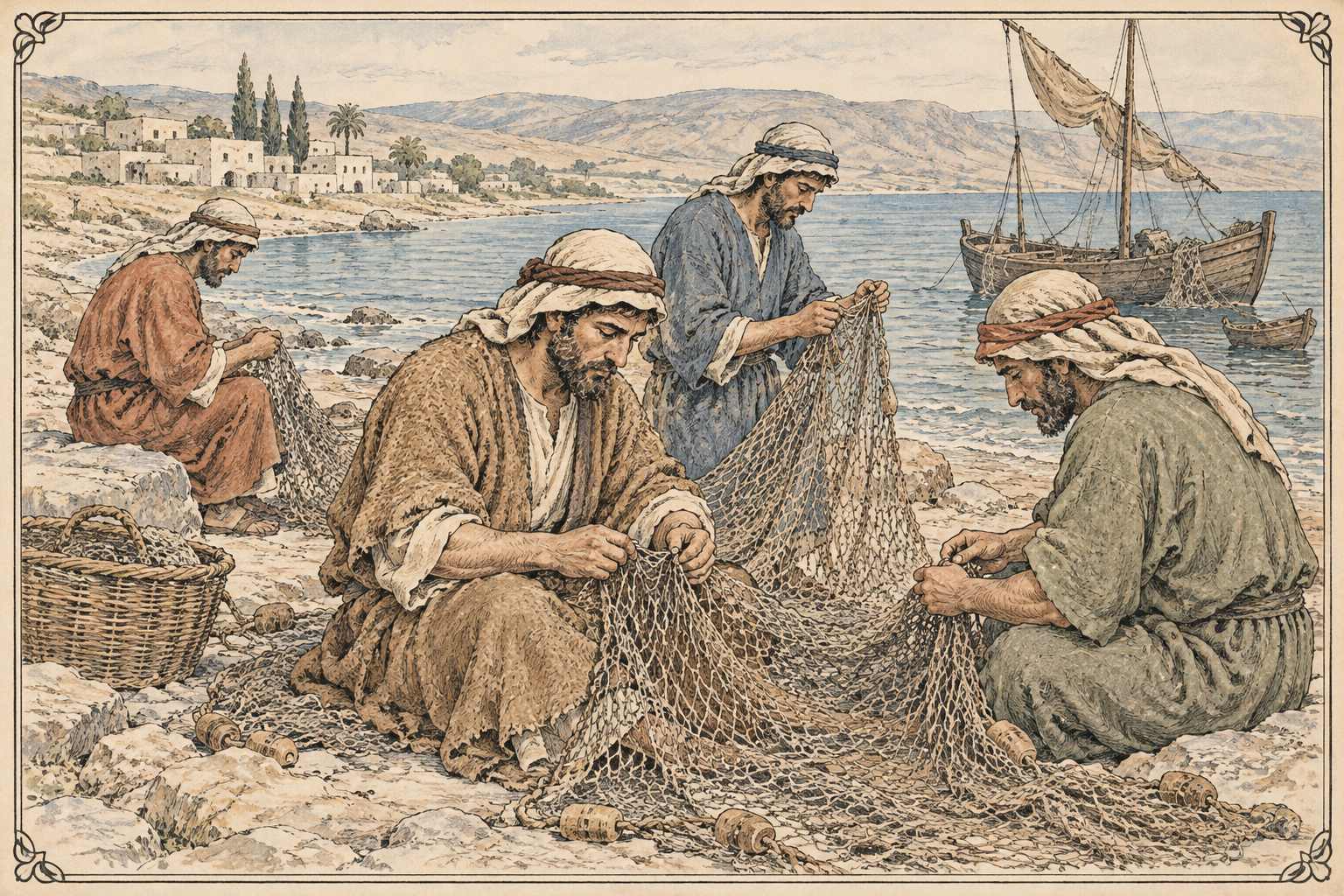
Capernaum was no pagan outpost scraped together on some forgotten border of the empire. It sat on the northern shore of the Sea of Galilee, a modest fishing town with a synagogue at its center and a population of Hebrew families who had lived under the Law and the Prophets for centuries. These were not strangers to the covenant. They were the heirs of it, descendants of Jacob, the chosen people of God (Alohim), the people to whom the promises had been given in the first place. When Yahushua made Capernaum his base of operations during the Galilean ministry, he was not visiting foreigners. He was coming home, in a sense, to his own.
Had Capernaum been a Gentile city with no knowledge of the Law, no memory of the Exodus, no scrolls of Yashayahu read aloud on the Sabbath, the story might carry a different weight entirely. But Capernaum's people stood in the direct line of covenant inheritance. They knew the Shema. They knew the stories of the tabernacle in the wilderness and the glory that once filled it. They were, by every external measure, the people most prepared on earth to recognize God's presence when it appeared among them.
Chosen People, Unrecognized Visitor
Here is the irony that ought to unsettle us. The people entrusted with the Law and the Prophets, the ones who had spent generations rehearsing the promises of a coming deliverer, failed to recognize the one those scriptures had been pointing toward all along. This was not a case of insufficient information. The synagogue in Capernaum had read the scrolls of Yashayahu and the Psalms for generations, texts saturated with anticipation of God visiting his people. Yet when that visitation occurred within walking distance of their own doorsteps, the town as a whole turned away.
A strange and sobering pattern runs through so much of the biblical story: proximity to revelation does not guarantee reception of it. The religious teachers of Jerusalem, steeped in Torah, missed it. The town of Capernaum, hearing Yahushua teach week after week in its own synagogue, missed it too. Knowledge of the Scriptures, it turns out, is not the same thing as recognizing the one the Scriptures describe.
The Weight of Inherited Promise
Covenant privilege was never intended as a badge of status to be worn comfortably. It was meant as responsibility. To descend from Abraham, Isaac, and Jacob was to carry forward a calling, to be a people set apart so that, in time, all the families of the earth might be blessed through them. The prophetic tradition is unambiguous about this. Being chosen means being accountable in a way that the nations outside the covenant are not. Amos said as much to Israel centuries earlier: "You only have I known of all the families of the earth; so I will punish you for all your iniquities" (Amos 3:2). Election is not exemption from judgment. It is the condition that makes judgment sharper when the calling is refused.
Capernaum inherited the promise. Capernaum also inherited the weight that comes with it. The town that should have known better is precisely the town that did not, and that gap between privilege and perception is where this whole judgment oracle begins.
The Tabernacle's Hidden Glory Walks the Streets
What the Holy of Holies Meant for Israel
To understand what Capernaum witnessed, we need to go back to the wilderness, to the tabernacle Moses built according to the pattern shown him on the mountain. At the heart of that structure, behind a thick veil woven with cherubim, sat the Holy of Holies, the single point on earth where the glory of God touched the camp of Israel directly. No ordinary worshiper entered there. Only the high priest, once a year, on the Day of Atonement, carrying blood and trembling, dared to cross that threshold. The presence of God was real, near, and utterly guarded. Israel lived in proximity to glory it could never casually approach.
This arrangement was not an accident of religious bureaucracy. It reflected something true about the nature of God's holiness and humanity's condition. The distance was the point. Sinful people cannot simply wander into unmediated divine presence and survive the encounter. The veil, the priesthood, the blood, all of it testified to a gap that needed bridging.
From Veiled Presence to Walking Presence
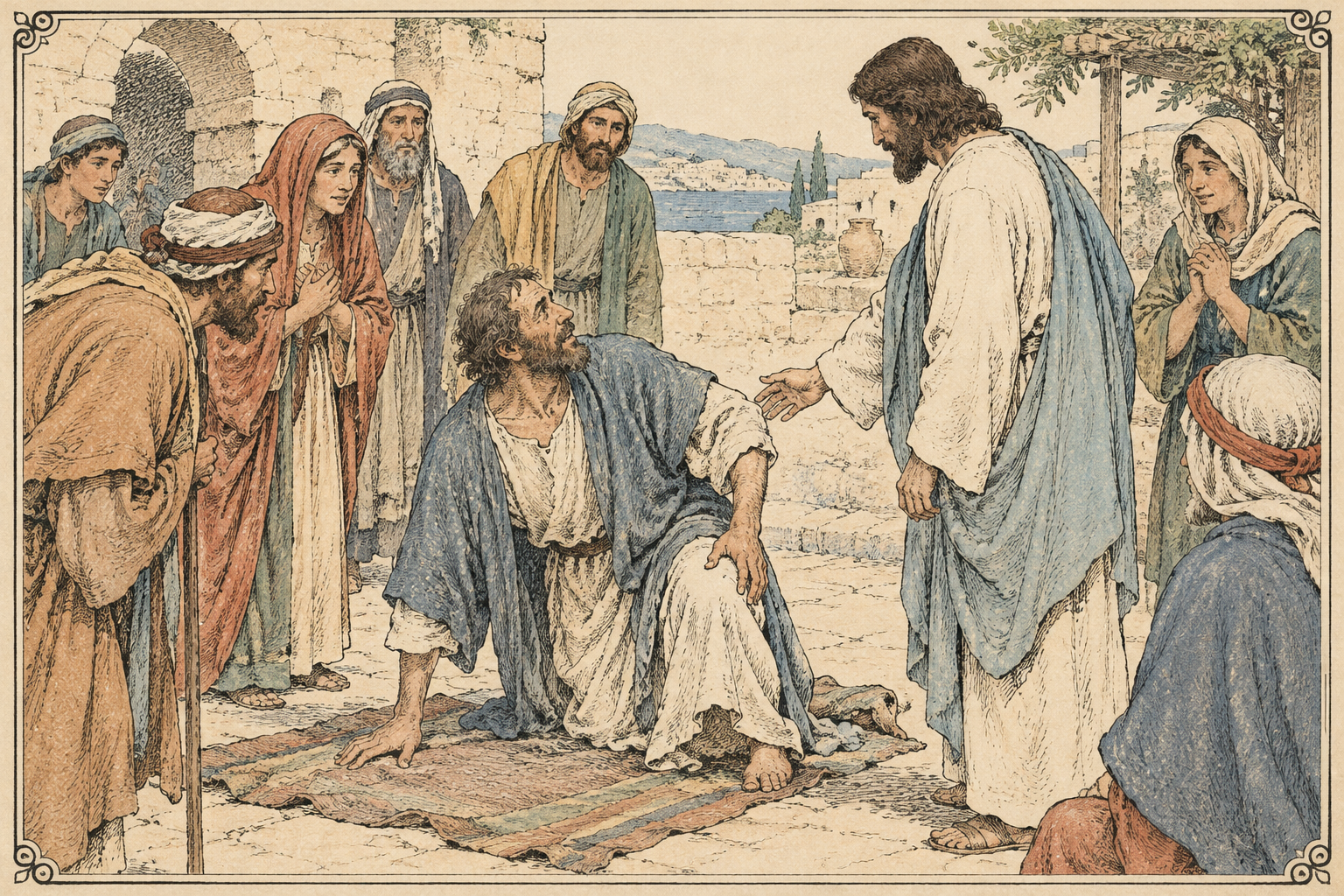
Now set that image beside Capernaum. When Yahushua took up residence there, something happened that the architecture of the tabernacle had only gestured toward. The veiled presence that once sat still in a guarded chamber, approached only once a year through blood and incense, began walking through fishing villages, eating meals in ordinary homes, teaching in a synagogue any Hebrew could enter on the Sabbath. The distance the tabernacle required collapsed. The idea that God had taken on flesh and walked among his people, sometimes called incarnation theology, is not a late doctrinal invention layered onto the Gospels by later theologians. It is the claim the Gospel writers themselves are making when they describe what happened in towns like Capernaum.
Prophets spoke for God from a distance. What Capernaum received was closer, nearer, more direct than anything Israel had experienced since the fire and cloud rested over the tabernacle in the wilderness. The hidden glory of the Holy of Holies had, in effect, stepped outside the veil and begun walking the dusty roads of Galilee.
Miracles as the Glory Made Visible
The miracles Capernaum witnessed were not isolated acts of compassion unconnected to anything larger. They were the glory made visible in categories people could recognize: a withered hand restored, a paralyzed man lowered through a roof and told to walk, a Roman centurion's servant healed at a word spoken from a distance, tormented minds set free from what the text calls unclean spirits. These were the same kind of divine self-disclosure that had once been confined to Israel's holiest space, now happening in open daylight, on ordinary streets, in front of fishermen and tax collectors and children. More works of power were concentrated in Capernaum than almost anywhere else in the Gospel record.
Matthew 11 does not leave us wondering whether the evidence was sufficient. It leaves us asking what a people do when overwhelming evidence stands directly in front of them and they decide, collectively, to look away.
The Verdict Pronounced Over Capernaum
Matthew 11:20-24 in Its Narrative Setting
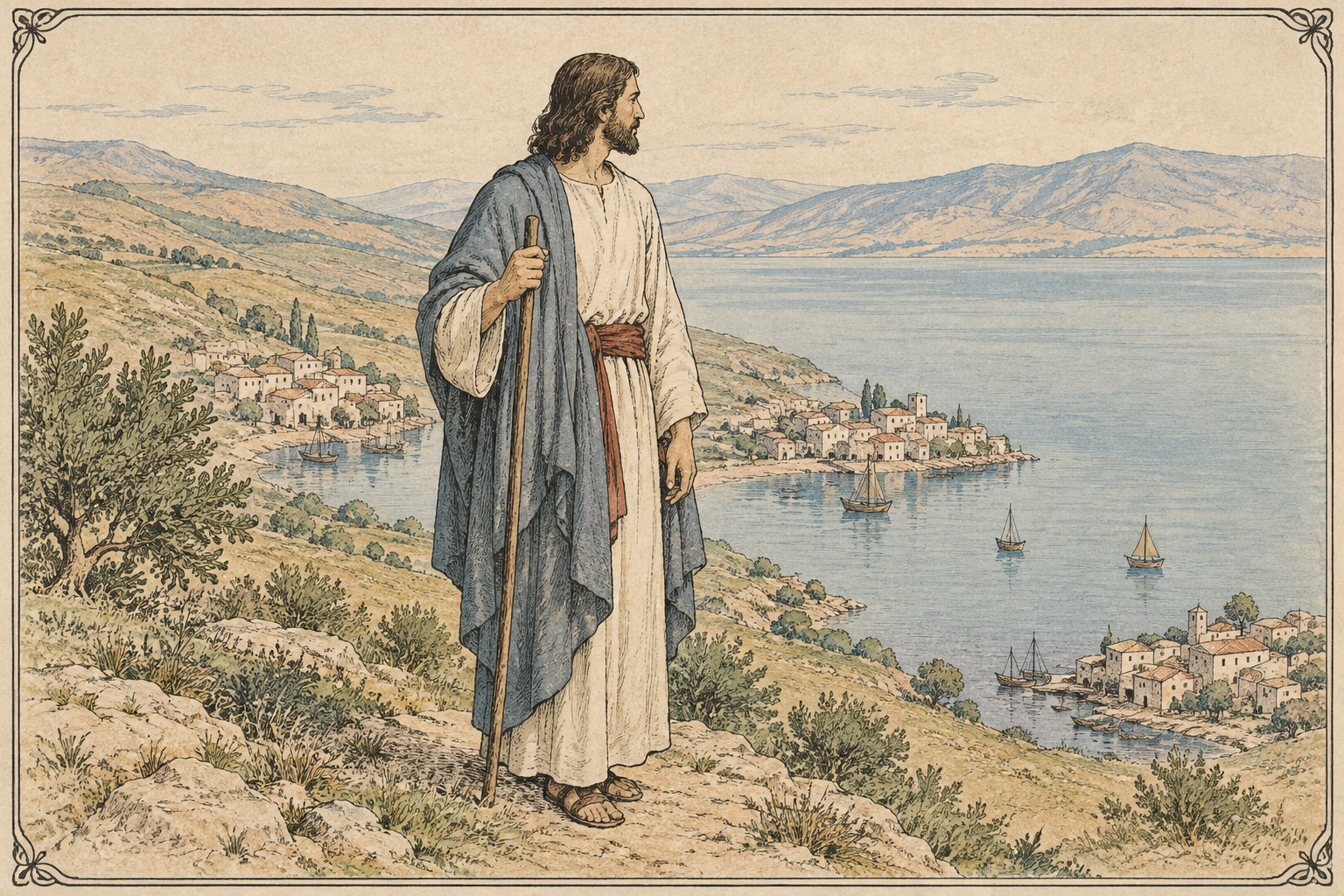
The judgment oracle does not appear in isolation. Matthew places it immediately after a run of teaching about Yahuchanan the Baptist and the nature of the kingdom, as Yahushua turns to address "the cities where most of his mighty works had been done, because they did not repent" (Matthew 11:20). Three towns receive explicit mention: Chorazin, Bethsaida, and Capernaum. All three sat within a few miles of each other on the northern Galilean shore. All three had seen Yahushua's ministry firsthand, not as rumor passed along trade routes but as lived experience in their own streets.
Chorazin and Bethsaida are compared unfavorably to Tyre and Sidon, Gentile port cities notorious in Hebrew memory for commercial arrogance and idolatry. "If the mighty works done in you had been done in Tyre and Sidon," Yahushua says, "they would have repented long ago in sackcloth and ashes" (Matthew 11:21). But the sharpest words are reserved for Capernaum, the town that had hosted Yahushua's own household, the place that functioned as his base of ministry throughout the Galilean campaign. Matthew 11 Capernaum judgment language builds in intensity precisely because Capernaum's privilege had been greatest.
"Brought Down to Hades": Language Heavier Than Fire and Sulfur
Yahushua's words to Capernaum are unsparing: "And you, Capernaum, will you be exalted to heaven? You will be brought down to Hades" (Matthew 11:23). This is Matthew 11:23-24 judgment Hades language, and it signals something considerably heavier than the physical devastation that ended Sodom and Gomorrah. Fire and sulfur destroyed bodies and cities. Being "brought down to Hades" speaks to a deeper reckoning, a reversal of status before God himself, language that many readers hear echoing Yashayahu's taunt against the king of Babylon who exalted himself to the heavens only to be thrust down to the depths of the pit (Isaiah 14:13-15), though the connection is an inference rather than a stated citation.
Sodom's judgment was swift, physical, and total within its own historical moment. Capernaum's judgment, as Yahushua describes it, reaches further. It is a verdict rendered before the throne of the one who knows exactly what Capernaum saw and exactly what Capernaum refused.
Exalted to Heaven, Thrust Down to the Grave
Notice the cruel irony embedded in the structure of the saying. Capernaum had been exalted, not by its own achievement but by sheer privilege of location and circumstance, lifted to a height no other town on earth occupied at that moment in history. It had hosted God in the flesh. It had watched him teach, heal, and cast out demons within its own walls. That exaltation becomes the measure of its condemnation. The higher the privilege, the further the fall. Capernaum's greatest honor and its greatest liability turn out to be the same thing.
The Counterfactual That Convicts: Sodom Compared
The Outcry That Reached Heaven
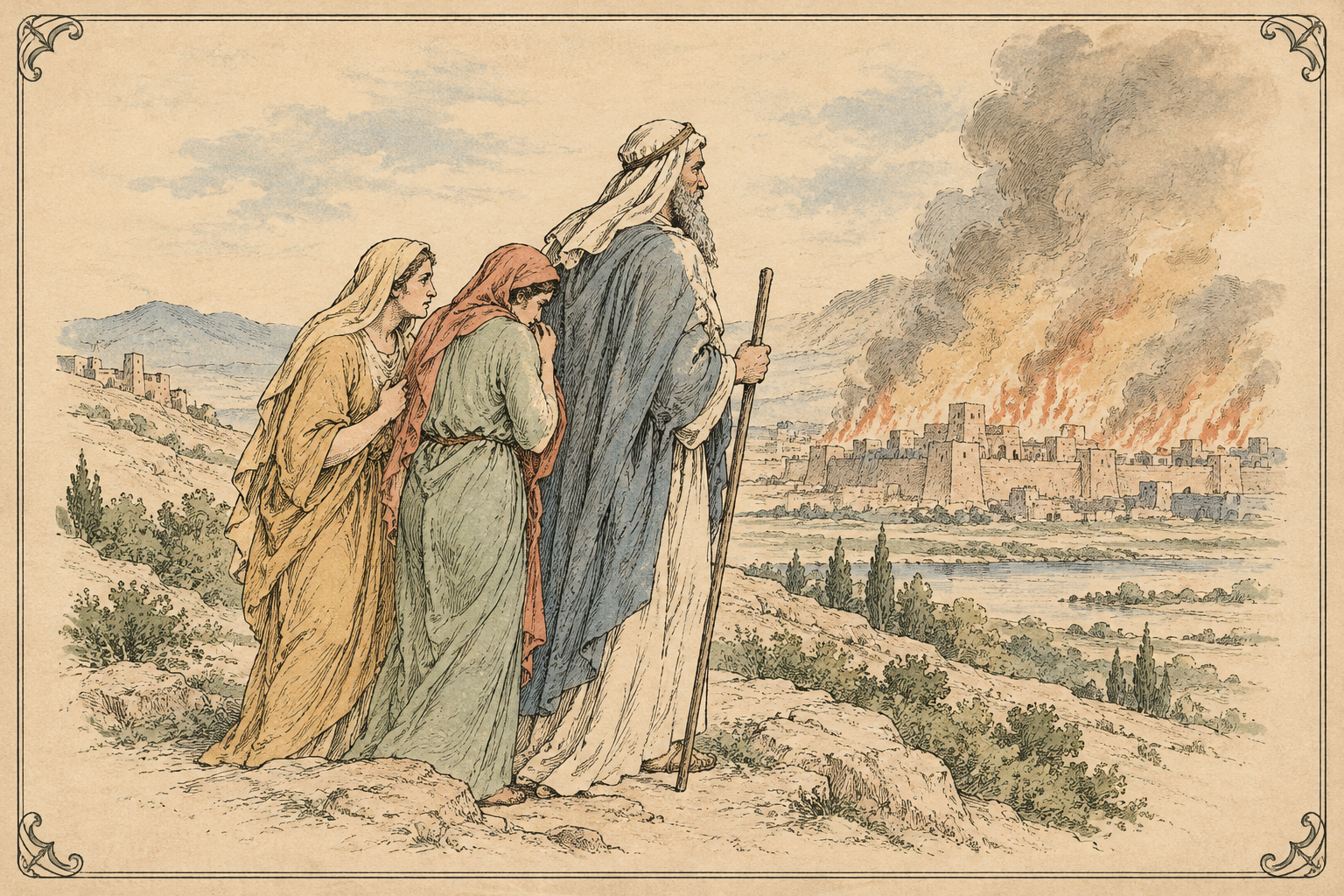
Genesis 18 and 19 record one of the darkest episodes in the ancient narrative. The sin of Sodom and Gomorrah had become so grievous that "their outcry has become great before the Lord (YHWH), and the Lord has sent us to destroy it" (Genesis 19:13). The Hebrew word behind that outcry, zeʿaqah, is a technical term for the cry of the oppressed, the same word used of the Hebrew slaves groaning under Egyptian bondage, the same word the Psalms use when appealing to God against injustice. Sodom's sin was not merely private immorality. It was a culture of cruelty, violence, and exploitation of the vulnerable, a city whose collective wickedness generated a cry of pain loud enough to reach heaven itself.
Later prophetic reflection, particularly in Ezekiel 16, describes Sodom's guilt in terms that should unsettle comfortable readers: pride, excess of food, careless ease, and a refusal to strengthen the hand of the poor and needy. Sodom was destroyed not for some single scandalous act alone but for a whole structure of arrogance and indifference toward human suffering.
"They Would Have Repented"
And yet Yahushua says this: "if the mighty works done in you had been done in Sodom, it would have remained until this day" (Matthew 11:23). This is one of the most startling counterfactual statements in the entire New Testament. Sodom, the city whose name had become the ancient world's permanent symbol of depravity, would have repented had it witnessed what Capernaum witnessed. The sterner sentence falls on Capernaum, not Sodom.
This counterfactual forces a distinction most readers skip past too quickly. There is a difference between moral failure, however severe, and the willful rejection of direct, personal, unmistakable revelation. Sodom sinned in ignorance of what Capernaum saw with its own eyes. Capernaum saw and still refused.
Culpability Measured by Revelation, Not Wickedness Alone
This is the hinge on which the whole passage turns. Judgment Day, as Yahushua describes it here, does not simply tally up wicked acts and weigh them against good ones like some cosmic ledger. It accounts for what a people saw and what they did with what they saw. Guilt is proportional to revelation, not simply to behavior. Sodom's sin was grave. Capernaum's sin was worse, not because Capernaum behaved more wickedly in any conventional sense, but because Capernaum possessed knowledge Sodom never had and did nothing with it but shrug.
Reducing Matthew 11 to a simple lesson about comparative sin tallies misses the real weight of the passage, and it is here that the argument must go further than most treatments of this text are willing to go.
Breaking the First Commandment Without Carving an Idol
Exodus 20 and the Command Against Other Gods
"You shall have no other gods before me" (Exodus 20:3). This is the first of the Ten Words given at Sinai, the foundation on which the rest of the covenant stands. It was never merely a prohibition against bowing to statues carved from wood or stone. It was a claim of total allegiance, a demand that Israel's loyalty, worship, and recognition belong to the Lord alone, with nothing and no one else occupying that place. The commandment assumes that God has made himself known sufficiently that refusing him amounts to a deliberate choice, not an innocent oversight.
The conventional reading of Capernaum's judgment stops here: a town saw miracles, failed to repent, and will answer for that failure. Many careful readers stop there. But if the one standing in Capernaum's synagogue, eating in Capernaum's homes, healing in Capernaum's streets, was in fact God in the flesh, the fullness of the Godhead walking among them, then Capernaum's refusal was not generic unbelief. It was a first commandment rejection Christ violation in the most literal sense available to a covenant people. They did not fail to recognize a prophet. They stood before the Lord himself in human form and turned away.
Idolatry Without a Golden Calf
Here is what strikes me as most compelling about this passage once the pieces come together. We typically think of idolatry as requiring an image, a golden calf at Sinai, a carved figure before which incense is burned. But the first commandment does not require an object of wood or metal to be broken. It requires only that something else, anything else, occupy the place reserved for the living God. Indifference can do this just as effectively as an idol can. Apathy can do this. Comfortable disbelief, politely declining to respond, can do this.
Capernaum did not carve an image and bow before it. Capernaum simply watched God stand in front of them and decided, collectively, that he was not worth rearranging their lives around. Theologians sometimes call this practical atheism: not a philosophical denial that God exists, but a functional decision to treat his presence as irrelevant once he has shown up. The golden calf and the shrug accomplish the same theological result. Both displace the living God from the place he alone deserves.
Turning Away as a Form of Worshiping Something Else
Refusal is never neutral. So many readings of Matthew 11 miss this point entirely, focused as they are on the mechanics of judgment severity rather than the commandment being violated underneath it. When Capernaum turned away from Yahushua, it did not simply fail to act. It enthroned something else in his place, whether that something was comfort, routine, pride in their own religious heritage, or simple unwillingness to be disturbed. Every refusal of God installs a substitute, even if the substitute has no name and no statue.
None of this means Capernaum's residents thought of themselves as idolaters. They almost did not. They likely considered themselves faithful Hebrews, keepers of the Sabbath, heirs of Jacob, loyal to the one God of Israel. That is precisely what makes the diagnosis so unsettling. You can keep every external form of covenant loyalty and still break the first commandment the moment God stands in front of you and you decide to look elsewhere. The sin is not failing to believe in a god called such. The sin is refusing the God who already stood there, in flesh and bone, asking to be recognized.
The Verdict That Still Hangs Over Every Generation
Greater Light, Greater Debt
The logic running through Matthew 11 does not stay confined to first-century Galilee. Revelation creates obligation, and the obligation scales with the clarity of what has been revealed. A person who has never heard of Yahushua stands in a different position before judgment than a person who has heard the gospel preached distinctly, has seen its claims laid out honestly, and has chosen indifference anyway. This is not a comfortable teaching, and it was not meant to be. It is, nonetheless, the consistent testimony of the text, from the prophets warning Israel before exile to Yahushua warning his own disciples that towns which reject their message will fare worse than Sodom on the day of reckoning.
When the Gospel Replaces the Miracle
We no longer have Yahushua walking bodily through our towns healing withered hands in the town square. What we have instead is the gospel proclaimed, the same claim about God in the flesh carried forward in word rather than direct sight. This does not lessen the weight of the encounter. The call to repentance addressed to Chorazin, Bethsaida, and Capernaum extends now to anyone who hears that same claim stated plainly: that God has entered human history, taken on flesh, and asks for recognition and response. The gospel functions today as the direct revelation Capernaum once received through sight. The medium has changed. The accountability has not.
Judgment Day Measured by Response, Not Circumstance
The question Judgment Day asks, according to this text, is not whether a person witnessed a miracle. It is whether truth, once made plain, was received or refused. Sodom never had the chance Capernaum had, and Yahushua himself says Sodom would have taken it. Capernaum had every chance and did not. That is the real scandal buried inside this passage, and it is not primarily about comparative judgment mechanics. It is about what happens when the living God stands in front of a people and they choose something else.
I think back to that train ride into London, the Bible open on my lap, and I understand now why Matthew 11 stopped me the way it did. This passage was never meant to remain a historical curiosity about Galilean towns long gone to dust. The Capernaum judgment Sodom and Gomorrah comparison is a mirror held up to anyone who has heard the claim distinctly and still hesitates. The invitation stands, as it always has, for those willing to recognize what, and who, is standing in front of them.